
The Shopper Who Chased Himself: A Puzzle About 'I'
The Shopper Who Chased Himself

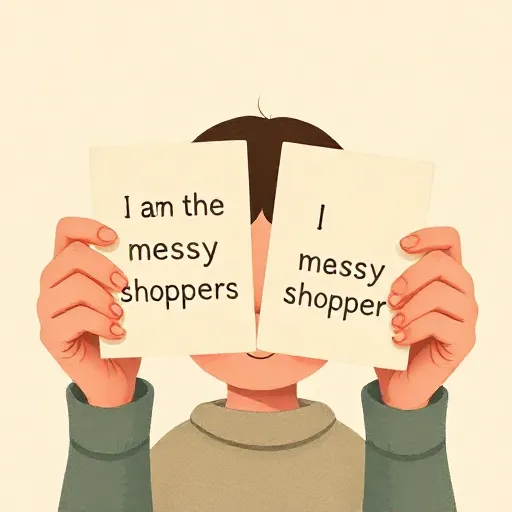
In 1979, the philosopher John Perry told a story about a trip to the supermarket. He saw a trail of sugar on the floor and decided to follow it. Round and round the tall counter he went, pushing his cart, looking for the shopper with the torn sack. He wanted to tell that person, “You’re making a mess!” The trail grew thicker. But he never caught up. Then it hit him: the sugar was spilling from his own cart. He was the messy shopper he was chasing.
Perry already believed that the shopper with the torn sugar sack was making a mess. He already believed that John Perry was making a mess (he knew his own name). But those beliefs didn’t stop him from searching. What changed was a new kind of belief — the one he described as “I am making a mess.” That tiny shift from “he” or “John Perry” to “I” made all the difference. He stopped chasing, rearranged the sack, and the story ended.
This moment captures a puzzle that has kept philosophers busy for decades: some beliefs seem to be irreducibly about you, in a way no other name or description can replace. Getting clear on that puzzle can change how we think about ourselves, our actions, and even the minds of robots.
What’s So Special About “I”?
Perry’s point is that the belief that made him act could not be replaced by any non-indexical description. Indexical words like “I,” “now,” and “here” change what they refer to depending on who says them and when. If Perry had instead started to believe “the bearded man in the blue shirt is making a mess,” he still might have kept looking for that bearded man — he might not realize the bearded man was him. He could believe every true fact about John Perry and still fail to connect those facts to himself.
Philosophers call this a self-locating belief — a belief that locates you in the world, not just a belief about what the world is like. Another classic example comes from Perry’s story of Rudolf Lingens, an amnesiac lost in a library. Lingens reads a biography of himself and a complete map of the library, but he still doesn’t know where he is or who he is. He can point to the map and say, “Rudolf Lingens is on floor six,” but until he can think, “I am Rudolf Lingens, and here is aisle five,” he remains lost.
David Lewis (1941–2001) drove the point home with an even stranger story: two gods who know every true fact about their world. One lives on the tallest mountain and throws manna; the other lives on the coldest mountain and throws thunderbolts. Each knows every proposition that’s true — they are, in a sense, omniscient. Yet neither god knows which one he is. They lack a piece of self-locating knowledge, and that ignorance can’t be filled by just adding more facts about the world. If knowing every worldly fact isn’t enough, then there must be a special kind of belief that isn’t about how the world is, but about where you are in it.
Lewis’s Answer: Beliefs About You-in-the-World

If self-locating beliefs don’t fit the usual picture, maybe we need to change what beliefs are about. Lewis proposed that instead of treating the objects of belief as simple sets of possible worlds — ways the whole universe could be — we should use centered worlds. A centered world is a possible world with a built-in “you are here” arrow: it picks out a specific time and a specific individual within that world. So believing “I am making a mess” isn’t just believing that a certain world is actual; it’s believing that you are the messy one in that world.
In this picture, all beliefs become self-attributions of properties. When Hume thinks “I wrote the Treatise,” he’s believing the property having written the Treatise. When someone else thinks the same words but isn’t Hume, they believe a different property — one that’s false for them. Lewis’s view elegantly handles cases where two people seem to share a thought but one is right and the other wrong, like Hume and a confused person named Heimson who thinks he is Hume. They share a way of thinking about themselves, but on a centered-worlds account, the content of Heimson’s belief is the property being Heimson and having written the Treatise, which is false. The similarity is in the self-locating structure, not in the traditional proposition.
Perry’s Answer: It’s How You Believe, Not What You Believe
John Perry (born 1943) took a different path. He thought the problem wasn’t with the objects of belief, but with the belief relation itself. On his view, the content of a belief can be an ordinary proposition like “John Perry is making a mess,” but you can stand in that belief relation in very different ways. Perry introduced the idea of belief states: internal ways that your mind latches onto a content, which can depend on your particular perspective.
Think of two hikers, John and David, who both believe the proposition “John is being attacked by a bear.” John curls into a ball; David runs for help. Both believe the same ordinary proposition, but John is in the “I am being attacked” belief state, while David is in the “he is being attacked” state. The difference in behavior comes from a difference in which belief state they’re in, not from which propositions they believe. A belief state is like a function: given who you are and where you are, it delivers a specific proposition. The belief state “I am making a mess” delivers the proposition that John Perry is making a mess when John Perry is in it, and a different proposition when someone else is.
So for Perry, what makes self-locating beliefs special isn’t that they have new kinds of content, but that they involve a special kind of relation — a perspective-sensitive mechanism. Your mind isn’t just a storehouse of facts; it’s a system that constantly relates those facts to a moving “I.”
But Do We Really Need Special Self-Beliefs?
Not everyone is convinced that self-locating beliefs require a whole new category. Some philosophers point out that similar puzzles already appear in cases where you know something under one name but not another — like knowing that Clark Kent is a reporter without realizing he’s Superman. In a twist on Perry’s story, you might chase Clark Kent to tell him he’s making a mess, while ignoring Superman, until you realize they’re the same person. The problem of the “essential indexical” might just be a special case of a broader puzzle about how we represent objects under different guises.
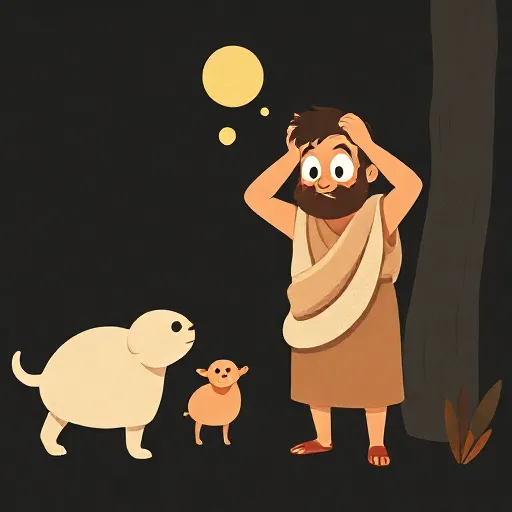
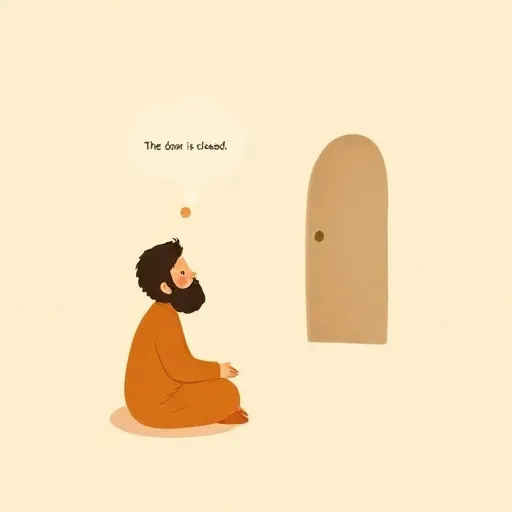
A different challenge comes from imagining an all-powerful being that can act without any self-locating thoughts. Suppose a god thinks “The door is closed,” and the door instantly closes. The god doesn’t need to think “I am closing the door” or even represent itself at all. If such a being could perform all the same actions, then self-locating beliefs might not be essential for action — at least in principle. But that doesn’t settle the question for humans. Even if a god could act without “I”-thoughts, it might be that we are wired to need them. Our daily decisions — from ducking under a low branch to planning our afternoon — seem soaked through with an “I”-perspective that doesn’t reduce to a list of non-indexical facts.
Why It Still Matters: Robots, AI, and Your Own Thoughts
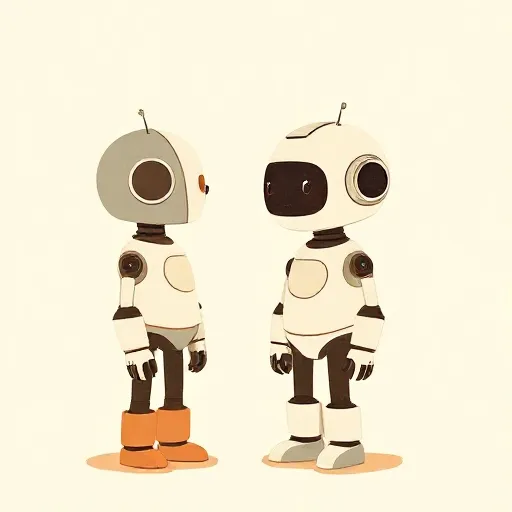
The debate isn’t just about grocery stores and ancient gods. When we build robots that navigate the world, or design self-driving cars, they need to represent their own location in a way that updates as they move. A car’s map may show an intersection at a set of coordinates, but the car must also realize “I am at those coordinates” to slow down. That sounds a lot like a self-locating belief. Yet current machines don’t have a conscious “I.” What they do have are internal states that play the same functional role Perry attributes to belief states — generating the right action for the individual in its environment. As you read this, your phone can say “You are here” on a map, but does it truly believe it? The philosophical puzzle helps engineers and cognitive scientists figure out what kind of mental architecture would count as genuinely self-aware.
On a more personal level, the question touches on how you think about yourself. When you wake up and remember you have a math test today, you don’t just know that a student named Emma has a test — you know that you have one, and that knowledge gets you out of bed. The shift from “someone” to “I” is what makes your own life feel like yours, and not just one more story in the world. Understanding self-locating belief is part of understanding what makes you a person, not just a character in a giant cosmic book.
Think about it
- Suppose a future brain scanner could read every descriptive belief you have about yourself (your name, height, favorite food). Would a scientist with that data know what it is like to be you? What would still be missing?
- Imagine a friend says, “I’m hungry.” You know they are hungry, but you don’t feel their hunger. If you could somehow download their hunger-pain into your own mind, would you then have the same self-locating belief they do? Why or why not?
- If a robot that drives a car says “I am low on fuel,” does it believe something about itself in the same way you do? How could anyone decide?