Should Science Be One Big Theory, or a Thousand Different Ones?
Why Three Maps Can All Be Right

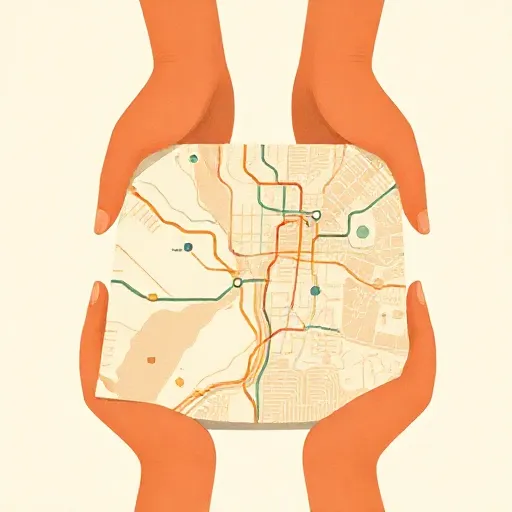
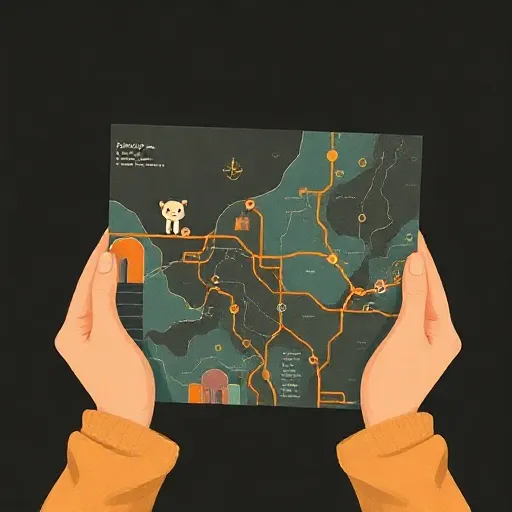
Imagine you need to get to a friend’s house. You pull out three maps: a subway map, a bike route map, and a hiking trail map. The subway map ignores hills and trees. The bike map highlights quiet streets. The trail map shows every twist in the forest but misses the subway stops entirely. Each map is different. Yet none is the “wrong” one. They all show real things about the city, just from different angles and for different purposes.
This is not a flaw. It is the starting point of a big idea in philosophy called scientific pluralism. Scientific pluralism is the view that science does not need one single, perfect account of the world. Instead, it is normal — even healthy — for science to contain many different methods, models, and explanations. For most of modern history, many thinkers believed the opposite. They dreamed of unity of science: one giant chain of reasoning that links every fact together, from the smallest particle to how societies work. Scientific pluralists say that dream is not only impossible but, in a messy world, undesirable.
The Dream of One Perfect Ladder

In the middle of the twentieth century, many philosophers of science believed that all sciences could be connected in a single chain. This idea is often called reductionism. Picture a very tall ladder. The bottom rung is the most basic physics of tiny particles. The next rung is chemistry, then biology, then psychology, and finally the social sciences at the top. Reductionism says that in principle, everything on a higher rung can be explained completely by the rung below it. Your feelings, your friendships, even the history of a country — all of it could be rewritten as long equations about atoms and forces. The only limit is how much computing power we have.
Some philosophers thought reductionism was more than a dream. Ernest Nagel (1901–1985) argued that we really could reduce one theory to another with the right logical bridge laws. Many others worked out the rules for how such a ladder would stand. The vision was elegant: one science, one world, one truth.
But by the 1960s and 1970s, cracks appeared. New sciences like artificial intelligence and cognitive psychology sprang up, and they didn’t fit neatly on any rung. Philosophers began to ask: what if the entire ladder is the wrong picture? Patrick Suppes (1922–2014), in his famous 1977 address “The Plurality of Science,” argued that science is not one ladder but a rich, tangled web of different kinds of knowledge.
When the Same Pattern Lives in Many Bodies

One of the strongest arguments against reductionism comes from a puzzle called multiple realization. The philosopher Jerry Fodor (1935–2017) used economics as an example. A rule in economics — say, “when interest rates go up, borrowing drops” — works across an entire country. But look closely, and that single pattern is made of millions of different physical events. One person puts a credit card back in her wallet. Another clicks “cancel” on a loan website. A bank manager writes down a number on a printed form. The same economic fact is realized in completely different materials, machines, and human actions.
If you tried to reduce that economic rule to pure physics, you’d have to write a separate explanation for every single case — and they would have nothing in common physically. The reductionist ladder breaks. The world is run through with patterns that show up in countless kinds of physical stuff, so you cannot simply collapse them into one bottom rung. This insight turned many philosophers away from the unity ideal and toward pluralism.
Conflicting Models That Still Work
Even inside a single branch of science, researchers often build many different models of the same thing. In fluid mechanics, engineers model turbulent airflow with several mathematical tricks at once. In climate science, teams run dozens of computer simulations of how the Earth will warm. These models sometimes make inconsistent assumptions. One may treat the ocean as a giant flat sheet; another may treat it as a layered cake of currents. If you take them literally, they contradict each other.
A strict reductionist would see this as a mess to clean up. Pluralists see something else. They argue that a messy world rewards many partial views. The philosopher Nancy Cartwright (born 1944) describes reality as a “dappled world” — like a patchwork quilt where some patches follow tidy laws and others don’t. No single model can capture everything, and trying to force one often makes predictions worse. Having rival models is not a sign of failure. It is like keeping multiple maps for the same trip: you need the subway map for the train, the bike map for the final blocks, and the trail map if the road is closed.
Knowledge From Where You Stand

For a long time, many scientists believed that good science must be value-free — completely clean of personal opinions, social background, or political views. But in the 1980s, feminist philosophers pushed back hard. Sandra Harding (born 1935) developed standpoint theory, which holds that all knowledge is situated: what you notice depends on where you stand in society. Harding argued that people in marginalized groups often spot things that dominant groups overlook — not because they have magical powers, but because they experience problems that others simply don’t face. For example, women scientists in the twentieth century called attention to neglected questions about women’s health that male-dominated research had long ignored.
Helen Longino (born 1944) took a different but related path. She argued that we should replace the impossible ideal of value-free science with clear rules for handling our biases. In her vision, good science requires four things: open forums where anyone can criticize an idea, actual uptake of that criticism, public standards for judging evidence, and — crucially — equal authority for different communities of knowers. This is feminist empiricism, and it treats diverse viewpoints not as a threat but as an essential tool for catching mistakes. If everyone at the table shares the same background, the same blind spots, you are more likely to design a flawed experiment. Bring in outsiders, and the science gets sharper.
Who Gets a Seat at the Table?

If science really does need many voices, then the way we organize science becomes a political question. The philosopher Philip Kitcher (born 1947) proposed a model he calls well-ordered science. He imagines a long public conversation — not a simple vote, but a careful deliberation in which everyone’s preferences are heard. Citizens, tutored by the best evidence available, would help set the agenda for research. Should we study a new space telescope, or a treatment for a neglected tropical disease? In Kitcher’s picture, that choice should not be left to a small group of experts alone.
Some critics say Kitcher’s model hands the public too much power; others say it still leaves real science in the hands of experts. A more radical view, often found in science and technology studies, argues that scientific facts themselves are shaped by the values of the people who produce them. Even the way we define a mental disorder or classify a species involves social choices. This line of thinking connects back to Harding’s standpoint theory: if marginalized people had real power in setting research agendas, we might discover facts that dominant science has made invisible.
Scientific pluralists do not say “anything goes.” They argue that not all diversity is helpful — climate change denial that ignores mountains of evidence, for example, is not a healthy disagreement. But they insist that the boundary between good and bad diversity is itself something we must argue about openly. Science, on this view, is not a machine that runs by itself; it is a human practice that needs constant care and, at times, reform.
More Than One Truth About the World

Scientific pluralism reshapes how you can think about every scientific headline you read. When two research teams publish conflicting models of a hurricane’s path, that is not automatically a disaster — it might be a sign that our modeling toolkit is rich and honest. When doctors disagree about how to classify a mental condition, they face a question that involves both brain science and human values. When your own community debates whether to fund a new telescope or a local health study, you are stepping into a centuries-old conversation about what kind of knowledge matters.
You do not need to be a philosopher to notice that the world is too complicated for a single pair of glasses. Scientists, like mapmakers, choose which features to emphasize based on what they need to do. The goal is not to tear down science but to understand why its messiness is often a strength. In a world full of urgent problems — climate change, pandemics, social inequality — the most dangerous idea might be that only one kind of person, with one method, can see things clearly.
Think about it
- If two computer models give completely different predictions about a flood, what should a town do to prepare? Should they trust the model made by the most famous scientists, or keep both in mind?
- Can a scientist ever be fully neutral, or do their life experiences always shape what questions they ask? Give an example from your own experience.
- Suppose your school wants to start a science club. Should the club only study facts from textbooks written by established experts, or should it also explore knowledge from local communities and cultures? Why?