
Is Science Really a 'View from Nowhere'?
The Tree That Stays the Same

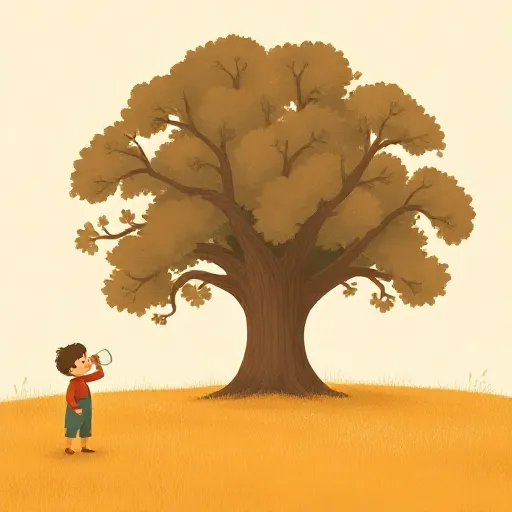
Imagine you and a friend are standing on opposite sides of a big oak tree. From your spot, the tree looks huge and blocks the sun. Your friend sees it smaller against the sky. If you walk closer, it seems to grow. And yet, you both know the tree itself hasn’t changed at all. Its height, its shape, its leaves—those features stay the same no matter who looks.
This simple idea points to something deep about how we think science should work. Many philosophers have believed that scientific objectivity means being faithful to the facts—describing the world exactly as it is, without letting our own eyes, ears, or opinions get in the way. The philosopher Thomas Nagel (b. 1937) called this dream the “view from nowhere”: seeing reality not from anybody’s particular angle, but from no angle at all. Bernard Williams (1929–2003) called it the “absolute conception.” If science could reach that view, we could settle arguments just by looking at the facts, predict what will happen, and explain why things appear the way they do from different perspectives.
But can any human actually see from nowhere? Scientists work inside a paradigm—a whole package of problems, methods, and background beliefs that shapes how they see the world. Thomas Kuhn (1922–1996) famously argued that observations themselves are theory-laden: what you notice depends on the theories you already carry with you. He gave a striking example from astronomy. A follower of Ptolemy like Tycho Brahe looked at the horizon at dusk and saw the sun slowly sinking down. A follower of Copernicus like Johannes Kepler looked at the same scene and saw the horizon rolling upward to meet a stationary sun. They looked in the same direction, yet they literally saw different things. If even our senses are shaped by our theories, then no observation can be a perfectly neutral referee between rival views. The view from nowhere starts to look unreachable.
Why Evidence Doesn’t Speak for Itself
Even if scientists could somehow describe the world without any theory getting in the way, there’s another problem. Scientific theories aren’t tested in isolation. Whenever you check a theory against an experiment, you have to rely on a web of background assumptions. The physicist and philosopher Pierre Duhem (1861–1916) pointed out that you can never run a “crucial experiment” that single‑handedly proves one theory true and another false. If a prediction goes wrong, the fault might lie in the theory you’re testing, but it might also lie in some hidden assumption about your measuring instruments, the air pressure, or even the number of planets. Because these assumptions can be wrong, a failed prediction doesn’t automatically kill a theory.
A more dramatic challenge came from the sociologist Harry Collins (b. 1944) in the 1980s. He studied the search for gravitational waves and argued that scientists face an experimenter’s regress. To know whether your apparatus works, you need to know if it gives correct results. But to know if its results are correct, you first need to know the apparatus is reliable. That’s a circle. Collins claimed that in practice, the circle is broken not by raw facts, but by social factors—a scientist’s career interests, what the community expects, and which projects look promising. The physicist‑turned‑philosopher Allan Franklin (b. 1938) pushed back, insisting that reasoned judgment, careful calibration, and error‑checking can settle disputes. Still, even Franklin did not show that these methods produce a pure, perspective‑free picture. Underdetermination—the idea that evidence never forces us to pick just one theory—means that values and human judgment inevitably fill the gap.
When Values Put on a Lab Coat

If facts alone can’t do all the work, maybe objectivity means keeping human values out of science. This idea is called the value‑free ideal (VFI): in gathering evidence and deciding whether to accept a theory, scientists should rely only on cognitive values—things like accuracy, simplicity, and explanatory power—and shut out contextual values such as politics, personal interests, or ideas about right and wrong. But is that really possible?
The philosopher Richard Rudner (1921–1979) argued that the very act of accepting a hypothesis always involves a value judgment. Suppose a drug company tests a new medicine. No test is perfect; there’s always some chance the results are wrong. If scientists accept the hypothesis “this drug is safe,” they risk harming people if they are mistaken. If they reject that hypothesis, they risk denying a helpful treatment to people who need it. Which risk is worse? That’s an ethical question, not just a number. So even the core decision of accepting a scientific claim brings contextual values through the door.
Heather Douglas (b. 1969) showed that this problem goes deeper. Her case study of dioxin experiments on rats found that values shaped every stage: classifying cells as cancerous or not, choosing how to extrapolate from high doses to low ones, and deciding how much evidence was enough. Meanwhile, Helen Longino (b. 1944) argued that even the supposedly “neutral” cognitive values aren’t so neutral. Choosing a simpler theory over a more complex but more accurate one can hide political assumptions. If we prize simplicity, we might ignore the messy, interconnected relationships that feminist values such as ontological heterogeneity—the idea that the world is full of diverse kinds of things and connections—want us to see. So value‑freedom seems not only difficult, but perhaps not even desirable if we care about knowledge that serves everybody.
The Machine That Replaces You
If individual judgments are so easily biased, maybe the solution is to take the human out of the picture as much as possible. This approach is often called mechanical objectivity. Lorraine Daston and Peter Galison describe how, from the nineteenth century onward, scientists tried to replace personal discretion with automatic routines—photographs, instruments, and later, statistical formulas. The goal was to produce results that didn’t depend on who was doing the measuring.
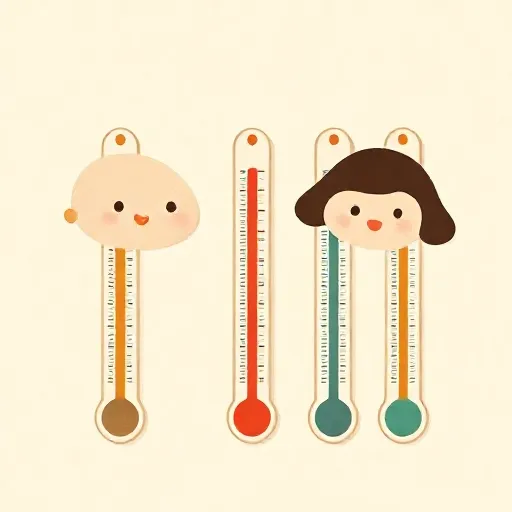
Measurement does seem to tame some kinds of perspective. A hot day in England might feel chilly to a visitor from Mexico, but both can agree it’s 21°C. Yet measurement never gives a completely naked look at reality. As the historian Hasok Chang (b. 1967) showed with early thermometers, you have to make assumptions—for instance, that the liquid in the tube expands in a simple, predictable way—before you can trust the numbers. In economics, numbers like the consumer price index, as Julian Reiss (b. 1971) notes, are built on ethical choices about what counts as a better or worse bundle of goods. Numbers make science feel impersonal, but they still carry human fingerprints.
The same struggle appears in modern statistics. You might think that a method like the p‑value—a measure of how surprising the data are if no real effect exists—would be an objective machine. But in practice, researchers fall prey to questionable research practices: testing lots of things and reporting only the “significant” results, or slightly tweaking the data to cross the magical p < .05 line. This publication bias means many published findings are probably wrong, as the so‑called “replication crisis” has shown. The philosopher Paul Feyerabend (1924–1994) went even further: he argued that any fixed set of rules for doing science is a “tyranny” that crushes creativity. For him, personal quirks and diverse standpoints aren’t bugs—they’re features. The dream of a bias‑free method, he insisted, is neither possible nor good for science.
Truth by Teamwork

If objectivity can’t live inside a single mind or a single instrument, maybe it lives in the scientific community itself. This is where a group perspective makes a difference. The replication crisis in psychology and medicine made that clear: when other teams try to rerun an experiment and get a different result, we start to question the original claim. Large‑scale checks for reproducibility act like a scientific immune system—they don’t guarantee truth, but they filter out results that are just artefacts of one lab’s quirks.
Helen Longino, a philosopher of science, turned this idea into a full theory. She proposed that a scientific community’s method is objective to the degree that it allows transformative criticism. For that to happen, four things are needed: there must be public avenues for criticism (like peer review); the community must share a set of cognitive standards; criticism must actually be taken up and change practice; and intellectual authority must be shared equally among qualified people, not just a closed circle. This last point connects directly to feminist critiques: for centuries, science excluded women and marginalized groups, not only as researchers but as subjects of study—think of drug trials run only on men, or theories about human evolution that ignored female roles. Feminist standpoint theorists such as Sandra Harding (b. 1935) argue that the perspectives of those at the margins can actually improve our knowledge, because they notice biases the dominant group overlooks. Strong objectivity, on this view, doesn’t mean erasing all standpoints—it means including many standpoints and holding them up to open, equal scrutiny.
Why It Matters for the News You Read
So is science objective? The answer depends on which kind of objectivity you have in mind. The idea that science gives a pure “view from nowhere” has taken some hard hits; theory‑ladenness and underdetermination make it look impossible. The value‑free ideal is also shaky, because values seep into the most careful reasoning, and some values might even make science better. Freedom from personal bias can’t be fully automated, though tools like rigorous measurement and statistical checks still help. And the community‑based view reminds us that objectivity is something we build together, through criticism and diverse voices.
This isn’t just a puzzle for philosophers. When you hear a science headline—“new study finds miracle cure” or “climate data are uncertain”—you can ask: Who did the study? Did they share their data? Could other teams repeat it? What values might have shaped the questions they asked? Objectivity isn’t one thing you either have or don’t have; it’s a set of habits and safeguards that make science more trustworthy. And knowing how those safeguards work—and where they break—helps you think clearly about the knowledge that shapes your world.
Think about it
- If scientists could design a perfectly unbiased robot to do all experiments, would you trust its results more than a human’s? Why or why not?
- Imagine a study shows a new drink helps students concentrate, but the research was paid for by the company that sells the drink. Does that automatically make the study unreliable, or could you still judge the evidence on its own? How?
- When you and a friend disagree about something that happened in the playground, is the best way to settle it to find the one person with no connection to the story, or to bring together many different accounts and look for what they all agree on? How is that like the way science works?