
If Scientists See Through Ideas, Can Science Still Be Fair?
When Two Scientists Saw Different Things
A century ago, two teams of physicists stared at tiny screens, counting flashes of light. The flashes were supposed to signal that invisible particles were striking the screen. In Sweden, Hans Pettersson’s assistants saw plenty of flashes coming from silicon. In England, Ernest Rutherford’s team saw hardly any. Both groups were sure they were right. The answer mattered for knowing how atoms break apart.
The mystery wasn’t solved by more staring. Rutherford’s colleague James Chadwick visited Pettersson’s lab and ran a quiet test. While Pettersson’s assistants watched the screen, Chadwick secretly switched the equipment so that—if the particles were real—none could reach it. The assistants still reported flashes at almost the same rate. Their eyes, shaped by what they expected to see, had been filling in the missing signal.
This wasn’t a story about fraud. It was a story about how hard it is to separate what’s really there from the ideas you bring to the table. And that’s the puzzle at the heart of this article: if every observation is colored by your expectations, your training, and your theories, can science ever be truly objective?
The Dream of Pure, Uncontaminated Facts
A hundred years ago, a group called the logical empiricists set out to explain what made science so special. They thought scientific credibility had to rest on a solid foundation: observation reports that anyone could verify. The idea was simple. A theory is a set of sentences. To test it, you derive prediction sentences and compare them with observation sentences—reports like “the thermometer reads 38°C” or “the liquid turned red.” The best observation sentences described things any person with healthy senses could agree on, like a pointer lining up with a mark on a dial.
This focus on intersubjectively ascertainable facts was meant to protect science from propaganda and prejudice. In the 1930s, some Nazi leaders claimed that Jewish and Aryan scientists thought in fundamentally different ways, so Einstein’s physics shouldn’t be taught to German students. The logical empiricists fought back by arguing that observation is the same for everyone—it doesn’t depend on your culture or your identity. If the evidence is public and checkable, then no dictator gets to rewrite the facts.
But this dream had a problem. Even the simplest observation report depends on a lot of background knowledge. A thermometer reading isn’t just a number; it assumes that this kind of thermometer works reliably, that the liquid inside expands evenly, that you held it the right way. All of that is theory in disguise. As soon as philosophers looked closely, the idea of a perfectly theory-free observation began to melt away.
Why a Thermometer Is Never Just a Thermometer
Scientists today rarely talk about “observations” in the old sense. They talk about data—numbers, images, recordings—produced by instruments. The change in language matters, because calling something “data” acknowledges that it was made, not just seen.
Take a modern fMRI brain scan. A machine sends magnetic pulses into your head, protons in your blood respond, radio signals bounce back, and a computer runs a chain of statistical programs. The result is a colorful map of brain activity. No human ever “saw” that activity. The connection between the picture on the screen and the neurons in your brain depends on layer after layer of theoretical assumptions: about blood flow, about magnetic fields, about which mathematical models filter out noise. Yet this deeply theory-soaked data is what neuroscientists trust to study memory, emotion, and disease.
That doesn’t mean instruments are unreliable. In fact, they often correct errors that human senses would miss. Helmholtz, a 19th-century physicist, once needed to measure an electric pulse so brief that no eye could catch it. He rigged a galvanometer so the pulse would deflect a needle, and then used the deflection to calculate the duration he couldn’t see. He called this an “artificial method of observation.” The term captures a key insight: good science frequently bypasses raw perception altogether.
The Worry That Wouldn’t Go Away
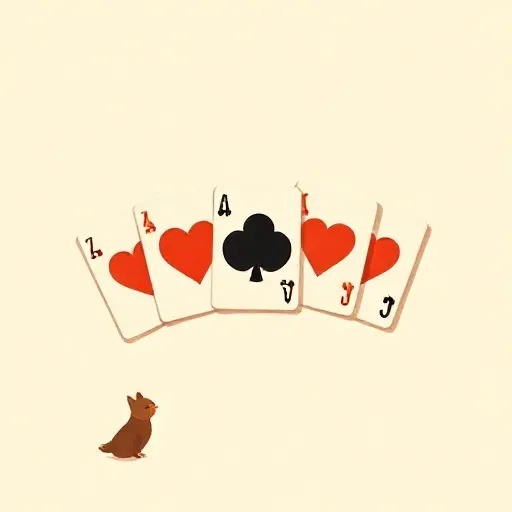
If data always arrives soaked in theory, a scary question appears. Could it be that our theories force us to see only what we already believe? In the 1960s, Thomas Kuhn (1922–1996) argued that scientists in different “paradigms” literally perceive different worlds. He pointed to a psychology experiment where people were briefly shown cards like a black four of hearts. At first, they reported seeing a normal red four of hearts. It took repeated tries for the anomaly to register. Kuhn thought scientific revolutions worked the same way: you can’t see the evidence for a new theory until you’ve already started to adopt it.
A real case from the 1870s seems to back Kuhn up. The physicist Arthur Worthington studied what happens when a drop of milk hits a hard surface. Using a strobe light and his own memory, he drew beautiful, symmetrical splash patterns. Years later, he photographed the same event and was shocked: the splashes were irregular, messy splats. He had been so convinced the physics should be symmetrical that he had unconsciously ignored the messy evidence—even when he had recorded it. His theory was dictating what he saw.
But there’s a crucial twist. Worthington did notice his mistake once he used cameras. Pettersson’s flashing screens were discredited by Chadwick’s clever test. Even Kuhn admitted that Priestley and Lavoisier, who disagreed totally on whether air contained “oxygen” or “dephlogisticated air,” still agreed on the same water levels in a gas-measuring tube. Paradigms don’t lock you in forever. You can catch your assumptions and correct them. Theory-ladenness isn’t an automatic doom; it’s a challenge you can work around.
Testing a Theory While Using It
Here’s another puzzle: sometimes scientists use the very theory they’re testing to design their experiment. Isn’t that circular? In the 1880s, Albert Michelson and Edward Morley built an ingenious device to measure how the Earth moved through the invisible “aether” that was supposed to fill space. The experiment is now famous for giving a null result—no aether effect was found—which shook physics. But to set up the experiment, the researchers had to assume something about whether the arms of the device would contract or not as they moved. Later, to save the aether theory, a new idea—Lorentz contraction—was invented, which required rethinking the very assumption the experiment had made.
Philosopher Allan Laymon showed that in this case, the assumption didn’t rig the outcome. The predicted result would have been the same whether contraction was true or false, given the precision of the measurements. And later versions of the experiment specifically tested the contraction idea while still assuming no contraction in the metal arms—and could have found evidence against it. So using a theory inside an experiment doesn’t always stack the deck. What matters is whether the design allows the world a genuine chance to say “no.”
Values Wear White Coats Too

It’s not just scientific theories that creep into evidence—values do too. Consider research on whether giving birth at home or in a hospital is safer for low-risk pregnancies. Studies that focus on infant mortality rates often find hospitals safer. But studies that also count high rates of C-sections and episiotomies as harms might paint a different picture. The choice of which outcomes count as “harms” is a value judgment, and it can tip the balance of the results. Feminist philosopher of science Kristen Intemann highlights this to show that values don’t just color the final opinion—they shape what evidence gets collected and how it’s described.
That doesn’t mean values always corrupt science. Elizabeth Anderson (born 1959) points out that the real danger is dogmatism—when a commitment, whether to a theory or a value, makes you unable to hear counterevidence. A biologist who assumes female macaque sexuality is only worth studying in relation to reproduction might wire up females with heart-rate monitors only when males are present, missing almost all female-female sexual interactions. That value-driven decision blinded her to important facts. But a different set of values—curiosity about female sexuality for its own sake—could reveal new phenomena. The goal isn’t to strip all values from science (which may be impossible) but to hold them lightly enough that evidence can still correct them.
Why This Matters When You Read the News

So where does this leave the tribunal of experience—the idea that nature can judge our theories? Contemporary philosophers of science have turned the old worry on its head. The fact that data is theory-laden isn’t a bug; it’s the feature that lets data speak to theories at all. A naked number in a lab notebook means nothing until you connect it to concepts like temperature or voltage. But because that connection is made with assumptions, we have to be honest about what those assumptions are. That’s why scientists now emphasize sharing raw data, code, and “metadata”—information about how the data was made and processed—so that future researchers can rewind the processing, spot bias, and repurpose evidence for new questions. Ancient Babylonian eclipse records, inscribed on clay tablets for astrological purposes, have been re-analyzed by modern geophysicists to study the slowing of Earth’s rotation across millennia. Evidence can travel across deep theoretical divides if we record how it was produced.
For you, this means science isn’t a magic mirror that reflects pure facts. It’s a human activity, building instruments and arguments that can be checked, criticized, and improved. When you encounter a bold scientific claim—on social media, in a classroom, or in a documentary—you can ask: What had to be assumed to get that result? Who might have expected something different, and why didn’t they see it? Theory-ladenness doesn’t make science pointless; it makes it a community effort of constant self-correction. That’s far more robust than a fantasy of perfectly neutral observers.
Think about it
- If a news article reports that a study found a new treatment is “safe,” what hidden value judgments might have shaped that label?
- Could two equally honest scientists working in different countries, with different cultures, ever look at the same data and reach completely different conclusions? Why might that be okay—or not?
- Imagine you are designing an experiment to test whether cats prefer wet or dry food. What background assumptions would you be making without even realizing it? How could you check if they are fair?