Can a White Horse Not Be a Horse?
A Strange Claim in the King’s Court
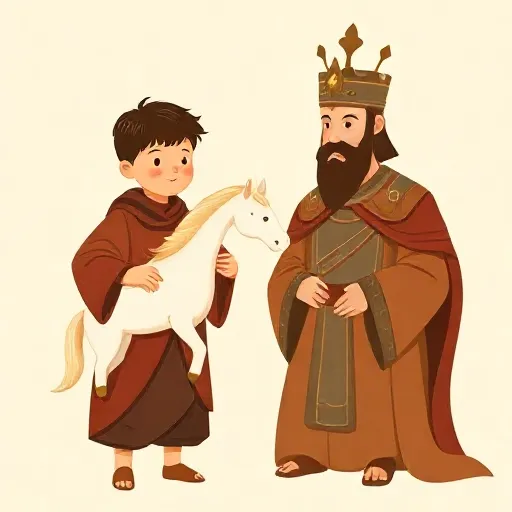
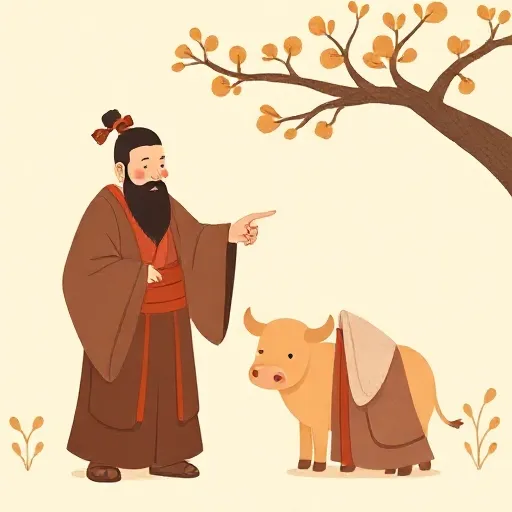
Imagine you’re standing in a royal court in China, sometime around 300 BCE. A man named Gongsun Long (c. 320–250 BCE) steps forward and announces calmly: “A white horse is not a horse.” The crowd chuckles. You can see a white horse right outside the window — of course it’s a horse! But Gongsun Long isn’t joking. He begins to argue, and soon you’re no longer sure what to think.
This was the world of the School of Names — a group of early Chinese thinkers who loved twisting words and ideas until everyday truths turned upside down. They were called disputers because they practiced bian, a kind of public debate or persuasion that often involved analogies and wordplay. Their enemies said they cared only about winning arguments, not about truth. But even their strangest riddles raised deep questions: How do words connect to the world? Can we ever be sure our way of sorting things is the “right” way?
Words as Tools and Weapons
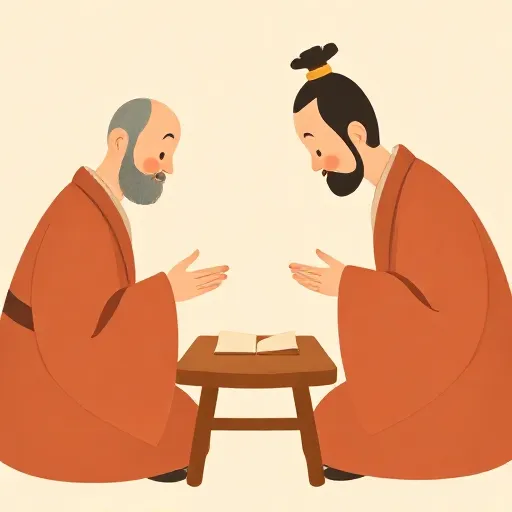
The disputers’ favorite activity, bian, grew partly out of lawsuits and court advice. In a legal argument, you might cite a precedent — “This case is like that one, so treat it the same.” The disputers turned this everyday reasoning into a sport. They competed to demonstrate that a statement everyone accepted was false — or that an absurd-sounding claim was true. Some, like Yin Wen (fl. 4th century BCE), used these skills to advise rulers on how to “correct names” and make government consistent. Others, like Deng Xi (d. 501 BCE), China’s earliest known lawyer, earned a reputation for making “both sides admissible” — defending either position in a dispute with equal cleverness.
To their critics, this was dangerous. The Annals of Lü Buwei complained that such debaters “don’t seek the facts” but only “strive to demolish each other, with victory as their sole purpose.” The Zhuangzi said they “can defeat others’ mouths, but cannot persuade their hearts.” And yet, beneath the gamesmanship lay a serious fascination with the machinery of language itself.
The Great Same-and-Different Game
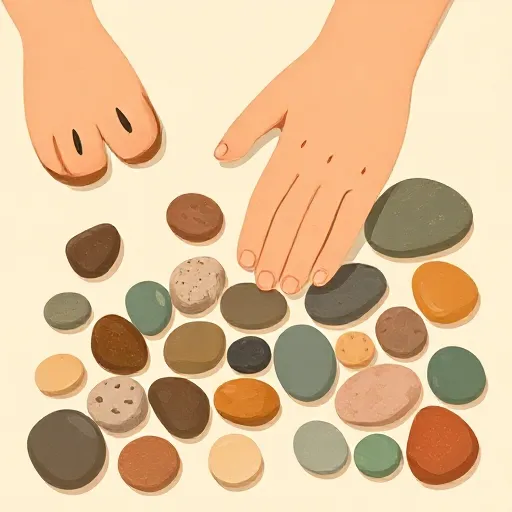
Two themes appear again and again in the disputers’ puzzles: same and different (tong yi), and hard and white (jian bai). Both are about how we group things — and whether those groupings are fixed by nature or just by our choices.
The same/different problem asks: When are two things “the same” kind of thing? A brown horse and a white horse are both horses — same kind, different color. But is a white horse the same as a brown horse in every way? What if we focus only on color? Then the white one belongs with clouds and snow, not with brown horses. You can shift the standard almost endlessly. By some measure, anything can be treated as the same as anything else, or as different. But if that’s true, what gives anyone the authority to say where the “real” boundaries lie?
The hard/white puzzle is trickier. Imagine a perfectly white stone that is also very hard. The hardness and the whiteness are completely mingled — you can’t peel the color off like a sticker. The Mohists called this “as hard to white”: two features that fill the same space and can’t be separated. But some disputers argued as if you could detach them — as if “white” were a separate item you could add to or subtract from the “horse shape.” This was “separating hard and white,” and it became a favorite move in word-sorcery.
Hui Shi and the World as One
The most mind-bending thinker in this group was Hui Shi (fl. 313 BCE). A text called “Under Heaven” records ten theses he defended, many of them dazzling paradoxes:
- The sky is as low as the earth; mountains are level with marshes.
- Just as the sun is at noon, it is setting.
- Today I go to Yue, but I arrived yesterday.
- The south has no limit — yet it has a limit.
How could anyone say such things? Hui Shi’s key idea was that distinctions are not built into the world; they depend on the perspective we choose. Compared to an infinitely enormous Great One — the whole cosmos added up into a single unit — the difference between a mountain and a swamp shrinks to nothing. From the viewpoint of an hour, noon and sunset are simultaneous. If space is infinite, “south” must be limitless, yet any direction needs a starting point. The same object or event can be “the same” or “different” depending on the scale you use.
His tenth thesis was the grandest: “Universally care for the myriad things. Heaven and earth are one unit.” Since all things can be seen as one huge body, Hui Shi thought our care should extend to everything, not just people. This was more radical than the Mohist ideal of loving all humans impartially — it meant caring for animals, plants, even rocks, because they are all parts of the same whole.
But the Zhuangzi’s writer had a sharp comeback. If you say “everything is one,” aren’t you already splitting the world into “one” and the statement that says so? “One and the saying make two; two and the one make three.” The very act of naming the One breaks it apart.
The White Horse That Wasn’t a Horse
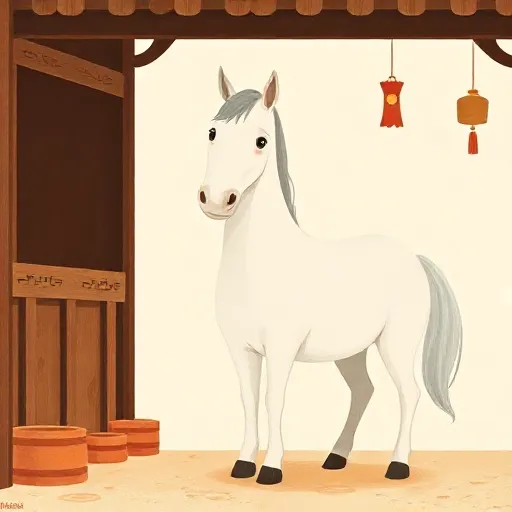
Gongsun Long became famous — or notorious — for proving over and over that “a white horse is not a horse.” His arguments, preserved in the short dialogue “White Horse Discourse,” pull apart everyday language with glee.
His first argument was simple but slippery. “Horse” names the shape, he said; “white” names the color. Naming the color is not the same as naming the shape. So “white horse” names something different from what “horse” names — therefore, a white horse is not a horse. (Notice the move: he’s treating the color and shape as if they were separate objects, a classic “separating hard and white” trick.)
His second argument: If someone asks for a horse, you can deliver a brown or black horse. If someone asks for a white horse, you cannot deliver a brown or black one. What can be “delivered” differs. If “white horse” and “horse” pick out exactly the same things, the rules should be the same. Since they aren’t, white horse must not equal horse.
Underneath the fun, Gongsun Long was playing on an ambiguity. In classical Chinese, the sentence “White horse is horse” can mean “White horses are members of the horse kind” (true) or “The kind white horse is identical to the kind horse” (false). By smuggling in the identity reading, he could “prove” the absurd claim. But the puzzle exposes a genuine knot: when we combine names into phrases like “white horse,” does the new phrase work the same as the simple name “horse”? The Mohists had already noticed that adding a color word narrows the group you’re talking about. Gongsun Long turned this observation into a performance that made people doubt their own ears.
Why Word Games Still Matter
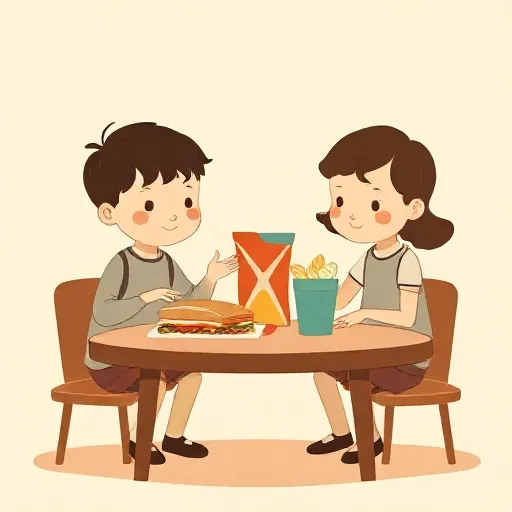
You don’t need a royal court to stumble into these problems. Think about a debate you might have with friends: Is a hot dog a sandwich? Is a video game a sport? Is a robot an animal? Every time you fight over how to label something, you’re replaying the same-and-different game. The disputers’ arguments show that our categories are often softer than we imagine. We decide, by convention and habit, what counts as “the same.” That doesn’t make the decisions meaningless — but it does mean they could have been different.
The critics were right that hair-splitting won’t teach you how to be a good person or run a state. Xunzi scolded that the disputers had “no regard for the facts about right and wrong.” The Zhuangzi suggested we’d be better off adapting to each situation instead of searching for fixed, absolute distinctions. And yet, without the troublemakers who ask “What do you mean by ‘horse’?” or “What exactly makes two things the same?”, we might never notice how much work our words are doing — or how they could be rearranged.
Next time you’re in an argument where someone says “that’s not real art” or “that doesn’t count as lying,” you’re standing where Gongsun Long and Hui Shi once stood. The question isn’t just who wins the debate — it’s what our words commit us to, and whether we’re willing to reconsider.
Think about it
- If a friend insisted that a hot dog is not a sandwich because “a sandwich requires two separate slices of bread,” how would you try to convince them otherwise? What standard would you use to decide what counts as a sandwich?
- Imagine you could rename one everyday object and everyone would accept the new name. What would you change, and what might go wrong with the old way of talking about it?
- Hui Shi thought that from a distant enough viewpoint, mountains and marshes are level. Can you think of a disagreement in your own life that would look pointless or different from a much bigger perspective? Does that perspective make one side right, or just make the whole argument seem less important?