
What If Laws, Not People, Ruled the Kingdom?
A Kingdom on the Edge of Collapse
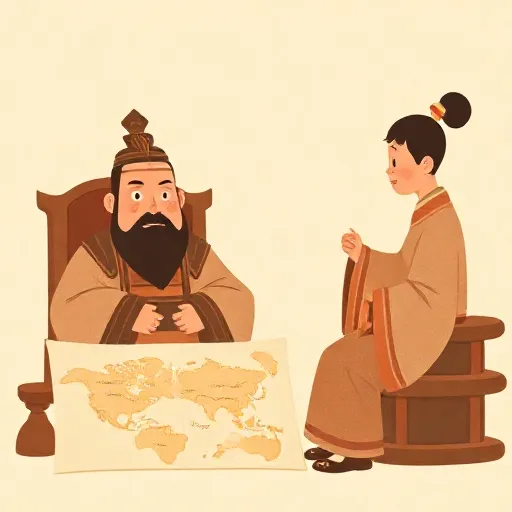
In the fourth century BCE, China was not one country but many small states locked in endless war. A ruler of the state of Qin, terrified that his kingdom might be swallowed up, listened to a man named Shang Yang (d. 338 BCE). What Shang Yang said was shocking. He did not talk about imitating the ancient sage kings or nurturing a kind heart. Instead he told the ruler that to survive you need a rich state and a powerful army — and you cannot get them by hoping for good people. You must build a system where clear rules, not personal feelings, run everything. That idea launched the fa tradition (often called Legalism in English). The word fa can mean law, standard, or model, like a carpenter’s square. Fa thinkers wanted to replace guesswork with something measurable, the way a square makes sure every cut is straight.
Why We Can’t Just Copy the Past

Fa thinkers like Shang Yang, Shen Buhai (d. 337 BCE), Shen Dao (4th c. BCE), and the brilliant writer Han Fei (d. 233 BCE) thought most people were stuck in the wrong debate. Their rivals — followers of Confucius or Mozi — kept arguing about which version of the past was the right model. But Han Fei pointed out that we cannot even agree on what the ancient kings really did, so how can we copy them? Worse, the world had changed so much that old tricks no longer applied. In far-off times, Han Fei explained, there were few people and plenty of food, so nobody fought. Now, with huge populations and scarce goods, everyone scrambles for resources. When people are “knowledgeable” and crafty, moral preaching is a waste of breath. The only reliable force is coercion.
Behind this view lay a cold-eyed picture of human nature. Fa thinkers did not waste time debating whether humans are born good or bad. They simply observed that almost everyone follows their own self‑interest. Ordinary people want riches and reputation; officials want more power. That was not a problem to be fixed — it was a tool. Because people run toward benefit and away from harm, a clever ruler can use rewards and punishments like steering ropes. The trick is to make sure the only way anyone gets what they want is by doing exactly what the state needs.
The Blueprint: A Rich State and a Strong Army
Shang Yang’s master plan was brutally simple. The state needed only two things from its people: farming and fighting — what he called “the One.” If the fields are full, the army can eat. If the army is strong, no enemy can destroy you. But tilling dirt is backbreaking and charging into battle is terrifying. So Shang Yang invented the ranks of merit, a ladder that turned everyone’s selfishness toward the state’s goals. Every soldier who brought back an enemy head could earn noble rank, land, and legal privileges. A farmer who produced extra grain could also buy rank. Critically, there was no other path to wealth or honor — not trade, not study, not inheritance. The whole society became a giant machine where you climbed only by serving the government.
Punishments were just as tightly engineered. Even small crimes brought harsh beatings or mutilation, and families were forced to spy on each other and report any wrongdoing. Yet Shang Yang insisted the real goal was to make punishments unnecessary. Once everyone knows the law is swift and impossible to escape, they stop breaking it. The law itself had to be transparent: written down and proclaimed so that even the lowest servant understood it. And it had to be impartial — no special treatment for a lord’s favorite nephew. The idea was that a country ruled by clear standards, not whim, would eventually run so smoothly that the ruler could almost sit back and watch.
The Ruler’s Secret Toolbox
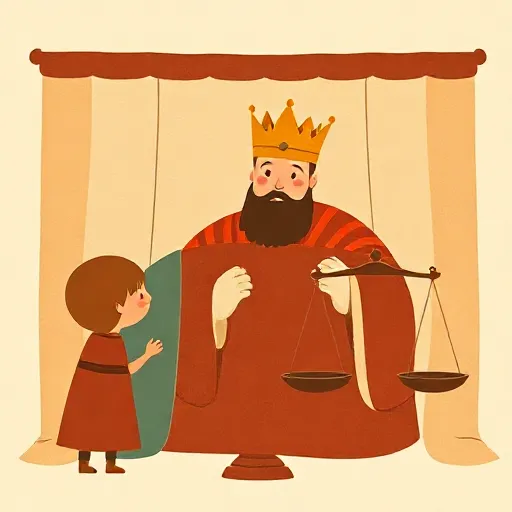
Fa thinkers did not believe in superhero kings. Most real rulers, they admitted, were mediocre. But that was okay because the throne itself gives shi — positional power. A commander does not need to be the smartest person in the army; the chain of command gives his orders force. The problem was that the greatest danger always came from inside the palace. Han Fei warned that every minister is a potential enemy; officials hide their selfish plans behind smooth words and would happily grab the ruler’s power if they could. Therefore the ruler needed a private set of tricks called shu, techniques of rule.
One core technique was xingming, “performance and titles.” A minister must make a clear promise about what he will achieve. Later, his actual results are matched against that promise. If they don’t match, he is punished, no excuses. This kept everyone honest. But Han Fei went further. He advised the ruler to keep his own thoughts secret, sometimes to say the opposite of what he meant, so that no one could figure out how to please him falsely. The ruler should never show what he likes or dislikes — that would only help schemers. At the same time, the ruler was told to do almost nothing himself. Let the ministers exhaust their brains solving problems; the sovereign simply collects the credit when things go well and blames them when they fail. The result was a strange picture: a figure who is all‑powerful yet almost a ghost in his own government, caught between god‑like authority and the terror of being outwitted.
No More “Poems and Documents”
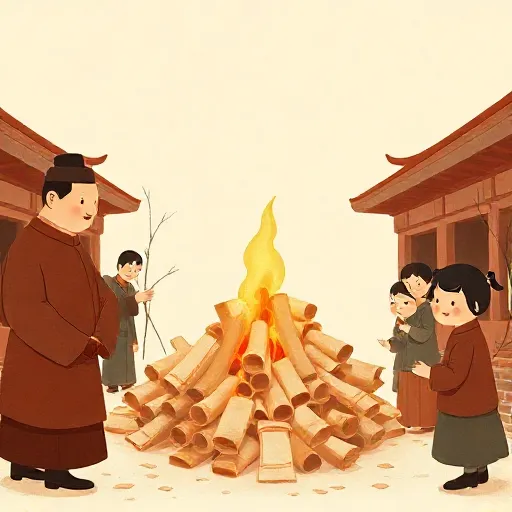
Shang Yang and Han Fei had a deep dislike for scholars who wandered from court to court selling moral slogans. They called traditional virtues like benevolence and righteousness “lice” that weaken the state. Their worry was not that being kind is evil, but that if a clever talker could gain rank by memorizing old poems or debating ethics, ordinary people would stop sweating in the fields and chasing enemy heads. In their ideal world, there would be no private study at all. Han Fei imagined a state where “there are no texts written on bamboo strips, but the law is the teaching; there are no discourses of the former kings, but officials are the teachers.”
This terrifying vision was put into real‑world policy by Li Si (d. 208 BCE), a former classmate of Han Fei and the chief minister of the Qin Empire. In 213 BCE, after heated debates at court, Li Si ordered the burning of many privately owned books — especially the classic poems and histories that rival scholars used to criticize the government. He repeated Han Fei’s command: if you want to learn the rules, study with an official. The book‑burning outraged educated people for centuries and made the fa tradition one of the most hated philosophies in Chinese history. But it was never really about hating knowledge — it was about insisting that the state must control every pathway to success.
Why We Still Argue About Fa Today
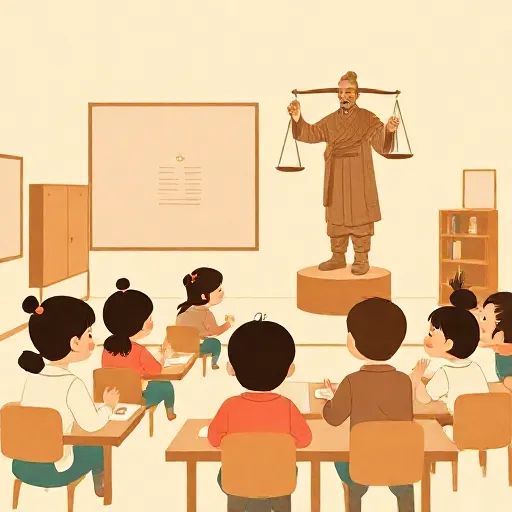
After the Qin dynasty collapsed, the fa tradition faded from open admiration, yet its questions never went away. Should we measure people by clear, impersonal standards — test scores, production numbers, concrete results — or should we weigh personal character and wisdom? Does a strong society need a single, all‑powerful authority, or does that always end up crushing those it is supposed to protect? When you want to stop cheating in a video game, you might wish for a system that catches every offence immediately, just as Shang Yang wanted. But you also know that living under constant surveillance feels unfair.
The fa thinkers took a daring bet: that human selfishness, if channeled by clever institutions, could produce order without requiring everyone to become a saint. They showed that a state built on carrots and sticks can be terrifyingly effective. But they also revealed the cruelty that comes when people are treated only as tools for national power. Their experiment leaves you with a question that still has no final answer: would you rather live in a society governed by open, unbreakable rules that treat everyone the same — or one led by rulers who try to be wise and kind, even if that means they sometimes play favourites?
Think about it
- If your school gave every student a grade based only on a single test, with no extra credit for being a good person or thinking creatively, would that be fairer or less fair?
- Can you imagine a government where the leader has almost no personal say and just follows a rule book? What might go right and what might go wrong?
- If you knew that the state would reward you with money and status only for one specific job (like farming or soldiering), would you still try to become a musician or writer even if it was illegal?