When Is It Right to Overthrow the Government?
A Tax on Tea, and the Question of Revolution
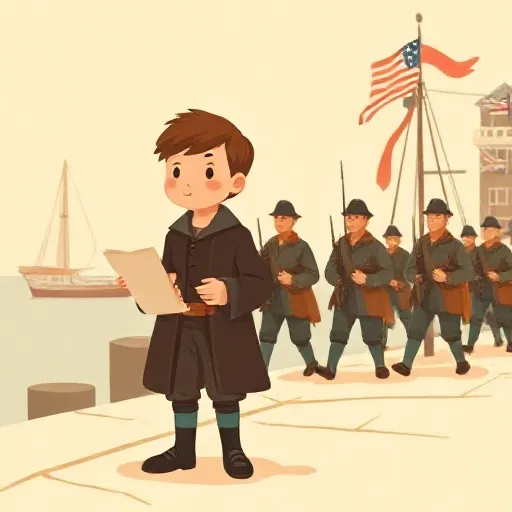
It is 1773. You live in Boston, a city ruled by a king across the ocean. The king’s soldiers demand taxes, but you have no vote. When you protest, you are punished. Some neighbors whisper, “We must fight back and create our own government.” Others warn, “Rebellion will bring chaos and bloodshed.” What do you do?
This is the question of revolution — using force outside the normal legal rules to destroy an existing government and replace it with a new one. Revolution is not the same as rebellion, which throws off a government’s authority without always aiming to build a replacement. It also differs from secession, where a group breaks away from a country to form a new, separate state. Most revolutions become violent and can turn into large‑scale civil wars.
Philosophers have disagreed sharply about whether revolution can ever be morally justified. The debate stretches from 17th‑century Europe to the present day, and it still shapes how we think about resisting injustice.
Kant’s Domino Theory and Locke’s Broken Trust
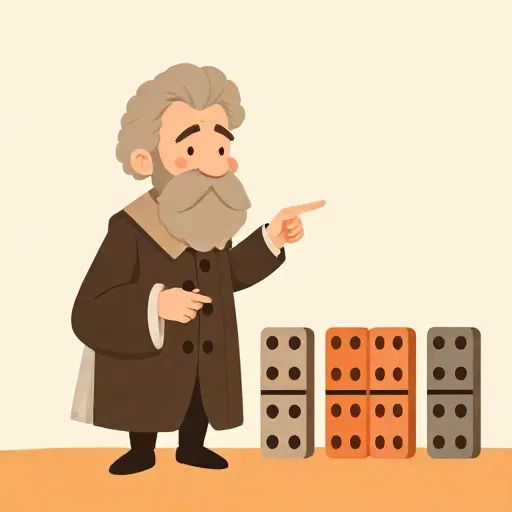
The German thinker Immanuel Kant (1724–1804) argued that revolution is never justified. He believed that rights can only exist when there is a fair, impartial judge to enforce them. Without government, each person would try to enforce their own idea of what is right, and that would be chaos. For Kant, destroying the state is like burning down the only courthouse because you disagree with a judge — after that, nobody’s rights can be protected. Therefore, even a deeply abusive government must be obeyed.
The English philosopher John Locke (1632–1704) took the opposite view. He argued that government is like a trustee hired to protect people’s natural rights to life, liberty, and property. If the government instead attacks those rights, it breaks the trust. The people can then take back the power to defend themselves, just as you would fire a security guard who is stealing from your home. This is the Self‑Defense Argument for revolution. Locke thought the risks of chaos were lower than Kant feared, because society’s habits and relationships could hold things together while a new government was formed.
An earlier thinker, Thomas Hobbes (1588–1679), had been even stricter: he said you can resist only when your life is in immediate danger, and otherwise you must obey to avoid anarchy. Locke’s more hopeful view became hugely influential, but Kant’s worry — that revolution may cause more suffering than it cures — never disappeared.
Just War Rules: When Can You Start a Revolution?
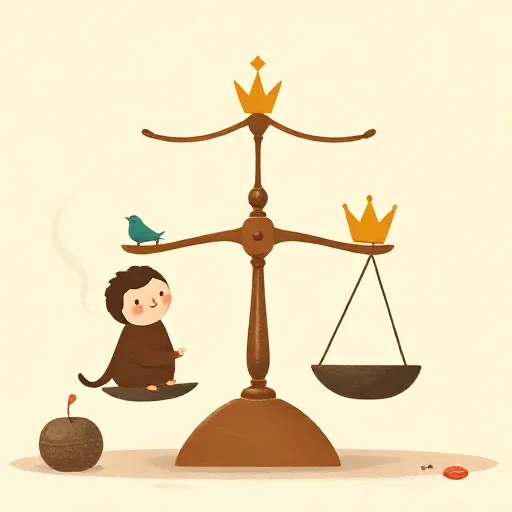
Many philosophers today examine revolution through the lens of just war theory — a set of moral rules about when and how it is permissible to fight. For starting a war (the jus ad bellum rules), three criteria are especially challenging for revolutionaries.
First, you need a just cause. The clearest case is a Resolute Severe Tyranny: a regime that persistently violates basic human rights — such as freedom from torture, arbitrary killings, or starvation — and blocks all peaceful ways to change it. No serious thinker says it is right to overthrow a decent government that respects rights.
Second, the good you hope to achieve must be proportionate to the death and destruction the war will cause. This is hard because revolutionary wars are often extremely bloody, especially in what some scholars call Hobbesian contexts — places where society is shattered and there are no organizations or clubs to help rebels organize peacefully. The American Revolution took place in a Lockean context, with colonial legislatures that gave leaders practice at cooperation, so it was less chaotic. The early Russian Revolution, by contrast, had little of that structure and quickly spiraled into mass violence.
Third, you face the problem of rightful authority. Who gets to lead the fight? In a tyranny, there are no elections to choose rebel leaders. A small group usually claims to speak for the people, but it is hard to know if they truly represent anyone. This worry is especially sharp when rival rebel groups fight each other for power.
Hidden Weapons and Human Shields: The Dirty Fight
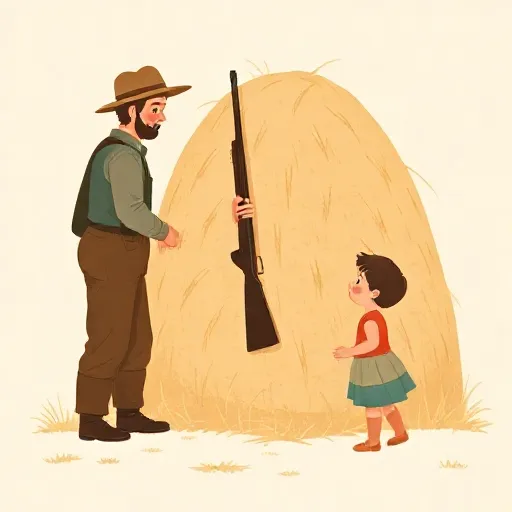
Even if a revolution is just, the way it is fought matters. Just war theory also includes jus in bello rules for conduct during war. The most important is discrimination: you must target only combatants, not non‑combatants — ordinary civilians who are not fighting. This is called non‑combatant immunity. But revolutionaries often use “irregular” tactics that put civilians at risk.
One tactic is civilian camouflage: fighters dress like civilians when not in combat, simply to avoid being captured or killed before a battle. A more troubling form is civilian disguise: fighters pretend to be civilians during an attack, making it nearly impossible for the government army to tell friend from foe. Then there is the use of human shields — placing military equipment near homes or schools so the enemy is afraid to strike — and direct targeting of civilians to spread terror.
Most philosophers say these tactics are wrong because they strip away protection from innocent people. Some, however, argue that revolutionaries are so outmatched that a little camouflage can be fair, as long it only helps them retreat safely and does not trick the enemy in combat. A few even suggest that civilians who actively help an oppressive regime — for instance, a farmer who supplies the secret police — might lose some of their immunity. Yet nearly all agree that deliberately killing random civilians is never acceptable except possibly in a “supreme emergency” where the alternative is a moral catastrophe like genocide, and even then it is deeply dangerous.
Why the Debate Matters Today

You may never face a revolution, but the question of when it is right to resist an unjust government touches real life. In many countries, people still struggle against brutal rulers and ask themselves whether violence can ever be the answer.
The debate is not settled. What makes it so difficult is that the right answer depends heavily on facts: how bad the tyranny is, how organized the rebels are, and what kind of society will emerge afterward. For that reason, moral philosophers are now teaming up with social scientists to study the actual results of revolutions in different settings. Without that knowledge, grand theories of revolution remain incomplete.
So the next time you learn about a protest or a rebellion in the news, remember the puzzles of Kant and Locke, and the tricky rules of just war. Deciding to tear down a government is one of the most serious choices any people can make — and even the brightest thinkers still cannot agree on a simple yes or no.
Think about it
- If a government began arresting peaceful protesters and taking away free speech, at what point — if ever — would using violence to resist be right? What would you need to find out before making that call?
- A rebel group fighting a dictator places their ammunition store next to a school, hoping the army will not bomb it. Is that ever fair? Why or why not?
- A foreign country sees a just revolution happening. Should it send weapons or soldiers to help? What might go wrong?