

Why Should You Do What the Government Tells You?
The cop, the king, and the question

Imagine you’re biking home when a police officer pulls you over for riding on the wrong side of the street. She points to a law you didn’t know existed and writes you a ticket. You feel a flash of annoyance. You never voted for that law. You never promised to follow it. So why should you have to obey?
That feeling is the start of one of philosophy’s biggest questions about politics: what makes a government legitimate? Political legitimacy is the quality that turns a command backed by a threat — “do this or you’ll be fined” — into a rule you truly ought to follow. Without it, a state is just a very powerful bully. With it, the state has the right to rule, and you might even have a political obligation to obey.
Philosophers have wrestled with this problem for centuries. They don’t agree on an answer, but they have given us sharp tools to think about power, fairness, and why we follow rules at all.
A belief that makes a country run

If you ask people why they obey the government, you’ll hear many answers: “it’s always been that way,” “the president is inspiring,” or “the laws are reasonable.” The sociologist Max Weber (1864–1920) noticed that these answers fall into three big buckets. People have faith in a government because of tradition (it’s old), charisma (the leader is magnetic), or legality (the system follows its own rational rules). Weber called this a descriptive account of legitimacy: it simply describes what people believe, without saying whether those beliefs are right.
Weber’s insight is useful. A regime that people genuinely believe in will be more stable than one held together only by fear. But a descriptive story leaves something out. Imagine a tyrant whom everyone worships out of brainwashing. On Weber’s view, that tyrant’s rule is legitimate — because people accept it. Yet most of us feel there’s a difference between being believed to have the right to rule and actually having that right. That’s where a normative concept of legitimacy comes in: it’s not about what people happen to believe, but about what makes power morally justified.
Locke’s dare: you never signed a contract

John Locke (1632–1704) gave the most famous answer to the normative question: you can only be subject to a government’s authority if you’ve consented. He imagined life before any government — a state of nature where everyone is equally free, governed only by natural law. The problem? Natural law is vague, and nobody can enforce it reliably. So people agree, by a social contract, to transfer their natural authority to a civil state that can protect their rights.
Locke insisted that “no one can be put out of this estate and subjected to the political power of another without his own consent”. That consent can be express (you say “I agree” out loud) or tacit (you show it by living peacefully in a society and enjoying its benefits). For Locke, if you did consent — originally or by staying — you are bound to obey. If the state then violates natural law itself, it loses its legitimacy, and the duty to obey evaporates.
But here’s the dagger: David Hume (1711–1776) and many critics after him pointed out that almost no real government was founded on actual consent. Most states began with conquest or violence. And today, nobody sits you down to sign a social contract. Tacit consent seems stretched — if staying in your home country counts as agreeing, you hardly have a free choice. If legitimacy requires actual consent, it looks like no government in history has ever been legitimate.
If not consent, then what?

If Locke’s consent is too demanding, what else could make a state legitimate? One powerful alternative comes from Immanuel Kant (1724–1804). Kant didn’t think we need to find an actual contract in the history books. Instead, he proposed a test: a law is legitimate if all individuals could have consented to it. This is hypothetical consent — it’s not about what you said, but about what no reasonable person could reject.
Kant’s idea grew into a family of theories known as public reason. John Rawls (1921–2002) gave it a crisp form in the 20th century. He argued that political power is legitimate only when it is exercised according to a constitution whose essentials all citizens, as reasonable and rational, can endorse. The catch is that this standard only applies to the most basic rules — what Rawls called “constitutional essentials” and basic justice — not to every single traffic law. So a state can be legitimate even if some of its laws are unpopular, as long as the overall framework rests on reasons everyone can share.
Another path altogether was taken by Jeremy Bentham (1748–1832) and John Stuart Mill (1806–1873). They tied legitimacy not to consent but to consequences. For Bentham, a law is justified if it promotes the greatest happiness of the citizens. Mill added that protecting individual liberty is itself crucial for human flourishing, and that democratic debate helps society find the best outcomes. Their utilitarian approach says: obey because, on the whole, the system makes your life better. Critics worry, though, that this could justify crushing a minority as long as the majority benefits — a result many find unacceptable.
Is it fair if you had no say?
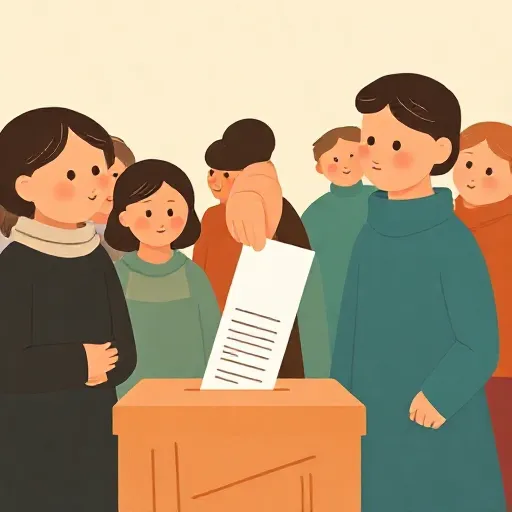
Jean-Jacques Rousseau (1712–1778) offered a third vision, one that still shapes how we think about democracy. He was deeply suspicious of consent that you never actively give. For Rousseau, you are truly free only when you obey laws you have helped to create. The key is political participation: if all citizens join in forming the “general will” — the shared vision of the common good — then each person, in obeying the law, is really obeying themselves.
This turns legitimacy into a question of process. Many contemporary philosophers agree that democracy has unique legitimacy because it publicly treats every citizen as a political equal. When you vote, deliberate, or even protest, you take part in the ongoing justification of the rules. Even when you lose a vote, you can recognize the outcome as binding because the procedure itself was fair. Procedural legitimacy of this kind doesn’t guarantee that the result will be just — a democratic majority can still pass an unfair law. But many believe the process gives you a reason to obey that a dictator’s command can never offer.
Notice something important here: legitimacy and justice are not the same thing. Rawls made this distinction sharp. A political system can be fully legitimate — it respects the right procedures and basic rights — yet still be unjust in some ways. The opposite isn’t true: a perfectly just system would automatically be legitimate. This means you can criticize a law as seriously unfair while still acknowledging that the government has the right to enforce it. That’s a tense but useful space: it lets you push for change without rejecting the whole system.
Why it still matters: the rule you never agreed to

Back to that ticket. You didn’t sign up for the traffic code. Yet you probably sense that a country with no rules at all would be worse — no safe streets, no enforcement of promises. The real question is which rules you should accept and why. The centuries-old debate about political legitimacy gives you a mental toolkit.
When a school announces a dress code you find silly, you can ask: did anyone who has to follow the rule have a voice in making it? That’s the Rousseau-style test. When a new environmental law limits what your family can do, you can ask: could everyone reasonably accept this if they thought about it impartially? That’s the Kantian test. And when you feel a law is deeply unjust, you can draw on Locke’s idea that a government that consistently tramples fundamental rights may lose its legitimacy entirely — though that’s a last resort.
The same questions now reach beyond national borders. Global bodies make rules about trade, health, and climate that affect your life, yet you never voted for them. Philosophers today debate whether these institutions need their own kind of legitimacy, perhaps through better democratic accountability or stronger protection of basic rights. The puzzle you first met on your bike now spans the planet.
Legitimacy isn’t an abstract game. It’s the quiet framework that lets you criticize power without trying to smash it, and that allows millions of strangers to live together under rules they didn’t personally author. Getting clear about it is part of growing into a thoughtful citizen — one who knows the difference between a command and a reason.
Think about it
- Imagine your town passes a curfew for everyone under 16. No young person was asked for an opinion. Could the law still be legitimate? What would need to be true for you to accept it?
- If a government is elected fairly but passes a law that harms a small group of people, is that law legitimate? Should the harmed group still obey?
- Suppose a global organization makes a rule that limits how much plastic your country can produce, and your country’s leaders disagree. Where would you look for the rule’s legitimacy — in the process, the outcome, or something else?