Does Memory Make You the Same Person Over Time?
The General Who Remembered Too Much — and Not Enough
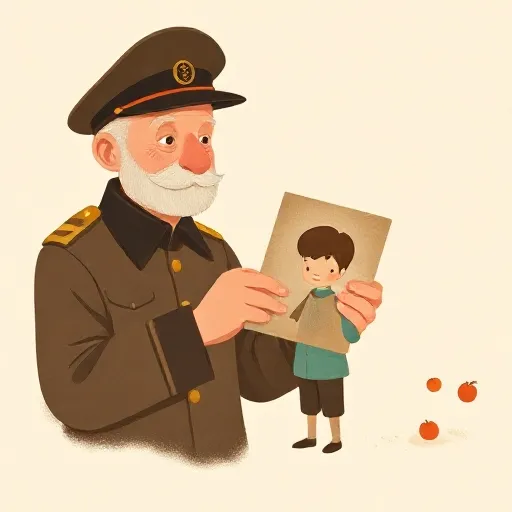
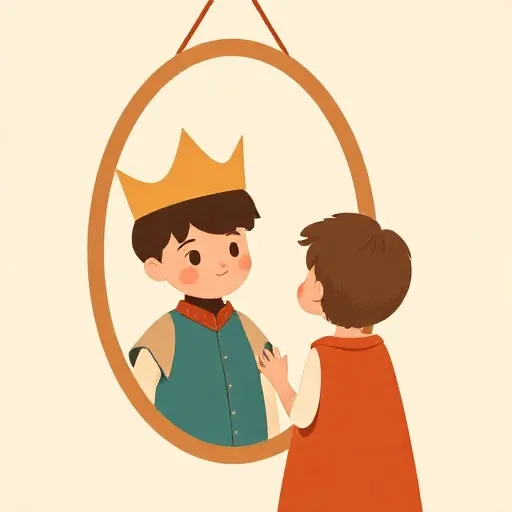
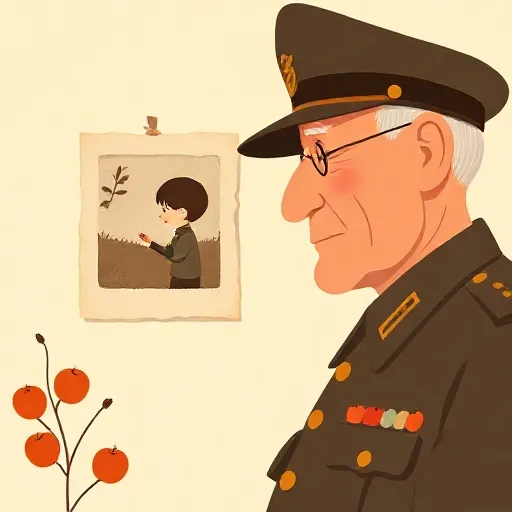
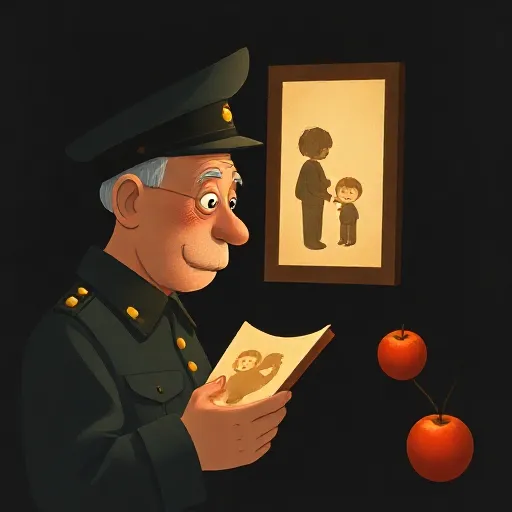
Imagine an old general looking back on his life. As a boy he stole apples from an orchard and was beaten for it. As a young officer he captured an enemy flag in battle. Now, as a decorated general, he can still picture himself seizing the flag. He also remembers that, when he was an officer, he could still recall the apple‑stealing and the beating. But today the general has completely forgotten that childhood punishment.
Are the general and the apple‑stealing boy the same person? You probably want to say yes. But in the 1600s, the English philosopher John Locke (1632–1704) offered a powerful rule: what makes you the same person over time is your consciousness — your ability to remember your past experiences. If you can remember doing something, then you are the identical person who did it. So the general’s memory of the flag gives him identity with the young officer. The young officer’s memory of the beating gives him identity with the boy. By a basic law — if A equals B and B equals C, then A equals C — the general should be identical to the boy. But the general has no memory of being beaten. According to Locke’s rule, he cannot be the same person as the boy. We end up with a contradiction.
The Scottish philosopher Thomas Reid (1710–1796) used this story to shake up our thinking about memory and the self. He believed that Locke’s rule — and the hidden model of the mind behind it — led straight into this paradox. Reid spent decades arguing for a different picture, one where memory reaches directly to real past events, and where you are not a pile of memories but something much simpler.
The Storehouse of Ideas: Why Reid Said It Doesn’t Work
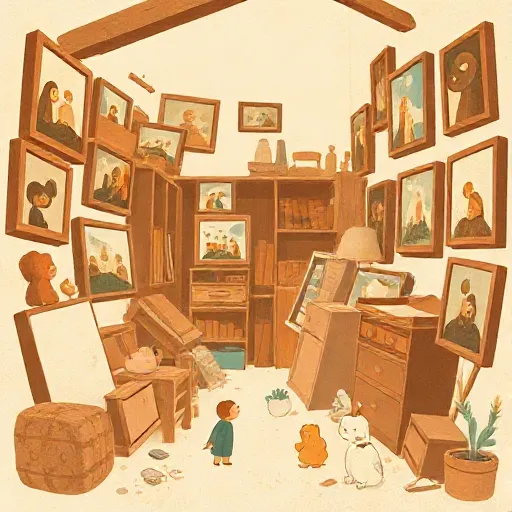
To understand Reid’s fight with Locke, we need to see the old model they were both wrestling with. For centuries, many thinkers imagined the mind as a kind of storehouse. When you see a tree, your eye leaves an impression on the brain, and this creates a mental picture — an idea — that gets filed away like a photograph. Remembering means pulling that stored picture back out. On this storehouse model, memory and imagination are basically the same: memory is a faithful copy; imagination is a blurry or rearranged one.
Locke used this storehouse metaphor, but he noticed a problem. Ideas, he said, exist only while you are thinking them. They cannot survive in a mental drawer when no one is looking. So Locke admitted the metaphor was just a metaphor — but he still talked about the mind “painting ideas anew” when you remember. Reid pounced. How can the mind paint an idea anew unless it already has a model to copy? You would need to remember the original idea to repaint it. The explanation assumes the very thing it is supposed to explain.
Reid had another sharp criticism. The storehouse model says that the immediate objects of memory are mental pictures, not the outside events themselves. But those pictures are present now. Nothing inside a present idea wears a tag that says “I happened six years ago.” If all you ever had were present mental images, you could never truly think about the past. Reid compared this to the difference between striking your head hard against a wall and touching it lightly. The light touch is weaker and less lively, but that does not make it a memory of the hard blow. Strength and liveliness — which Locke and David Hume (1711–1776) sometimes used to separate memory from imagination — cannot capture the deep sense of pastness that real memories carry.
Memory as a Direct Connection to the Past
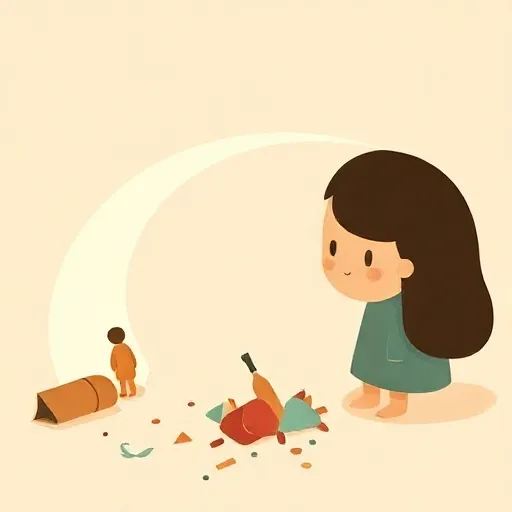
If memory isn’t stored pictures, what is it? Reid’s answer is now called direct realism about memory. The “direct” means memory connects you to the event you once saw or heard — not to a copy of it inside your head. The “realism” means the event was a real part of the world.
Reid noticed that there are two kinds of remembering. One kind is semantic memory: knowing facts, like “Napoleon was defeated at Waterloo.” You can report this with a “that” clause — you remember that something happened. The other kind is episodic memory: remembering a lived experience, like your tenth birthday party. This kind requires that you were actually there. Reid called that the Previous Awareness Condition: you can have an episodic memory of an event only if you were a witness or participant in it. He cared most about episodic memory because it is tied to your own history.
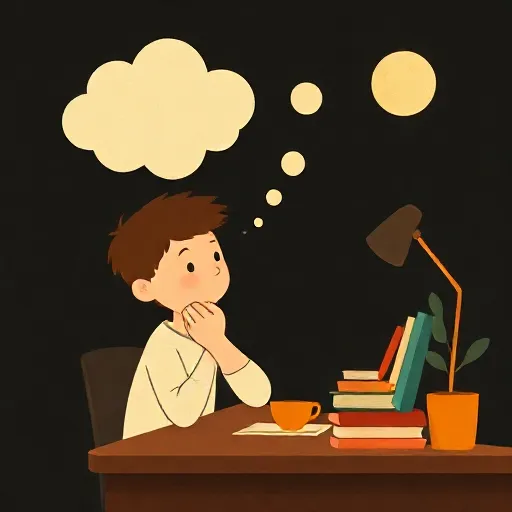
On Reid’s view, an episodic memory is made of two ingredients. First, a conception of the past event — a way of thinking about that very event. Second, a belief that it happened to me. The belief is part of the memory itself, not a separate thought you add later. When you remember your birthday party, your memory already contains the conviction that you were there. For Reid, that belief gives memories their special power: they tell you, immediately and without any reasoning, that you witnessed that past event. You don’t look at a mental picture and guess that it shows the party you attended; the memory just is your grip on the past.
This direct‑realist picture avoids the circularity Reid saw in Locke. You never need to store an idea and later compare it. Instead, your past perception of the party simply continues, preserved by conception and belief. Memory keeps you in touch with the same event you originally perceived — not with a fading copy.
When Memory Isn’t What Makes You You
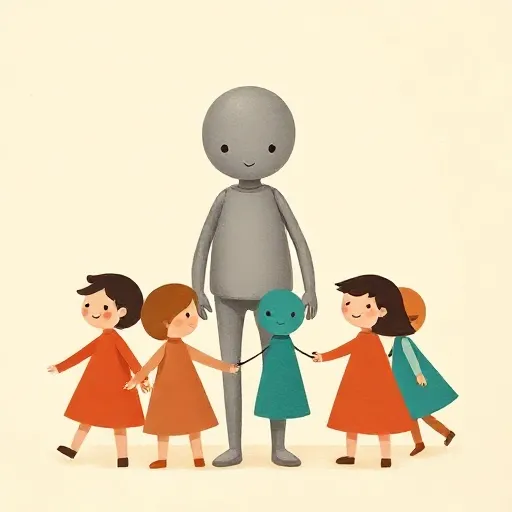
Reid’s critique of Locke went beyond the storehouse model. He attacked the very idea that memory is the metaphysical glue that holds a person together over time. His most famous weapon was the story of the brave officer we met at the start. If memory were the strict rule of identity, the general would be forced to be both identical to the boy (because his memory connects through the officer) and not identical to the boy (because he forgot the beating). This contradiction, Reid argued, shows that a memory‑based theory collapses.
Reid offered other reasons too. Memory cannot be necessary for personal identity, because you have surely done things you no longer remember. Reid wrote that he knew who nursed him as a baby even though he had no memory of it. And memory cannot be sufficient for identity, because memories flash in and out of existence — they are fleeting mental events. But identity demands a continuous, unbroken existence. A thing cannot have two separate beginnings. If the self were just a chain of remembered moments, its unity would vanish every time you fell asleep.
Behind all this was a deeper disagreement about what a self is. Locke held that the self is not a hidden substance but a stream of consciousness. Reid thought the self is an immaterial, indivisible substance — something that has thoughts but is not made of them. The self endures while thoughts come and go. If you tried to explain identity in terms of memories, you would be trying to build something permanent out of things that cannot last. Reid believed this was like trying to build a house out of smoke.
You Are Not a Bundle of Thoughts
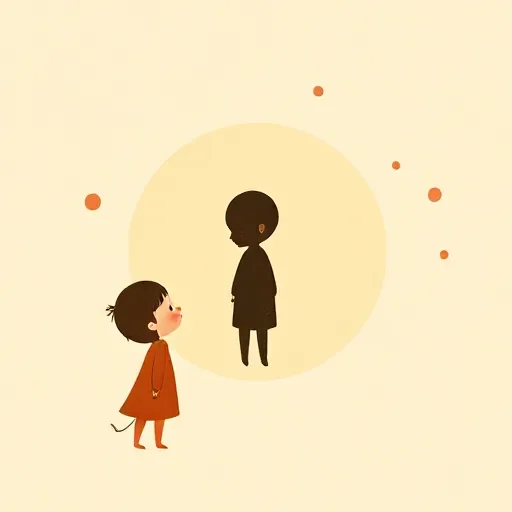
So if memory doesn’t make you who you are, what does? Reid’s answer is radical: personal identity is simple and unanalyzable. You cannot break it down into smaller parts — not into memories, not into bodily continuity, not into anything else. The self is a whole, seamless thing. Reid compared it to a Leibnizian monad, a single substance with no parts that can be taken apart. Because it has no pieces, it doesn’t need to be glued together by memory.
This isn’t a defeat for Reid — he isn’t saying “we can’t know.” He is saying that identity itself just is the continued existence of a simple substance. Memories are evidence, not ingredients. When you remember your first day of school, the remembering does not make you the person who walked into that classroom. Rather, your memory testifies, directly and with certainty, that you were there. For Reid, first‑person memory reports are immediate evidence — they don’t rest on an argument or a similarity check. If your memory is a genuine episodic memory, it cannot falsely tell you that you were present. You just know by being the one who remembers.
This also explains why evidence about your own past feels different from evidence about other people. You know you were at your own wedding because you remember it. You know your friend was at your wedding because he looks like the person in the photos. Reid thought this difference was crucial: your own past is known directly; other people’s pasts are known indirectly. But neither kind of evidence brings a person into existence — it only reveals what is already there.
What This Means for You: Are You Still the Person Who Ate Breakfast?
This may seem like an old‑fashioned argument among long‑gone thinkers. But the questions they fought about are alive whenever you wonder who you really are. If you forget what you ate for breakfast, are you a different person than the one who ate it? Reid would say no — identity survives forgotten lunches and lost childhood memories. You are not a collection of snapshots; you are the single, continuing thing that collected them.
The debate matters for responsibility, too. If your past self made a promise, are you bound by it? Reid’s answer was clear: yes, because you are the same substantial self. You cannot blame your past actions on a “different you” just because the memory faded. On the other side, if identity really were only memory, then deep forgetting could seem to cut you loose from your own history — a thought unsettling enough to make any of us uneasy.
Today, philosophers still wrestle with the very puzzles Reid raised. Can science ever reduce the self to brain patterns? Would uploading your memories into a machine make that machine you? The storehouse model of memory has crumbled, but the mystery of what holds a person together across time remains. Reid’s direct realism and his simple, unanalyzable self are still live options in the debate. And the brave officer still stands guard, asking us whether we are really made of what we remember.
Think about it
- If you forgot everything about your life before today, would you still be the same person? Why or why not?
- Suppose a perfect copy of all your memories was placed into a clone. Would the clone be you, or just someone with your memories?
- If you made a promise yesterday but today you remember it only dimly, are you the same person who made it? Does the strength of your memory change your responsibility?