Is Remembering Like Time Travel, or Are You Just Making It Up?
A Birthday You Can Touch? The Puzzle of Remembering

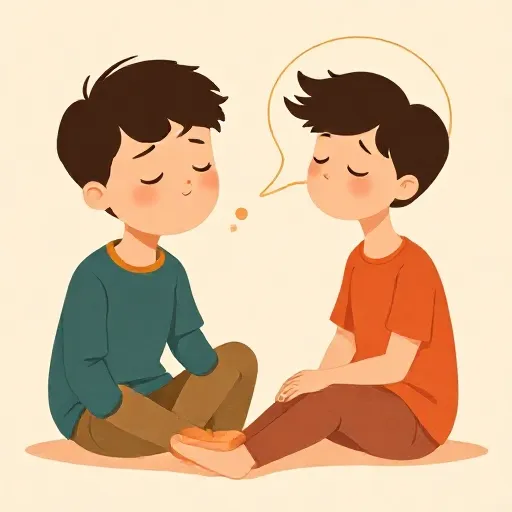
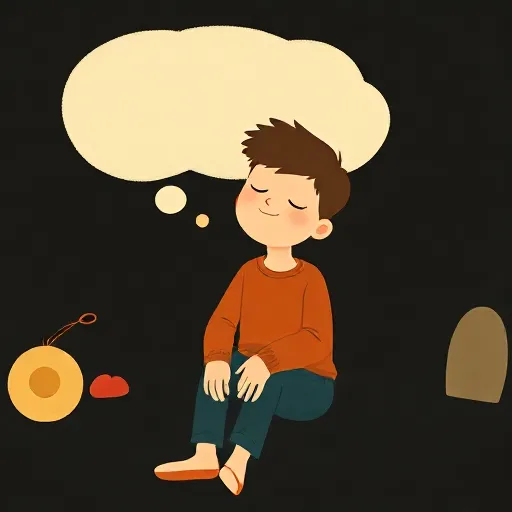
Close your eyes and think about your last birthday. Can you see the cake? Hear your friends singing? Maybe you feel a little bit of the same excitement. It feels like you are visiting that moment again, almost like a short trip through time. Philosophers and scientists call this kind of memory episodic memory — the ability to mentally re-experience events from your personal past. But what is actually happening when you remember? Are you playing back a perfect recording stored in your brain, or are you building a story right now, using scraps of the past? This question is at the heart of the philosophy of memory.
Not all memory is like time travel. When you remember that Paris is the capital of France, you are using semantic memory, which stores facts about the world. You don’t re-live learning that fact; you just know it. Episodic memory, on the other hand, comes with a special feeling — the sense of being there again. Psychologist Endel Tulving (1927–2023) called this autonoetic consciousness: the awareness that you are mentally travelling back to your own past. That feeling is what makes a memory feel like a memory instead of just a piece of information.
But that feeling can also be fooled. Sometimes we are certain we remember something exactly as it happened, only to find out we got important details wrong. Did your brother really wear a blue shirt at that birthday, or are you mixing it up with a different party? This is where the debate begins: is memory a reliable video recorder, or a creative storyteller that sometimes makes mistakes?
The Video Recorder vs. The Lego Builder
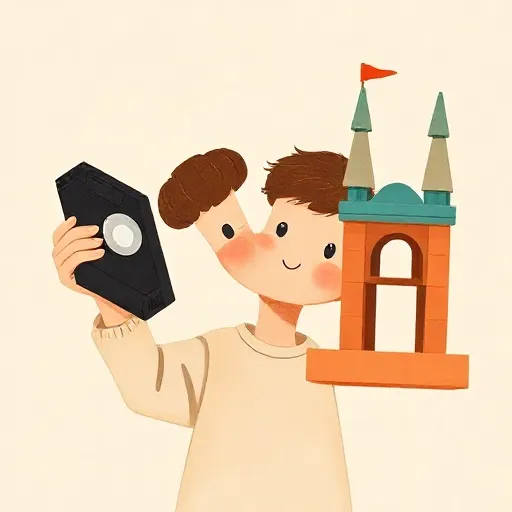
For a long time, many people imagined memory works like a video camera. You record an event, the tape is stored safely, and when you remember you just press play. This preservationist view says the content of a memory is a preserved copy of your original experience. In the 19th century, psychologist Hermann Ebbinghaus studied how memories fade, but he still treated memory as a storehouse of items.
By the early 20th century, a different picture emerged. Psychologist Frederic Bartlett showed that when people retell a story from memory, they change it — smoothing out odd bits, adding details that fit their expectations, and forgetting what didn’t make sense. Bartlett argued that remembering is not replaying a tape but constructive: we build a mental representation from fragments, like building a castle out of Lego bricks rather than pulling a photograph from a drawer.
This generationist view has grown stronger with modern brain research. Every time you recall an episode, your brain actively pieces together sights, sounds, and feelings, sometimes adding new information that wasn’t there before. That’s why a memory can change over time — and why two people who went to the same party can remember it completely differently. But if memory is so creative, how can we trust it to connect us to the real past? That question leads to two main philosophical theories about what makes a memory a genuine memory, and not just a daydream.
The Trail of Breadcrumbs: The Causal Theory

The most influential answer among philosophers is called the causal theory of memory. According to this view, a thought counts as a genuine memory only if there is an unbroken causal chain linking your present mental image back to your original experience of the event. The chain runs through a memory trace — a stored representation in your brain that was created during the original experience and that survives until you retrieve it.
Imagine a painter who, as a child, once saw a garden with a red balloon floating into the sky. Years later, completely forgetting that day, she paints a scene of a garden with a red balloon. When someone shows her the painting, she has no feeling of remembering — she thinks it came from her imagination. But there is a causal link: the original experience left a trace, and that trace influenced her painting. Philosophers C. B. Martin and Max Deutscher, who proposed the modern causal theory in 1966, would say that in a case like this, the painter is in fact remembering, even though she doesn’t feel like she is. The causal chain is what matters, not the feeling.
This theory has a clear strength: it rules out lucky coincidences. If you were to describe a party that you never attended, and by chance your description matched exactly what happened, the causal theory would say you are not remembering — there is no causal connection. Most philosophers agree that such a coincidence is not memory. But the causal theory faces a challenge from the constructive nature of memory. If we rebuild memories from bits and pieces, the retrieved representation often includes content that wasn’t in the original experience. For example, you might remember seeing a whole forest from a photo you took, but the photo only showed a few trees — your brain filled in the rest (psychologists call this boundary extension). The trace cannot fully explain where all the new content comes from. If a “memory” contains mostly imagined details, can we still say it is caused by the original event in the right way? This is a deep problem for the causal theory.
The Imagination Machine: Simulation Theory
A newer view, the simulation theory, says that remembering is actually a form of imagination — specifically, a reliable kind of imagination aimed at the past. Philosophers Kourken Michaelian and Felipe De Brigard argue that the same brain system we use to imagine future events is also responsible for episodic memory. When you picture tomorrow’s beach trip, you combine stored bits of past beaches, weather, and feelings. When you remember last summer’s beach trip, you do much the same thing: you construct a mental scene from stored ingredients. The only difference is that your imagination is now directed at an event that really happened, and your brain system is reliable enough to get the details mostly right.
If the simulation theory is correct, then a causal chain from the original event is not required. What matters is that your mental construction system works reliably — that it produces accurate representations most of the time. Suppose you hear a detailed story about your own first day of school from your parents, and later you form a vivid mental image of walking into the classroom. Even if none of the content comes from your own original experience (you were too young to form lasting traces), the simulation theory could count this as a genuine memory, as long as your brain’s scene-building process is reliable and the representation is accurate. Many philosophers find this shocking: can you remember something you never actually experienced? The simulation theorist would say yes, if your mind’s reconstruction gets it right and is generally trustworthy.
Supporters of this theory point to brain scans that show striking overlap between the networks used for remembering the past and imagining the future. They also argue that it elegantly handles constructive errors: since both true memories and false memories are produced by the same imagination system, the difference between them is simply whether the output happens to be accurate — not whether a trace was preserved. But critics worry that if memory is just reliable imagination, we lose the idea that memory connects us directly to the past. If your memory of your fifth birthday is no different in kind from a well-informed guess, does that change your relationship to your own history?
When Memories Lie: Are You Sure That Happened?
Whether you prefer the causal theory or the simulation theory, one fact is clear: memory is not infallible. Psychologists have shown that it is surprisingly easy to implant false memories. In one famous experiment by Elizabeth Loftus, people who were told they had been lost in a shopping mall as a child later “remembered” the event, complete with rich details — but it had never happened. This is called confabulation, when the brain produces a memory-like story without any real event behind it.
The possibility of confabulation forces a tough choice. The causal theory can distinguish a true memory from a confabulation by checking for a causal trace. But as we saw, the theory struggles when even real memories are heavily reconstructed. The simulation theory bites the bullet: it says that whether a mental construction is a memory or a confabulation depends not on the past but on the reliability of your brain’s construction process. A reliable process that accidentally produces a false scene is just a mistake, not a completely different kind of thing.
This debate matters because it shapes how much we can trust memory in everyday life. If the simulation theory is right, then every time you recall a family holiday, you are doing something similar to imagining a holiday you’d like to take. That doesn’t mean your memory is fake — it just means that even your most precious memories are, in a way, crafted stories, not perfect records. That can feel unsettling, but it also explains why memories can heal and change: you are not stuck with a fixed tape; you are the author.
Why It Matters: You Are Your Memory’s Architect
Next time you sit with your friends and tell the story of your best day ever, you are doing more than just recalling facts. You are actively rebuilding that day, choosing which moments to spotlight, and — without even knowing it — weaving your own identity. Philosophers have long noticed that memory is what ties your present self to your past self. John Locke (1632–1704) argued that you are the same person over time because you can remember your earlier thoughts and actions.
So the question of whether memory is a video recorder or a Lego project is not just a puzzle for scientists. It is about who you are. If memories are simply retrieved from a perfect archive, then your self is a fixed story. If memories are rebuilt each time, then you are constantly re-creating the person you were — and that means you have the power to understand your past in new ways, even if some details get lost along the way. That doesn’t mean you should stop trusting your memory, but it does mean you get to be both the keeper and the editor of your own life.
Think about it
- If you have a vivid memory that you later learn is completely false, would you still call it a memory, or something else? Why?
- Imagine a future device could record your brain activity and play back a perfect video of an event you never experienced. If watching it felt exactly like remembering, should we count that as real memory?
- When two people in your family tell conflicting stories about the same holiday, can they both be remembering truthfully, or must one be wrong? What does your answer say about what memory is?