Did You Really Change, or Are You Still the Same You?
The Boy Who Stole Apples and the Old Man Who Forgot
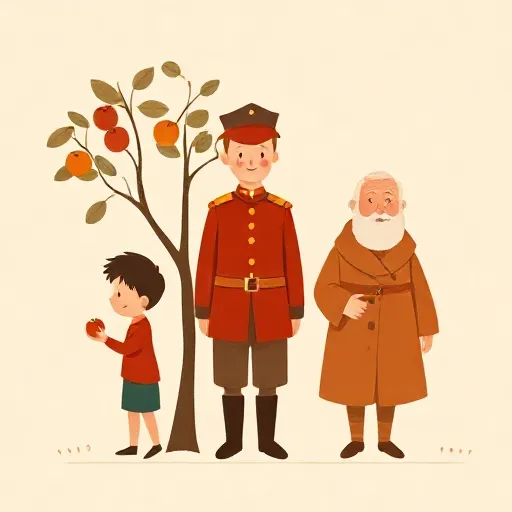
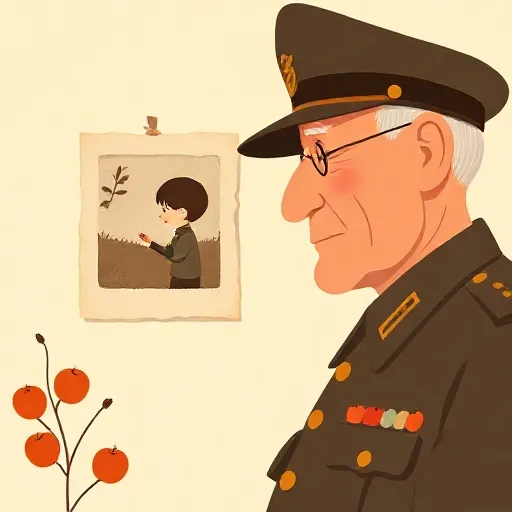
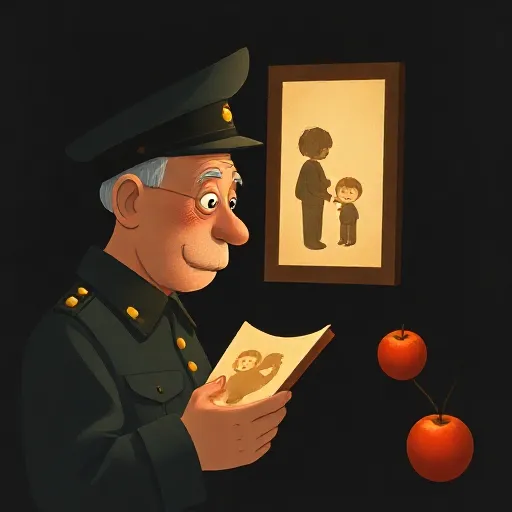
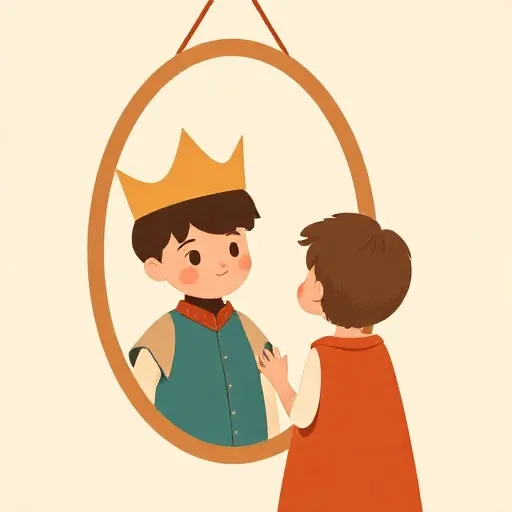
Imagine a ten-year-old boy who sneaks into an orchard and steals a bag of apples. He’s thrilled and ashamed at the same time. Years later, as a brave army officer, he remembers that afternoon and laughs about it. More decades pass. The officer is now an old general. He still remembers seizing an enemy’s battle flag in his soldiering days. But ask him about the stolen apples, and he draws a blank. The memory is completely gone.
This story—adapted from the philosopher Thomas Reid (1710–1796)—raises a sharp question. The boy, the officer, and the old general all have the same name and the same body across time. But the young apple thief and the elderly general share no actual memory link. If you cannot recall an earlier self, are you still the same person as that earlier self? And what connection, exactly, keeps the “you” of today tied to the “you” of last year, or the “you” of tomorrow?
Philosophers talk about numerical identity—the idea that one thing can be the same individual at different points in time, no matter how much it changes. Numerical identity is not about how similar two things are (identical twins are very similar but are still two different people). It’s about whether a single person persists through change, the way a river is the same river even though the water in it is always new. The puzzle is what makes that persistence true for you.
Are You Your Memories?
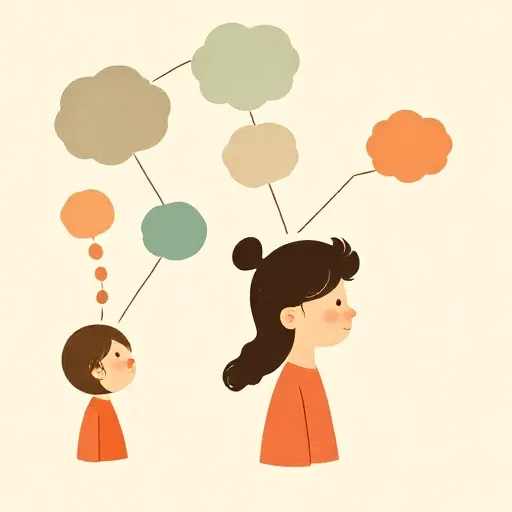
One of the most famous answers comes from John Locke (1632–1704). He suggested that what ties your past, present, and future selves together is your mental life. His idea developed into the modern psychological view: you at one time and you at another time are the same person just in case you are psychologically continuous with your earlier self.
Psychological continuity is a chain of direct mental links. Those links—called psychological connections—include memories, plans you’ve kept, beliefs, desires, character traits, and even quirks of personality. You remember yesterday’s lunch, so today’s you is directly connected to yesterday’s you. Yesterday’s you remembered the day before, and so on. The chain stretches backward, overlapping at each step, just like the apple thief was directly connected to the boy, and the general to the officer, even though the two ends of the chain do not directly touch.
Notice that continuity involves a chain—it does not require that you personally recall every moment of your life. Reid’s general is still the same person as the boy because an unbroken memory chain runs through the officer: the officer remembered the boy, so continuity ties the general back to the boy. Similarly, connections can involve more than memories. If you’ve held the same intention to learn guitar for months, that intention is a psychological thread stitching your past and present selves together.
Locke’s insight seems to match something deep about how we see ourselves. If a copy of your body appeared but had completely different memories and a totally new personality, hardly anyone would say you had survived. But the psychological view has competition.
Are You Your Living Body?
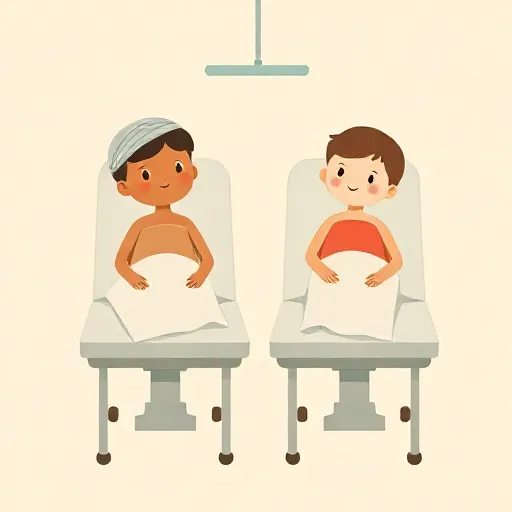
The main rival to the psychological view is the biological view. According to this picture, you are essentially a living human animal. You persist through time as long as the same biological life continues—as long as your body, especially the brainstem, keeps running the organism’s life-sustaining functions without a radical break. This approach is sometimes called animalism.
From the biological perspective, you were the very same being as the newborn baby who couldn’t form long-term memories, and you would remain the same being even if you fell into a permanent unconscious state. The continued existence of your organism is what makes you you. Psychological traits come and go; they are things you have, not what you are. Eric Olson, a leading animalist, and others point out that we naturally say things like “I was a tiny baby” even though we have zero mental connection to that earliest self—because we think of ourselves as the same living creature.
The biological view has a straightforward strength: it doesn’t need to solve tricky memory puzzles. Your body’s life continues in one continuous biological process, so identity is a clear yes-or-no matter. But a famous thought experiment puts pressure on this approach.
Imagine a surgeon removes your cerebrum (the part of the brain that supports consciousness and memory) and transplants it into a different body. The resulting person has all your memories, beliefs, and personality. Meanwhile, your original body is kept alive but has no mental life. Most people have the strong intuition that you go with your psychology—you wake up in the new body, not in the old empty shell. If that intuition is correct, what matters for survival is your mental continuity, not merely the life of a brainless organism.
When One Person Becomes Two
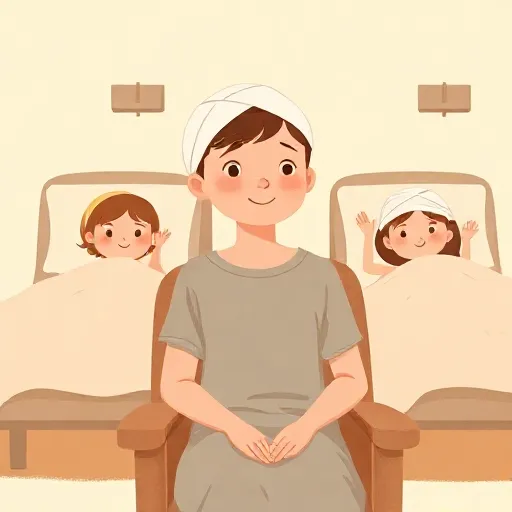
The psychological view faces its own dramatic challenge from a thought experiment designed by Derek Parfit (1942–2017). It pushes the idea even further: maybe what we really care about isn’t identity at all.
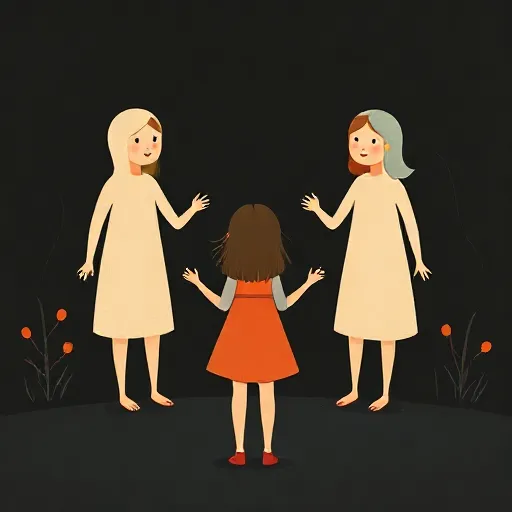
Suppose you have two triplet sisters who both suffer irreversible brain damage. Your own brain hemispheres are exact functional duplicates. A surgeon transplants one half of your brain into each sister’s head. After the operation, both sisters wake up fully psychologically continuous with you—they share your memories, your plans, your character. They both seem to be you.
But numerical identity cannot split: one thing cannot be identical to two separate things. So if both survivors are truly psychologically continuous with you, numerical identity with you must break. Neither of them is you, even though each has everything that seems to matter about you. Would you still care about their future in that special, egoistic way you care about your own future? Parfit argued that you would—and that this shows psychological continuity, not strict numerical identity, is what matters for prudential concern (your special, self-interested care about your own well-being).
This “identity doesn’t matter” view flips the conversation. Instead of asking whether you are the same person, we should ask which relations bind your present self to a future self in a way that makes it rational to care about that future self as you. Those relations are psychological continuity and the strength of psychological connectedness.
Caring About the Future You Who Forgets
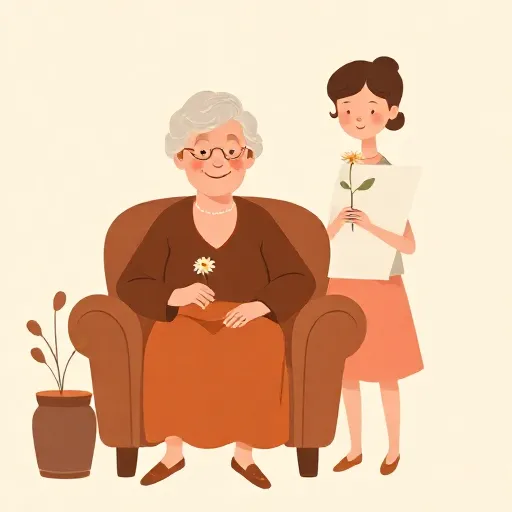
Once you start thinking in terms of mental connections, the practical questions grow urgent. Imagine a healthy adult who writes an advance directive: “If I ever develop severe dementia and lose my memories and personality, I do not want life-saving treatments for things like pneumonia. I want to be allowed to die.” Years later, she becomes a dementia patient—let’s call her Margo. Margo doesn’t remember writing the directive. She seems content, even happy, painting simple pictures and enjoying her daily routine. Should doctors respect the earlier wish, or listen to the person in front of them right now?
If what matters is psychological continuity, Margo is psychologically continuous with her earlier self, so the advance directive still speaks for her. But psychological connectedness—the amount of direct memory, intention, and personality links—has drastically weakened. Some philosophers, like Jeff McMahan, argue that while Margo is still the same person, the thinning of connections should reduce how much special prudential concern we owe that later self. Others, like Agnieszka Jaworska, reply that what matters is Margo’s remaining capacity to value things: she can still find meaning in her daily life now, so her present wishes carry real weight.
These are not just puzzles for hospital rooms. Whenever you make a big promise or plan for your future—signing up for a sport, swearing to a friend you’ll always be loyal—you are betting that the future you will still feel bound by your present choices. But psychological connections loosen over time. The you of a decade from now might have different values, different tastes, even different friends. Does that mean you should care less about that future self? Parfit thought so: more psychological distance, less egoistic concern. Others say personal growth and character change are valuable, and the continuity of your life story gives you reason to stay invested in that far-off stranger who will carry your name.
Why It Still Matters for Your Life
These debates are not just for philosophers in dusty libraries. They quietly shape how we think about responsibility, promises, and who we want to become. When a teacher punishes you for something you did last month, the system assumes the “you” who sits in detention is the same person who broke the rule—and that enough psychological connections remain to hold you accountable. Amnesia from an accident doesn’t automatically erase blame, because psychological continuity persists even when direct memory fails.
But consider a person who commits a terrible crime and then, many years later, suffers dementia so severe that they have almost no mental link to their earlier self. Is it still fair to punish that person? The answer hinges on which psychological relations make you morally responsible for your past actions. If a thread of continuous consciousness is enough, responsibility may remain; if rich memory and value connections are required, it may fade.
Our relationship to future selves also plays out in everyday choices. Saving money, studying for a test, learning a skill—all of these actions assume there will be a future you who benefits. The more you see that future self as you—bound by a chain of intentions and memories—the more it makes sense to sacrifice a little comfort now for a better life later. But if you see the far-off you as barely connected, you might be tempted to grab the cookie today and let Future You deal with it.
The question at the heart of personal identity—What makes me the same person over time?—doesn’t have a single settled answer. But thinking about it changes how you see your own life. It invites you to ask not only who you are right now, but what threads of memory, body, and commitment you want to build between today’s self and the person you will become.
Think about it
- If you woke up tomorrow with all your memories erased, would you still be the same person? Why, or why not?
- If there were two future people, each with half your memories, would it matter which one got your favorite dessert or your best friend? What would you do?
- Imagine you could write a message that your future self—ten years older—would definitely read. What would you say, and do you think that future person would feel bound by it?