Are You Still You If You Forget Everything? Locke’s Bold Idea
The Prince Who Swapped Bodies
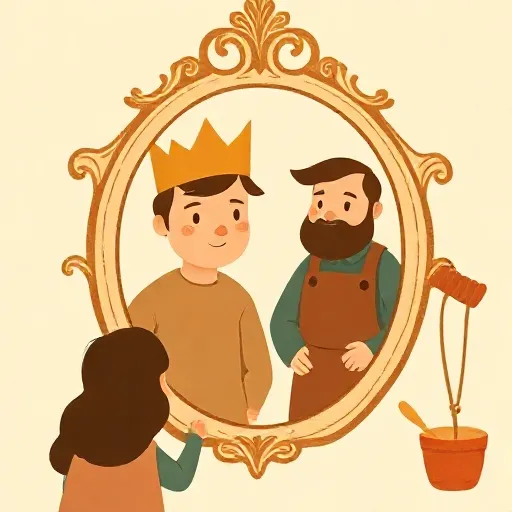
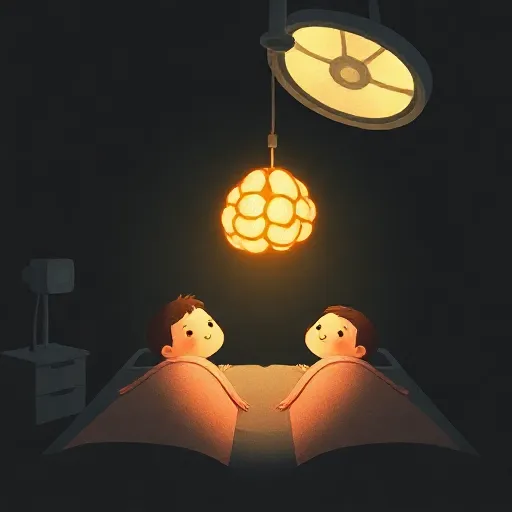
It’s 1690. John Locke (1632–1704) asks you to imagine something strange. A prince’s consciousness — all his thoughts, memories, and sense of self — suddenly leaves his body and enters the body of a sleeping cobbler. The cobbler’s own consciousness fades away. The prince’s soul carries every “princely thought” into the cobbler’s rough hands. Who is the person now walking around in the cobbler’s apron? Most people would say the body belongs to the cobbler, so the person must be the cobbler. But Locke disagreed. The person is still the prince, because the prince’s consciousness moved with him. Personal identity, Locke argued, follows consciousness, not the body.
Locke defined a person as a thinking, intelligent being that can reason, reflect, and think of itself as itself across time. But he gave “person” another crucial job: it is a forensic term — a word that belongs in courtrooms and moral judgments. Persons are the kind of beings who can be held accountable for their actions, who can expect punishment or reward. If the prince had stolen a loaf of bread before the switch, the person in the cobbler’s body should be the one to make amends, because he carries the consciousness that performed the theft.
This was a shocking move. Most of Locke’s contemporaries believed that you remain the same person because you have the same immaterial soul, or because you have the same human body. Locke separated those ideas. He used the word man to mean the living human animal — bones, flesh, organs. A man can stay the same while the person changes. And a person can stay the same even if the man or the soul changes. That distinction is the earthquake at the heart of Locke’s theory.
Two Persons in One Body
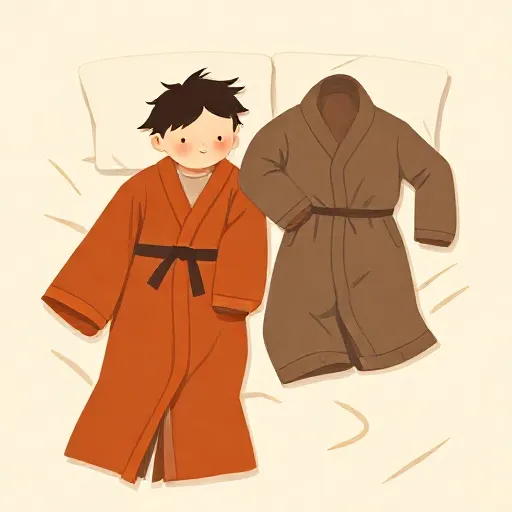
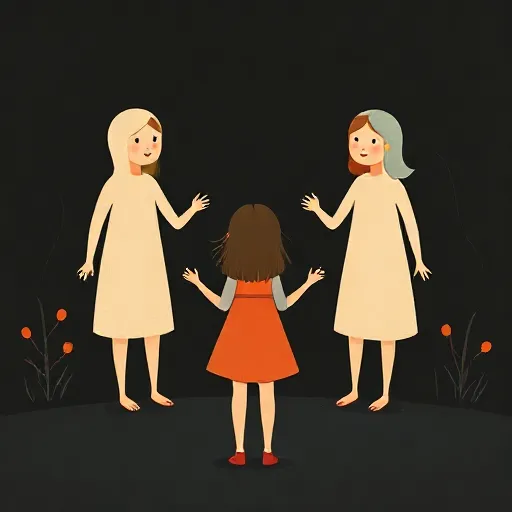
Locke didn’t stop with body-swapping. He pushed the thought experiment further: what if a single human body housed two separate streams of consciousness? Imagine Socrates, he said. By day, Waking Socrates thinks, argues, and remembers his philosophical life. By night, Sleeping Socrates has a completely different set of thoughts and memories, with no access to the daytime self. When morning comes, Waking Socrates recalls nothing of what Sleeping Socrates did. Are these two the same person? For Locke, the answer was a firm no. Waking Socrates should not be punished for something Sleeping Socrates did, any more than you should be punished for the actions of a stranger who happens to look like you.
Locke then added an even bolder claim: even if both selves share the very same immaterial soul, they remain distinct persons as long as their consciousnesses don’t connect. He imagined a “day-man” and a “night-man” who take turns using the same body and the same soul, but never share memories. They are as separate as two different people, he said. The soul’s persistence does not make the person the same. Only the continuity of consciousness — the ongoing stream that makes your experiences feel like yours — does.
Locke was careful not to deny that humans might have souls. But he thought we cannot know whether the soul is a material substance or an immaterial one. God could have given the power of thought to matter, for all we can tell. So personal identity must not depend on something so mysterious and hidden. It must depend on what we can actually experience: the flow of our own awareness.
The Brave Officer’s Memory Problem
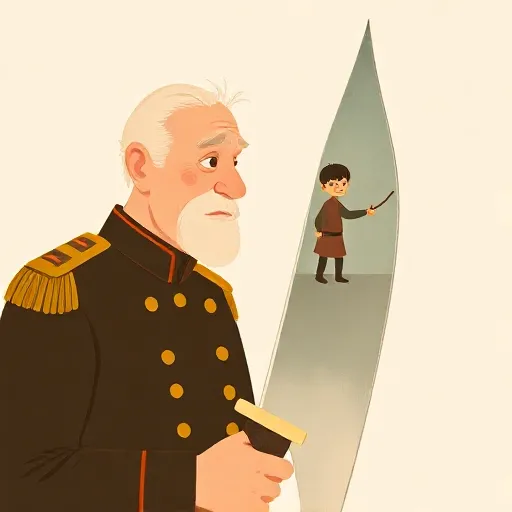
Soon after Locke’s essay appeared, critics spotted a deep trouble. One of the sharpest objections came from the Scottish philosopher Thomas Reid (1710–1796). Reid told a story to show that Locke’s theory leads to a contradiction.
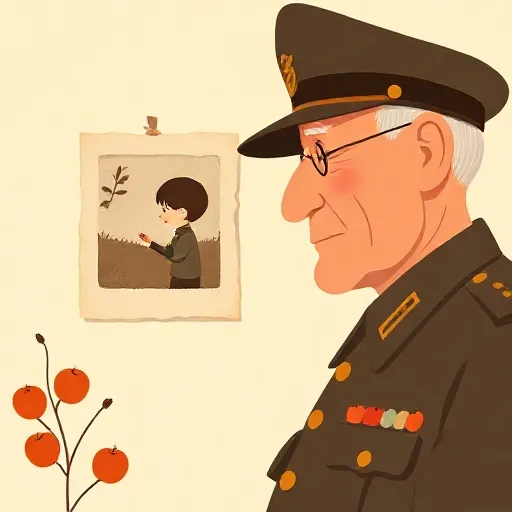
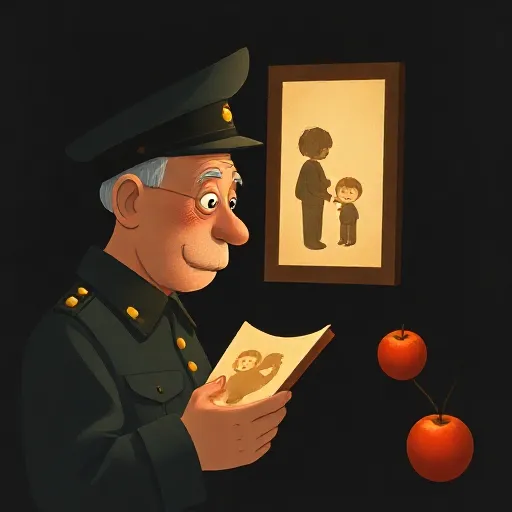
Suppose a brave officer was once flogged as a boy for stealing apples. Years later, as a young officer, he remembers the flogging and also later remembers capturing an enemy standard in his first campaign. Many years after that, the officer is now a general. The general remembers taking the standard, but the flogging has completely vanished from his memory. According to Locke, the general is the same person as the young officer (because the memory of the standard connects them). The young officer is the same person as the boy (because he remembers the flogging). By simple logic, if A = B and B = C, then A = C. So the general must be the same person as the flogged boy. But Locke also says the general is not the same person as the boy, because the boy’s flogging is not part of the general’s consciousness. We get a contradiction: the general both is and is not the boy.
Other critics, like Joseph Butler (1692–1752), argued that Locke’s whole approach was circular. Consciousness of oneself, Butler said, already assumes you are a continuing self; it cannot create that continuity. It would be like saying that recognizing a tree makes it the same tree — the recognition presupposes the identity, not the other way around.
Defenders of Locke reply that “consciousness” for Locke is not just memory. It’s the ongoing, first-person awareness that makes your thoughts your own, whether or not you are actively recalling the past. Under that broader reading, the general might still count as the boy if the conscious stream is unbroken, even if the specific memory is lost. The dispute over what Locke really meant — and whether his view survives Reid’s challenge — is still very much alive.
Defenders and Rebuilders

Not everyone attacked Locke. Catharine Trotter Cockburn (1679–1749) published a passionate defence of his Essay in 1702, when she was only twenty-three. Some critics had charged that Locke’s view threatened the idea of an immortal soul — after all, if personal identity doesn’t require a soul, what happens to the soul after death? Cockburn pointed out that Locke never denied the soul’s immortality. He thought the soul was probably immaterial, but even if it were material, an all-powerful God could make it live forever. And Locke’s imaginary cases, she insisted, were not meant to describe everyday life. They were tools to pry apart concepts we usually mix together: man, soul, body, person.
Other thinkers took Locke’s ideas in new directions. Anthony Collins (1676–1729) embraced the possibility that thinking might arise from matter, pushing closer to a materialist view of the self. David Hume (1711–1776) went even further. When Hume looked inside himself, he found no single, stable self — only a bundle of changing perceptions. He argued that the mind is just a collection of experiences, and the idea of a persisting person is a fiction we create with our imaginations. Without Locke’s initial break from the soul-based view, such radical theories might never have found a footing.
Your Identity Today: Why Locke Still Matters

Locke’s way of asking questions about personal identity is everywhere now. Every film about body-swapping or memory loss owes something to his thought experiments. But the real weight of his idea hits closer to home. Think about someone you love who can no longer remember shared moments — an aging grandparent, for example. Are they still the same person they were? If your stream of consciousness breaks, does your identity break with it?
Modern philosophers still divide into camps that trace back to Locke. Psychological continuity theorists, like Derek Parfit (1942–2017), develop Locke’s insight: you survive as the person whose mental life is linked to yours by overlapping chains of memory and character. Animalists, by contrast, argue that we are fundamentally human organisms — our identity is biological, not psychological. Both sides see Locke as the conversation starter. Even those who reject his view thank him for making the question clear.
Locke also forces us to face a hard real-world puzzle: if a person commits a crime and later suffers complete amnesia, forgetting it ever happened, should the law still punish them? If you say no because their consciousness no longer includes the act, you are following Locke’s logic. If you say yes because the human animal did it, you are pushing back. That tension is exactly why Locke’s 300-year-old idea still feels urgent. The next time you wonder whether you are really the same person you were five years ago, you’re stepping into the argument he started.
Think about it
- If a person commits a crime but then gets complete amnesia and has no memory of it, should they still be punished? Why or why not?
- If you could upload your entire stream of consciousness to a computer, leaving your body behind, would the uploaded file be you? What would happen to the original you?
- Suppose every morning you wake up with no memories of the day before, but your personality and habits stay the same. Are you the same person you were yesterday?