Would You Survive a Brain Transplant? The Personal Identity Puzzle
The Brain Swap That Shook a Classroom
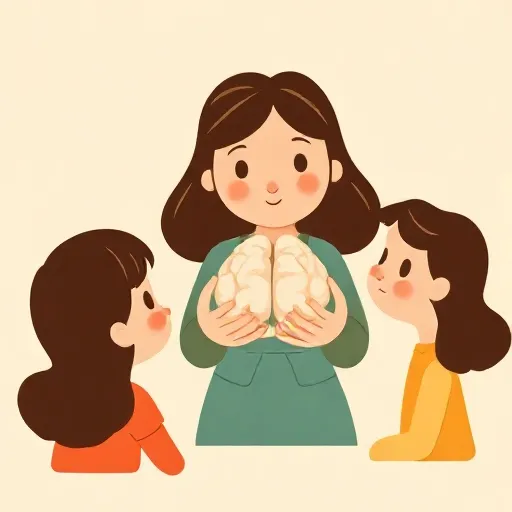
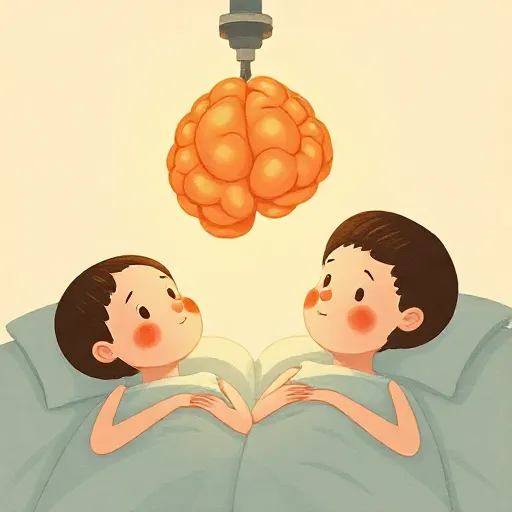
Your science teacher writes a strange question on the board: “If we transplanted your brain into another person’s head, where would you go?” The class erupts. One kid says you’d still be you in the new body because your memories are inside the brain. Another argues that your body would just get a donated brain, like a heart transplant — you’d stay put, maybe without any memories. Both sound right at first. But they can’t both be true.
This is not just a sci-fi riddle. It’s the heart of a centuries-old puzzle about personal identity: what makes you the same person from one day to the next, and what would it take for you to survive a radical change? Philosophers call this the persistence question.
What Does It Mean to Be the Same Person Over Time?
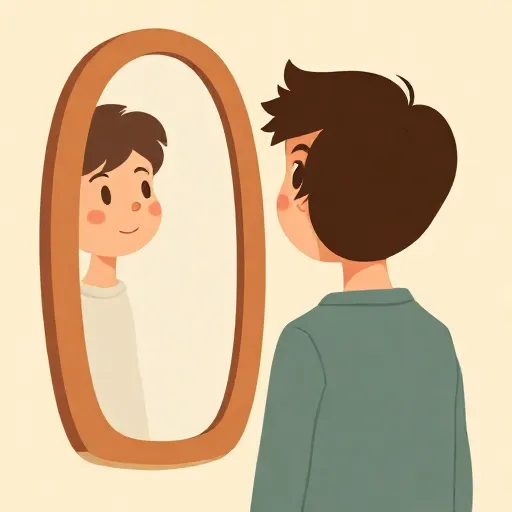
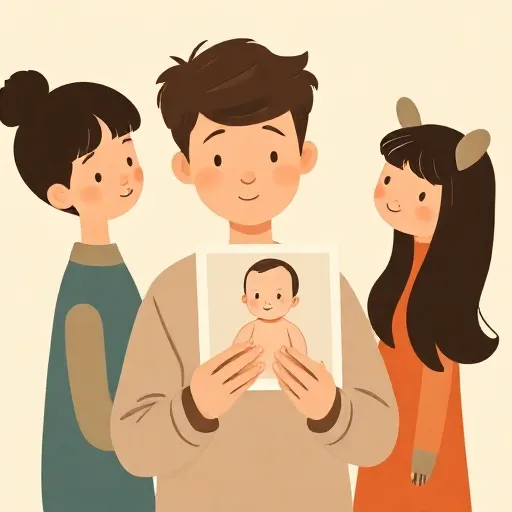
Look at your baby photo. The chubby toddler on the couch is you — not just in the sense that you share a name or some DNA. You are numerically identical: one and the same being. That’s different from being the same sort of person. You might be a different sort of person now (grumpier, more musical, less obsessed with glitter) than you were at age three, but it’s still the same living individual. The persistence question asks what makes that true over time. What are your persistence conditions?
It’s tempting to answer, “My body.” After all, you’ve had the same human organism your whole life. But the brain-transplant thought experiment challenges that. If your brain (and with it, your memories, personality, and skills) were moved to a new body, the being who woke up would remember your birthday party, feel like you, and insist she was you. Many people feel that she would be you. If that’s right, your body alone isn’t what matters.
Your Mind Is the Key: Psychological Continuity
The most popular answer among philosophers is that you persist through time because of psychological continuity. According to this view, you are essentially your mental life — your beliefs, desires, memories, and preferences — and the causal chains that connect them across moments. The English philosopher John Locke (1632–1704) wrote that a person is “a thinking intelligent being, that has reason and reflection, and can consider itself as itself, the same thinking thing, in different times and places.” For Locke, the thread that ties you to your past is memory.
But memory alone runs into trouble. First, memory isn’t transitive: you remember what you had for lunch today, but you can’t remember falling asleep last night. If only memory counted, you’d be a different person every time you dozed off. Second, you can’t remember things from your own past unless you already know it was your past — the idea becomes circular. So modern versions of this view replace simple memory with a broader idea of psychological connectedness: your current mental states are caused, in the right way, by your earlier ones. Even while you were unconscious last night, most of your beliefs quietly persisted, causing your waking self to have them now. That chain of causal links is psychological continuity.
This view implies that in a brain transplant, the recipient is you, because she inherits your mental life directly. But then a new puzzle arrives — one wilder than any transplant.
The Problem of Fission: When One Becomes Two
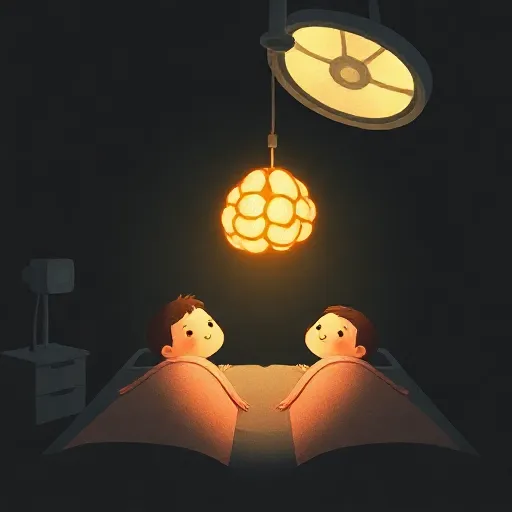
Suppose surgeons remove the two hemispheres of your cerebrum (the upper brain that handles thoughts and memories) and place each in a different body. Both recipients — call them Lefty and Righty — wake up with all your memories, believing they are you. Each is psychologically continuous with you. If psychological continuity is what makes someone you, then you are Lefty and you are also Righty. But Lefty and Righty are clearly two different people, not one. One thing cannot be identical with two separate things.
Philosophers have proposed two main solutions. One, the non-branching view, says that you survive only if no “branching” occurs. If both hemispheres get preserved, you die — but if one is destroyed and the other kept, you survive. That leads to a strange result: preserving more of your brain can be worse for your survival. Why would keeping your second hemisphere alive end your existence? This view deeply unsettles the idea that survival is all about identity.
The other solution says there were two of you all along — two people sharing the same body and thoughts before the surgery, only to be separated afterward. That’s hard to believe when you can’t feel any doubling inside your own head. Both solutions push us to ask a more personal question: if identity is so fragile, what actually matters about surviving?
But What About Your Body? The Animalist Challenge
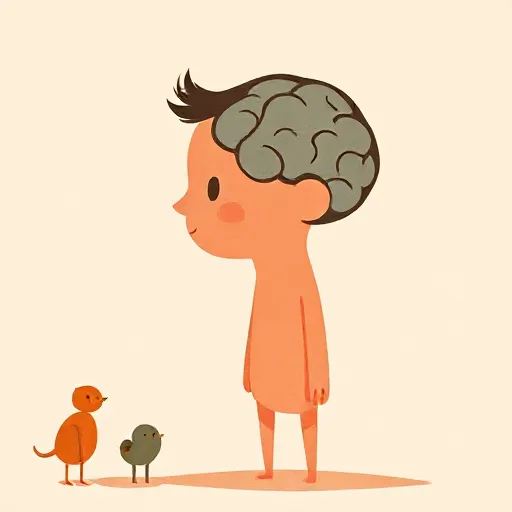
Other philosophers think we’re overcomplicating things. Animalism says that you are a biological organism — a human animal — just like a cat or a dog. Your body isn’t just a container for a mind; it is you. If your brain were transplanted, you’d stay behind with the rest of your body (an empty head, but still alive), just as a liver transplant doesn’t move the person. The brain recipient might have your memories, but she’d be a new person — a psychological copy, not the original.
This view faces its own test: does it really sound plausible that with a new brain (and someone else’s memories) you could still be you? But animalists point out that we were once embryos with no thoughts, and we might one day be in a vegetative state with no mental activity. If you are only your mind, you’d have to say you didn’t exist as an embryo and that a permanently unconscious body is not you at all. Animalism respects the idea that you are a single living thing from fertilization to death.
Animalism also dodges a tricky problem for psychological views: if you are not your body, then your body — that silent, living organism reading these words — would also be a thinking being, a second “you.” That would mean two thinkers are sitting in your chair right now, and you could never be sure which one you are. Insisting you are the animal avoids that doubling entirely.
Why It Matters: Caring About Your Future Self
You might think this debate is just a brainy game, but it sneaks into real feelings. Imagine you’re told that tomorrow all your memories will be erased and replaced with someone else’s — but your body will live on. Would you still care as much about that future person? Would you pay to spare her pain? According to the English philosopher Derek Parfit (1942–2017), what gives you a selfish reason to care about your future is not identity itself, but psychological continuity. If a copy of you were made and your original body painlessly destroyed, that copy would have everything you really care about: your plans, your relationships, your sense of who you are. On this view, you should treat your future copy exactly as you’d treat yourself.
The brain-transplant question from the start of this article is not just about science — it’s about what makes a life yours. If the law held you responsible for a crime you cannot remember committing, would that be fair? If you could split into two people, would you love them both like yourself? These puzzles aren’t solved. But noticing them changes how you think about what it means to be a person.
Think about it
- If a machine could create a perfect duplicate of you — with all your memories — and the original you would be painlessly destroyed, would that count as dying, or as surviving in a new form?
- Imagine you and your best friend accidentally swap brains. After the operation, who gets your allowance? Who should do your chores?
- If someone offered to upload your mind into a computer so you could live forever, but your biological body would die, would you accept? Why or why not?