Could Two Identical Brains Have Different Thoughts?
The Copy in the Mirror
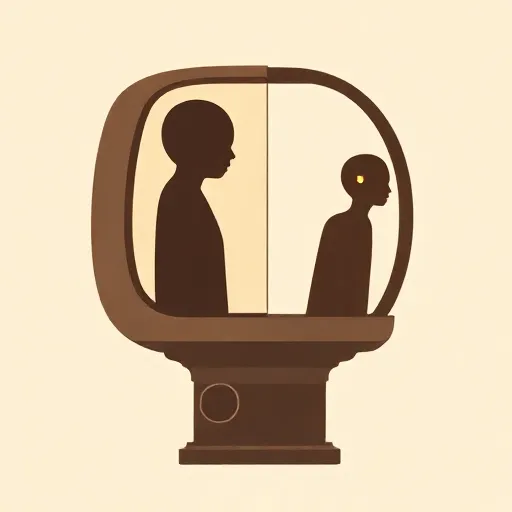
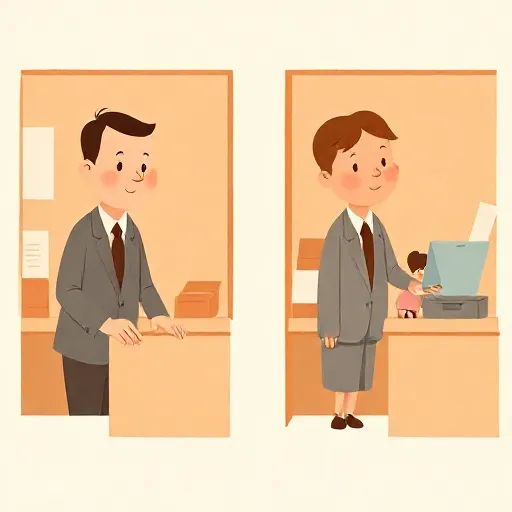
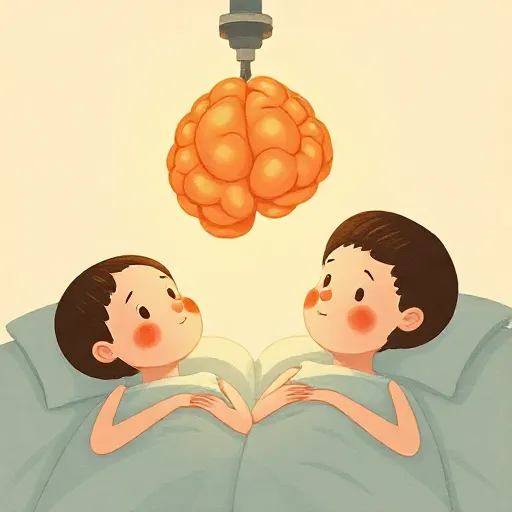
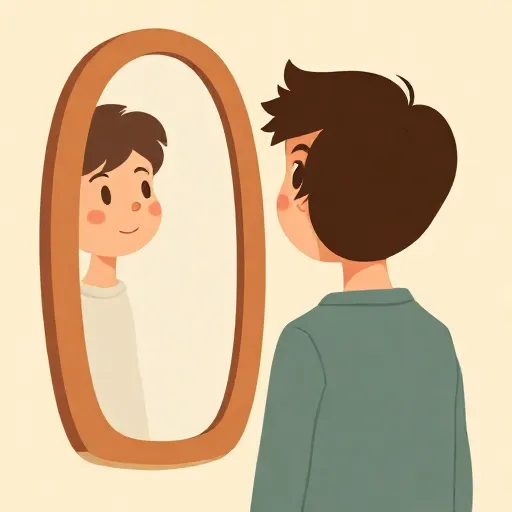
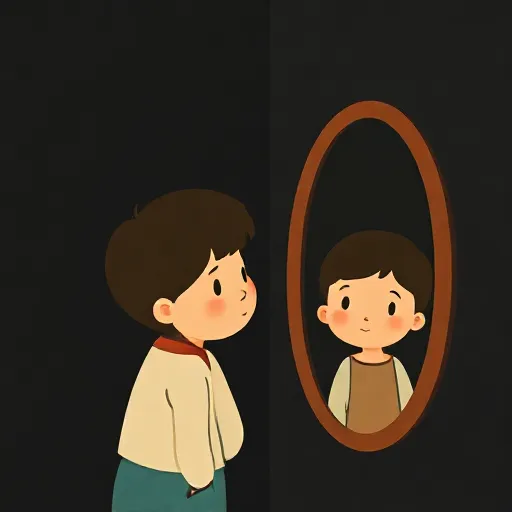
Imagine a machine that can build an exact copy of you — every atom, every cell, every wiggling neuron in your brain. The copy is so perfect that not even a microscope could tell the difference. You are eating lunch, feeling bored. Your copy sits down, identical in every physical way. The question that has grabbed philosophers for decades is this: must your copy feel exactly what you feel? Could you be daydreaming about soccer while your physical duplicate is humming a song you have never heard?
If the answer is no — if being physically identical guarantees being mentally identical — then something deep is going on. It means your thoughts, feelings, and decisions cannot float free from the stuff of your brain. They are, in some strong sense, supervenient on your physical states. The term sounds technical, but the idea is simple and it reaches far beyond brains. It connects to whether robots could ever feel pain, whether a painting’s beauty is in the paint or in your head, and whether moral rules are part of the natural world.
The Core Idea: No Difference Without Another
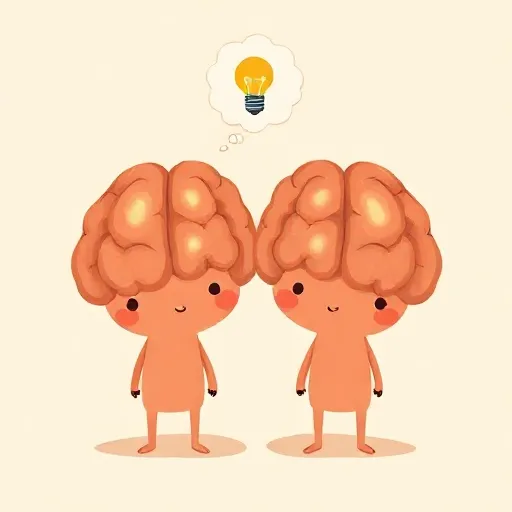
The slogan that sums up supervenience is: There cannot be an A‑difference without a B‑difference. Take A to be mental properties (feeling sad, seeing red) and B to be physical properties of your brain and body. The slogan says that if two people are exactly alike in all physical ways, they cannot be different in any mental way. You cannot be in pain while your physical twin is perfectly comfortable. Everything mental must ride on something physical.
Notice the word “cannot.” This is not just saying that in real life people with matching brains happen to have matching thoughts. It says something stronger: it is impossible for the physical to be the same while the mental changes. Different kinds of impossibility are in play, and philosophers mark this difference by talking about modal force. That is a fancy way of asking: in what way is it impossible? Is it impossible in the way that a square circle is impossible — no matter what universe you imagine? Or is it only impossible given the laws of nature we happen to have, like a rock floating upward by itself?
The first kind is called metaphysical necessity. The second is nomological necessity (from the Greek nomos, meaning law). When people say your mind supervenes on your brain, they usually have one of these strengths in mind. The difference matters enormously, as we will see.
Zombies and Other Possible Worlds
In the 1990s, the philosopher David Chalmers (born 1966) asked a strange question: could there be a zombie? Not the movie kind that groans and shuffles. In philosophy, a zombie is a being that is physically exactly like a human being, but with no conscious experience at all. Your zombie twin walks, talks, laughs, even writes essays about philosophy, but inside it is completely dark — no feelings, no sights, no sounds, no “what it is like” to be anything. If such a zombie is possible in any conceivable world, then mental properties do not supervene on physical properties with metaphysical necessity. There would be an A‑difference (consciousness vs. no consciousness) with no B‑difference (identical bodies and brains).
Chalmers and others think zombies are conceivable and therefore metaphysically possible. They conclude that consciousness is not just a physical thing. Other philosophers push back: just because you can picture something does not mean it is truly possible. You can picture water that is not H₂O, but science tells us water just is H₂O. The idea was dismissed as a trick of the imagination. The zombie debate is alive today exactly because it tests how tightly the mental must cling to the physical.
If zombies are impossible, the supervenience of mind on brain holds with metaphysical necessity. If zombies are possible, the connection is at most nomological — a lucky feature of our universe, not a deep necessity. Either way, the zombie thought experiment forces everyone to be clear about what kind of “cannot” they mean.
More Than Just Physical?
Even if your thoughts supervene on your brain, does that mean they are nothing more than your brain? Not so fast. In the 1970s, Donald Davidson (1917–2003) brought supervenience into the philosophy of mind to say that mental properties depend on physical ones without being reducible to them. This is the view called nonreductive physicalism. The idea is that mental properties are real, not illusions, but they are not identical to physical properties. They are something over and above physics — or are they?
Here the big fight starts. Some philosophers say supervenience alone is too cheap. Think of a shadow. The shape and position of a shadow supervene on the object, the light source, and the wall. Change the object and the shadow changes. Yet the shadow is not the object; it is something extra, even if it cannot exist without the object. If the mind supervenes on the brain in just that thin way, maybe it is still something extra in the world. Others reply that if God created all the physical facts, she would be done — the mental would come along automatically, so it counts as nothing more.
The word reduction usually demands more than supervenience. Most philosophers agree that if A reduces to B, then A supervenes on B, but not the other way around. You could have supervenience without being able to explain why the supervenience holds. That demand for an explanation — what some call superdupervenience — is a recurring theme. If supervenience cannot be explained, it can feel like magic.
Supervenience Everywhere: Morals and Art

Supervenience was not born in the mind-brain debate. In the 1950s, R.M. Hare (1919–2002) used it to talk about ethics. He said that moral properties like being wrong supervene on natural properties like causing harm or telling a lie. If two actions are exactly alike in every natural respect — the same consequences, the same intentions — they must have the same moral status. You cannot say that one case of breaking a promise is wrong while another that is identical in every factual way is morally fine. That would be an A‑difference without a B‑difference, and moral language would not make sense.
The idea shows up in art, too. A painting’s beauty seems to supervene on the physical arrangement of paint and canvas. A tiny brushstroke in the corner of a masterpiece might shift the whole feeling from calm to unsettling. Here, supervenience is not a perfect lockstep: a small physical change can create a big aesthetic difference. Still, two paintings that are physically identical cannot have different aesthetic properties. The colors, shapes, and textures settle the artistic value, even if we cannot yet explain exactly how.
In all these cases — mind, morality, art — supervenience gives us a framework for asking how the “higher-level” stuff of our lives connects to the “lower-level” physical world. It does not give answers; it sharpens the questions.
Why It Matters for You
Supervenience might sound like a puzzle for specialists, but it touches choices you make every day. If your decisions supervene on the buzzing of neurons that follow the laws of physics, does that leave any room for free will? If a perfectly copied brain would make exactly the same choices as you, in what sense are those choices yours? Philosophers disagree, and the zombie debate shows that even the tightest physical duplication might not settle whether there is a ghost in the machine.
The argument also sneaks into conversations about artificial intelligence. Suppose we build a robot whose circuitry perfectly mirrors a human brain. If everything mental supervenes on the physical, that robot would have genuine feelings. If, however, consciousness requires something beyond supervenience — a special kind of dependence or a non‑physical substance — the robot might be a clever zombie. Supervenience thus draws the line between science fiction and philosophy.
Hare’s moral version hits closer to home: if moral facts supervene on natural facts, then ethics can be investigated by looking at the world carefully — psychology, biology, maybe even physics. If they do not, morality might float free of anything science can measure. You are living the question every time you argue about what is right.
The debate is not settled. Supervenience is a shared starting point, not a finish line. It tells us that certain patterns must hold, but it stays silent on why. And “why?” is the oldest question of all.
Think about it
- If you met someone physically identical to your best friend but with completely different memories, would that be a real possibility or just a trick of your imagination? What does your answer say about how tightly mind ties to brain?
- Suppose scientists build a robot that behaves exactly like a human and its internal wiring copies a brain. Would it feel anything? Could you ever know for sure?
- If moral facts supervene on natural facts the way Hare thought, does that mean someday science could tell us with certainty what is right and wrong? Would that make morality less free?