What Makes Gold Gold? The Invisible Code Inside Everything
What’s Inside the Shiny Lump?
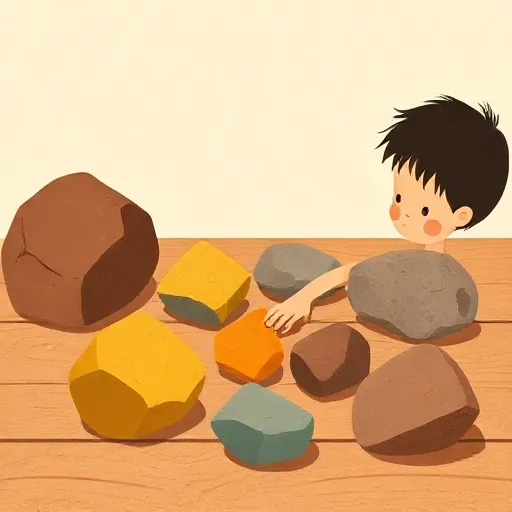
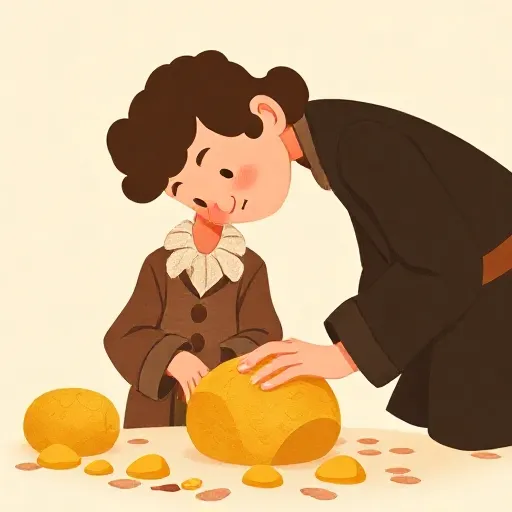
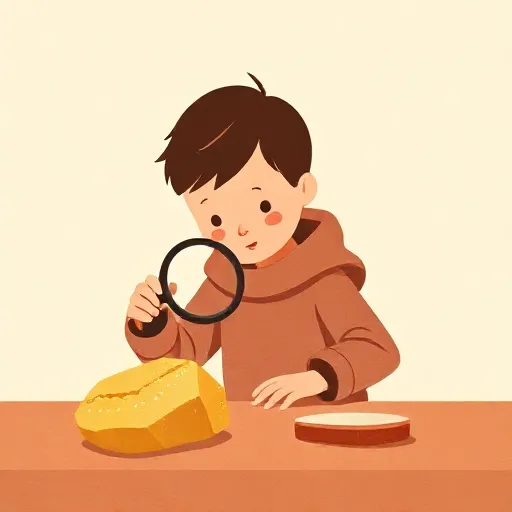
Imagine you’re sorting a pile of rocks. Some are heavy and yellowish. Others are the same color but flake apart. You probably put the first group in the “gold” pile and the rest in the “not gold” pile. You’re using the qualities you can see and feel: color, weight, malleability. That list of observable traits is what the English philosopher John Locke (1632–1704) called a nominal essence — a name-linked idea that lets you say, “This is gold.”
But Locke didn’t stop there. He believed that underneath all those traits there is a hidden inner makeup that makes the lump behave the way it does. He named that hidden structure the real essence — the actual, unknown constitution of a thing that causes all the qualities you notice. The real essence of a chunk of gold, for Locke, would be the arrangement of its invisible particles, its solidity, shape, and motion, working together to produce the yellow shine, the heaviness, and the way it melts.
To understand this, you need to know how Locke thought about qualities. A quality is simply a thing’s power to produce an idea in your mind. He split qualities into three kinds. Primary qualities belong to the body itself, even when nobody looks at it — solidity, extension, figure, motion or rest, number. Secondary qualities, like color or taste, are not in the object at all. They are just the power of those primary qualities to trigger a sensation in you. When you see a gold nugget’s yellow gleam, that yellow isn’t really in the nugget; it’s a power the nugget has on your eyes given the way light bounces off its surface. Tertiary qualities are powers a body has to change something else — like the sun’s power to melt wax.
So when you create a nominal essence for gold, you’re gathering a bundle of primary and secondary qualities together and saying: “Anything that has this bundle is gold.” But the real engine that makes those qualities happen — the particle-level blueprint — stays hidden. Locke thought this difference matters a lot.
The Scholastics’ Magic Ingredient: Substantial Form
Locke wasn’t making up this idea of an essence out of nowhere. For centuries, philosophers in the Aristotelian tradition — often called Scholastics — had their own picture. They taught that every natural substance was a combination of matter and an immaterial substantial form. This form was like a secret recipe: it made the thing be what it is, sorted it into a species, and caused all its characteristic traits. A lump of gold possessed the substantial form of gold, and that single invisible ingredient did two jobs at once. It told you, “This belongs to the species gold,” and it produced the lump’s color, heaviness, and meltability.
Locke thought this was asking one ingredient to do too much. He split the concept of essence in two. The nominal essence takes over the job of sorting things into species. The real essence takes over the job of causally explaining why a thing has the qualities it does. That way, you don’t need a mysterious immaterial form. You only need matter in motion — tiny particles bumping and linking in certain patterns, which is exactly what the new mechanical science (the corpuscular hypothesis) suggested.
By dividing the labor, Locke gave himself a strong toolkit for criticizing the Scholastic theory of natural kinds. He thought that if you look carefully at the world, you’ll see that nature doesn’t hand us pre-sorted boxes with neat labels.
Locke’s Attack: Why Nature Doesn’t Come with Labels
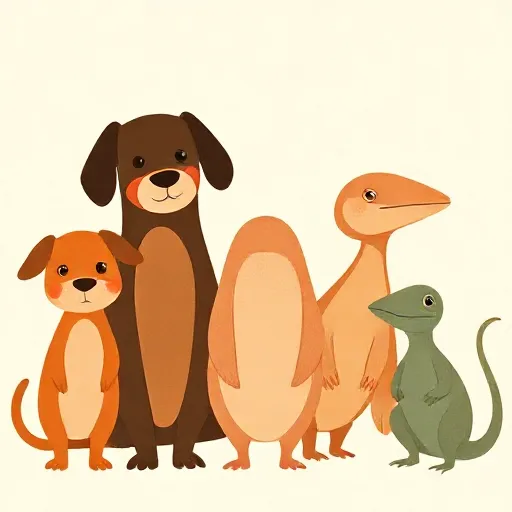
Locke offered several arguments against the idea that nature sorts everything into fixed species with shared substantial forms.
First, he pointed to borderline cases and monsters. If nature stamped every member of a species with the same form, you’d never get beings that blur the lines or that have wildly different properties. But you do. A dog can be born with two heads. One sample of sulphur can behave very differently from another sample that looks identical. Locke thought that if you assume real essences are material structures, those variations make sense — small differences in the tiny machinery can produce different results. A single immaterial form shouldn’t allow such messiness.
Second, he argued that our general terms are human inventions created by a process of abstraction. You look at several things, notice what they share, and strip away the rest. The resulting abstract idea is a mental construction — a pattern you keep in your mind. That pattern, not any invisible form, is what the name “gold” really stands for. Species, Locke said, are “the workmanship of the understanding,” not of nature. Nature gives us similarities, but we decide which similarities count.
Third, Locke pushed the point further: nature gives us too many similarities. Among all the traits you could use to define a kind, only a few get chosen. You must decide that color and weight matter for gold, while, say, electrical conductivity does not (or does). Nothing in nature forces that choice. The selection is yours.
Underneath all of this is a deeper conviction. Locke thought generality — the “kind-ness” of a group — exists only in words and ideas, not in things. You never bump into “gold” walking down the street; you bump into this particular heavy yellow lump. The shared category lives in your head. So while real essences do the real work of causing qualities, they don’t determine what species a thing belongs to. Only the nominal essence does that.
The Watchmaker and the Hidden Gears
Locke wasn’t the only modern thinker wrestling with classification. Working a generation before him, Francis Bacon (1561–1626) and Robert Boyle (1627–1691) developed their own corpuscular versions of natural kinds. They argued that the material structure of a body — its “texture” of particles plus the laws of nature — both causes its properties and places it in a species. Think of what we might call a corpuscular form: a blueprint made of matter that does both jobs the Scholastic substantial form used to do.
Locke disagreed. He thought that even if you could see the internal machinery, you’d still face the same sorting puzzle as before. He made the point with a brilliant analogy about watches.
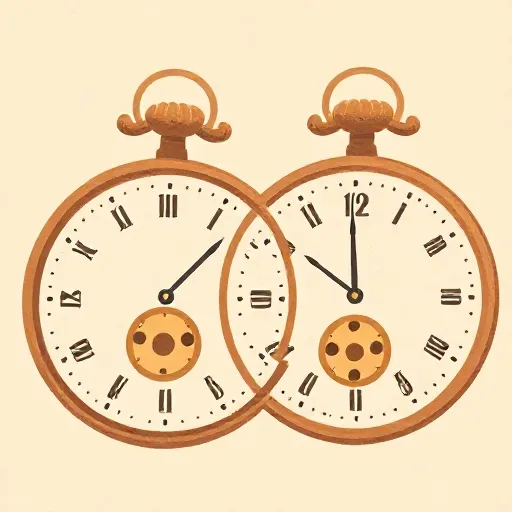
Suppose you’re a watchmaker looking at a collection of timepieces. Some have four wheels inside, others five. Some use a spring, others use bristles. All show the time correctly and all look the same from the outside. Are they different species of watch, or the same species? The answer, Locke said, depends on which abstract idea you attach to the name “watch.” If your idea only includes the outer face and the ability to tell time, then they’re all the same kind. If your idea includes a specific inner gear count, then they’re different. The internal constitution — the real essence — doesn’t settle the question on its own. You still need a nominal essence to draw the line.
Because humans have no direct access to real essences, Locke was skeptical that we could ever use them as the foundation of a scientific taxonomy. Nature may well contain real similarities among the hidden structures of different lumps of gold. But we can’t build our classification system on something we can’t observe. That didn’t stop some of his sharpest critics, like Gottfried Wilhelm Leibniz (1646–1716) and Edward Stillingfleet (1635–1699), from arguing that nature’s kinds are real and that our nominal essences must track those hidden similarities. Stillingfleet challenged Locke: if the sun had a twin, wouldn’t it have the same real essence as our sun? Locke’s reply was to steer the conversation back to naming: we call something a “sun” when it fits the observable pattern, not when we have peeked at its secret core.
Whether Locke himself secretly believed in real natural kinds while denying we can ever know them is a fiercely debated question among scholars. Some point to passages where he admits it’s “probable” that nature’s inner frames also have real differences. Others note his insistence that even if we knew those frames, we’d still have to choose which differences matter — just like the watchmaker.
Why It Still Matters: Sorting Your World
This isn’t just a dusty debate from the 1600s. You live inside it every day.
When scientists argue about whether a newly found animal counts as a separate species or just a variety, they’re replaying Locke’s puzzle. Biologists use DNA and other hidden structures as their real-essence clues, but they still have to decide how much genetic difference is enough to draw a new line. That is a choice, not a pure discovery.
Closer to home, think about how you sort your own world. You define who is a “friend” based on a list of qualities you’ve noticed — kindness, humor, getting your jokes. That’s your nominal essence of a friend. But the real essence of that person — the billions of firing neurons and invisible chemical reactions inside their skull — is something you’ll never fully know. If you could see it, would it change your definition? Or would you still cling to the list of outward traits that matter to you?
Locke’s insight was that naming things is always both discovery and invention. Nature supplies the similarities, but the labels, the boundaries, and the importance of any one trait are works of the human understanding. That doesn’t mean you can call anything anything — your words still have to answer to the world. But it does mean the question “What makes gold really gold?” is more complicated than it looks. And it means you get to keep wondering.
Think about it
- If you found a metal that looked, felt, and weighed exactly like gold but never melted no matter how hot you made it, would you still call it gold? Why or why not?
- Scientists sometimes argue whether a strange animal is a new species or just a variation of an old one. Who do you think should get to decide — the scientists who study its DNA, or the local people who have always lived with it?
- Imagine you could see every atom and chemical reaction inside your best friend’s brain. Would that change your definition of who they are, or would the old list of qualities you notice (funny, kind, loud) still be what matters most?