Can Science Ever Be as Certain as Geometry? Locke’s Answer
Gold and Triangles: Two Kinds of Knowledge

Imagine holding a heavy gold ring. You see its yellow shine, feel its cool weight, maybe tap it to hear a soft clink. But could you ever, just by sitting in a chair and thinking hard, figure out exactly what gold is made of? Could you prove all its properties the way you prove that the angles inside a triangle always add up to 180 degrees?
John Locke (1632–1704), an English philosopher and doctor, spent years puzzling over questions like these. In 1689 he published a huge book, An Essay Concerning Human Understanding, that tried to map what our minds can and cannot know. He noticed something odd. In geometry, you can be absolutely certain. You don’t need to find a triangle in the world; you can prove its properties using only clear ideas in your mind. But when you turn to nature — to gold, water, plants, or the human body — that kind of certainty seems to vanish. Locke did not think this was a flaw in science. He thought it revealed something deep about the human mind: we can have two very different kinds of knowledge.
The Dream of Perfect Science: Scientia
To understand Locke’s view, you need to meet an old dream that fascinated thinkers from Aristotle (384–322 BCE) onward. The dream was called scientia — certain, universal knowledge. According to this ideal, truly scientific knowledge must be about necessary truths, things that could not possibly be otherwise. And it must be built like a chain of demonstrations: you start from self‑evident premises, then deduce every conclusion step by step.
Aristotle and many medieval philosophers believed scientia was possible not only in geometry but also in natural philosophy, the study of the physical world. They thought that every substance has a real essence — an inner nature that makes it what it is and causes all its observable properties. If you could grasp a substance’s real essence, you could deduce its qualities with the same certainty you get in a geometry proof. You wouldn’t need to run experiments. You would know why gold is yellow the way you know why a triangle’s angles sum to two right angles.
Locke kept this old ideal as a measuring stick. He agreed that geometry and even morality could give us scientia. But he grew convinced that when it comes to material substances — stuff like gold, wood, or blood — the dream was out of reach for human beings.
Why the Secrets of Gold Stay Locked Away
Why can’t we have scientia about the natural world? Locke gave two stubborn obstacles.
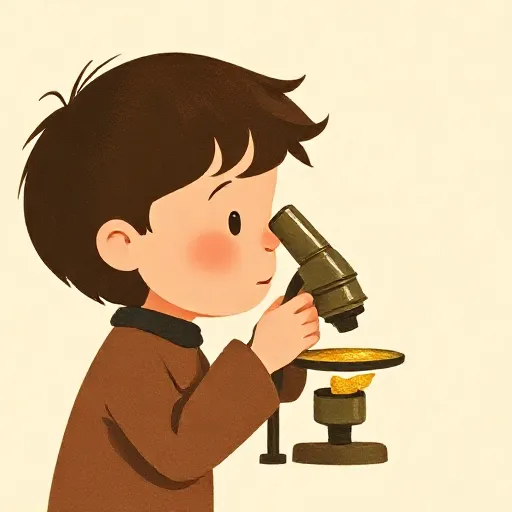
First, we cannot detect real essences. Suppose gold is made of incredibly tiny particles, or corpuscles, whose shapes, sizes, and motions produce yellowness, heaviness, and the way gold melts. Those particles are far too small for our senses to see. Locke imagined what might happen if we had “microscopical eyes.” Perhaps we would see a dazzling texture of tiny parts instead of a smooth yellow surface. But even then, we would only see more shapes and colors — we would never grasp the ultimate inner constitution itself. God, he thought, designed our senses for finding our way to the market, not for reading the fine print of nature.
Second, even if we somehow knew the real essence, we still could not deduce most of a substance’s qualities with certainty. Locke distinguished three kinds of qualities. Primary qualities are the basic ones that corpuscles really have, regardless of anyone watching: size, shape, motion, and solidity. Secondary qualities are powers to produce sensations in us, like color, taste, and sound. Tertiary qualities are powers to produce effects in other substances, like opium’s power to make a person sleep, or gold’s ability to dissolve in a certain acid and not another.
Locke saw almost no necessary connection between primary qualities and the rest. Why should a particular arrangement of tiny shapes and motions give us the taste of sugar rather than salt, or the yellow of gold rather than the blue of a cornflower? He could not conceive how one follows from the other the way a triangle’s angle sum follows from its definition. Because those connections are hidden, we can never sit down and deduce gold’s properties from its inner makeup. We always need to go and look, to test, to experiment. That is why natural philosophy, he concluded, “is not capable of being made a Science.”
Sensitive Knowledge: What Our Senses Can Actually Tell Us
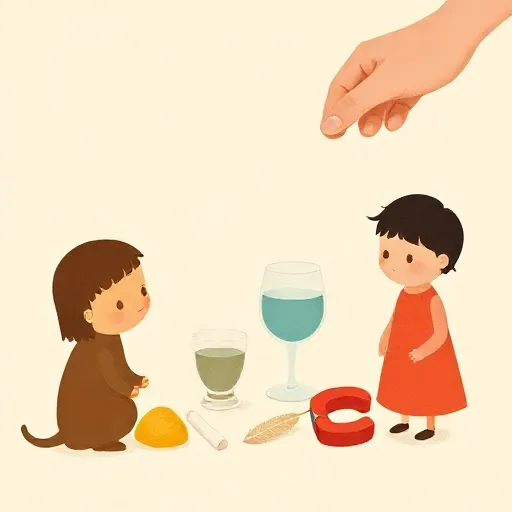
Locke refused to give up completely. If certainty is impossible, he said, we can still have real knowledge — just a humbler kind. He called it sensitive knowledge.
Instead of knowing a substance’s real essence, we build a nominal essence: a list of observable qualities we have found repeatedly co‑existing together. For gold, that list includes yellowness, great weight, the ability to be hammered into thin sheets, and resistance to rust. These are not the deep causes; they are the helpful signs we use to recognize and name gold.
Sensitive knowledge is based on “trials” — observations and experiments. It does not give us necessary connections; it gives us co‑existence. We see that whenever four of gold’s familiar qualities appear, the fifth usually turns up too. But Locke insisted this is only probable, never absolutely certain. Tomorrow, a lump that looks and feels like gold might surprise us by missing a property we expected. Our generalizations are strong guesses, not eternal guarantees.
This may sound weak, but Locke thought it was still genuine knowledge. It is far better than wild opinion because it is tied to what our senses actually show us. And it was exactly the sort of knowledge that the new experimental philosophers of his day — including his friend Robert Boyle (1627–1691) — were busy collecting. Locke’s idea gave their work a philosophical home: you don’t need to grasp inner essences to learn something real about the world.
Locke’s Tug‑of‑War: Believing and Doubting the Invisible Parts
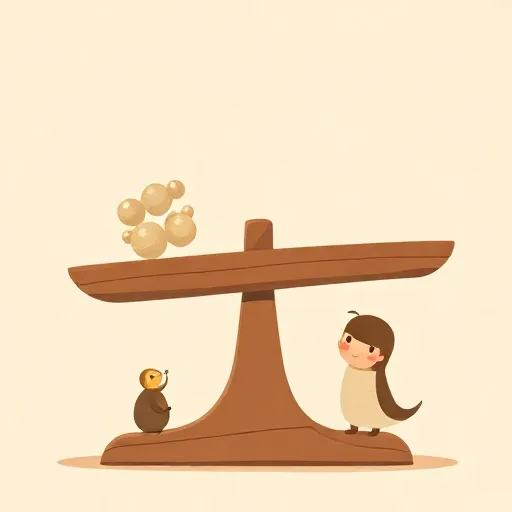
If you read Locke’s Essay carefully, you might feel pulled in two directions. In many passages, he talks as if the corpuscular hypothesis — the theory that material bodies are built from invisibly small particles with only primary qualities — is true. He writes that the real essence of a substance like gold just is the size, shape, and motion of its corpuscles. He seems to lean on the hypothesis when he explains why real essences stay hidden.
But then he pulls back. He calls the corpuscular story a “hypothesis” and says it is not his job to decide which physical theory is correct. More sharply, he points to several phenomena that he thinks the hypothesis cannot explain. How do motions of tiny particles produce a sensation of color in a mind? After Newton’s great book on gravity appeared in 1687, Locke became convinced that bodies can act on each other at a distance, something the strict version of the hypothesis had always denied. He also worried that we cannot understand how simple motion is transferred by impulse, nor how the solid parts of a body stick together at all. Faced with these puzzles, Locke sometimes said that God must have “superadded” certain powers directly to matter — powers that cannot be explained just by shape, size, and motion.
Scholars today still argue about where Locke really stood. Some think he accepted the corpuscular hypothesis as the best available theory, and his skeptical remarks are only about our knowledge of its details. Others argue he was genuinely agnostic, treating the hypothesis as a useful but unproven guess, and using it mainly to illustrate his deeper distinction between real and nominal essences. The debate matters because it shows how a careful thinker can use a scientific theory while also recognising its limits.
What Locke Learned from Newton (And Why It Still Matters)

In the 1690s Locke became friends with Isaac Newton (1643–1727) and studied the Principia closely. Newton’s gravity was a game‑changer. Before, Locke had been sure that bodies can only affect each other by bumping. After reading Newton, he admitted that matter attracts matter across empty space in ways we simply cannot conceive. He credited “the incomparable Mr. Newton” with showing that God can put powers into bodies that go far beyond our tidy ideas.
Locke and Newton shared a certain humility. Both believed we see only the surfaces of things. In his Principia, Newton wrote that we do not know the substance of anything — we see shapes and colors, hear sounds, touch outer skins, but the innermost stuff remains invisible. Locke would have nodded at that.
Why does this still matter for you? When you learn about atoms, quarks, or DNA in science class, you are building sensitive knowledge, not scientia. Scientists don’t look at an apple and see its ultimate essence; they build models that explain and predict, always ready to revise them when new evidence appears. Locke’s big move was to show that this is not a failure. It is what human knowledge of nature looks like. Certainty lives in mathematics; in the physical world, we work with careful, probable, and endlessly improvable knowledge — and that is enough to go a very long way.
Think about it
- If a scientist could predict every property of gold just from knowing its atomic structure, would that count as Locke’s dream of scientia? Why or why not?
- Locke thought angels might have perfect knowledge of nature without using senses. Can you imagine a mind that knows everything about the physical world without ever observing it?
- When you trust your five senses, do you think you are getting certain knowledge, or just a very good educated guess? How would you test the difference?