
Why Did China’s Philosophers Stop Looking Inward?
The Fall of the Ming and a Philosopher’s Resolve
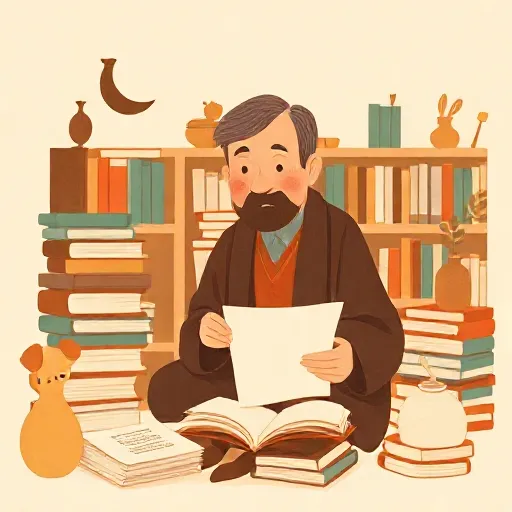
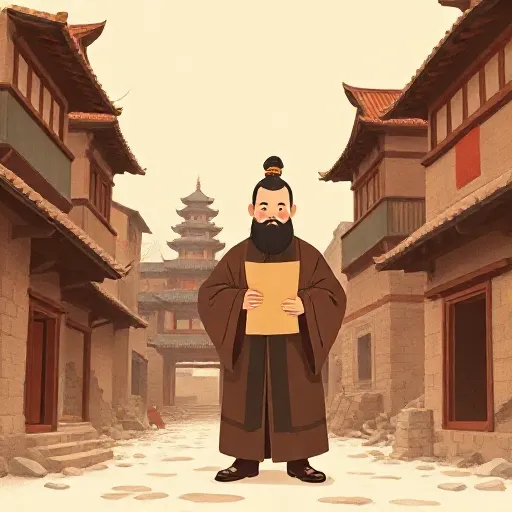
In 1644, the Ming dynasty collapsed. Armies of rebels and Manchu invaders tore through China, and the imperial court fell. A 31-year-old scholar named Gu Yanwu (1613–1682) looked at the wreckage and blamed his fellow thinkers. For years, educated men had spent their days in quiet meditation, debating the subtlest secrets of the universe — while the real world crumbled around them. Gu made a fierce promise: from then on, he would never pursue any learning that could not help govern the state and improve people’s lives.
This story captures a huge shift in Chinese philosophy. The Neo-Confucianism of the Song and Ming periods (roughly 960 to 1600 CE) had prized inward moral introspection. Thinkers believed that the deepest reality was a master pattern called li (principle), and that you could grasp it by turning inward and purifying your own mind-heart. But by the late Ming, a growing number of voices said that this “empty talk” had made scholar‑officials useless. They wanted a philosophy of concrete things: history, institutions, material forces, and practical skills.
Not everyone agrees on how sharp the break really was. Later historians like Liang Qichao (1873–1929) and Hu Shi (1891–1962) portrayed the Ming‑Qing transition as a cataclysmic rupture — the birth of a new, more scientific, progressive spirit. Others, such as the great Confucian scholar Qian Mu (1895–1990), insisted that Qing thought grew organically out of Song‑Ming roots. Still, most scholars do recognize that something major happened. Four powerful currents — vitalism, historicism, utilitarianism, and intellectualism — rose up and rearranged the intellectual landscape.
Vitalism: The World Is Made of Qi, Not Just Ideas

Neo‑Confucians had a two‑story view of reality. Upstairs was li (principle) — an immaterial, eternal pattern like a cosmic blueprint. Downstairs was qi (material force, the psycho‑physical stuff of life). Most earlier thinkers said li was prior and more important; qi was just the messier, physical stuff that followed along. Qing philosophers flipped the house upside down.
Wang Fuzhi (1619–1692) argued that li does not float above qi. Rather, li is simply the way qi organizes itself. He wrote, “In actuality, li exists within qi. Qi is nothing but li.” Imagine a river: you can’t separate the “river‑shape” from the water itself. Take away the water (qi), and there is no shape (li). Wang went further: human feelings and desires were not a dirty by‑product; they were natural and good. Rituals and rules were not imposed from outside to crush desire — they expressed our deepest communal desires.
Huang Zongxi (1610–1695) made the same point bluntly. “If there is no qi, then there is no li,” he said. The words li and qi are just two names for one single thing. He even located moral virtues — benevolence, rightness, wisdom — right inside the shifting movements of qi and emotion, not in some static realm above them.
The mid‑Qing scholar Dai Zhen (1723–1777) pushed this farthest. The dao (the Way) was not an abstract eternal path. It was living, drinking, eating, talking, and moving. He argued that human desires were the natural soil out of which moral principle grows — not weeds to be pulled. This vitalist outlook did not become a formal “materialism” like Western ideas. But it gave a new dignity to the physical, emotional, and everyday world.
Historicism: No Timeless Blueprint, Only Changing Times
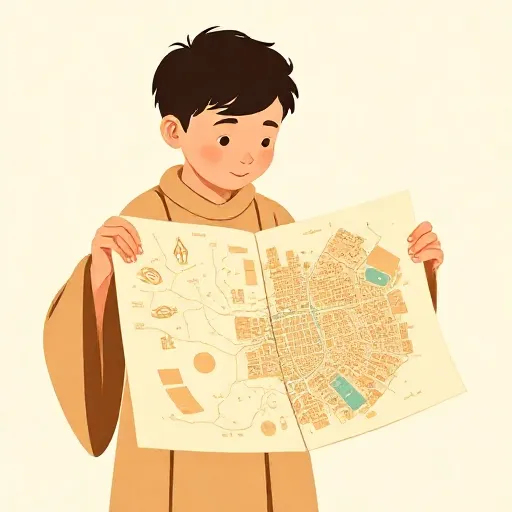
If li and dao weren’t timeless blueprints hanging above history, then truth must be found inside history. This is the core of historicism — the idea that meanings and principles are embedded in particular times, places, and events, and that you have to study those changing conditions to understand anything.
Huang Zongxi opened his great history of Ming thought by declaring that the mind‑heart has no fixed fundamental substance. Its substance is simply the sum of what it has done, in all its “myriad different forms.” Institutions, too, change. He looked at the long course of Chinese history and concluded that you could not just copy the ancient systems of the Three Dynasties; each age must find its own way.
Wang Fuzhi built a whole philosophy around shi (conditions, circumstances). Principle, he said, is always embedded in concrete qi and only becomes visible through actual conditions. “Conditions become different when times are different,” he wrote. “Principle also becomes different when conditions are different.” Even the ancient classics did not give unchanging models; they governed their own world, not yours.
Gu Yanwu was just as practical. He argued that institutions — even ones he admired — had to change. He wrote that sticking rigidly to outworn systems would lead to “the gravest of calamities.” And yet, none of these men fully abandoned the ancient sages. Huang still believed in universal principles from the Golden Age; Wang held that timeless moral truths about loving the people and promoting education ran through all of history; Gu championed the “four bonds” of propriety, righteousness, integrity, and shame as constant guides.
Later, Dai Zhen and Zhang Xuecheng (1738–1801) pushed historicism even further. Zhang made the explosive claim that “the Six Classics are all histories.” The classics were not sacred books dropped from heaven; they were the records of the ancient rulers’ governments. To find the dao, you had to examine the entire course of history, including the recent past. Yet both Dai and Zhang still yearned for a single, overarching “essential dao” behind the flux. Qing historicism was thus a tense, live argument — a new sense of time and change that pulled against a deep loyalty to ancient wisdom.
Utilitarianism: Learning Must Fix the World
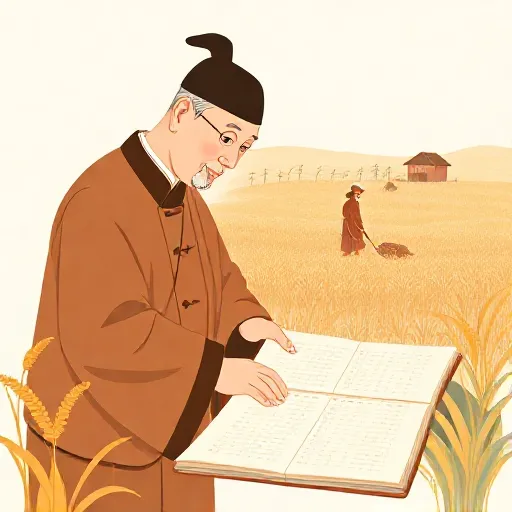
All of these shifts fed a powerful practical drive. The phrase jingshi zhiyong (ordering the world and extending utility) became a rallying cry. The moral self‑cultivation that earlier Confucians treasured mattered only if it issued into effective action.
Gu Yanwu despised “empty and vacuous learning.” He wrote his masterwork, Records of Daily Knowledge, so that a future ruler could “discern in it actual practices and affairs” and lift the age to order. The sages themselves, he said, wrote books to discard error and change customs — not to float in abstraction. A profound person, for Gu, pursues learning “to illuminate the Way and save the world.”
Huang Zongxi thought the duty of a true scholar was “to bring peace to the country and preserve society.” He mocked those who boasted of great inner enlightenment but were “bemused and befuddled” when a real crisis came. Classics and histories were valuable because they recorded “the enterprise of ordering the world.”
Wang Fuzhi said every piece of writing should lead you back to “your body and mind‑heart” in order to “establish the basis for cultivating oneself and governance.” History, he argued, was supremely valuable because it gave “the past as the teacher of the future” — but only if its practical lessons were made clear.
This utilitarianism did not vanish when later eighteenth‑century scholars dove into painstaking kaozheng (evidential research). Qian Daxin (1728–1804), a towering figure in that movement, insisted that the Five Classics were meant “to render the world good,” and that Confucian learning “rests with the illumination of the substance in order to extend utility.” Zhang Xuecheng put it most memorably: “Historical learning is for the ordering of the world. It is surely not writings of empty words.” Practical statecraft and the most meticulous philology were seen as allies, not enemies.
Intellectualism: Seek Knowledge Outside, Not Just Within
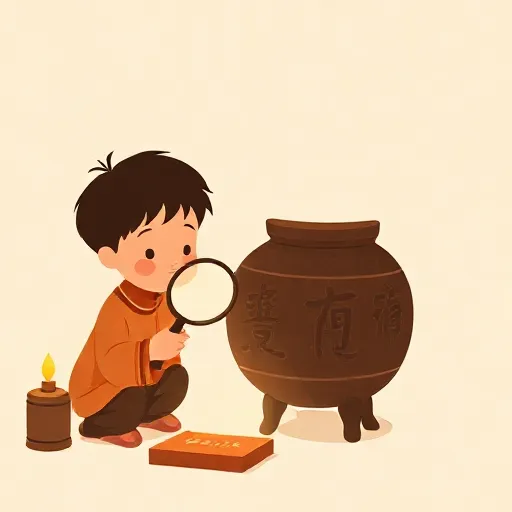
Perhaps the most decisive turn was the new status given to external, discursive knowledge. Neo‑Confucians had often prioritized zun dexing (honoring the virtuous moral nature within) and treated book‑learning as secondary. The Qing generation championed dao wenxue — following the way of inquiry and learning, which meant wide reading, empirical observation, and careful philology.
Gu Yanwu declared that the study of principle was nothing other than the study of the classics. If you wanted to understand the sages, you first had to know phonology — how ancient words sounded — and then analyze texts word by word. He called for “broad learning” based on “multifarious observation.”
Wang Fuzhi attacked the idea that you could simply have a mysterious, direct enlightenment without study. Knowledge, he said, comes from your senses engaging with the “changing external forms” of the world: the sun and moon rising, seasons turning, rain falling. You must “investigate things” with both your mind‑heart and your seeing and hearing.
Dai Zhen put it bluntly: “If the pursuit of study and inquiry was abandoned, would it then be possible to lead a life for the reverent realization of one’s moral nature?” He thought moral nature actually feeds on learning. Even Huang Zongxi, a follower of the inward‑looking Lu‑Wang tradition, reinterpreted his hero Wang Yangming (1472–1529), arguing that the act of “extending innate moral knowing” just was practice, study, and clear differentiation.
This intellectualism reached its fullest expression in the kaozheng movement, a vast enterprise of evidential research that scrutinized every ancient word, artifact, and institution. It was a methodology that trusted what you could verify, not what you intuited. Yet, as with the other three currents, it never quite escaped its parent tradition. Many kaozheng scholars still believed they were recovering the single, true, ancient dao. The break from the inward past was real — but it was also, in a deep sense, a search to save that past.
Why This Still Matters: The Outward Turn and You

Qing philosophy is not just a story about seventeenth‑century China. It is a live question about where you think solid knowledge comes from. If you face a hard decision — say, how to make a fair rule for your class — do you listen mainly to your inner sense of right and wrong? Or do you hunt down examples from history, gather facts, talk to everyone involved, and weigh the concrete outcomes? The Qing thinkers, in their own messy, half‑traditional way, shifted the balance dramatically toward the second path. They believed that a world built on “empty talk” had failed, and that only by looking outward — at material life, at changing institutions, at actual texts and artifacts — could you hope to bring peace and order.
And yet they also show us that the past never fully lets go. Every one of them, even the boldest, used the language of the ancient sages and longed to recover some kind of timeless core. This tension between tradition and innovation, between universal values and particular moments, is something we all inherit. Understanding it in their world might just help you see it better in your own.
Think about it
- If you could learn what is right by either meditating quietly on your own thoughts or by studying dozens of real‑world cases from history, which would you trust more? Why?
- Can a community keep its core traditions while completely replacing its old institutions with new ones? Is there a point where changing everything means losing the tradition itself?
- Gu Yanwu said he would never study anything that did not help the world. Do you think it is ever worthwhile to study something just because it fascinates you, even if it has no obvious practical use?