Can Two Philosophical Worlds Ever Really Talk?
The Book That Starts by Saying Words Can’t Get There

Imagine cracking open a very old book — so old it was written more than two thousand years ago in a language you don’t speak. The first line, once you read the translation, tells you this: the truest truth cannot be put into words. Then the book keeps going for eighty-one chapters, using words to explain why words will never quite get you there.
This is the Daodejing, one of the founding texts of Daoism, a Chinese philosophical tradition. It does not open with a definition or an argument. It opens with a kind of gentle self-destruction — a warning not to trust the very thing you are about to read. To a reader raised on Western philosophy, where arguments march forward step by step and conclusions get nailed down with proofs, this can feel like arriving in a country where nobody obeys the traffic laws you grew up with.
So a real question appears: when two traditions think so differently about what thinking even looks like, can they ever truly understand each other? This is the problem of commensurability — the question of whether ideas from one tradition can be translated into the language of another without getting badly distorted along the way.
Some philosophers say no. Some say yes, we have to. And some say the truth is messier than either answer.
When Two Worlds Seem Impossible to Translate

The strongest position is called radical incommensurability. It says that traditions like Chinese and Western philosophy are so deeply different — in their basic concepts, in how they ask questions, in what counts as a good answer — that they cannot meaningfully talk about the same things. There is no shared measuring stick.
Look at a few examples and the worry becomes clearer. In the Confucian text called the Analects, you find the idea that a well-ordered state grows naturally out of well-ordered families. If you learn to be a good son or daughter, the argument goes, you are already learning to be a good citizen. The state is the family, just larger. Meanwhile, a major thread in modern Western thought imagines the state as something like a contract — an agreement among equals who want to protect their own private interests. These are not just different political opinions. They start from different pictures of what a human being even is.
Or take the Daoist idea of wuwei — often translated as “nonaction.” It does not mean sitting still and doing nothing. It means acting so smoothly, so in tune with the grain of a situation, that the action feels effortless, like a dancer who has stopped counting steps and simply moves. The seventeenth chapter of the Zhuangzi (another Daoist classic, from the 4th century BCE) tells the story of Cook Ding, who carves up an ox so gracefully that his knife never goes dull. He does not do this by thinking hard about anatomy. He does it by feeling the spaces between the joints and letting his body flow through them. The text says he moves according to tianli — heavenly patterns — not according to a rulebook.
Western philosophy has its skeptics about reason, certainly. But the idea that your best thinking happens when you stop thinking — that has never been the mainstream. So if one tradition prizes discursive argument and the other warns you away from it, how do they even begin a conversation?
Getting Close Enough to Know You’re Far Away

The contemporary philosopher Samuel Fleischacker offers a more moderate version. Sometimes, he argues, we can understand another tradition just well enough to know that we do not fully understand it. We grasp that its people value something deeply, and we may even think they are wrong to value it so much — but we cannot fully enter into why they find it so compelling.
Fleischacker’s idea builds on the thought that every culture runs on a world picture — a set of background assumptions about what matters, what counts as evidence, and what interests thinking should serve. Modern Western science, for instance, is built around the interests of prediction and control. You want to know what will happen so you can manage it. But Chinese traditions like Daoism and Confucianism often revolve around a different interest: attunement. To become attuned to the world is to see its goodness and to know your place in its order — not to manipulate it, but to harmonize with it.
The philosopher Charles Taylor (born 1931) argues that modern science deliberately severed the link between understanding and attunement. And in terms of predicting and controlling physical nature, that severance brought enormous power. But Taylor also points out that no single argument can prove global superiority. If attunement is a genuine ideal, we moderns have failed at it miserably — even as our technology has raced ahead. You cannot prove that prediction matters more than harmony, because the proof itself would have to assume one interest over the other.
This is a kind of moderate incommensurability. The traditions are not sealed boxes. You can glimpse across the gap. But you may not be able to settle the deepest disagreements between them — because the disagreements are not just about facts. They are about what is worth caring about in the first place.
The Rule That Says We Must Agree
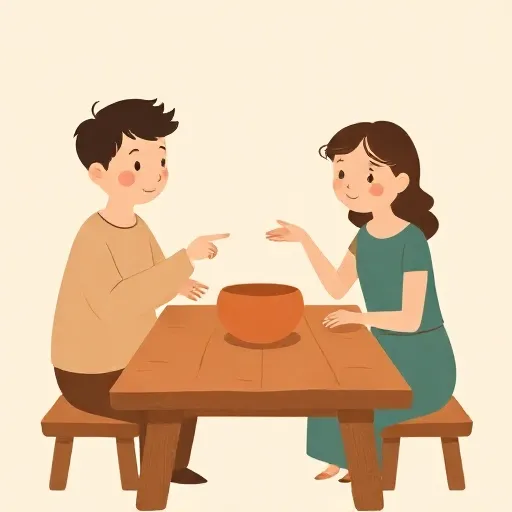
Not everyone accepts that traditions can be deeply incommensurable. The American philosopher Donald Davidson (1917–2003) argued for a strong principle of charity in interpretation. A belief, he said, gets its identity from its place in a whole pattern of beliefs. If you try to interpret someone and you attribute to them a pattern of beliefs wildly different from your own — beliefs you think are massively false — you start to lose your grip on what their beliefs are even about. To identify someone’s beliefs as being about the same subject matter as yours, you must assume a large amount of agreement.
Applied to cross-cultural philosophy, this means: if we can understand Confucian ideas about the state as family, it must be because we share enough background with them to make sense of the idea — even if we disagree with it. And indeed, Western thought has its own versions of the same theme. David Hume (1711–1776) explicitly rejected the contract theory of government, arguing that social bonds grow more naturally from small human groups like families and communities. The Confucian idea is not alien. We can feel its pull, even if we do not endorse it.
But there is a problem with pushing charity too far. The fact that we can find echoes of another tradition’s ideas in our own — and that we can imagine why someone would find those ideas appealing — does not mean we actually share the beliefs. Consider filial piety, the duty to honor and care for one’s parents. Many cultures have some version of this. But the Confucian tradition gives it an unusual intensity. One story in the Analects tells of Cengzi, a student of Confucius (551–479 BCE), who is gravely ill. He bids his students to look at his hands and feet. All his life, he explains, he has kept his body intact — because his body was a gift from his parents, and preserving it was part of his duty to them. This idea, that bodily care is a form of gratitude to one’s parents, has remained central in Chinese culture for millennia. We in the West might recognize the value of gratitude, but we do not typically give it that same weight or scope.
The philosopher Thomas Kasulis puts the point with a visual metaphor: what is foreground in one culture may be background in another. We share many of the same elements. But we arrange them differently, and the arrangement changes everything.
Why This Fight Still Matters

So where does this leave us? The philosopher Alasdair MacIntyre (born 1929) offers a useful distinction. There is a difference between being unable to understand another tradition and being unable to settle conflicts between traditions. A person who grows up in one culture and then migrates to another might become fully bilingual in both traditions. They understand each one perfectly well. But they may still be unable to resolve certain disagreements — instead having to say, “This seems true to this community, and that seems true to that community.” This is evaluational incommensurability: not a failure of comprehension, but a standoff between different ways of weighing what matters.
That standoff matters for you, right now, even if you have never read a page of Chinese philosophy. You live in a world where traditions constantly bump into each other — in your classroom, in the news, in arguments with friends whose families come from different places. The question of whether and how we can understand each other across deep differences is not just a puzzle for scholars. It is a daily challenge.
And here is what the comparative philosophers keep discovering: diving into another tradition often reveals that your own tradition is less uniform than you thought. Western philosophy contains its own skeptics about reason. Chinese philosophy contains its own rigorous arguers — the philosopher Mozi (5th century BCE) criticized Confucians for uncritical acceptance of tradition and demanded explicit standards for evaluating beliefs. Mencius (4th century BCE) and Xunzi (3rd century BCE) engaged in sophisticated debates about human nature that still resonate with modern psychology. The boxes are never as sealed as they first appear.
Comparative philosophy does not promise that all traditions will merge into one happy agreement. It promises something more interesting: that by trying to understand what is foreground for someone else, you may notice what is foreground for you — and realize that your own arrangement was never the only possible one.
Think about it
- If you grew up in a culture that valued harmony over individual achievement, would you be a different person — or would you still be you, just making different choices?
- Can you think of something you believe deeply that someone from a very different culture might never fully understand, even if you explained it perfectly?
- If two traditions disagree about something important — like whether family loyalty should come before fairness to strangers — does one of them have to be wrong? Or could they both be right in different ways?