Can Your Heart Know Something Science Can’t?
The Last Emperor Falls—and Old Ideas Are on Trial
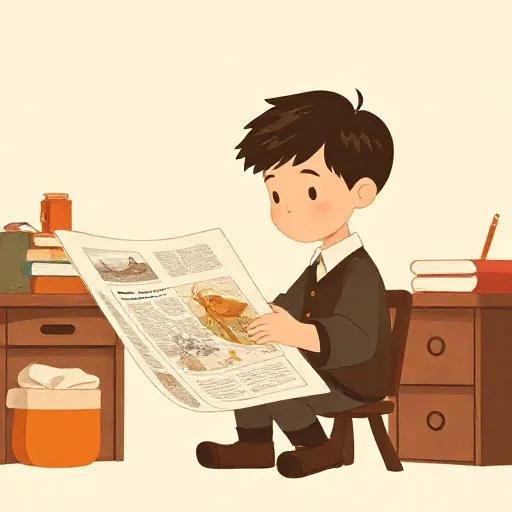
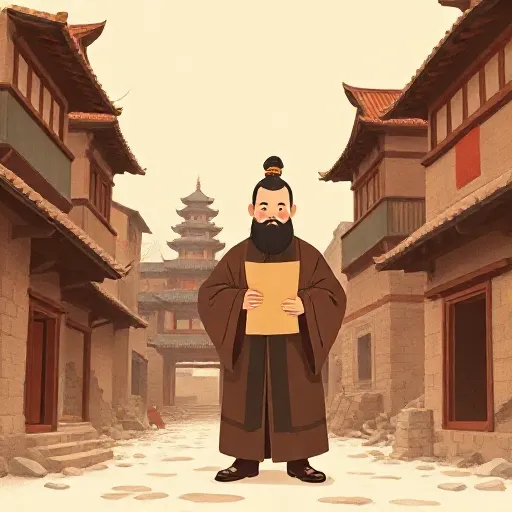
In 1911, China’s last emperor was a six‑year‑old boy. Within months, the empire collapsed, and a new republic promised to modernise everything. Young Chinese started reading Darwin and John Stuart Mill. Some shouted that traditional culture—especially Confucianism—was a weight dragging the country down. Others insisted it was the only moral anchor China had.
Among this second group were four philosophers who would shape modern Confucianism: Xiong Shili (1885–1968), Mou Zongsan (1909–1995), Tang Junyi (1909–1978), and Xu Fuguan (1903–1982). They had lived through invasions, civil war, and the fall of the old world. They admired Western science and democracy, but they were horrified by the spiritual emptiness they saw in the West. People obsessed over money, treated others as objects, and reduced right and wrong to whatever satisfied their desires.
Their mission was to show that Confucianism was not an obstacle to the modern world. It could support science and democracy, but more than that, it offered something the West had lost: a way to know what is truly good—not through experiments, but through the heart.
Two Ways of Knowing: Microscopes and the Heart‑Mind
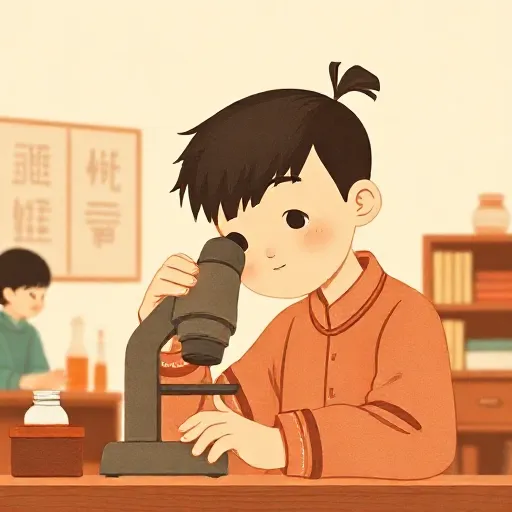
All four philosophers drew a sharp line between two kinds of knowledge. One kind is the knowledge of seeing and hearing—what we learn from science, books, and experiments. It helps us understand the world, build bridges, and cure diseases. The other is knowledge of the virtuous nature, which Xiong Shili called wisdom. It is not about facts; it is a direct awareness of what is morally right.
Xiong explained it this way: ordinary knowledge splits the world into me over here and the object over there. But wisdom does not divide—it is like a feeling that fills your whole mind without any gap between you and the situation.
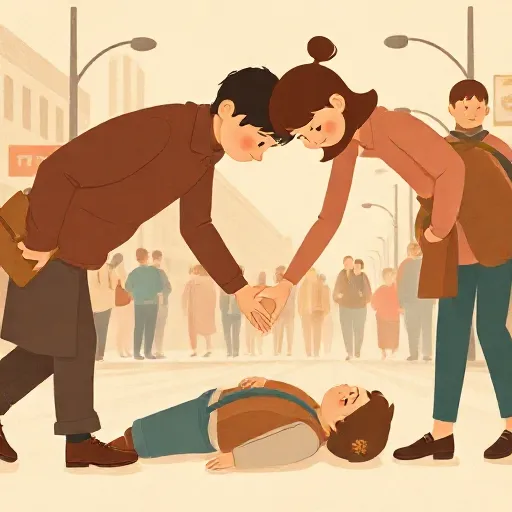
Mou Zongsan took this further. He said that when you see a toddler about to fall into a well, you don’t stop to calculate how to help. A flash of alarm and compassion surges up instantly. That flash, he argued, is intellectual intuition—a direct, non‑sensory grasp of the fact that you have a free, moral self. The German philosopher Immanuel Kant had claimed that free will could never be known, only assumed. Mou disagreed: the flash of compassion shows you are free, right now, in a way no theory can deny.
Tang Junyi called the same capacity affective connection. He meant that your mind can reach out and truly touch another person’s mind, recognising them as a subject just like you. Xu Fuguan named it embodied recognition—the undeniable feeling of shame, pity, or respect that rises in your chest.
All of them insisted that science, for all its power, cannot prove or disprove these moral feelings. If a psychology experiment couldn’t find your sense of right and wrong, they’d say: that’s a problem with psychology, not with your feelings.
Are You Two People at Once? The True Self and the Desiring Self
If you feel hungry for a snack or frustrated when you lose a game, is that the same self that feels horrified by cruelty? Mou and Tang both said no. Borrowing a page from Kant, they distinguished two levels of the person.
There is an empirical self—the part driven by desires, comfort, and self‑interest. Then there is a transcendental self (Mou called it the true self or fundamental mind). The transcendental self is what makes you capable of feeling compassion, shame, and moral obligation. It is not shaped by your upbringing or your genes; it is the core of what it means to be human.
Tang argued that you can see this true self in every cultural activity—even science. When a scientist searches for truth, she must set aside her immediate cravings and trust that other minds can understand her results. That act of reaching beyond herself already shows a moral concern for others. The desire for truth, he said, is a form of affective connection.
Xiong Shili was especially horrified by how some early Darwinists described life as a competition where the strong crush the weak. He pointed to examples of animals helping each other and said mutual aid is more natural than war. Treating cruelty as part of human nature, he warned, makes it harder to fight evil.
But how do you know which feelings come from your true self and which come from selfish desire? This was a sore spot. Critics pointed out that from the inside, a selfish impulse can feel just as powerful and “right” as a moral one. Mou never fully explained how to tell the difference. He seemed to trust that humans learn over time to hear the genuine moral voice—but he never gave a test like Kant’s “could everyone act this way?”
Why Democracy Needs Sages, But Sages Are Hard to Find

The traditional Confucian dream was government by a sage king—a ruler so wise and good that he naturally did what was best for the people. The problem, Mou Zongsan said, is that sages are rare. When the next ruler is cruel or careless, there is no safety net.
Mou’s remedy was a startling idea called self‑restriction. Morality, he said, must voluntarily pull back to make room for value‑neutral institutions like elections, courts, and a free press. These structures do not depend on the virtue of the person in charge; they work because everyone has to follow the same rules. This “indirect” link between morality and politics, Mou argued, actually protects moral goals better than trying to run everything through a single virtuous leader.
Tang Junyi built democracy on a different foundation: the equal worth of every person’s moral mind. If I want the right to have a say in government, reason demands that I grant you the same right. Democracy, for him, was not a Western invention—it was the logical conclusion of the Confucian belief that every human being possesses a humane heart.
Xu Fuguan went furthest. He claimed that democracy is the true fulfilment of rule by virtue, not its enemy. In the old system, people had to hope their ruler would set aside his personal preferences. Democracy removes that gamble: leaders must follow the people’s wishes even when they don’t feel like it. The virtue is baked into the system, and ordinary people are free to develop their own moral lives.
All three rejected communism and one‑party dictatorship. They believed Confucianism demanded a government that respects every person’s ability to become good—and that requires giving everyone a voice.
Why It Still Matters: The Search for a Moral Anchor

Today, we live in a world that measures almost everything with data. Algorithms guess your next move. Scientists scan brains and explain emotions as chemicals. If right and wrong are just feelings, why should anyone take them seriously?
The modern Confucians would say you’re asking the wrong question. They’d point to the shock you feel when you see someone treated unfairly, or the warmth that spreads through you when a friend forgives you. Those experiences, they’d argue, are not illusions; they are your heart‑mind telling you something true about human worth. You don’t need a lab to prove it any more than you need a ruler to know your hand hurts.
Their dream was a world where science and compassion walk together—where submarines and microscopes coexist with a deep respect for the moral self. In Taiwan, Hong Kong, and even mainland China today, students still study Mou and Tang. The idea that democracy needs a moral backbone, not just laws and money, is a live debate in many countries. The four philosophers’ answer—that our ordinary feelings of pity, shame, and respect are the starting point—remains a challenge to anyone who thinks goodness is just a number.
Think about it
- If a scientist could predict every choice you will ever make, would it still make sense to blame someone for hurting a friend? Why or why not?
- You meet someone who insists that right and wrong exist only in your head, like a preference for chocolate or vanilla. Could you ever convince them otherwise without using a single fact from science or religion?
- Can a country be truly fair if it does not believe that every person—no matter how selfish—has a core of moral worth? What might go wrong?