
Why Do You Follow Rules Nobody Is Enforcing?
The Empty Street Puzzle
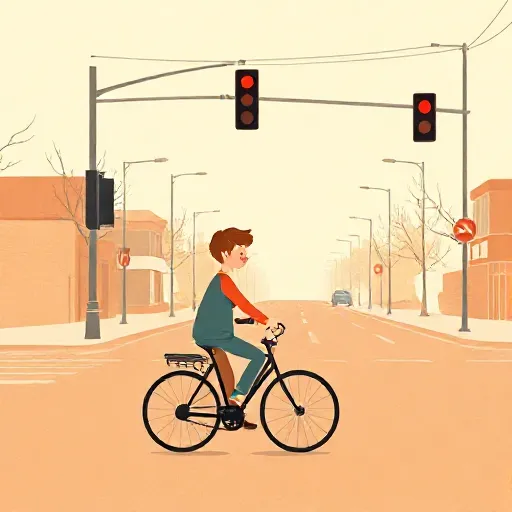
Imagine you are walking home. You reach a crosswalk. The light is red. There are no cars anywhere. No police officer watches from a corner. No one else is around to see what you do. Do you cross, or do you wait?
Most of us feel a little tug in that moment. Even if we decide to cross, part of us knows we broke an invisible rule. That feeling—the sense that something should or shouldn’t be done even when nobody is checking—is what philosophers and scientists call a norm. Norms are the rules a group shares about what is appropriate, allowed, required, or forbidden in different situations. They are not just habits. They come with social pressure: a side-eye, gossip, a scolding, or even being pushed out of the group.
The big puzzle is this: how does a mind built from cells and electrical signals learn to feel the weight of an invisible rule? Why do we enforce rules on other people, and even on ourselves? Researchers who study normative cognition—the mental machinery that lets you learn, follow, and enforce norms—are trying to crack that puzzle.
The Hardware for Rules: Built-In or Learned?

One way to think about your brain is as a tool kit. Some tools might be specialized for specific jobs. Christian Wolff (1679–1754), an early figure in this conversation, believed reason could figure out moral rules from scratch. But modern scientists ask a different question: is there a piece of mental equipment that is specifically designed to handle norms?
Some researchers argue yes. They point to the idea that children seem almost too good at catching on to rules. You do not need to sit a three-year-old down and teach her a classroom policy. If she watches someone play with a toy in a specific, unusual way, she will often scold a newcomer who plays with it “wrong,” even if no adult told her to.
This has led thinkers like Chandra Sripada and Stephen Stich to propose that we are born with a two-part engine inside our minds. The first part is a norm acquisition mechanism. Its job is to scan your surroundings for clues that a rule exists, figure out what the rule is, and then hand that information off. The second part is a norm execution mechanism. It stores the rule in a personal database inside your head, spots when that rule applies, and—this is the crucial part—generates motivation to obey it and to punish people who don’t.
The Ultimate Copycats and a Promiscuous Mind
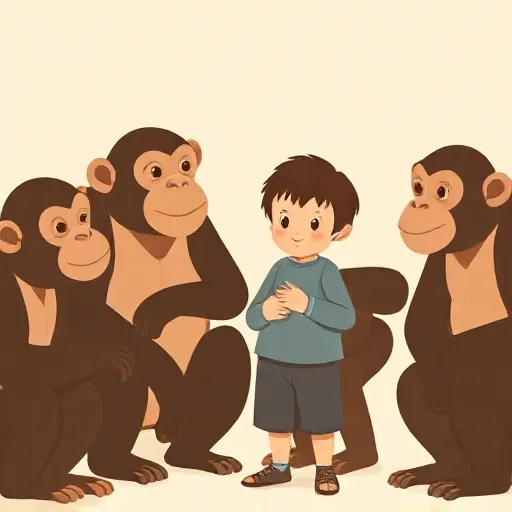
If you have ever seen a younger sibling imitate you down to the exact way you hold a fork, you have witnessed a human superpower. Researchers call this overimitation. A chimpanzee will copy the steps needed to get a raisin out of a box and skip the useless ones. A human child will copy everything—even the obviously pointless spin of the lid—and then get mad at someone who leaves the spin out.
This “promiscuous normativity” means kids sometimes mistake something a person simply does for something a person ought to do. If you show a group of children and adults that a certain type of behavior is common in a community, they will start to negatively judge a community member who acts differently, even if nobody ever said there was a rule. It is a leap from “everyone does this” to “everyone should do this.” Our wiring seems to encourage that leap.
That brings up a deep question about what drives you to follow a rule. Is your motivation instrumental—you obey just to get a reward or dodge a punishment? Or does your mind have a capacity for intrinsic motivation, where a rule, once truly learned and internalized, tugs on you for its own sake? Think of tipping at a restaurant you will never visit again. If you still leave the tip, you might be feeling the intrinsic pull of an internalized rule.
The Moral Scrapbook or the Big Sorting Machine?

Look around your life. You follow rules about how to dress, how to greet your grandmother, how to take turns during a kickball game, and how not to hit someone who annoys you. But do all these rules live in the same mental folder?
Some philosophers think your mind distinguishes sharply between moral rules and mere social conventions. According to one influential view, a moral rule has a special signature: people feel it applies everywhere, to everyone, even if an authority figure says otherwise. Harming someone for fun feels wrong even if the President announced it was okay. Wearing pajamas to a wedding is just a convention that could be changed by a new trendsetter.
This picture is disputed, however. Other researchers suspect that what counts as “moral” is itself a cultural product. While all humans might have the same general-purpose norm machinery in their heads, the things that get loaded into it—etiquette, sacred values, fashion, fairness—vary wildly across cultures. What feels like a deep, universal moral truth to you might, on this view, be a rule your particular community happened to stamp with a heavy moral weight.
Why You Agree to Be So Odd

This brings us back to the empty street. Why did that red light feel heavy? Groups that share rules can cooperate on an astonishing scale. You can build a highway system, trade stocks, or play a massive online game with thousands of strangers because you share a huge pile of invisible rules about fairness, trust, and punishment.
Some thinkers argue that this cooperation is so vital that evolution built a dedicated “tribal social instinct” into humans. Cultures over time competed with other cultures, and the ones that found a way to make their internal rules stick—through guilt, shame, and a willingness to scold rule-breakers—succeeded.
That doesn’t mean your rule-following is always for the best. A heavy, costly norm can spread just as easily as a useful one. The same mental equipment that makes you wait politely at a crosswalk is also what makes entire societies commit to rigid, even harmful, traditions. The question is not whether we should have norms—we can’t escape them—but how to look more clearly at the invisible code running your life and see the engine underneath.
Think about it
- Imagine you find a birthday gift you don’t like. You know the giver will never find out you threw it away. Is throwing it out wrong, and if so, where does that rule get its power?
- If a group of kids at school starts to treat a harmless, goofy habit as a serious social rule, how could you argue that it doesn’t really matter? Could you ever prove it?
- Do you think a robot that perfectly follows a polite rule—like holding the door—is actually following a norm in the same way you do, or is something crucial missing?