Doctors Keep Secrets. But When Should They Tell?
“This Stays Between Us”
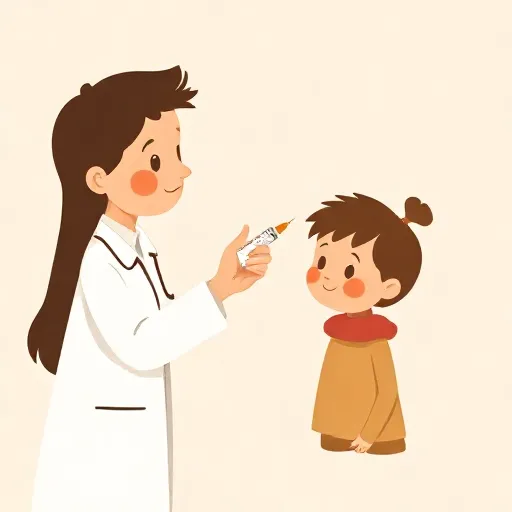
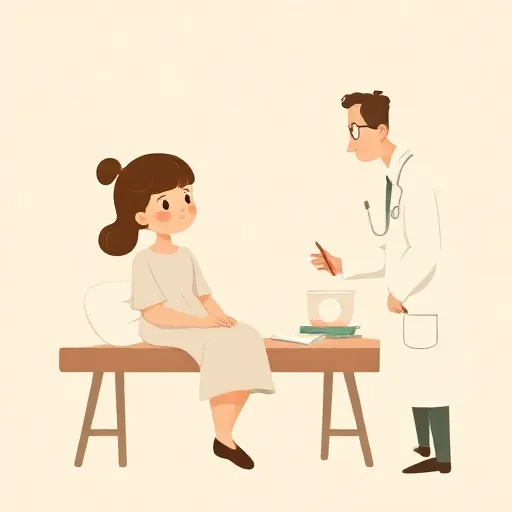
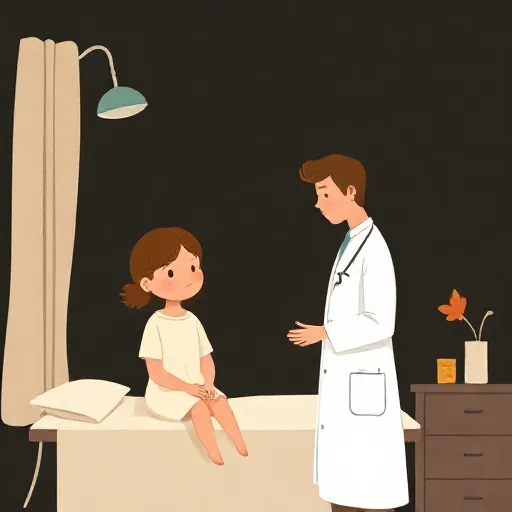
You’re twelve years old and sitting on the crinkly paper of an exam table. The doctor smiles and says, “What we talk about here stays here.” You feel yourself relax. Maybe you whisper something you haven’t even told your parents — a rash you’re embarrassed about, or a worry that your head sometimes feels foggy. That promise is called confidentiality, the rule that health workers must keep your personal health information secret, sharing it only with people you allow.
But what if keeping that secret could put others at risk? And is your medical information truly private today, when it’s stored in computers and shared across thousands of eyes? Philosophers have wrestled with these questions for centuries. They’ve asked why confidentiality matters, when it should be broken, and who really controls your health data.
The Secret That Helps You Get Better

Why do doctors keep secrets in the first place? Ancient Greek healers, following the physician Hippocrates (460–370 BCE), swore oaths to keep patient information private. Modern philosophers give several reasons why this tradition is wise.
One big reason is practical: if people feared their doctor would blab, they might avoid seeking care. Suppose you had a strange mole but worried your classmates would find out and tease you. If you trusted your doctor’s secrecy, you’d get it checked early, maybe saving your life. Philosophers call this a utilitarian argument — confidentiality leads to healthier people and lower costs because diseases are caught sooner. Sissela Bok (born 1934), a philosopher who studied secrecy deeply, described confidentiality as guarding the boundaries around shared secrets and argued it protects trust and human well-being.
But some philosophers think confidentiality isn’t just about usefulness. They say it shows respect for human dignity. Your health details are deeply personal — things like incontinence, anxiety, or a genetic condition that runs in your family. Keeping that information private treats you as a person with feelings and choices, not a case file. Others point to fairness: you might feel that you “own” your health information, especially something as unique as your DNA. If you paid for medical services, you should control who sees your data. The idea that knowledge is power also supports keeping medical details in the patient’s hands.
So, confidentiality is backed by a mix of common sense, respect, and fairness. But no philosopher thinks it’s an absolute rule. There are times when even the deepest secret must be told.
When the Doctor Must Speak Up
Imagine a doctor learns that a patient plans to seriously harm someone. In the United States, a famous legal case from 1976 ruled that mental health professionals have a duty to warn potential victims. The patient’s privacy is important, but protecting a life matters more. This is one major exception to confidentiality.
There are others. Health care workers are required to report suspected child abuse — even if they promised the child or family they’d keep it quiet. A six-year-old with unexplained broken bones needs protection, and doctors cannot stay silent.
Then there’s the threat of infectious diseases. When COVID-19 swept the globe, public health officials asked people to share symptoms, get tested, and reveal their contacts. In many places, governments made symptom reporting mandatory. The ethical reasoning here is that an individual’s privacy cannot outweigh the community’s right to avoid a deadly outbreak. For centuries, societies have quarantined people with highly contagious illnesses like Ebola or measles, even against their will.
Philosophers accept these exceptions because they prioritize preventing serious harm over total privacy. As you can see, the line between keeping a secret and breaking it is drawn where lives are at stake.
Your Digital Health Diary: A File with Many Eyes
Even when doctors try to keep your secrets, modern technology makes it tricky. Most medical records are now stored electronically. Data protection laws, like HIPAA in the United States, set rules for who can see your files. But data breaches happen: a hospital laptop is stolen, a hacker breaks into a database, or an employee accidentally emails the wrong list. Suddenly, thousands of patients’ names, diagnoses, and medications are exposed.
Philosophers ask: is a data breach itself a harm, even if nobody reads the information? Some say yes, because it increases the risk of medical identity theft — someone using your details to get treatment or buy drugs in your name. That risk damages your sense of security and control.
Also, many of us voluntarily give away our health data. You might wear a fitness tracker that monitors your heart rate, counts your steps, and logs your sleep. The app company might sell that information to advertisers or researchers. Teens share mental health struggles on social media, trading privacy for support and advocacy. Philosopher Anita L. Allen (born 1953) has noted that today’s culture of openness sometimes conflicts with old ideals of secrecy. We’re navigating a world where you can choose to broadcast your surgery or keep a cancer diagnosis hidden from even close friends — both are possible.
Then there’s the challenge of anonymity. Researchers often promise that your name won’t appear in studies, but de-identifying data isn’t foolproof. Computer scientists try “differential privacy” methods to shield individuals, but it’s an ongoing battle. The more we digitize, the harder it is to guarantee that a secret stays secret.
The Right to Decide: Your Body, Your Choice?
So far we’ve focused on informational privacy — who sees your health facts. But there’s another kind of privacy that philosophers and courts have debated: decisional privacy. This means the freedom to make personal medical choices without the government or strangers interfering.
A landmark example is the 1976 case of Karen Quinlan, a young woman who fell into a coma and was kept alive by a breathing machine. Her parents asked the hospital to turn it off, believing Karen wouldn’t want to live that way. The New Jersey Supreme Court agreed, saying that a person’s right to privacy included the right to refuse life-saving treatment. Later, in the case of Nancy Cruzan (1990), the U.S. Supreme Court confirmed that patients have a right to refuse medical care, even artificial feeding. Philosophers like Ronald Dworkin (1931–2013) argued that these decisions are deeply personal; they involve a person’s own convictions about what makes life meaningful.
Decisional privacy also plays a huge role in debates about reproduction. Some philosophers, like Judith Jarvis Thomson (1929–2020), argued that a woman has a right to control what happens to her own body, including whether to continue a pregnancy. Opponents counter that an unborn life is a separate moral being that deserves protection. This remains one of the most heated ethical disputes in the world. Similarly, questions about fertility treatments or whether parents can choose the sex of their child through embryo screening all hinge on how far decisional privacy extends.
And there’s a twist: sometimes health care providers themselves claim a privacy right — a right to refuse to perform procedures that violate their personal beliefs. A pharmacist might decline to dispense emergency birth control. A doctor might decline to refer a patient for an abortion. So the clash of decisional privacies becomes a tug-of-war: whose choice wins, the patient’s or the professional’s?
So, Can You Really Keep a Secret?
Back to our exam room. That reassuring promise “this stays between us” is powerful but imperfect. Confidentiality helps you trust a doctor enough to be honest, and it treats you with dignity. But if your secret could endanger a child, a partner, or a community, the doctor’s silence may become a harm. And in the age of electronic records and wearable devices, many unseen others might have access to information you thought was locked away.
Understanding these ethical tensions doesn’t mean you should stop trusting your doctor. Instead, it helps you ask better questions: Who else will see this? Can I choose to share it? What would I want if my secret could save a life? Philosophy doesn’t give simple answers, but it lays out the reasons so you can make up your own mind — the very thing privacy is meant to protect.
Think about it
- You find out a close friend has a serious illness but has sworn you to secrecy because they don’t want anyone to treat them differently. Your friend’s parents don’t know. Would you tell an adult? Why or why not?
- A doctor refuses to prescribe a medication because they personally believe it’s wrong, even though it’s legal and another doctor down the street would prescribe it. Is that fair to the patient? What might be a good reason for such a refusal?
- Your school wants to use a health app that tracks your sleep and mood to improve student well-being. The data would be “anonymized” before researchers see it. Would you feel comfortable participating? What would you want to know before agreeing?