Should Leaders Ever Keep Secrets from the People?
The Rule You Can’t Say Out Loud

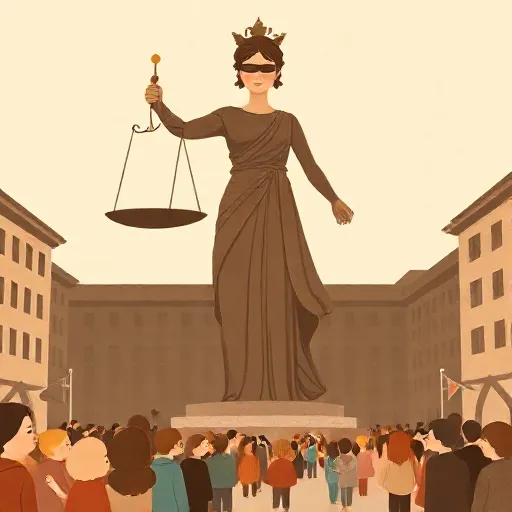
In 1795, the German philosopher Immanuel Kant (1724–1804) wrote a short essay about war and peace. But tucked inside it was an idea that would start a long argument about secrets and fairness. Kant asked: what if you could test whether a plan is wrong just by imagining it being shouted in the middle of a town square?
He called this the hypothetical publicity test. A publicity test asks whether a rule — or a maxim, which is like the principle behind an action — can survive being known to everyone. Kant’s version says: if your rule would fall apart the moment people found out about it, then that rule is probably unjust. It’s a negative test: passing it doesn’t prove a rule is right, but failing it shows something is fishy.
But right away, another thinker disagreed. Henry Sidgwick (1838–1900), a British philosopher, argued that some good things can only be done if they stay quiet. He thought about utilitarianism — the idea that we should act to create the greatest happiness for the greatest number. Sidgwick said that if everyone knew the full truth about how utilitarians sometimes make tough calls, people might misuse it, and happiness would go down. So, he claimed, certain utilitarian ideas should be kept secret, even from most decent people. He even said the fact that they should be kept secret should itself be kept secret! That’s a kind of double secrecy.
Kant’s test seems simple, but Sidgwick pushed back: if being open makes the world worse, maybe hiding something is the right thing to do.
When Secrecy Backfires — or Works

Kant and Sidgwick both gave examples to show their points. Sidgwick compared two actions. First, celibacy — choosing not to marry. If everyone knows celibacy is allowed, people won’t suddenly stop marrying, because strong natural feelings push toward it anyway. So no secrecy is needed. But lying is different. If everyone knows lying is sometimes acceptable, people might start lying more often, and trust would decay. So, Sidgwick argued, we should keep it quiet that lying is sometimes okay. The rule only works if most people don’t know all the exceptions.
Kant’s own examples were about rebellion and secession. He argued that if a rebel group openly announced its plan to overthrow the ruler, the ruler would just crush it — so the plan could never work if publicized. That, he thought, was a sign the plan was unjust. But later thinkers pointed out a problem: a police raid against a criminal gang also fails if it’s announced ahead of time, yet we don’t think the raid is unfair. So maybe “it falls apart when publicized” doesn’t always mean “it’s wrong.”
This leads to a deeper question: can you ever tell the public the whole story without spoiling the very goal you’re trying to achieve? A real-life example comes from Freedom of Information laws, which let citizens ask for government documents. Sometimes an agency can’t even confirm whether a document exists, because that confirmation would give away the secret. The reply — called a Glomar response — is a kind of meta-secrecy, but it’s more open than Sidgwick’s total silence. The rule for when to use Glomar responses might itself be publicly debated, so the system stays partly transparent.
Your Vote, Your Voice, and Your Neighbor’s Eyes

The debate about secrecy moves from hypothetical tests to real political life: should your vote be secret?
In the 19th century, John Stuart Mill (1806–1873) argued strongly against secret ballots. He believed voting wasn’t just a private right — it was a trust, like being asked to decide something for the good of everyone. If you’re going to do a public duty, Mill said, you should do it “under the eye and criticism of the public.” He worried that secret votes let people act selfishly without having to explain themselves to their neighbors.
But Mill’s own father, James Mill, and another philosopher, Jeremy Bentham (1748–1832), saw it differently. They agreed voting was a trust, but they thought the threat of powerful people bullying voters was more dangerous than the risk of selfish voting. If your boss or landlord could punish you for how you voted, a secret ballot was the only way to be free. Bentham thought the ballot should be secret because, in real life, publicity often helps the few with power over the many.
Today, most democracies use the secret ballot for citizens. Yet the question shifts when we talk about representatives. Should a member of parliament vote in public? Most say yes, because they must be accountable to the people. But the argument isn’t settled: if we worry about powerful interests pressuring voters, shouldn’t we worry about lobbyists pressuring politicians the same way?
The Civilizing Force of Speaking Aloud
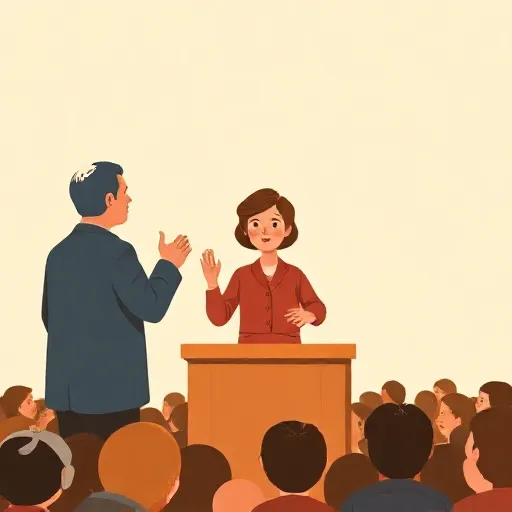
So far we’ve looked at votes. What about talking — deliberation in public?
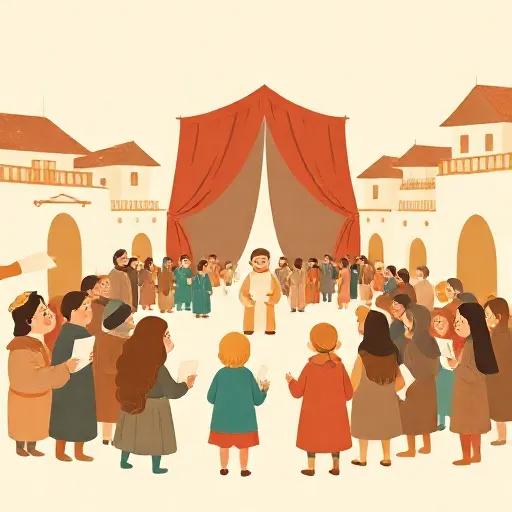
Imagine a representative who only cares about getting re-elected. In a secret meeting, she might argue for whatever helps her friends. But put her in front of a camera, and she knows the audience expects reasons that sound fair and principled. So she hides her selfish motives and talks about the common good. Jon Elster, a contemporary philosopher, calls this the civilizing force of hypocrisy. Even if she doesn’t believe what she says at first, having to say it over and over might slowly change her mind. Publicity, in this view, acts like a filter: it blocks the most obviously self-centered arguments and pushes people toward language everyone can accept.
But other philosophers and social scientists have found cracks in this idea. James Madison, one of the founders of the United States, noted that once people declare a position in public, they become stubborn — they won’t change their minds even when they hear better arguments. Secrecy, Madison thought, lets people try out ideas, hesitate, and actually learn. And some researchers today have discovered that in closed-door meetings, lobbyists sometimes talk more about justice and the common good than they do in public, where they slip back into “what’s in it for me.” So publicity might not always civilize; sometimes it just makes people perform.
Rawls: Rules Everyone Can Check
The most famous modern philosopher to wrestle with publicity was John Rawls (1921–2002). He developed two ideas: public reason and public rules.
Public reason says that when we argue about laws — say, about abortion or taxes — we should only use reasons that all reasonable citizens could accept. You might have deep religious beliefs that lead you to oppose a law, but in a diverse society, you can’t expect everyone to share those beliefs. So in the public square, you need to give reasons that others could at least understand, even if they disagree.
Public rules, Rawls’s less-known idea, says that principles of justice should be clear enough that everyone can know what they demand and check whether others are following them. If a rule is too fuzzy — like “everyone should sacrifice fairly for the war effort” — you might never know if you’ve done enough, or if your neighbor is doing their part. That can feel unfair.
But the philosopher G. A. Cohen (1941–2009) objected. He argued that sometimes what matters is a good-faith effort — trying your best — not perfectly clear rules. During World War II, people in Britain were called to “do his bit.” No one could say exactly how much sacrifice was required, but everyone roughly understood. Cohen thought that demanding perfect clarity would kill the spirit of justice.
Still, Rawlsians have a reply: when the costs of getting it wrong are high — say, if someone might end up working a terrible job because they misunderstood the rule — then clarity really matters. In those cases, a public standard protects us from being cheated or overburdened.
Why It Still Matters in Your Life

You probably aren’t a prime minister or a judge, but you face the publicity puzzle all the time. Your class wants to decide on a rule for using phones during lunch. Should the discussion happen in the open, where everyone has to give reasons others can accept? Or should a small group figure it out quietly, because saying everything aloud might lead to endless arguments or hurt feelings?
Kant would ask: can you imagine announcing the rule to every student and teacher without it backfiring? Sidgwick might whisper that sometimes the best solution works only if no one makes too much noise about it. And Rawls would want the final rule to be clear enough that everyone can see if it’s being followed.
The tension between transparency and secrecy isn’t going away. It’s built into our lives together. When you find yourself wanting to hide something for what seems like a good reason, ask yourself: would this still feel okay if everyone found out? And if not, maybe that’s a sign to think twice. Or maybe — just maybe — it’s a sign that the world is more complicated than any single test can handle.
Think about it
- If a student council plans a surprise event to boost school spirit, but they keep the details totally secret, is that the same as a government hiding a spending decision? Why or why not?
- In a classroom, should the teacher always explain every rule to the whole class, or are there times when keeping some reasoning quiet leads to a better learning environment?
- If you knew that being completely honest about a difficult situation would make people panic and act worse, would you still tell them everything? What would make you decide?