
Can You Be Good Without a Rulebook?
A Surprise Party and a Tough Choice
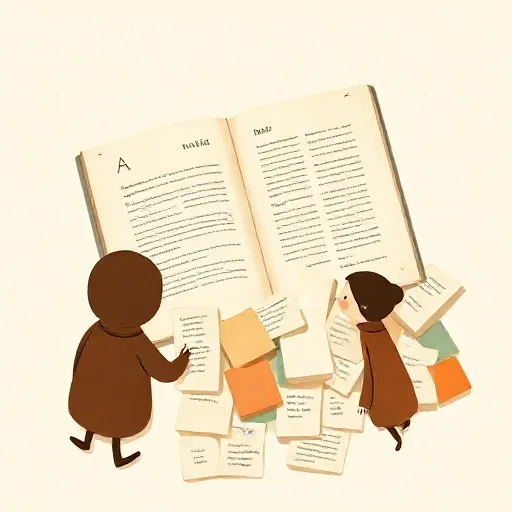
Imagine you promised your friend Alex you would keep their surprise birthday party a secret. Now Alex’s mom asks you directly, “Is there a party tonight?” If you tell the truth, you ruin the surprise. If you lie, you break a promise. How do you decide? Do you pull out a mental rulebook and check what it says about lying? Or do you throw the rulebook away and just look hard at this exact situation?
This question is not just for kids. It lies at the heart of a debate philosophers have been having for more than two thousand years: the dispute between generalism and particularism.
Generalists believe morality needs moral principles — general rules like “lying is wrong,” “keep your promises,” or “help people in need.” According to generalists, these rules can steer you through any situation, no matter how tricky. The philosopher Immanuel Kant (1724–1804) argued that morality must rest on a supreme principle, something like “act only in ways that you could will to become a universal law.” For Kant, that single principle was the ultimate test of right and wrong.
Particularists disagree. They think no set of rules can ever capture the full messiness of real life. A rule like “lying is wrong” might work most of the time, but there will always be cases where lying is actually the kind or fair thing to do — like protecting a surprise party. The ancient Greek thinker Aristotle (4th century BCE) already warned that ethical truths are often too messy for exact rules. The contemporary philosopher Jonathan Dancy pushes further: he argues that any feature that is a reason for an action in one case might count against that very same action in a different case — or be no reason at all.
The battle lines are drawn. Are you a generalist who leans on rules, or a particularist who trusts your eye for the situation? Let’s see the best arguments on both sides.
Why One Rule Can’t Fit All: The Holism of Reasons
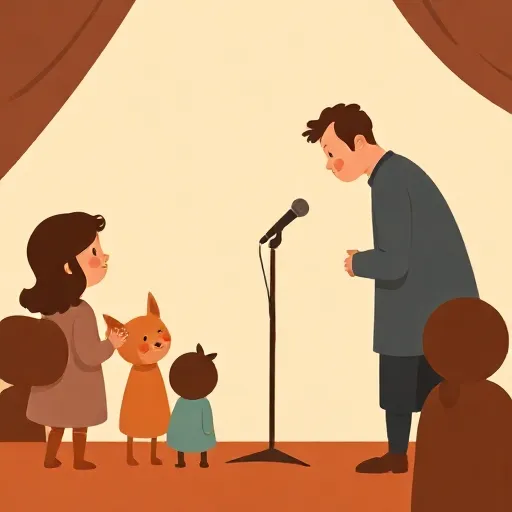
One of the most powerful arguments for particularism is called holism about reasons. To understand it, picture this: you are about to tell a joke. The fact that the joke is funny seems like a strong reason to tell it. But now imagine the joke pokes fun at someone’s stutter, and that person is standing right next to you. Suddenly the funniness of the joke is no longer a reason to tell it — in fact, it might be a reason against telling it. The very same feature (the joke’s humor) flips its moral direction depending on the context.
Dancy uses examples like this to show that a consideration can be a reason in favour, a reason against, or no reason at all, depending on the situation. He calls this view holism in the theory of reasons. The opposite view he labels atomism — the idea that a reason always counts the same way, with the same force, wherever it appears. If atomism were true, moral rules would have a much easier time. A rule like “telling a funny joke is good” would be safe. But holism suggests that any simple rule of that kind is bound to break down.
Generalists have pushed back. They point out that holism does not logically rule out all moral principles. A sophisticated generalist like Kant might say that making someone laugh is good only when it can be willed as a universal law — which might fail when the joke humiliates someone. So the principle itself can already be flexible enough to handle context. Dancy replies that even if such a principle could be built, it would be a “cosmic accident” — a rule with a forced, artificial shape that hides the real messiness underneath. Generalists answer that whether a principle is a cosmic accident depends on deeper metaphysics, not on holism alone. The debate continues.
Can Rules Make You Fairer?
Even if principles are not built into the deep nature of morality, maybe we still need them as tools for getting through the day. Generalists often argue that without principles, we are likely to fall into special pleading — interpreting our duties in a way that secretly favours ourselves. You might think you are judging a tricky situation fairly, but really you are just letting yourself off the hook. Rules can help because you can adopt them ahead of time, before your own interests are at stake. Publicly announcing a principle, like a New Year’s resolution, can also make it harder to cheat later. It becomes a point of honour.
Particularists reply that the cure for self‑serving judgment is not rules, but better looking. Dancy writes that the remedy for poor moral judgment is simply to “look again, as hard as one can, at the reasons present in the case, and see if really one is so different from others that what would be required of them is not required of oneself.” Generalists worry that this advice is unrealistic given human nature. Rules may not be perfect, but ditching them entirely might leave us even more vulnerable to bias.
Another practical worry is predictability. If everyone makes moral decisions case by case with no shared rules, how can you guess what someone else will do? Successful cooperation — from sharing chores to running a government — depends on being able to rely on other people. Generalists suggest that principles make our behaviour more predictable and thus more trustworthy. Particularists respond that people can be quite predictable even without explicit rules, simply by cultivating good judgment. Again, both sides can point to real‑world experience, and neither has delivered a knockout punch.
How Do You “See” Right and Wrong?

If we do not use rules, how do we know right from wrong? Particularists often compare moral knowledge to perception. The philosopher John McDowell suggested that a virtuous person does not need to consult principles. Instead, she simply “sees” what a situation demands, the way you recognise a friend’s face in a crowd. This perceptual model treats moral judgment as a kind of trained sensitivity. Generalists note that you can also “see” that a sentence is ungrammatical, even though grammar is actually governed by rules. So the feeling of immediate recognition does not prove there are no principles underneath.
A different picture treats moral wisdom as a skill, like riding a bicycle or baking bread. You can become an expert without ever memorising a list of instructions. But even a skill might be guided by implicit principles that you follow without being able to state them. Some philosophers try to find a middle ground. They suggest that moral principles are ceteris paribus rules — rules that hold “other things being equal.” For example, “lying is wrong, other things equal,” but when a murderer is at the door asking where your friend is, things are not equal. Such principles still need judgment to apply, so they borrow insights from both sides. This raises a big question for parents and teachers: is the best way to raise a good person to hand them a rulebook, or to train their ability to see and respond to what matters? The debate about moral knowledge turns out to be a debate about moral education, too.
Why This Debate Matters for You

So, do you need a rulebook? The argument between generalism and particularism has no easy winner. But the question itself is one you already face. Every time you decide whether to keep a secret, share credit, or stand up for someone, you are balancing the pull of general rules against the special details of the moment. Neither side says you should ignore morality entirely — both agree that being a good person matters. The real lesson may be that rigid rules without attention become blind, and attention without any rules can drift off course.
Think of it like learning to cook. A beginner follows a recipe exactly. But a great cook also tastes the soup, notices that the tomatoes are sweeter today, and adjusts the seasoning. Morality, many philosophers now suspect, works in a similar way. Principles can be useful guides, but they cannot replace the skill of looking closely at the people and situations right in front of you.
Think about it
- If a friend swears you to secrecy about a plan that could harm someone, would you break your promise or stay silent? Could a rule help you decide, or might it blind you to something important?
- You decide to live by the rule “never interrupt anyone.” Can you think of a situation where interrupting might actually be the kinder or wiser choice? Does the rule need exceptions?
- If you were teaching a younger sibling to be fair, would you give them a list of rules or tell them to “look hard and decide”? Why?