Is It Wrong Even If the Principal Says It’s OK?
The Playground Test
Picture a noisy playground. A kid shoves another off a swing, and a teacher runs over. “We don’t push in this school,” the teacher says. But would shoving be wrong even if the teacher were absent — or even if the principal made a new rule saying pushing was allowed? Most people feel the answer is yes.
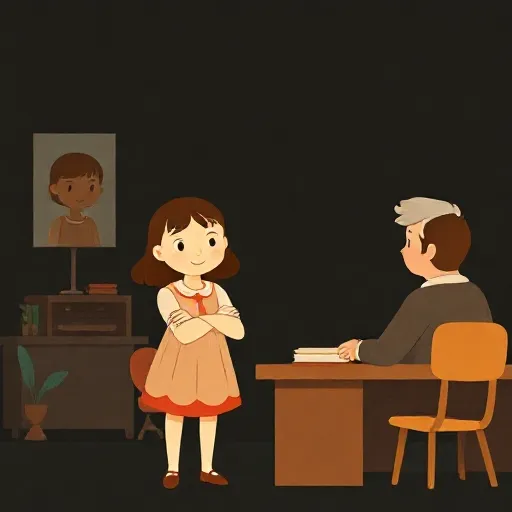
Now picture a different scene. A girl in class calls the teacher by her first name, which is against the rules. If the teacher announced tomorrow that first names are fine, would it suddenly be all right? Most people say sure. It was just a local custom.
These two situations feel different. The first seems to involve a moral rule — a rule about hurting people that doesn’t depend on who’s in charge. The second seems to involve a social convention — a rule that exists because a group decided to coordinate their behavior. But can we actually prove that this difference is real, especially in young children? That question set off a decades-long debate among psychologists and philosophers, and the answer could change how we think about punishment, guilt, and even what it means to be a good person.
Two Worlds of Rules: Morals vs. Customs

For a long time, many child psychologists believed that little kids treat all rules the same way. Jean Piaget and Lawrence Kohlberg thought that at first, children see every rule as something handed down by powerful adults — do this or get punished. In that early stage, a child can’t tell a moral rule apart from a rule about where to hang your coat.
Elliot Turiel (1938–) disagreed. He suspected that even toddlers could sense that some rules are special. Turiel came up with a simple experiment. He told children short stories about familiar actions: one kid hits another (a possible moral transgression) and one kid talks without raising a hand (a possible conventional transgression). Then he asked a set of questions — what he and his colleagues later called criterion judgments — to test how the children were thinking.
The questions checked three things. First, did the child think the action was wrong even if the teacher or principal gave permission? That’s authority independence. Second, would the child say the action was wrong in a different school or a different town? That’s universalizability across place. Third, would it still be wrong if it happened a long time ago or far in the future? That’s universalizability across time. If a child answered “yes” to all three, Turiel counted the judgment as moral. If the child thought the action was only wrong because of a rule and would be fine if the rule changed, he counted it as conventional.
When Turiel ran this test with children as young as three and four, the results were stunning. Almost all kids judged that hitting someone without a reason was wrong no matter what anyone said, anywhere, at any time. But chewing gum in class or calling the teacher “Susan” without permission? Those, they said, were wrong only if the rules said so. Even young children didn’t lump everything together. They had already separated the moral world from the world of convention.
What Makes a Rule Truly Moral? A Detective’s Checklist
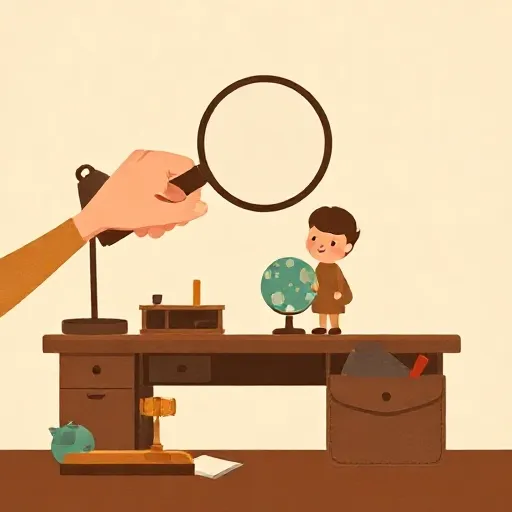
Why does Turiel’s test matter so much? Because if the pattern of answers really spots moral judgments, then we might have a way to figure out what morality is made of. The three features — authority independence, universalizability across places, and universalizability across times — act like a fingerprint. When a person’s thinking shows that fingerprint, maybe we’ve caught a genuine moral judgment in the wild.
Many researchers think this fingerprint points to something deep. Some compare it to how natural kinds work in science. Water is H₂O everywhere; scientists didn’t just decide that — they discovered it by testing lots of samples. In the same way, the cluster of criterion judgments might be the “H₂O” of moral thinking — the hidden essence that makes a judgment moral and not just conventional.
But not everyone is convinced. When psychologists tried the test with more grown‑up situations — whipping, slavery, or stealing — the fingerprint sometimes broke apart. People who said slavery was wrong didn’t always say it was just as wrong a hundred years ago or in another country, and they didn’t always say it would be wrong no matter what the laws were. That doesn’t mean they thought slavery was okay. It means the test might not be a perfect moral detector. The debate is alive: is Turiel’s fingerprint the real thing, or just a rough sketch that works best for playground shoves?
Do All Cultures Agree? The Harmless Taboo Challenge
One of the biggest fights about Turiel’s idea is whether it works across different cultures. Richard Shweder and his colleagues traveled to India and interviewed orthodox Hindus in the city of Bhubaneswar. They told them stories about actions that seemed, to Western eyes, like harmless customs: a widow eating fish twice a week, or a son getting a haircut and eating chicken the day after his father’s funeral.
To Shweder’s surprise, many Hindu participants judged these acts to be seriously wrong — and their answers on the criterion judgment questions looked like moral judgments, not conventional ones. But Turiel had an answer. He pointed out that the Hindus genuinely believed those actions caused terrible harm. Eating chicken the day after a father’s death was thought to block the father’s soul from reaching salvation. The widow’s fish was a “hot” food that might stir desires, offend her husband’s spirit, and bring suffering. So maybe the test was still tracking harm — just a kind of harm that Western outsiders couldn’t see.
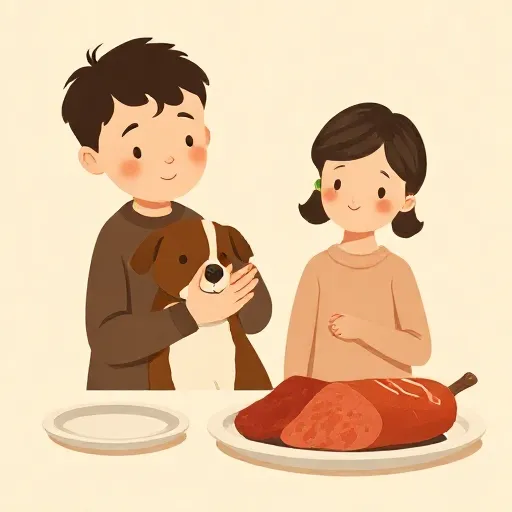
Jonathan Haidt took the challenge further. He asked Americans and Brazilians about “harmless taboo violations”: eating the family dog after it was killed by a car, a brother and sister kissing passionately in secret, or a man having sex with a store‑bought chicken before cooking it. He made sure to ask participants whether anyone was actually hurt. Many people said no one was harmed, yet they still treated the actions as morally wrong — universal and authority‑independent — especially poorer participants. But Haidt’s version of the test left out some of Turiel’s questions, so critics say he wasn’t comparing apples to apples.
More recent studies by Renatas Berniūnas tried again with better‑matched questions. When Lithuanians read about eating a pet dog or using the national flag to clean a toilet, many who said the act was harmless still gave moral‑type answers. The jury is still out. Maybe the moral/conventional boundary isn’t the same in every culture — or maybe we just haven’t found the right way to measure it yet.
Where Do Our Gut Feelings About Morals Come From?

If even little kids can spot a moral rule, where does that ability come from? Turiel’s own story was a constructivist one: children watch the world, notice that hitting causes pain, and reason their way to the rule that causing pain is wrong without needing adults to teach it. But many researchers think emotion plays a bigger role.
Shaun Nichols noticed that people often feel disgust when they think about certain rule‑breaking. In one of his experiments, he used a story about a man who spits in his own water glass at a dinner party. Participants who found the spitting disgusting treated it more like a moral violation — they said it would still be wrong even if the hosts allowed it. Nichols noted that they didn’t say anyone was harmed; they just felt gross. Nichols argued that some rules are “norms with feeling”; when a norm is backed by a strong emotion like disgust, we treat it as if it were moral, even if it only started as a custom.
But other researchers pushed back. Edward Royzman’s team repeated the spitting story and asked explicitly whether anyone was negatively affected. Most people said yes — the other guests would be disgusted and upset. Once that was taken into account, the feeling of disgust itself no longer predicted moral‑style answers. Royzman’s group also found that people who were better at thinking through “what if” scenarios — those who scored higher on a cognitive reflection test — were more likely to make the careful distinction between rules that depend on social agreement and rules that don’t. This suggests that slow thinking, not just a flash of emotion, helps us decide what’s truly moral.
Why Should We Care? Psychopaths, Guilt, and Fairness

The fight over the moral/conventional distinction isn’t just about playground shoves. It has real consequences for how we treat people who break serious rules, especially if their minds work differently.
In the 1990s, psychologist James Blair gave a version of Turiel’s test to men in prison who had been diagnosed as psychopaths — people who often lack guilt and empathy. Blair’s early study found that psychopathic offenders treated moral and conventional transgressions the same way. To them, hitting someone seemed no different from breaking a dinner‑party rule. Several philosophers jumped on this result. They argued that if psychopaths can’t really tell a moral rule from a custom, maybe they don’t have genuine moral concepts at all. If that’s true, some say, then psychopaths aren’t counterexamples to the idea that making a moral judgment always gives a person some motivation to do the right thing — and maybe they shouldn’t be held fully responsible for their crimes.
But later studies complicated the picture. When researchers used larger groups of inmates and refined the questions, the link between psychopathy scores and the moral/conventional task disappeared. One team concluded that “insufficient data exist to infer that psychopathic individuals cannot know what is morally wrong.” This doesn’t let psychopaths off the hook — it just shows that our best tool for spotting moral thinking might not be sharp enough to settle high‑stakes debates about punishment.
The messy truth is that the moral/conventional task has been used to support both sides of many philosophical arguments, from whether children have an innate moral grammar to whether feeling guilty is a necessary part of moral judgment. For now, the most honest conclusion is that the test teaches us something important — but we’re still arguing about exactly what.
So What Do You Think When You Say “That’s Not Fair”?
You already live inside this puzzle. The next time you feel heat rise in your chest when someone cheats at a game or picks on a smaller kid — even if the adults in the room don’t say a word — you’re stepping into the same territory that Turiel, Shweder, Haidt, and so many others mapped. You’re acting as if some standards don’t come from a rulebook. They come from somewhere deeper.
Philosophers and psychologists can’t yet hand you a perfect detector for real moral rules. But they’ve shown that the difference between morals and customs matters a lot. It matters when we decide what to teach children. It matters when a courtroom has to decide how much blame a person deserves. And it matters when you argue with a friend that something is wrong, full stop, even if no one is watching. That argument is tiny piece of the same debate — and you’re already in it.
Think about it
- Imagine a whole school where everyone, including the teachers, agrees that it’s okay to mock a classmate until they cry. Would mocking still be wrong? How would you argue your side without just pointing to a different rulebook?
- If you think eating a pet dog is disgusting and wrong, but a kid from another country thinks it’s a normal way to honor a dead animal, can both of you be right? What makes something a moral rule for you, not just a strong feeling?
- Some people say that if a person truly can’t understand that hurting others is different from breaking a dinner‑table rule, that person should face less punishment. Do you agree? Why might the practical consequences matter even if the science isn’t settled?