
Can the Future Really Be Unwritten? The Logic of Time
A Midnight Wake-Up Call

One night in 1949, New Zealand philosopher Arthur Prior (1915–1969) shook his wife Mary awake. He had been reading a brief footnote by John Findlay that hinted at something remarkable: a “calculus of tenses,” a mathematical system for reasoning about past, present, and future. Prior was convinced the idea could be turned into a real logic. That night, tense logic was born.
To see why he was so excited, think about an ordinary sentence like “Socrates is sitting down.” In Prior’s day, most logicians treated such a sentence as unfinished — like a diary entry without a date. You needed to add a time stamp, such as “at noon on Tuesday,” to turn it into a proper proposition (a statement that is definitely true or false). But Prior had rediscovered a much older view, shared by Aristotle (384–322 BC) and medieval thinkers. They believed a sentence like “Socrates is sitting down” is already complete. It is true at some moments and false at others, and its truth can change as time passes. This ancient insight became the heart of Prior’s new logic.
Symbols for Tomorrow and Yesterday
Prior wanted a formal language where you could talk about the future and the past without always mentioning dates. He introduced two new symbols, called tense operators:
- Fp means “It will be the case that p” (p is some proposition).
- Pp means “It has been the case that p.”
He also defined Gp as “It will always be the case that p” and Hp as “It has always been the case that p.” With these tools, Prior could write laws of time as tidy formulas. For example, if p → q is a logical truth, then Fp → Fq should also hold. He built a whole system of axioms and rules, just like a game with precise moves.
Underneath, Prior showed how the tense operators could be translated into talk about points in time and a relation “l” meaning “is later than.” He imagined that Fp says “p is true at some time later than now,” and Pp says “p is true at some time earlier than now.” Some rules of time, such as “if p will always be true, then p will be true” depend only on logic. Others, like “if p will be true, then it will later be true that it will be true,” depend on how time actually works — for instance, whether time is infinitely divisible or has a first moment. In this way, Prior’s calculus could describe different possible structures of time.
The Master Argument: A 2,300-Year-Old Puzzle
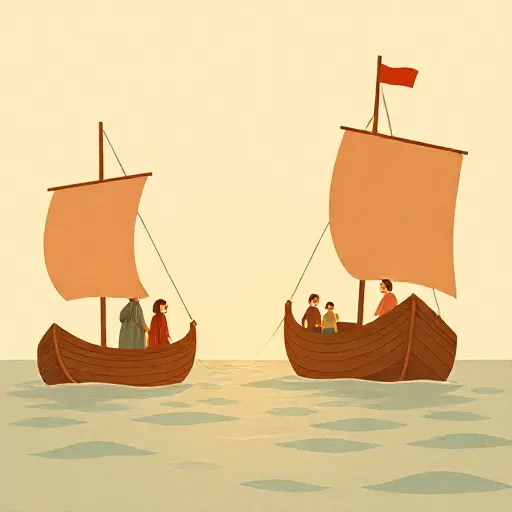
Long before Prior, an ancient logician named Diodorus Chronos (fl. 4th century BC) had argued that the possible is nothing more than what is or will be true. If Diodorus was right, the future is already settled — what will happen is the only thing that can happen. He supported his claim with a famous piece of reasoning called the Master Argument.
Prior reconstructed Diodorus’s argument inside his tense logic. He found that it relied on two key assumptions, one of which seemed harmless. That assumption says: when something is neither now true nor ever will be true, it must have been true at some past moment that it will never be true. In symbols: (¬p & ¬Fp) → P¬Fp.
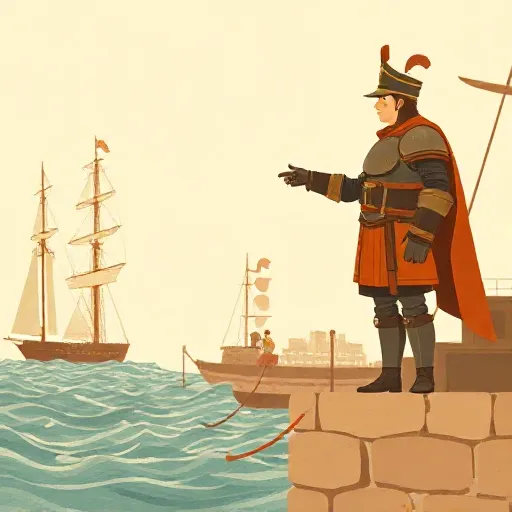
But Prior spotted a problem. Consider a future event that has not yet been decided — a so-called future contingent, like whether a sea battle will happen tomorrow. If it is genuinely undecided right now, the statement “it will happen” is neither definitely true nor definitely false. Prior used a three-valued logic where such statements receive a third truth value, often called “indeterminate” (½). In that system, the whole premise (¬p & ¬Fp) is indeterminate when p is a future contingent, while the consequent P¬Fp is false because it has never been settled that it will never happen. According to the three-valued truth table, a conditional with an indeterminate antecedent and a false consequent is itself indeterminate — not simply true. So the Master Argument’s crucial step fails for undecided futures. The future can remain open.
Time as a Tree: The Open Future
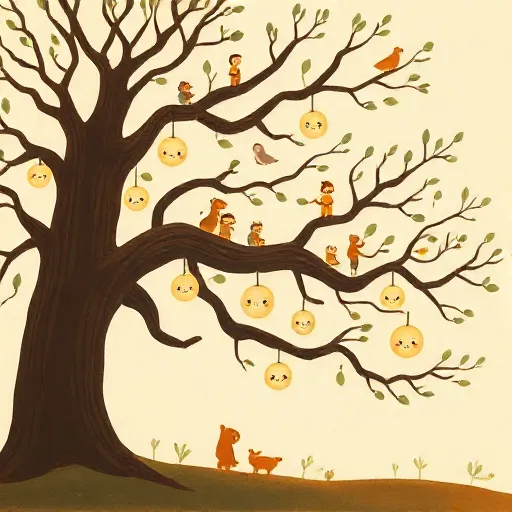
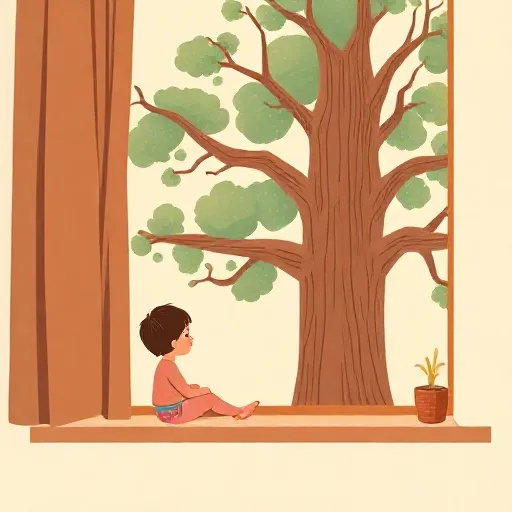
Mastering the Master Argument convinced Prior that the universe allows real alternatives. He rejected the idea that the future is a single, unchangeable line. Instead, he imagined time as a branching tree. The trunk is the past — fixed and unalterable. From the present moment, many possible futures spread out like boughs. When we make a choice, we head down one branch, and the others become merely what might have been.
Prior’s branching time picture gave him a powerful way to defend indeterminism — the view that some events, including human choices, are not predetermined. He could now formalise the difference between the settled past and the open future. “One of the big differences between the past and the future is that once something has become past, it is, as it were, out of our reach,” he wrote. “But the future is to some extent, even though it is only to a very small extent, something we can make for ourselves.” A logic that forces the future into a single track, he argued, cannot capture this basic experience of living.
From a Philosopher’s Notebook to Your Smartphone

Prior himself took little interest in computers. Yet he once predicted his tense logic would one day have “practical gains, for example in the representation of time-delay in computer circuits.” He was right. In the 1970s, computer scientist Amir Pnueli adapted Prior’s operators to reason about the behaviour of programs that run many tasks at once — today’s apps, websites, and operating systems. Using a branching-time logic very like Prior’s, engineers can formally prove that a program will not freeze or produce a dangerous error.
The citation for Pnueli’s Turing Award (computing’s highest honor) begins: “For seminal work introducing temporal logic into computing science.” Every time your phone runs a background update while you scroll through a game, you are relying on technology that grew from a footnote read by lamplight in 1949. Prior’s defence of freedom ended up guarding the reliability of machines.
Why Your Choices Still Matter

If the future were already written down completely, there would be no point in deliberating about what to do — after all, the outcome would be fixed no matter how you struggled. Prior’s tense logic captures the feeling that your choices do make a difference. The past is closed, a done deal. But ahead of you, branches spread in many directions, and your actions select the one that becomes real.
Even if you never learn the formal symbols, you use their logic every day. When you say “I will finish my project” or “I have been practicing,” you are doing what Prior made mathematically precise. A simple footnote, a midnight conversation, and years of hard thinking gave us a way to talk about time without trapping ourselves in a single, inevitable story. The future, it turns out, is not a finished book. You are still writing it.
Think about it
- If a friend says “I knew you’d pick the red candy,” does that really mean your choice was not free, or could they just be good at guessing?
- Suppose a supercomputer could predict every decision you will make tomorrow. Would you still feel responsible for your actions?
- Would you rather live in a universe where the future is a single, fixed story, or one where many different tomorrows are possible? Why?