Philosophy for Kids

Branching Time: What If the Future Isn't Set?

Here’s a strange thing about how we live our lives. You’re sitting in class, and you have a choice: you can pay attention, or you can stare out the window. Right now, both options seem genuinely possible. You could do either one. But when you look back on this moment later today, only one of those things will have happened. The other possibility will be gone—closed off, unrealized, never to return.

Most of the time, we don’t think twice about this. But some philosophers have noticed something peculiar: if both options are really possible right now, what does that say about the nature of time itself? Does the future already exist somewhere, waiting for us to arrive? Or is it being created as we go, with dead-end paths branching off behind us? Or—strangest of all—do all those possibilities somehow continue to exist, side by side, like a tree whose branches keep growing forever in every direction?

This is the puzzle at the heart of branching time.


What a Branching Picture Looks Like

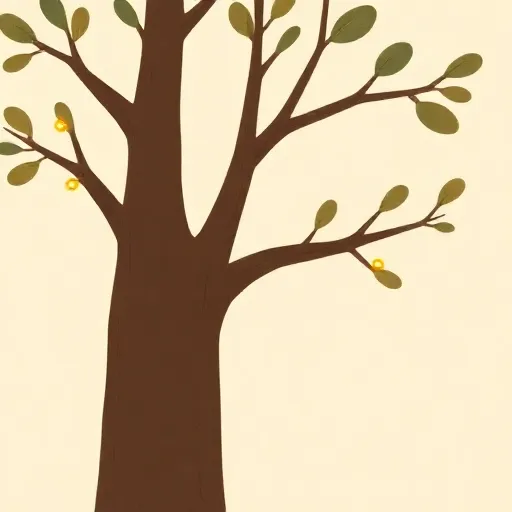
Imagine time as a tree. The trunk is the past—a single path that led to where you are now. You’re sitting on a particular branch right at this moment. But ahead of you, the branch splits into multiple possible futures. In one, you finish reading this article. In another, you get bored and put it down. In a third, you get interrupted by a friend. All of these futures are, from where you’re sitting now, genuinely possible.

A branching time model is a way of drawing this picture formally. It’s made of two kinds of things:

Moments are like snapshots—instantaneous slices of the universe at a particular time. They represent “how things are right now.”

Histories are complete possible courses of events—a whole timeline from beginning to end, following one path through all the branching points. Each history is like a story that includes everything that ever happens, from the Big Bang to whatever comes last.

The key idea is that histories overlap. They share moments. When you’re at a moment where the future branches, you’re standing at a point where multiple histories pass through. They share everything up to now, and then they go their separate ways.

Crucially, in standard branching time models, the past never branches. If you go backward from any moment, there’s only one path. Two different histories can’t share a future moment but have different pasts. This is called No backward branching, and it captures a deep intuition: the past is fixed. It’s already happened. What’s done is done. But the future is open.


Three Ways to Think About What This Means

Once you have this picture in your head, a natural question arises: what does it mean? Are all those branches really real? Or is just one of them actual, and the others are just abstract possibilities we use to think about the future?

Philosophers disagree about this, and their disagreement matters—not just for abstract theory, but for how we understand everyday claims like “there will be a sea battle tomorrow” or “you might get an A on the test.”

View 1: Everything Is Real (Branching Time Realism)

Some philosophers think the tree is literally real. Every branch exists. Every possibility happens—just in different histories. Your choice to pay attention or stare out the window doesn’t eliminate one possibility; it just means you end up in one history while another version of you (who made the other choice) continues in a different one.

This view is called branching time realism, and it’s the most radical option. It means there’s no single “actual” future. When you wonder “what will happen?” you’re really asking “what will happen in this history?” But from a God’s-eye view, everything that can happen does happen—just not all in the same timeline.

The philosopher Nuel Belnap developed this view most carefully. He argued that the distinction between what’s actual and what’s possible only makes sense from inside a particular moment and history. From the outside, there’s no difference. All moments are equally real. All histories are equally concrete.

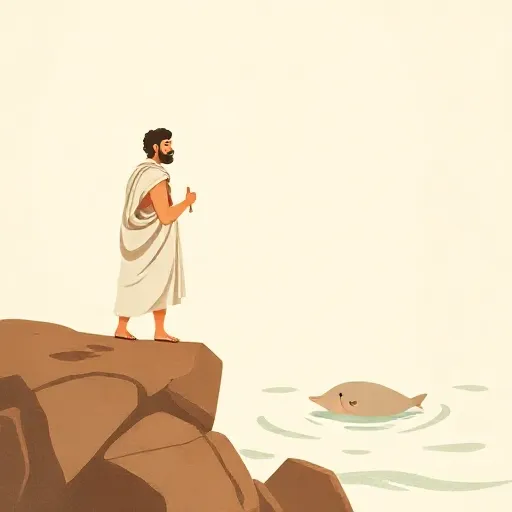
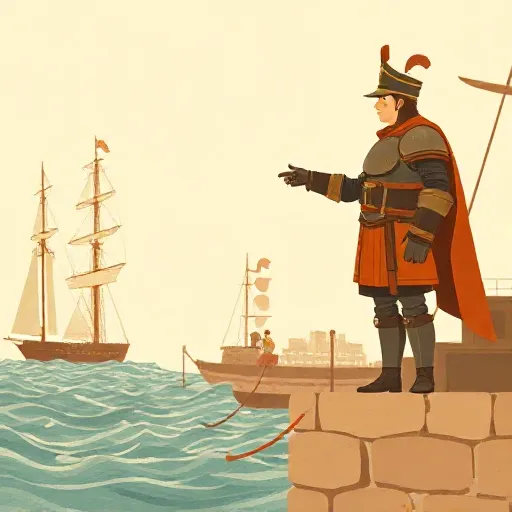
This view has some strange consequences. For instance, if you say “Tomorrow there will be a sea battle,” and someone else says “No there won’t,” on this view you might both be right—just relative to different histories. That’s not a contradiction, because there’s no absolute “what will happen.” There’s only what will happen in one history versus another.

Many people find this view implausible. The philosopher David Lewis objected that it conflicts with how we actually think about the future. “If two futures are equally mine,” he wrote, “one with a sea fight tomorrow and one without, it is nonsense to wonder which way it will be—it will be both ways—and yet I do wonder.”

Belnap’s reply was that Lewis had misunderstood. On branching time realism, you can’t say “it will be both ways” without relativizing to a history. “It will be a sea battle and it will not be a sea battle” is still a contradiction. It’s just that which future you’ll experience depends on which history you’re in—and you don’t know which one that is until you get there.

View 2: Only One Future Is Real (Actual Futurism)

Other philosophers think that only one history is actually real. All those other branches represent possibilities that could have happened, but they don’t actually exist. This view is called actual futurism.

On this view, the tree is a kind of map. It shows us what’s possible, but most of those possibilities are just abstract. Only one path through the tree is concrete—the one that actually happens. When you face a choice, you really do have multiple options. But once you choose, the other options weren’t just “not experienced by you”; they literally never existed.

This is closer to how most of us intuitively think about time. The past is fixed. The future is open. But eventually, one future becomes actual, and the others vanish like paths not taken.

Actual futurists have to decide what those “merely possible” branches are made of. Are they abstract objects, like numbers? Are they concrete but less real than the actual history? Or are they just fictions we use to think about uncertainty? Different philosophers give different answers.

View 3: The Future Is Open, the Past Is Fixed (Asymmetry Views)

A third group of philosophers combines elements of both views. They agree with actual futurists that there’s a real distinction between what’s actual and what’s merely possible. But they think the actual world is growing over time. As time passes, new moments become actual, and some branches get pruned away.

This is sometimes called the growing-block view. Imagine the tree as something that’s constantly being built. The past and present are solid—they exist. But the future doesn’t exist yet. It’s being created moment by moment. As each new moment becomes actual, some branches disappear (because they weren’t the path reality took), while others remain as live possibilities for the next step.

The philosopher Storrs McCall developed a version of this called pruning. In his picture, the whole tree changes over time. As the present moves forward, branches that don’t lead to the actual future literally vanish. The tree “grows by losing branches.”

This view tries to capture the sense that time is genuinely dynamic—that the future is being made, not just discovered. But it faces a challenge: if the branches vanish, where do they go? Are we supposed to believe that parts of reality are constantly being destroyed?


What Does “True” Mean in a Branching World?

Now here’s where things get really interesting. Suppose you accept some version of branching time. Now you have to decide: when someone says something about the future, like “It will rain tomorrow,” what makes that statement true or false?

This turns out to be surprisingly tricky. In a branching world, a statement about the future might be true on some histories and false on others. So how do we evaluate it?

Philosophers have proposed several answers:

Peircean semantics (named after the philosopher Charles Sanders Peirce) says a future statement is true only if it’s inevitable—true on every possible future. So “it will rain tomorrow” is true only if rain is unavoidable. If there’s any possible future where it doesn’t rain, the statement is false. This is a very strict standard. It means most predictions about the future are false, because there’s almost always some possibility they don’t come true.

Ockhamist semantics says we need to specify which future we’re talking about. A statement is evaluated relative to a particular history. So “it will rain tomorrow” might be true on one history and false on another. This solves the problem of how a future contingent can be true, but it raises a new question: which history should we use when we’re trying to decide whether an utterance made right now is true?

Supervaluationism tries to split the difference. A statement is “super-true” if it’s true on all possible futures, “super-false” if it’s false on all, and neither if it’s true on some and false on others. This means future contingents—statements that are genuinely unsettled—come out as neither true nor false. This matches the intuition that the future really is open, but it means giving up the idea that every statement has a definite truth value.

Relativism (defended by philosopher John MacFarlane) says that truth depends not just on when the statement was made, but on when it’s being assessed. A prediction made yesterday might be neither true nor false yesterday (because the future was open), but true today (because the predicted event happened). This lets us hold onto both the idea that the future is open and the idea that, looking back, some predictions turned out to be correct.

Each of these views has strengths and weaknesses. None of them is obviously right, and philosophers continue to argue about which one does the best job of matching our intuitions while staying logically consistent.


But Wait—Doesn’t Physics Say Something About This?

You might be wondering: doesn’t modern physics have something to say about whether the future is really open?

The answer is complicated. Quantum mechanics seems to suggest that, at a fundamental level, the world is indeterministic—that some events are genuinely random and unpredictable. This fits naturally with branching time. But different interpretations of quantum mechanics disagree about what this means.

The Many-Worlds interpretation, for instance, says that every quantum event causes the universe to branch into multiple copies. This looks very much like branching time realism. But many physicists who accept Many-Worlds think the branching is deterministic at the fundamental level—everything that can happen does happen, and there’s no genuine openness.

Other interpretations, like the Copenhagen interpretation, say that quantum randomness represents genuine indeterminism. But they don’t give us a clear picture of what that means for the structure of time.

There’s also a deeper challenge: the laws of physics don’t seem to care about the direction of time. Most fundamental laws work the same forward and backward. So why should the past be fixed while the future is open? Some philosophers think this means branching time models are scientifically suspect. Others think the asymmetry comes from something real but not captured by physics—like the fact that the universe had a special low-entropy beginning, which creates a direction for time.


Why This Matters

This might all seem like abstract puzzle-solving. But the way we think about branching time connects to real questions about how we live.

If the future is genuinely open—if multiple paths are really possible—then your choices matter in a way they wouldn’t if everything were already determined. You’re not just acting out a script that’s already written. You’re helping to create which future becomes actual.

If, on the other hand, all branches are equally real, then every possibility happens somewhere. Your choices don’t determine whether something happens, but which version of you experiences it. This is a very different picture of agency.

And if truth about the future is relative to when you’re assessing it, then maybe we should be more careful about calling predictions “wrong” just because they didn’t come true. They might have been correct relative to what was possible when they were made, even if they turned out false relative to what actually happened.

These aren’t just academic questions. They’re about how we understand responsibility, regret, hope, and decision-making. They’re about whether we can genuinely change the future, or whether we’re just along for the ride.

And nobody really knows the answer. That’s part of why branching time remains one of the most fascinating puzzles in philosophy.


Appendices

Key Terms

TermWhat It Does in This Debate
MomentA single, instantaneous slice of time—like a snapshot of the whole universe at one point
HistoryA complete possible timeline, from start to finish, following one path through all branching points
No backward branchingThe rule that the past never splits: any moment has only one possible past
Forward branchingThe idea that the future can split into multiple possible paths from a given moment
Thin red lineThe idea that one particular future is the “actual” one, even when many are possible
Historical possibilityWhat could happen given the way the past actually unfolded (not what’s logically possible)
Open futurismThe view that no future is “the real one”—all branches are on equal footing
Actual futurismThe view that exactly one future is real; the others are merely possible

Key People

  • Arthur Prior (1914–1969) — A philosopher and logician who first systematically developed branching time models. He thought the past is fixed and real, the future is open and doesn’t exist yet, and possibilities change over time.
  • Nuel Belnap (born 1930) — Developed a version of branching time realism where all branches are equally concrete and actuality is relative to a perspective within the tree.
  • John MacFarlane (born 1969) — Defended a “relativist” view of truth about the future, where whether a prediction was correct depends on when you’re assessing it.
  • Storrs McCall (born 1930) — Developed the “pruning” view, where the tree changes over time as branches that don’t lead to the actual future vanish.
  • David Lewis (1941–2001) — Criticized branching time for conflicting with ordinary ways of thinking about the future, and defended a different picture where possible worlds don’t overlap at all.

Things to Think About

  1. If you knew that all possible futures really exist in separate branches, would that change how you think about your own choices? Would you still care which branch you end up in?

  2. The “doomsday objection” says branching time can’t model the possibility that nothing at all happens in the future—that time itself might end. Is that a real problem, or can you imagine how a branching model could handle it?

  3. If a prediction about the future is neither true nor false when it’s made (because the future is open), is it fair to say the person who made it was “wrong” if the predicted event doesn’t happen? What about if it does happen—were they “right”?

  4. Some philosophers think time is like space—past, present, and future all exist equally, just at different locations in time. Others think only the present is real. How does each view affect what branching time would mean?

Where This Shows Up

  • Science fiction — Stories about alternate timelines, parallel universes, and time travel often assume something like branching time. The Butterfly Effect, Dark, and many Marvel comics explore these ideas.
  • Quantum mechanics — The Many-Worlds interpretation of quantum physics is essentially a version of branching time realism, where every quantum measurement splits reality into multiple branches.
  • Everyday decisions — When you make a choice and wonder “what if I’d chosen differently,” you’re implicitly thinking in branching-time terms. The question is whether that “what if” branch exists somewhere or is just a mental construct.
  • Law and responsibility — Courts sometimes need to decide what “would have happened” if someone had acted differently. The metaphysics of branching time affects how we think about counterfactuals like “if the warning had been posted, the accident wouldn’t have occurred.”