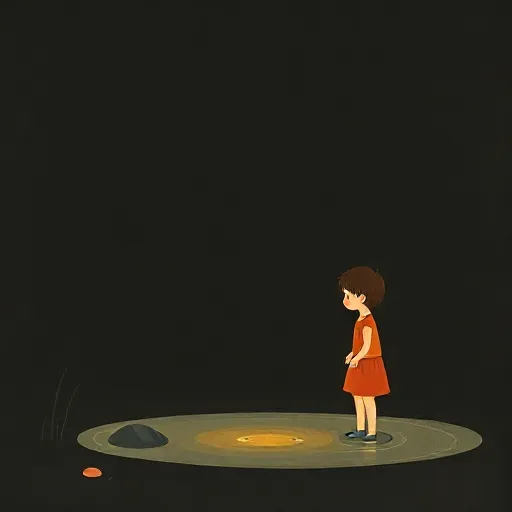
Would You Ruin Your New Shoes to Save a Life?
The Pond, the Shoes, and the Voice in Your Head

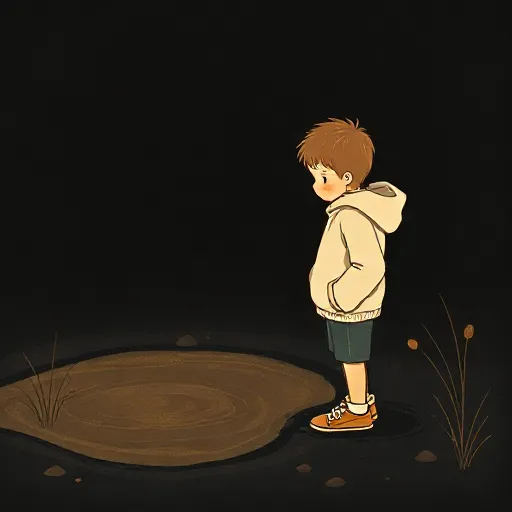
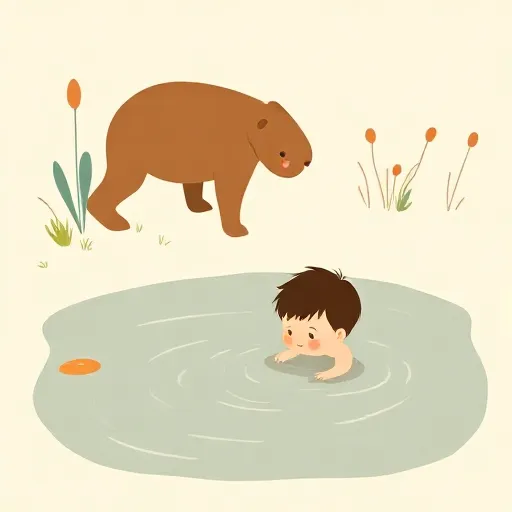
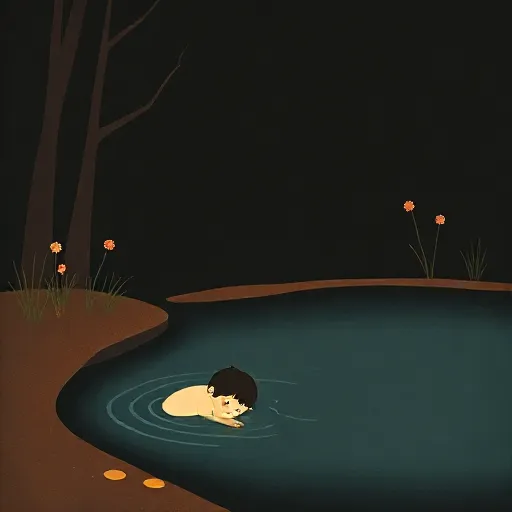
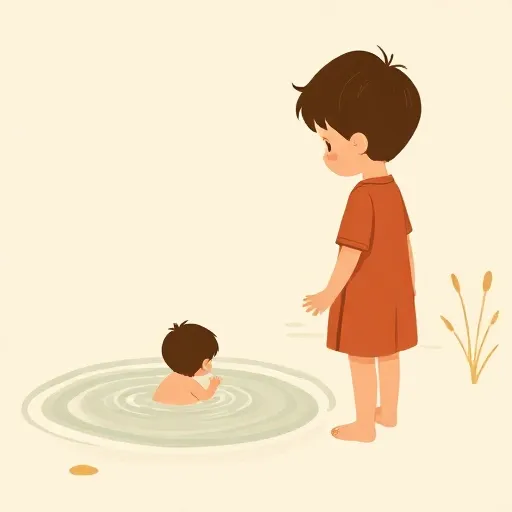
Imagine you are walking home from school when you pass a shallow pond. A toddler has fallen in and is thrashing around. No one else is nearby. You can easily wade in and pull the child out, but your brand-new sneakers will be ruined forever. No prize for guessing what most people think you should do: save the kid, forget the shoes. But what if the person who needs your help is not right in front of you—what if they are a stranger living on the other side of the world, and the cost of helping is giving up your favorite video game? Philosophers have been wrestling with this puzzle for centuries. They call it the problem of beneficence—the moral demand to act for the good of others—and the related character trait of wanting to do good is benevolence. The question is simple to ask and brutally hard to answer: how much of your own time, money, and comfort do you owe to other people simply because they are in need?
The struggle over beneficence is not about whether being kind is nice. It is about where the line falls between what you must do and what would be heroic but beyond your duty. Some thinkers have argued that kindness is wired into human nature, so helping others is as natural as breathing. Others have said that morality is a giant calculator, and you must always produce the largest possible pile of happiness, whatever it costs you. Still others warn that duty has limits, even when broken lives are on the line. All of them agree on one thing: drawing that line is one of the hardest jobs in all of ethics.
David Hume: Kindness Is in Our Bones
The Scottish philosopher David Hume (1711–1776) looked at the same question and smiled. People, he thought, are not selfish machines. They do kind things all the time, not because a rule orders them to, but because they feel like it. Hume believed that benevolence—an unselfish desire to see others happy—is an “original” part of human nature, as basic as hunger or curiosity. When you help a friend carry heavy bags or share your lunch with someone who forgot theirs, you are not coldly calculating a reward; you are acting from a natural impulse to care.
Hume did not pretend that people are angels. He famously described human nature as a mixture of a dove, a wolf, and a serpent. Some of our feelings are gentle and social (the dove). Others are ferocious and self-serving (the wolf). And still others are clever and calculating (the serpent). Depending on the person and the situation, one part of this mixture might win out over the others. You might rescue a drowning toddler without a second thought, but you might also hesitate to donate your allowance to help strangers you will never meet. For Hume, this messy blend of motives meant that we cannot say exactly how much benevolence any particular person will show. What we can say is that a life with no kindness at all is a life missing something deeply human.
John Stuart Mill: The Happiness Calculator
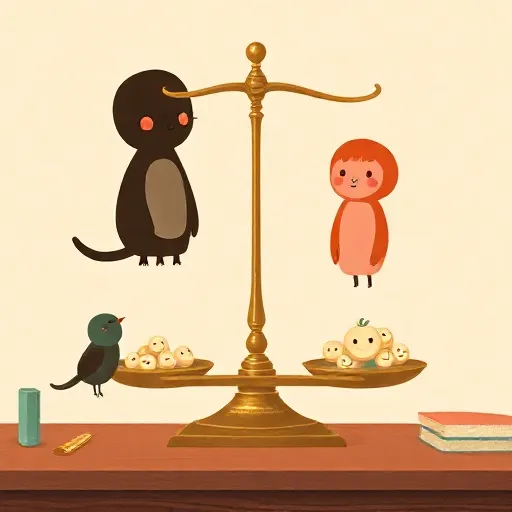
John Stuart Mill (1806–1873) turned beneficence into a mathematical rule. He argued that the one and only foundation of morals is what he called the principle of utility, or the greatest happiness principle. An action is right, Mill said, if it produces more happiness for everyone affected than any other action you could have taken. It is wrong if it does the opposite. This idea, known as utilitarianism, makes beneficence the supreme command of ethics.
Under Mill’s rule, you can never simply ignore a chance to help. Every time you spend money on something that brings only a small pleasure, you must ask: could I have used that same money to create much greater happiness for someone else? If the answer is yes—and it often will be, because a few dollars can buy life-saving medicine for a child in extreme poverty—then Mill’s calculus tells you that spending on your own little pleasures is morally wrong. Mill believed this demand gave ethics a coherence that rival theories could not match. But he left a huge practical difficulty unsolved: how far does this duty really go? If you must always choose the action that tips the happiness scale the most, you might end up giving away almost everything you own, working every hour just to help others, and never relaxing again. Mill knew the principle was demanding. He did not, however, give us a clear stop sign.
Immanuel Kant and the Duty You Can’t Measure
The German thinker Immanuel Kant (1724–1804) took a very different path. He had no patience for Mill’s happiness calculator, and he thought Hume’s friendly sentiments were too unreliable to serve as the backbone of morality. For Kant, what makes an action right is that it follows a rule you could honestly wish everyone followed. And one of those rules, he argued, is a duty of beneficence: you must help others, according to your means, without expecting anything in return.
So far, this sounds generous. But Kant immediately added that the duty is not unlimited. If Hume’s dove-wolf-serpent mixture makes the boundaries fuzzy, Kant’s own theory leaves them just as unclear. He wrote that nobody can set an exact limit on how much sacrifice is required. You must give up some of your welfare to benefit others, but you are not required to ruin yourself. The trouble is that Kant never explained where “some” stops. Should you spend one afternoon a week volunteering? Ten percent of your income? Half? Kant’s theory gestures toward limits without drawing a single line. The same problem would explode two centuries later in the work of a contemporary Australian philosopher.
Peter Singer: When the Pond Is the Whole World

Return to the toddler in the pond. Nearly everyone agrees you have to jump in, shoes be damned. But if you accept that, something uncomfortable follows. Peter Singer (born 1946) built his entire argument on that discomfort. He insisted that physical distance does not change your moral obligations. If it is in your power to prevent something very bad from happening—like a child dying from a preventable disease—without sacrificing anything of comparable moral importance, you ought to do it. The fact that the child lives in a faraway country and you would have to donate money instead of wading into water makes no difference at all.
Singer’s principle sounds like common sense applied to the pond, but applied globally it becomes staggeringly demanding. He argued that well-off people (that includes most of us who have money for snacks, games, and new clothes) are morally required to give to those in extreme need up to the point where giving more would cause us to sacrifice something of comparable importance. That could mean giving until you live at the same level as the people you are helping. Critics immediately objected that such a standard erases the difference between what we ought to do and what would be saintly but optional. In ordinary life, we usually think that giving a small amount to charity is good, but failing to give away most of your income does not make you a terrible person. Singer’s rule seemed to turn everyday generosity into a moral minimum.
In later writings, Singer softened the public message without abandoning the core principle. He suggested that, for practical purposes, we should probably promote a lower target—say, donating a fixed percentage of your income like ten percent—because that is a standard real people might actually meet. But he has never said that this lower target is the true limit of your duty.
Other philosophers have tried to build fairer limits. One, the contemporary thinker Liam Murphy, argued that your obligation is to do your fair share of what would solve the problem if everyone contributed. If others fail to give, that is on them—your duty does not swell to fill the gap. Murphy’s idea is attractive because it feels less crushing than Singer’s original demand, but it also seems too weak to fix giant problems like global poverty when so many people ignore their share. The debate remains wide open, and around every corner the same question reappears: how much is enough?
When Good Deeds Become Heroic
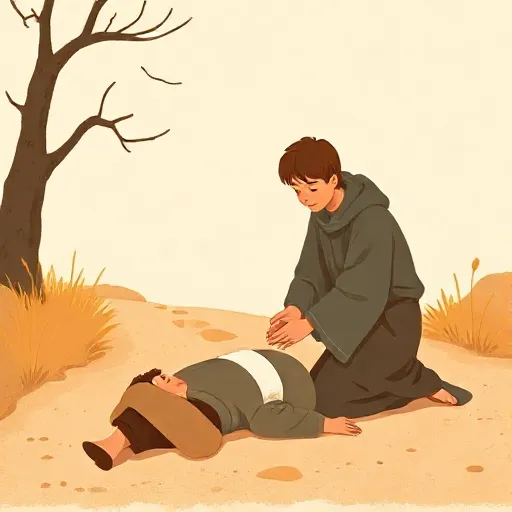
One of the most famous examples of beneficence comes from an old story, the parable of the Good Samaritan. In the tale, a traveler is beaten by robbers and left half-dead on the road. Several people pass by without stopping. Finally, a Samaritan—a stranger from a group often looked down upon—stops, treats the man’s wounds, and pays for his care at an inn. The Samaritan’s deeds are clearly good, but most readers do not think he performed a superhuman feat. He did not risk his life; he simply made an effort and spent some money.
This story illustrates a vital idea that keeps appearing in the debates: the difference between obligation and supererogation. Supererogatory acts are those that go beyond what duty requires—they are praiseworthy but not required. Calling an ambulance for an injured stranger is a duty; asking the ambulance to run over your own foot so the stranger can have your uninjured leg is supererogatory (and bizarre). The trouble, as every thinker from Kant to Singer has discovered, is that the line between duty and heroism is almost impossible to nail down. The Samaritan seems somewhere in the middle. Paying for an inn is not a huge sacrifice, but it is more than a simple wave of the hand. The entire debate about beneficence turns on this blurry middle ground.
Why does this still matter to you? Because every time you open your wallet, scroll past a donation link, or see someone struggling with a heavy load, you are standing on that continuum. You might not have to leap into a pond, but you will face smaller moments where a small sacrifice on your part could make a real difference in someone else’s life. And just like Hume, Mill, Kant, and Singer, you will have to decide for yourself where your duty ends and your own life begins. That is not a problem you can outsource to a calculator, a feeling, or a rule. It is a question you get to answer, every single day.
Think about it
- If a scientist invented a machine that could measure exactly how much happiness each choice would create, would you let it decide everything you do? Why or why not?
- Suppose everyone in your neighborhood gave a small fixed amount to help hungry families, but you knew that many richer people outside the neighborhood gave nothing. Should you give more than your fair share to make up for them?
- Can a person who never gives money to charity still be a good person if they are always kind to the people they personally meet? What would a child on another continent say?