
Why Can’t I Just Watch TV? The Fight Over Morality’s Demands
A Pond, a Puddle, and a Problem

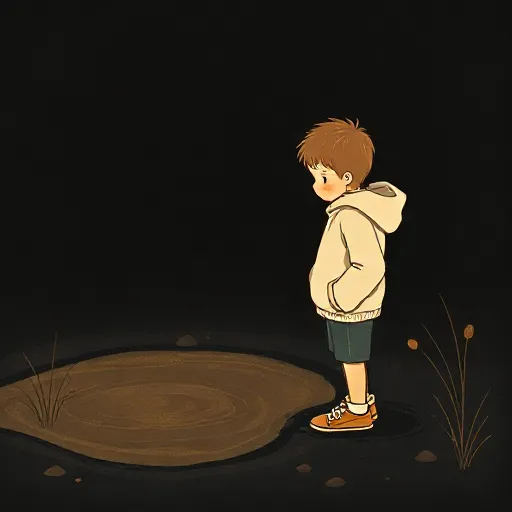
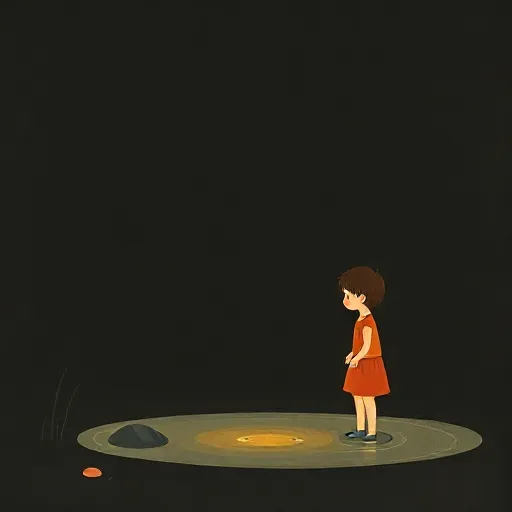
Imagine you’re walking to meet a friend. You pass a shallow pond and see a toddler splashing, about to drown. You could easily wade in and pull her out, but it would ruin your new shoes and make you late. Most people agree: you’d be a pretty rotten person if you kept walking. The philosopher Peter Singer (born 1946) used this scene to argue that we have a strong duty to help others, even when it’s inconvenient.
But then Singer took the argument further. There are children dying right now from lack of food or clean water, far away. For the price of those ruined shoes, you could save a life. If the pond case shows you must sacrifice a little to save a child right in front of you, doesn’t it also show you must sacrifice a lot to save children you’ll never meet? The logic seems to demand an endless chain of giving. And that’s where the trouble starts.
The Accusation: Morality Is Asking Too Much

This is the demandingness objection. It says some moral theories are too strict because they require you to give up your own happiness, projects, and even your life whenever doing so would produce a tiny bit more good for others. The main target is consequentialism, the view that the right act is always the one that creates the most good overall, counting everyone’s well-being equally. If you can save two strangers by dying yourself, consequentialism says you must. An evening relaxing? Wrong, if you could volunteer instead. Donating to charity? Keep going until you’re just as poor as the people you’re helping.
This isn’t just an attack on one theory. Even non-consequentialist views can be incredibly demanding. The philosopher W.D. Ross (1877–1971) thought we have firm duties not to kill or lie, but he still believed that whenever those duties aren’t in play, we must produce the most good we can. That too leaves no room for a life of your own. The objection says all these views miss something crucial: there’s a difference between what’s heroic and what’s simply required. In everyday life, going beyond duty is called supererogatory — good to do, but not wrong to skip. Demanding views erase that category.
The Integrity Worry and George’s Dilemma

The philosopher Bernard Williams (1929–2003) sharpened the objection with a story. George is a chemist who deeply opposes chemical weapons. He’s offered a job in a weapons lab. If he refuses, the job goes to a more eager scientist who will develop the weapons faster. Consequentialism seems to tell George: take the job you hate, because that will slow the weapon program down. For Williams, this was absurd. It forces George to abandon the very commitments that make him who he is — what Williams called his integrity.
Notice that George’s complaint is double. First, the view demands he sacrifice his deepest values. Second, it permits him to do something he thinks is outright wrong: helping build immoral weapons. The demandingness objection, though, is mainly about the first kind of problem. It says it’s unreasonable to require ordinary people to give up their own projects, even when those projects aren’t identity-defining. It might just be the freedom to watch a movie or sleep in on Saturday.
Strike One: Maybe Morality Really Is That Demanding

Defenders of demanding views have two main replies. The first is: “So what? Maybe you’re just not as good as you think you are.” They argue that if we find these demands uncomfortable, that’s a flaw in us, not in the moral theory. After all, if you truly believed you could save a life with a small donation, what excuse do you have?
Singer’s pond case is the sharp edge of this reply. It makes the duty to help feel undeniable. His argument runs: if you agree you must save the drowning toddler, and there’s no important moral difference between that child and a starving child across the ocean, then you must also help the faraway child. Distance, not knowing who exactly you’ll save, and the fact that others could help too — Singer argues none of these weaken your duty. The logic pushes us toward a strong, ongoing obligation.
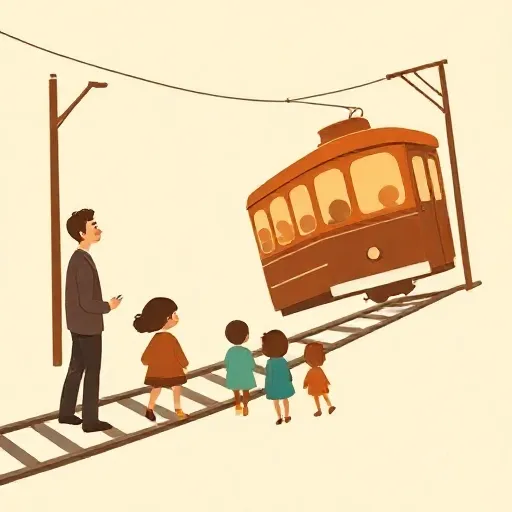
But critics point out a hitch. The pond case might involve a special “emergency rescue” duty, not a general duty to maximize good. Imagine you’re on your way to donate money that will save two lives when you spot the drowning child. If the duty were the same in both cases, you’d have to skip the child and keep going to save two. But most people feel you must stop and save the child right then. That suggests rescue duties are distinct and especially urgent, so the pond example can’t be stretched to cover all charitable giving without losing some of its demanding force.
Strike Two: Building in a Permission to Be Human
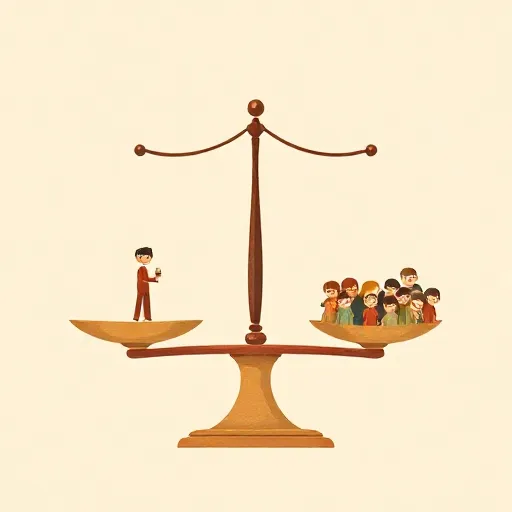
The second strategy to soften the demands doesn’t deny the duty to help — it just adds a counterweight. The idea is to give each person an agent-relative permission to care more about their own life and the lives of those close to them. The philosopher Samuel Scheffler (born 1951) called this an agent-centered prerogative. It means you are sometimes allowed to choose a smaller good for yourself over a larger good for a stranger. You may save your own child before two strangers, or save your own life instead of sacrificing it for two others.
Why should such a permission exist? Scheffler argued that we naturally see the world from two points of view: an impersonal one that counts everyone equally, and a personal one that cares more about our own projects just because they’re ours. A decent moral view, he said, must reflect that we have both perspectives. Others add that without some permission to say no, our bodies and time wouldn’t really belong to us. If you must always hand over your resources whenever the benefit is slightly greater elsewhere, you’re more of a tool for the general good than a person with your own life to lead.
How much weight should this permission have? That’s where things get tricky. If it lets you prefer one unit of good for yourself over a hundred for others, the view becomes very undemanding. If the ratio is only one to two, it stays severe. The most plausible versions, many think, make the permission stronger when the cost to you is larger. Losing your legs might let you refuse to help where a headache wouldn’t. But drawing the exact line is extremely hard, and no single proposal satisfies everyone.
One Donation Is Easy; a Lifetime of Them Is Not

Even a small sacrifice, repeated endlessly, can devour your whole life. This is the problem of demandingness through time. In the pond case, you save a child and go on your way. But with famine relief, every $100 you give saves one life, and then another child takes their place, needing another $100. Over a lifetime, a sequence of individually modest demands can add up to a giant total sacrifice. Is it really wrong to stop giving and enjoy a comfortable life after you’ve already saved dozens of people?
A simple limit — say, once you’ve given a certain total amount, you’re off the hook — has a flaw. It would let you walk past the next drowning child because you’ve “done your share.” That feels heartless. A more flexible approach says your permission to consider your own good grows stronger the more you’ve already sacrificed. If you’ve given a great deal, the next demand must clear a higher bar. Conversely, if you’ve spent years on yourself and done little for others, your permission weakens, and more is asked of you now. This fits the intuition many older people feel about “giving back” after a self-focused career. But if the permission strengthens too much, you could be forced to give and give until your life is barely livable — a worry that keeps the debate very much alive.
What’s Reasonable to Ask?
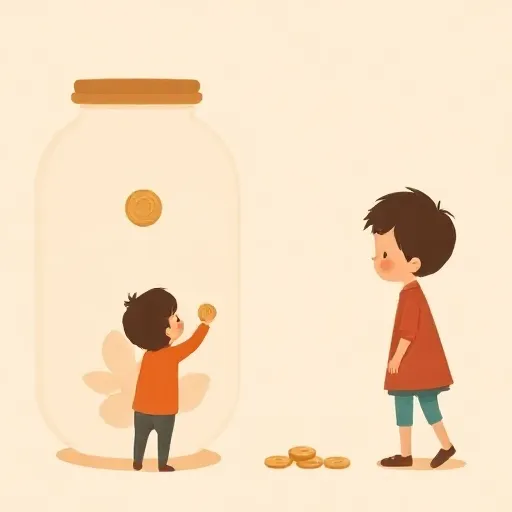
The demandingness objection matters because it’s about your life, right now. It’s the voice in your head when you feel guilty for buying a snack instead of donating the money. It’s the question of whether you deserve to keep the things and time that make you happy, when others have so much less. Philosophers don’t agree on the answer. Some, following Singer, think our ordinary moral comfort is just a privilege we should shed. Others, like Scheffler, think a morality that doesn’t leave room for a personal point of view isn’t a morality for human beings at all.
The fight isn’t just between selfishness and sainthood. It’s about designing a moral framework that acknowledges both the real needs of strangers and the legitimate claims of your own life. The fact that this balance is so hard to strike doesn’t mean we should stop trying. It means the challenge is genuinely deep — one that every thoughtful person, at twelve or at eighty, will keep wrestling with.
Think about it
- If you had to give up every hour of free time to help others until you were just as tired and stressed as the people you were helping, would that be a fair moral rule? Why or why not?
- Is there a real difference between saving a drowning person right in front of you and donating money to save a life far away? What makes the two situations feel different, and do those differences matter?
- Imagine a world where everyone always did the most good possible, all the time. What would your day look like? Would you want to live in that world?