What Is Everything Made Of? The First Philosophers Asked
A Beach, a Thought, and a Revolution
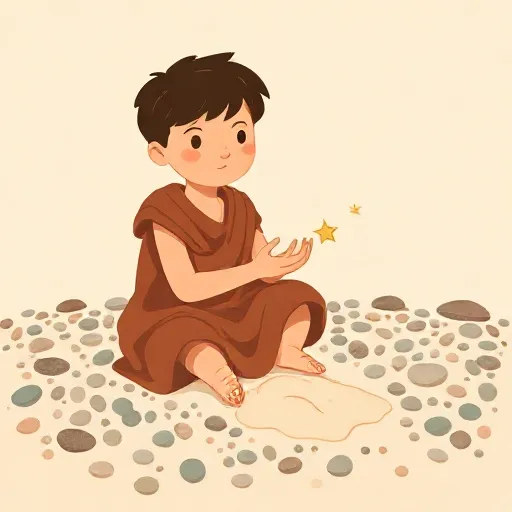
Imagine you are on a beach in ancient Greece, around 600 BCE. Water stretches to the horizon, waves crash, a river empties into the sea. You pick up a handful of wet sand and wonder: where did all this come from? What if everything—even the solid land—is made of water in some form? This kind of wondering started something huge. It was the birth of philosophy and science.
Before the thinkers we now call the Presocratics, most Greeks explained the world through stories about gods. The poet Hesiod, for example, wrote a genealogy of the gods where the universe began with Chaos, and each major god was a part of nature—sky, earth, sea. The gods were powerful, immortal, and unpredictable; they could cause storms, disease, or good fortune on a whim. Humans simply had to accept whatever the gods did. But the Presocratics broke with that tradition. They looked for explanations that did not rely on divine intervention—explanations that came from the world itself. They called it a kosmos, an ordered arrangement that makes sense on its own.
We do not have complete books from these early thinkers. Only fragments—short quotations preserved by later writers—and reports about their ideas survive. But even from these scraps, we can see a revolution: they asked the first philosophical question, “What is everything made of?” and gave answers that still echo today.
Water, the Unbounded, and Air: The Milesians’ Hunt for a Basic Stuff
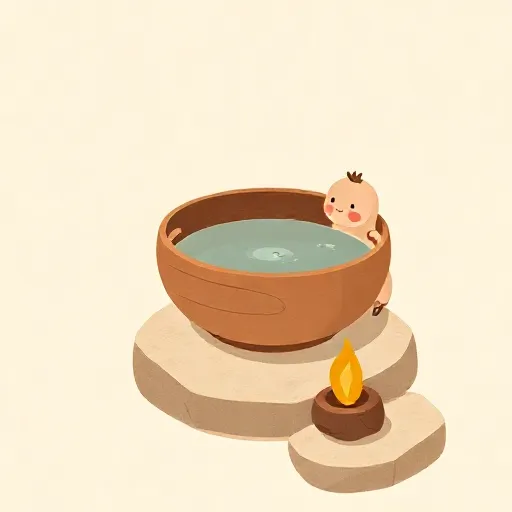
The first philosopher, according to Aristotle, was Thales of Miletus (c. 624–546 BCE). He lived in a Greek city on the coast of what is now Turkey. Thales said that water is the archē (pronounced ar-KHAY), the starting point or fundamental principle of all things. Why water? Maybe because it can change form: it evaporates into mist, freezes into solid ice, and nourishes life. Thales apparently thought that the earth rests on water like a log, and that everything comes from it. He also said that a magnet has a soul because it can move iron—suggesting that the whole world is alive and full of gods, but gods that are natural, not supernatural.
Thales’ follower Anaximander (c. 610–546 BCE) took a different approach. He argued that the original stuff could not be any ordinary thing like water, because water has qualities—wetness, coolness—that would limit what it could become. Instead, he proposed the apeiron (ah-PAY-ron), the “indefinite” or “unbounded.” This was a vast, eternal something with no definite characteristics. From the apeiron, opposites like hot and cold separated off, and their interactions produced the world as we know it. Anaximander even described a kind of cosmic justice: opposites pay penalty to each other for their “injustice” over time. So summer’s heat eventually gives way to winter’s cold, and day balances night. The universe, he thought, runs by law-like cycles, not by the moods of gods.
The third Milesian, Anaximenes (c. 585–528 BCE), returned to a single stuff—but chose air. Air seems neutral, like the apeiron, yet it is something we can feel. Anaximenes explained change through condensation and rarefaction: when air thickens, it becomes wind, then cloud, then water, then earth, then stone. When it thins, it becomes fire. He even gave an everyday example: if you blow with your mouth tight, the air feels cool; if you blow with your mouth open, it feels warm. For Anaximenes, air was the breath of the cosmos—the divine stuff that moves and orders everything.
These three Milesians set the pattern for all later philosophy: find a single, natural principle that explains the whole world without help from myths.
Xenophanes and Heraclitus: New Eyes on Gods and Change

Xenophanes of Colophon (c. 570–475 BCE) sharpened the Presocratic attack on traditional religion. He noticed that different peoples picture gods looking like themselves: Ethiopians’ gods are dark-skinned, Thracians’ gods have red hair. If horses and lions could draw, he joked, they would make horse-gods and lion-gods. But Xenophanes did not just mock; he proposed a new kind of god—a single greatest god, not at all like a human, who thinks and perceives everything without moving, controlling the cosmos by thought alone.
More importantly for science, Xenophanes insisted that natural phenomena are just that—natural. He said the rainbow, traditionally called the goddess Iris, is really just a colored cloud. Even the sun and stars, he thought, are clouds that catch fire. This was a bold move: everything in the sky can be explained without divine messengers. And because the gods no longer delivered knowledge, humans had to rely on their own inquiry. As Xenophanes put it, the gods did not reveal everything from the start; by searching over time, we discover better.
Heraclitus of Ephesus (c. 535–475 BCE) pushed deeper into the nature of change and knowledge. He is famous for saying you cannot step into the same river twice, because the water is always flowing. For Heraclitus, the world is constant transformation, governed by a hidden rational order he called the logos (LOH-gohs). The logos is like the language of the universe—a law-like principle that makes sense of all the change. All things, he said, are one.
Heraclitus used fire as the symbol of the logos: fire is always changing yet always stays the same. He saw conflict as essential: war is the father of all. By this he meant that opposites are linked and create harmony, just as the tension in a bow makes it useful. He criticized earlier thinkers who collected facts without understanding the logos: much learning does not teach understanding. True wisdom, for Heraclitus, came from grasping the unity behind the flux. He also connected the soul to fire, thinking a dry soul was wisest. Heraclitus’s riddling style challenged readers to interpret signs, much like the oracle at Delphi.
Parmenides: The Shocking Claim That Nothing Ever Changes
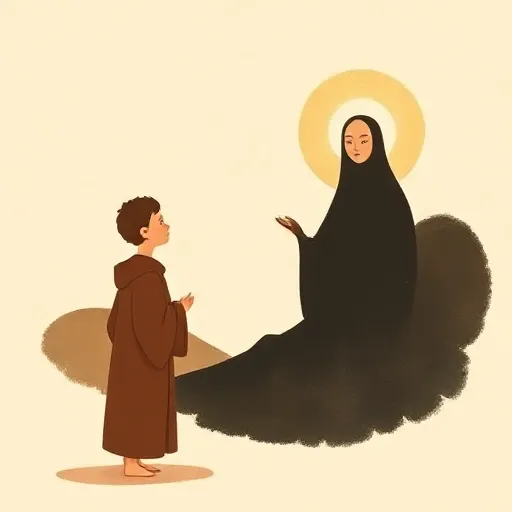
Around 510 BCE, Parmenides of Elea (born c. 510 BCE) made a stunning argument: change is impossible. In a poem, he tells of a young man taken to a goddess who offers two paths of inquiry. One path says “it is and cannot not be.” The other says that it is not and must not be. The second path, Parmenides claims, is unthinkable—you cannot think about what is not. So the only reality is what-is.
What-is, he argued, must be ungenerated, indestructible, unchanging, and complete. It cannot have parts or holes, because that would be what-is-not intruding. Nothing comes into being from nothing, so the world we think we experience—full of birth, death, movement, and variety—is an illusion. True knowledge is about what-is, accessible only to reason. The senses deceive us; they show a world of change, but that world is not fully real.
Parmenides set a huge challenge: if what-is cannot change, how can we explain the ever-shifting world we see? Later thinkers tried to save the appearances while respecting his rules.
Rescuing the World: Pluralists and Atomists

After Parmenides, philosophers had to get creative. Anaxagoras of Clazomenae (c. 500–428 BCE) said that nothing truly comes to be or passes away; things are just mixtures that separate and recombine. In the beginning, all ingredients were mixed together infinitely, so fine that nothing was distinguishable. Then a cosmic intelligence called Nous (“mind”) started a rotation that separated them, forming stars, earth, and living things. Yet even now, everything is in everything—a tiny bit of hair, flesh, and gold is everywhere. The senses give us clues, but reason must infer the hidden mixture.
Empedocles of Acragas (c. 492–432 BCE) proposed four divine “roots”: earth, water, air, and fire. These are eternal and unchangeable, satisfying Parmenides’ requirement. They mix and separate through the competing forces of Love (which brings unlike things together) and Strife (which gathers like to like). The cosmos cycles endlessly between total mixture under Love and total separation under Strife. Empedocles even gave recipes: bone is earth wetted by rain and hardened by fire; flesh is equal parts of the four roots, mixed finely. He also taught that how you live matters; the ethical life and understanding the cosmos go hand in hand.
The most radical response came from the atomists, Leucippus (5th century BCE) and Democritus (born c. 460 BCE). They said reality consists of an infinite number of atomon (uncuttable particles) and empty space, the void. Atoms are solid, eternal, and differ only in shape, arrangement, and position. The void lets them move and combine. Everything we perceive—sweet, cold, color—is “by convention”; the true reality is only atoms and void. For example, sweet things are made of round, large atoms; sour things of rough, angular ones. Democritus acknowledged that the senses cannot show us atoms, but reason can reach the truth hidden in the depths. He also thought the goal of life was a calm contentment, which might connect to an atomic theory of the soul.
Why the First Philosophers Still Matter

You might wonder: why should I care about people who lived 2,500 years ago and got the science mostly wrong? Because they got the questions right. Before the Presocratics, explanations depended on stories about powerful beings who held all the answers. After them, the project became: we can figure out the universe ourselves.
Every time you ask “what is this made of?” or “why does that happen?” you are following in their footsteps. Their search for a single underlying principle led to our idea of atoms, elements, and natural laws. Heraclitus’s focus on change and hidden order echoes in modern physics. Parmenides’s challenge about being and non-being still troubles philosophers. And the atomists’ claim that qualities like color and taste depend on the arrangement of tiny bits is startlingly close to what we now know.
These thinkers did not separate science from philosophy; they were just trying to understand the world. They showed that human reason, not divine revelation, could be the key. So next time you are at the beach, staring at the water and wondering what holds it all together, remember Thales. He started a conversation that has not ended yet.
Think about it
- If you had to guess, without using modern science, what do you think the world is really made of? What evidence would you look for?
- Anaximander said the universe has a kind of justice, with opposites balancing over time. Can you think of something in your life or in society where opposites seem to balance each other out?
- Parmenides claimed that change is not real—only what truly exists, unchanging, is real. Does that make sense to you? What seems more real: the constant growth of a tree, or the idea of “tree” itself?