How Did the First Philosophers’ Ideas Survive Without Their Books?
A Shortcut to the Lost Wisdom of Greece
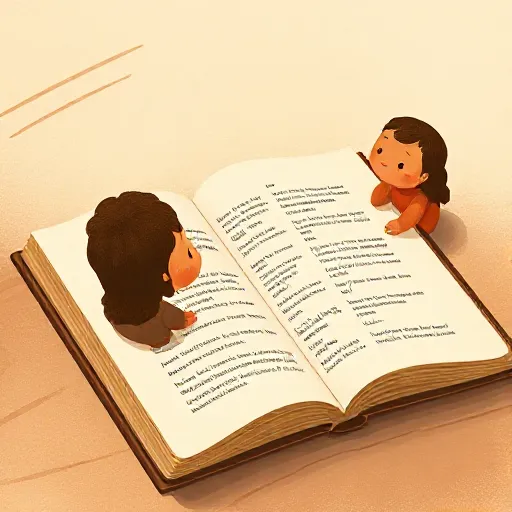
Imagine you want to know what the very first Greek philosophers thought about the stars, the gods, or what everything is made of. You search for their own writings—but almost nothing survives. The papyrus scrolls of Thales, Anaximander, and hundreds of others crumbled into dust long ago. What you find instead are odd little books: lists of short, clipped sentences, each one naming a philosopher and what that person supposedly believed. A typical entry might read, “Thales: water is the first principle of all things.” There’s no argument, no proof, just a single bald claim.
These collections are called doxographies — from the Greek words doxa (“opinion”) and graphō (“I write”). A doxography is a report of the tenets, or doctrines, of different thinkers, usually arranged by subject. They are the cheat sheets of ancient philosophy. Without them we would know almost nothing about many early Greek scientists and philosophers. Yet the story of where these summaries came from, and how much we can trust them, is one of the trickiest detective sagas in the study of ideas.
The Master Detective: Hermann Diels and His Stemma
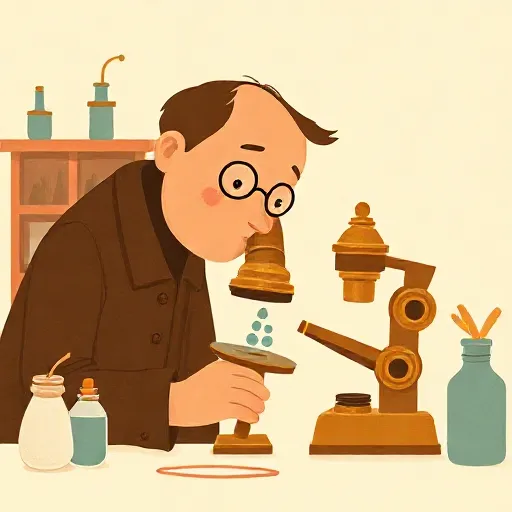
In 1879 the German scholar Hermann Diels (1848–1922) published a book that changed how we look at these summaries. He focused on a particular work called the Placita (“Tenets”), which survives under the name of an unknown author we now label Ps‑Plutarch (Plutarch lived later, but this isn’t him). The Placita marches through physics chapter by chapter — principles, cosmos, sun, moon, weather, living things — and under each heading lists what various philosophers said. It never argues; it just lays out the options.
Diels noticed that the exact same sentences often appeared in another late book, the Anthology of Stobaeus (5th century CE), and that a Christian bishop, Theodoret (5th century CE), copied the same material too. Diels reasoned that all three must have borrowed from a single now‑lost source. He named it after an otherwise mysterious figure mentioned by Theodoret: Aëtius, who probably worked in the late first or early second century CE. Ps‑Plutarch’s Placita, Diels argued, was just a drastically shortened version—an epitome—of Aëtius’s longer original.
Diels then imagined an even deeper chain. Aëtius, he thought, had himself leaned on an earlier compilation that Diels called the Vetusta Placita (“Older Tenets”). And behind that, Diels traced the whole tradition back to a gigantic lost work by Aristotle’s pupil Theophrastus (c. 371–c. 287 BCE): the Physical Tenets in sixteen books. Diels saw the history as a tree trunk — Theophrastus at the root, later epitomes branching off — and believed he could reconstruct what the earliest Greeks really taught by peeling back the later layers. He was so confident about this “stemmatic” method that his edition of the fragments of the Presocratics (the Fragmente der Vorsokratiker) still shapes how scholars talk about Thales, Heraclitus, and Empedocles today.
Aristotle’s Filing System: The Birth of Dialectical Doxai
Where did Theophrastus get the idea of organizing tenets by subject? From his teacher Aristotle (384–322 BCE). Aristotle had a method for investigating any topic. Before offering his own answer, he would collect and sort the doxai — the established opinions — of earlier thinkers. But he didn’t just make a pile. He sorted them by division: first decide what kind of thing you are studying (a substance? a quality? a motion?), then list the views that claim it is “this” as opposed to “that.” He even gave his students a manual: in the Topics, he instructed them to make “separate lists for each set, with separate headings,” and to note who said what.
Theophrastus applied this dialectical recipe to the whole of natural philosophy. His Physical Tenets grouped opinions about principles, the heavens, the soul, the senses, and much more. In his surviving treatise On the Senses, for instance, he arranged thinkers according to whether they thought knowledge comes through similarity (“like knows like”) or through contrast (“unlike knows unlike”), and within each group he ordered them by how many senses they believed in. That is exactly the spirit of the later Placita chapters: a tidy division lemmata followed by a compromise or maverick view that doesn’t quite fit.
So the thread runs from Aristotle’s classroom, through Theophrastus’s massive filing project, into Aëtius’s handbook, and finally down to the scraps we read today. This is why, when you open Ps‑Plutarch, you see a systematic arrangement by topic, not by philosopher or date. The ancients weren’t just recording random facts — they were building a status quaestionis: a snapshot of what the options were on a given subject, before they tried to settle the question themselves.
The Danger of Trusting the Cheat Sheet

There is a huge catch. Diels’s stemma was brilliant, but parts of it were seriously shaky. Later scholars showed that the chain from the Vetusta Placita back to Theophrastus is full of guesswork. Even the tidy distinction between “arranged by subject” (like Aëtius) and “arranged by school or person” (like Diogenes Laërtius) doesn’t hold up once you look closely. More importantly, when we compare what the doxographies say about philosophers whose own writings do survive — such as Plato or Aristotle — we see that the summaries are often distorted. The brief doxographical lemmata had been “modernized,” simplified, sometimes even garbled to fit the scheme of the chapter.
This means that for the lost Presocratics, whom we know only through these reports, we cannot automatically treat an Aëtian sentence as a fresh, reliable window onto the original. Diels himself was so eager to recover Theophrastus’s supposed reliability that he overlooked evidence that Aristotle’s Metaphysics also matches the later tradition — meaning the chain could just as easily go back to Aristotle directly, not to Theophrastus at all. Some scholars have even argued that the tradition was deliberately updated by skeptical philosophers who compiled conflicting opinions to show that no one really knows the answer, encouraging a suspension of judgment.
None of this means doxographies are worthless. It means they are a tool we must use with care. Think of them as a sketch drawn by someone who once saw a painting — helpful, but not the painting itself.
Why a Skeptical Eye Matters—Then and Now

So why should a twelve‑year‑old care about dusty manuscripts and stemmas? Because every day you encounter doxographies of your own. When a textbook says “Plato believed that the physical world is a shadow of true reality,” you are reading a doxographical statement — a compressed report of a huge set of arguments. When a friend summarizes a film by saying “it’s about how greed destroys friendships,” that’s a doxography too. Summaries help you grasp the landscape quickly, but they can also hide the messy, interesting reasons behind a conclusion.
The detective work that Diels began is still going on. In 2020, scholars published a new single‑column reconstruction of Aëtius’s text, with a detailed commentary that for the first time shows exactly where the evidence stands. They confirmed that Diels’s core intuition — that Ps‑Plutarch, Stobaeus, and Theodoret share a single source — was correct. But they also built in safeguards to show how each step in the transmission chain can be verified or questioned. That level of caution is the real lesson: when we inherit old ideas through many hands, we need to look at the hands, not just the ideas.
The next time you read a one‑sentence claim about what some long‑dead thinker believed, remember you’re looking at the end of a trail of copying, condensing, maybe even correcting. Ask yourself: who wrote this down first? And what might have been lost along the way?
Think about it
- If you had only a short, possibly distorted list of what someone believed, how could you check whether the list is accurate?
- Imagine you’re writing a summary of a friend’s argument for a class assignment. What might get lost or changed without you realizing?
- If all the original works of a famous thinker were gone and we only had Roman summaries, would it be fair to say we really “know” what that thinker thought? Why or why not?