Is Everything Conscious? The Strange Idea That Might Solve the Puzzle
A Magnet with a Mind?
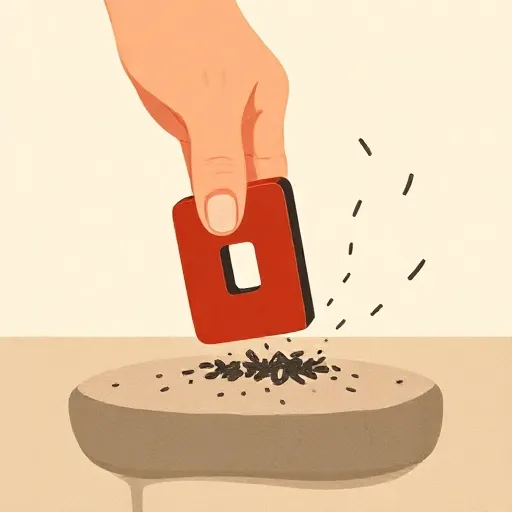
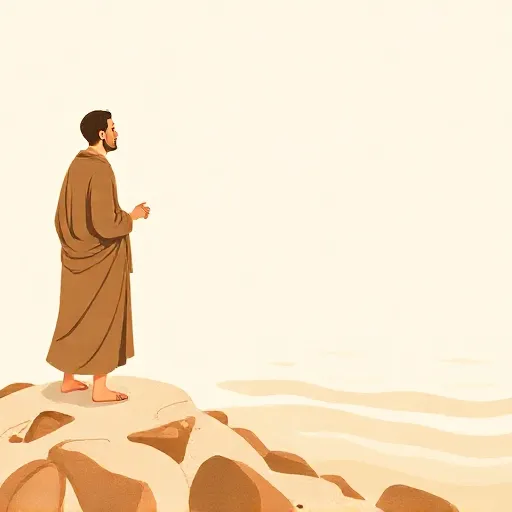
Around 600 BCE, the Greek thinker Thales (c. 624–545 BCE) watched a magnet tug on bits of iron. The rock moved them without being pushed. Thales had a simple rule: things that move themselves have a mind. So he decided the magnet must have a mind too. He went further. According to some ancient reports, Thales believed the whole universe is alive and full of spirits.
That was the first whisper of panpsychism, the view that mentality — the ability to have a mental life — is a basic feature of the world, like mass or charge. In its most common modern form, panpsychism says that everything has consciousness: some kind of raw, felt experience, no matter how simple. An electron would not think or plan. But maybe there is something it is like to be an electron.
Other early Greek philosophers saw the problem differently. Democritus (c. 460–370 BCE) tried to explain everything with tiny, mindless atoms. But he admitted that qualities like sweetness or color could not be explained by atoms alone, so he called them unreal — only atoms and void truly exist. The choice was clear: either mind is a basic ingredient of reality, or it must somehow be built from mindless parts. This puzzle has never gone away.
Spinoza’s God: A Universe Made of Mind
During the scientific revolution, Galileo and Descartes split the world into two kinds of stuff. Matter had measurable “primary” qualities like shape and size. Colors, sounds, and tastes — “secondary” qualities — were shoved into the mind. This created a deep rift: bodies on one side, souls on the other.
Baruch Spinoza (1632–1677) hated the rift. He argued that there is only one substance: God or Nature. This single substance has infinitely many sides, but two we can grasp — Extension (matter) and Thought (mind). Everything physical is also mental, and everything mental is also physical. A circle in the world and the idea of that circle are the same thing under two descriptions. For Spinoza, all of nature has a mental side.
Gottfried Leibniz (1646–1716) broke the universe into infinitely many mind-like building blocks he called monads. A monad is a simple, everlasting thing that cannot interact with any other monad. Yet each monad carries a view of the entire universe inside it. The only model Leibniz could find for a truly simple substance was something like a perception or a tiny urge — a purely mental kind of being. Matter, in his view, was just the confused way monads appear to each other.
Both thinkers were driven by the same hunch: physics tells you what things do, but not what they are on the inside. The inner nature of reality, they thought, must be something like a mind.
Fechner, James, and the Golden Age
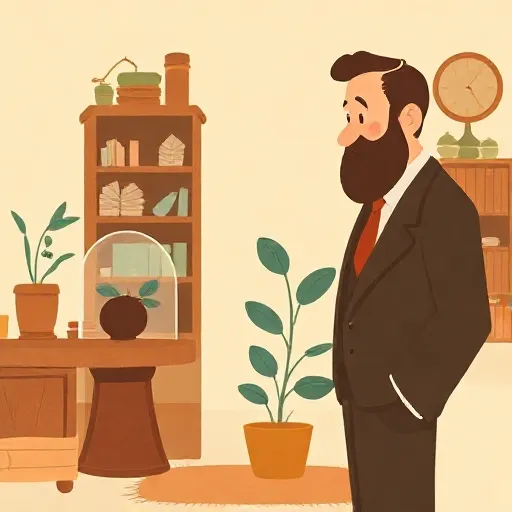
The nineteenth century was panpsychism’s busiest period. Gustav Fechner (1801–1887) developed a view called synecological panpsychism. Instead of giving minds to tiny atoms, he thought the entire universe is a single great mind, and we are parts of it — like cells in a larger body. Later, this same idea would be called cosmopsychism. Fechner imagined plants, trees, and even the Earth possessing a dim, unified awareness.
William James (1842–1910), the great American psychologist, started out with a “neutral monism”: the stuff of the world is neither mental nor physical, but something that can look like either. Over time, he leaned toward panpsychism, writing that the constitution of reality is “of the psychic type.” But James also saw a deep trouble. If every tiniest particle has its own speck of experience, how could those specks ever combine to form your single, rich stream of thought? He called this the “mind dust” worry. That worry grew into the combination problem, which today is the biggest challenge panpsychism faces.
The Hard Problem and a Radical Answer
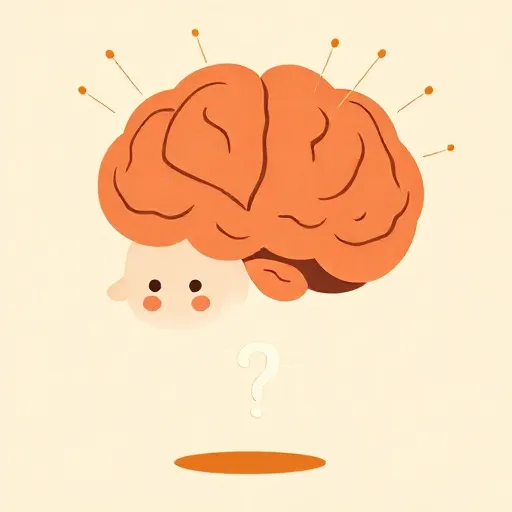
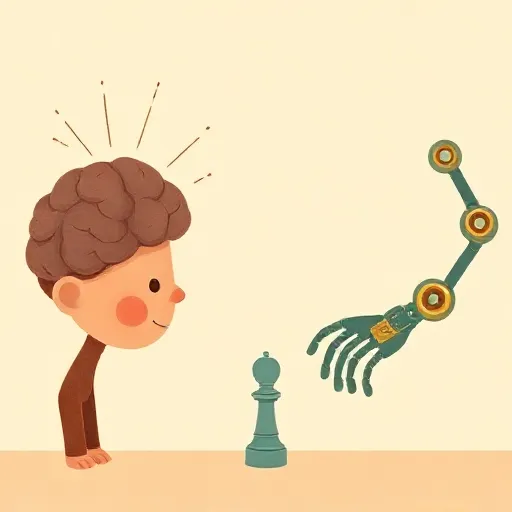
Today we know a lot about the brain. But knowing which neurons fire when you see blue does not explain why blue looks like anything at all. Philosophers call this the hard problem of consciousness. You can imagine a creature that acts exactly like a human — screaming, pulling away from fire — yet has no inner experience. If that is imaginable, then physical facts alone can’t explain consciousness.
Thomas Nagel (b. 1937) argued that we must avoid radical emergence: the idea that a totally new kind of property — conscious experience — pops into existence from parts that have none. Radical emergence, Nagel thought, makes consciousness an unintelligible miracle. If our brains are made of ordinary matter with no mental properties, there is no intelligible route from matter to mind. The only way out, he said, is to suppose that the basic stuff of the world already has some mental or proto-mental features.
Galen Strawson (b. 1952) sharpened the point. Whenever something truly emerges — like liquidity from molecules — it happens because the parts and their arrangement transparently explain the new property. Molecular sliding makes liquidity obvious. But no set of purely physical facts makes it obvious why there should be feeling. So, Strawson concluded, the basic ingredients of reality must themselves be conscious in some extremely simple way.
There is another argument. Physics describes the world with math — mass, charge, spin, position. It tells you how an electron behaves but never what an electron is in itself. Look inside your own mind, and you find the one bit of reality whose inner nature you know directly: consciousness. The philosopher Bertrand Russell (1872–1970) and the astronomer Arthur Eddington (1882–1944) both argued that consciousness might be the hidden inner nature of all matter. If so, then panpsychism is not a wild guess; it is the simplest story that fits the clues.
Can Tiny Minds Add Up?
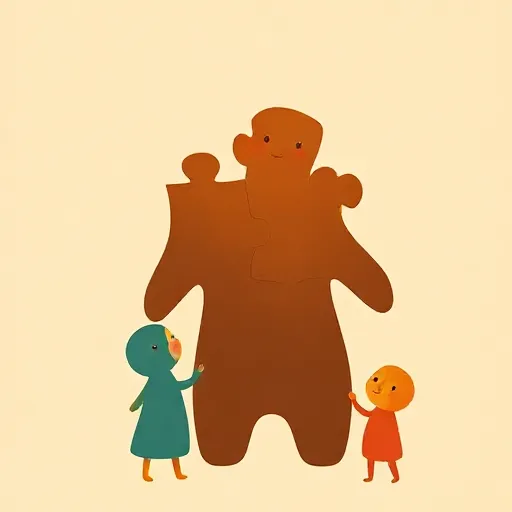
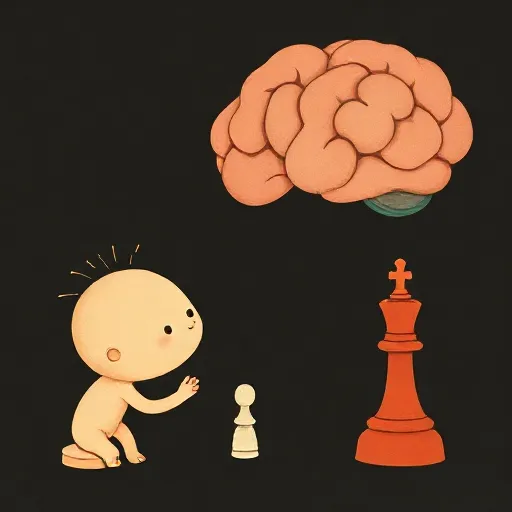
The hardest question for panpsychism is how lots of micro-minds become one macro-mind like yours. This is the combination problem, and its hardest piece is the subject-summing problem. Distinct subjects have their own viewpoints. My pain is mine; your hunger is yours. If billions of micro-subjects exist in your brain, each with its own tiny experience, how could they ever add up to a single “you” that feels all those things at once?
William James thought it was impossible. A hundred separate feelings, he said, are each shut in their own skin, “windowless.” Group them together, and you simply have a hundred feelings, not one new unified feeling. You would need a 101st feeling to emerge — and that would be a completely new fact, not something the hundred feelings composed.
Some panpsychists try to soften the problem. Emergent panpsychists hold that human consciousness is not composed of micro-consciousness but is a new fundamental thing that appears when physical systems get complex enough — a kind of fusion between micro-subjects that then disappear into the larger subject. Others flip the picture upside down with cosmopsychism: the universe is the one big conscious whole, and our minds are limited segments of it. Both moves try to dodge the puzzle of summing small subjects.
No one claims to have a complete solution yet. But panpsychists point out that many great scientific ideas took centuries to make full sense. They hope that treating consciousness as a basic feature of reality will eventually lead to a breakthrough.
Why This Ancient Puzzle Matters to You
You have probably asked yourself why you are you and not a robot. Why does the world look like something from the inside? Scientists can measure your brain activity, but they can’t climb into your head and feel what you feel. That gap is the very mystery panpsychism tries to address.
If panpsychism were true, it would change how you see everything around you. The chair you sit on, the air you breathe, the screen you are reading — all might have some faint, fleeting inner quality. It doesn’t mean rocks have hopes or quarks dream. It means the most basic spark of felt experience is as real and widespread as gravity.
This doesn’t settle debates about how to treat animals or nature, but it asks you to think carefully about what it means to be a conscious being in a possibly conscious world. The strangest ideas sometimes bring us closer to the truth. The fact that we can even wonder about the minds of electrons tells you something important: philosophy begins and ends with the shock of being alive.
Think about it
- If every atom in your body had a tiny experience, would that make you a collection of tiny selves rather than a single person? Why or why not?
- Can you imagine a copy of yourself that behaves exactly like you but feels nothing at all? If so, what does that say about how much science can really explain?
- If panpsychism were true, would it be wrong to step on an ant or pluck a flower? What kind of inner life, if any, would you need to care about?