Did the Entire Universe Come from a Single Simple Thing?
The Philosopher Who Chased Wisdom, Not Conquest
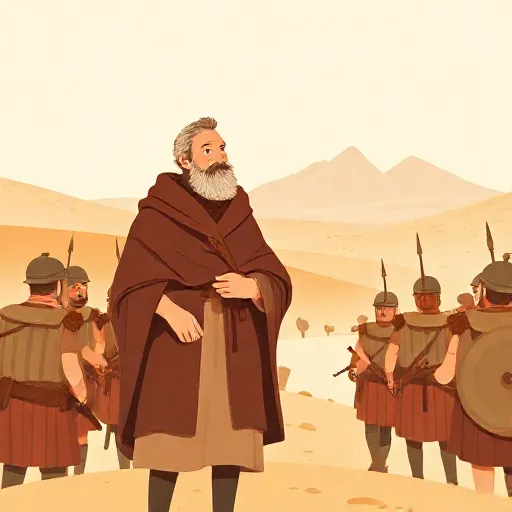
In the year 243 CE, a fifty-year-old Egyptian named Plotinus (204–270 CE) joined a Roman army marching toward Persia. He wasn’t a soldier. He was a philosopher who had spent eleven years learning from a mysterious teacher in Alexandria. Now he wanted to study the wisdom of Persian and Indian sages. But the emperor was murdered, the campaign collapsed, and Plotinus had to flee. A year later he arrived in Rome, where he taught for more than twenty-five years. His great question was the simplest—and most audacious—you can ask: Why is there anything at all?
Plotinus’s answer would become one of the most ambitious systems of thought ever built. He believed that everything in existence, from a grain of sand to the furthest star, pours forth from a single source so simple it cannot even be called a “thing.” He called it the One. And he was convinced that the human mind, by thinking clearly and living well, can climb back up this great chain of being and touch its ultimate origin.
The One: Too Simple to Describe
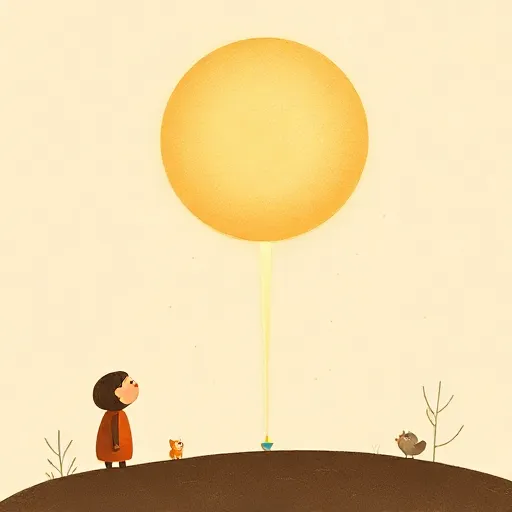
If you want to explain everything, you can’t start with something complicated. A cause must be simpler than what it explains—otherwise you’d need an even earlier cause. Plotinus reasoned that the first principle of the universe had to be absolutely simple. That’s the One. It isn’t a god with a personality. It has no parts, no shape, no qualities. You can’t say it’s “good” in the ordinary sense, because saying “it is good” would add a property to it, and the One can’t have any properties.
What can the One do? Nothing—and everything. Since it’s completely perfect, its very nature is to overflow. Plotinus liked to compare it to fire. A fire is hot by its own internal activity. But it also sends out heat that warms the air around it without the fire itself becoming any cooler. In the same way, the One gives rise to everything that exists, yet stays perfectly complete and unchanged. Philosophers call this overflowing emanation. It’s not a choice or a plan—it’s simply what happens when something has unlimited power.
The Intellect: A Living Blueprint
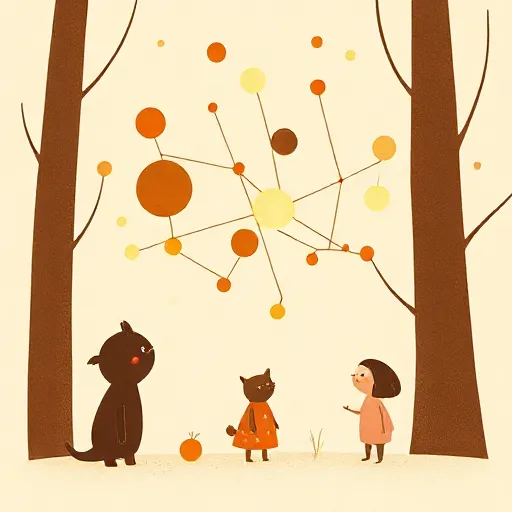
The first thing that emanates from the One is a level of reality Plotinus calls Intellect (or Nous, the Greek word for mind). At first, what flows out is completely shapeless—a kind of “intelligible matter” with no content. But this shapeless activity instinctively turns back toward the One to gaze at it. That turning shapes it into something definite: a realm of pure, timeless ideas, or Forms.
Think of geometry. Any geometric theorem—say, the Pythagorean theorem—contains within it, potentially, links to all the other truths of geometry. In Intellect, every Form is a living truth that contains all the others. Being, Motion, Rest, Sameness, and Difference weave them together into a unified web. The Intellect doesn’t have to search for knowledge; it already is perfect knowledge, all at once. Plotinus sometimes calls it a “Perfect Living Organism”—a blueprint so complete that the physical world is merely its shadow.
The Soul: The Bridge Between Worlds
If Intellect is the blueprint, who builds the house? That’s the job of Soul, the third great level of reality, or hypostasis. Soul acts like a bridge. It gazes upward at the Forms in Intellect, then projects their outlines downward into the physical world. This activity is called “contemplation,” and it creates time itself—because Soul deals with one idea at a time, not all at once like Intellect.
Each living body has its own individual soul, but these souls are not trapped inside flesh. Plotinus insists they remain “undescended,” hovering above the body and animating it like a light from above. What we normally call a living being is really a compound: the body, plus an image of the soul projected onto it. Because all souls are kin, they can communicate directly without bodies, and together they help the cosmic Soul run the universe like a single harmonious organism.
Where Evil and Beauty Collide: Matter and the Return
At the bottom of the chain lies matter—not the stuff you can touch, but a permanent substrate with no qualities of its own. It has no color, no size, no shape. Plotinus calls it “non‑being,” because it lacks any identity. Forms are projected onto it like reflections on a mirror, and matter itself never changes. This complete absence of goodness is the root of all evil. Evil happens when a soul becomes fascinated by the mere images flickering on matter and mistakes them for real beauty.
Some of Plotinus’s contemporaries, the Gnostics, believed the physical world was the work of a malevolent creator and a prison for the soul. Plotinus fought this idea aggressively. He held that the sensible universe is a magnificent image of the intelligible one—as good and beautiful as it can possibly be, given that it includes matter. Our task is not to despise the world but to climb back up. Through ethical virtues, clear reasoning, and finally a direct intellectual leap, a person can touch the One itself and experience a blissful union. That, Plotinus says, is the highest eudaimonia—true well‑being.
Why Plotinus Still Whispers to the Stars
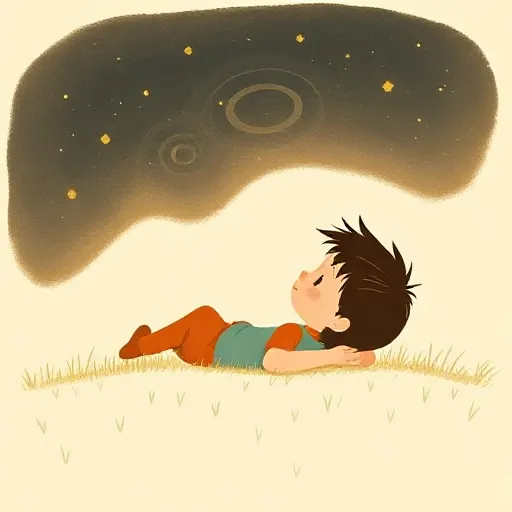
You may never sit in a Roman lecture hall, but you’ve probably looked at the night sky and felt that everything must hang together in some deep way. Plotinus’s vision is a map of that intuition. He insists that the universe is not a pile of random things but a flowing, living system where each level springs from something higher. And the mind, he believes, is not cut off from that source—it can retrace the path all the way back to the single, silent point where everything begins.
It’s an idea that invites you to wonder: What if the most complex thing in the world—your own consciousness—is itself a distant echo of absolute simplicity? Plotinus doesn’t ask you to believe on faith. He asks you to turn inward and see for yourself.
Think about it
- If the entire universe came from one perfectly simple thing, could you ever discover that thing just by thinking alone?
- Can something exist that has no qualities at all—not even a shape or a location? Why or why not?
- Is it possible for you to feel connected to everything without using words, just through a moment of silent attention?