Does the Universe Flow from a Single Source?
Who Was Plotinus and What Was the Puzzle He Tried to Solve?
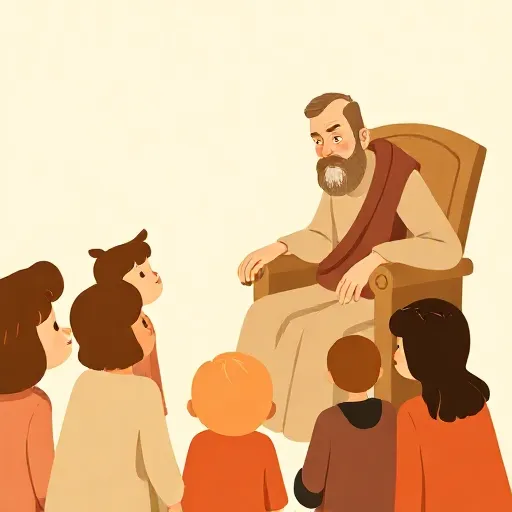
In the year 245, a philosopher with a piercing gaze and a quiet, disciplined intensity traveled from Alexandria to Rome. His name was Plotinus (204/5–270). He had spent years studying in Egypt with a mysterious teacher named Ammonius Saccas, who never wrote anything down. Now Plotinus began his own school, teaching only through spoken discussions. Eventually his most talented pupil, Porphyry, persuaded him to put the ideas into writing. After Plotinus died, Porphyry edited those notes into six groups of nine essays—the Enneads, from the Greek word for “nine.”
What obsessed Plotinus was a question that still grips anyone who looks up at the night sky and wonders where it all came from: How can the entire universe, with its dizzying variety of stars, rocks, plants, thoughts, and desires, emerge from a single divine principle? If the source of everything truly is one, how does it produce many things without splitting apart or planning like a craftsman?
Before Plotinus, many philosophers had offered answers that seemed either too messy or too magical. The Neoplatonists—the school Plotinus is usually said to have founded—tried something bolder. They built a whole system on just one ultimate cause, but they insisted that the universe did not begin at a moment in time. Instead, the process is eternal: right now, at every instant, reality flows outward from that source in steady, orderly stages.
The One: A Unity Beyond All Thought
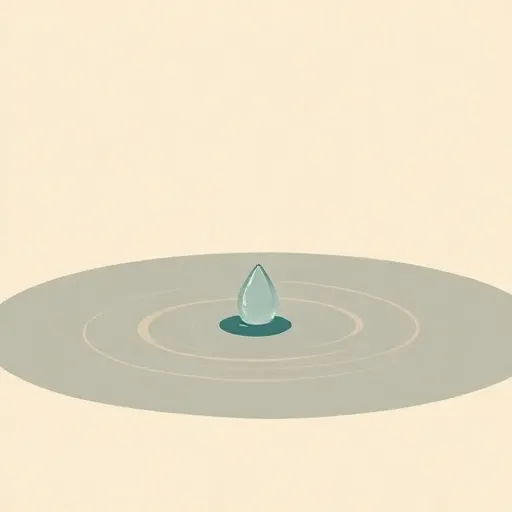
The top of the Neoplatonic ladder is something they called the One. It is not a god who thinks or decides, not a person, not even a thing. Plotinus described the One as absolute Unity, beyond all being, beyond every category we can name. We can only say what it is not—not limited, not divided, not needing anything. Because it is perfect unity, it is the simplest possible reality.
How, then, does anything else exist? The Neoplatonists used a careful analogy drawn from everyday life: every activity has an inner and an outer side. The sun’s inner nuclear activity (they didn’t know about fusion, but they observed that the sun produced heat and light from its own nature) has an outer effect—the warmth and brightness that reach us. A tree’s inner organizing principle produces its outer fruit. A human’s inner thoughts and feelings spill over into speech and expression. None of these outer effects is the purpose of the inner activity; they simply “fall out of” it, carried along by what the thing already is.
The One’s inner activity—a limitless, singular energy—overflows in the same way. Its outer effect is not a plan, not a decision, not a creation in time. It is an eternal, unstoppable overflow that produces the next level of reality.
Absolute Consciousness: The Living World of Forms

The first outward effect of the One is what the Neoplatonists called nous, a Greek word often translated as “Intellect” but better understood as pure absolute Consciousness. This is not a brain or a mind inside a body. It is a kind of pre-embodied power of knowing, a realm where thinking and the objects of thinking are one and the same. The Neoplatonists called it the second Hypostasis—a distinct, independent level of reality (the word means “standing under,” like a foundational support).
Consciousness, having emerged from the One, tries to understand itself. To do that, it must turn back and gaze toward its source. In that turning, the original unity splits into a duality: there is the act of thinking and the thing thought about. Instantly, basic categories appear—identity and difference, rest and change, number. And with them, the entire world of eternal Forms or ideas (the pattern of a tree, the nature of justice, the shape of a circle) arises without any effort. These Forms are not dead blueprints; they are living thoughts, a conscious noetic cosmos.
This is not a process you can picture as a stream of light gushing out—even though the light analogy often gets used. No agent pushes anything, no patient receives something. It is more like a single activity that unfolds itself into a many-layered unity. And just as the One’s inner life overflows into Consciousness, so Consciousness’s inner life overflows again, giving rise to the next stage.
Soul: The Bridge That Turns Ideas into Trees, Stars, and You
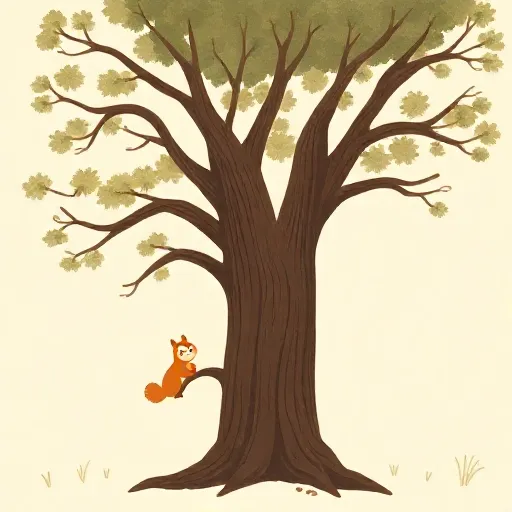
That next stage is Soul (psychê), the third Hypostasis. Soul is not something that lives inside a body; rather, the entire physical world rests in Soul. For the Neoplatonists, Soul is the general phenomenon of life, the link that carries the images of the eternal Forms down into the material world. It is a great continuum: from the highest acts of memory and imagination all the way down to the simple metabolism of a plant.
The idea that the universe is a living being was an old one, but Plotinus gave it a striking twist. Soul does not labor like Plato’s divine craftsman, assembling matter piece by piece. It simply turns back and gazes at Consciousness, becomes “informed” by the Forms it sees there, and then, by a kind of benevolent necessity, projects those forms into the lower realm of space and time. The trees, the stars, the human face—all are the outer effect of Soul’s inner contemplation.
Within Soul, the Neoplatonists drew a further line between higher and lower functions. Nature (phusis) is the lowest aspect, a silent, dreamlike contemplation that shapes the physical world without deliberate planning. Even a stone or a patch of dirt, in this view, has a hidden divine moment. For all their reputation as other-worldly thinkers, the Neoplatonists saw the material universe as profoundly good and beautiful, the effortless product of divine power.
The Last Flicker: Matter and the Puzzle of Evil
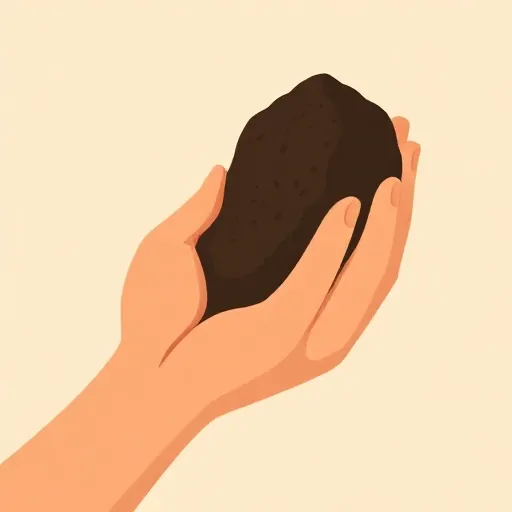
If the chain of inner and outer activities keeps spilling forward, where does it stop? Plotinus compared it to light radiating outward until it fades into darkness. Matter is the limit—the point where the energy transmitted from the One exhausts itself and no further outer activity can arise. It is not a thing with its own shape or power; it is purely passive, an entirely formless non-entity. Yet it is not nothing. Matter is what makes the activity of Soul perceptible. A leaf cannot be seen unless there is something for its color and shape to appear on.
This picture raised a hard question: If everything ultimately flows from the One, which is pure goodness, why does evil exist? Plotinus’s answer was subtle and controversial. Matter itself does not cause evil; it has no active power. Evil arises when a higher being—especially a human soul—fixes its attention downward toward the material world and becomes obsessed with what is lower. The direction of concern, not some dark force, is what stains the soul. Later Neoplatonists, such as Proclus in the fifth century, were not satisfied. Proclus argued that a human soul could be genuinely wicked by its own nature, not just because it looked in the wrong direction. This dispute lives on inside the Neoplatonic tradition, much like later debates about whether people are fundamentally good or can become radically corrupt.
Living the Ascent: The God Within and the Return to the One
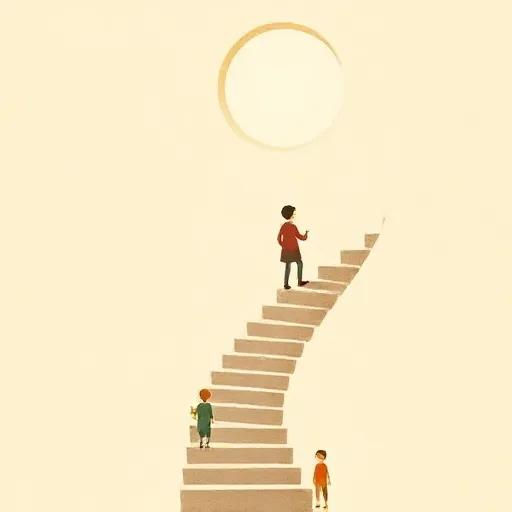
Human beings, in the Neoplatonic vision, are miniature versions of the entire cosmos. Each of us contains all the levels: the bodily matter, the vegetative life of Nature, the psychic life of Soul, the rational spark of Consciousness, and, at the deepest core, a trace of unity from the One. This makes every person a microcosm—a little world.
Ethics, then, is not primarily about being a good citizen or following social rules. The cardinal virtues—justice, courage, temperance, practical wisdom—still matter, but their real job is to purify us. They prepare the soul for a much more momentous project: turning inward and upward, step by step, until the divine element within us reunites with the divine whole. Plotinus’s final words to his followers, as recorded by Porphyry, were “to bring back the god in us to the divine in the All.” The goal is nothing less than deification—becoming like the One in the deepest possible sense. On this basis, later Neoplatonists would strongly resist the Christian idea that salvation had already been accomplished by a single historical person.
Why Neoplatonism Still Echoes Today

For a philosophy often called too abstract and speculative, Neoplatonism had an astonishing afterlife. Christian thinkers such as Augustine (354–430) and the Cappadocian Fathers in the fourth century absorbed its ideas deeply, using them to shape Christian theology. Through a text called the Theology of Aristotle (actually a reworking of Plotinus), Neoplatonic ideas helped Islamic philosophers like Al-Farabi and Avicenna (Ibn Sina) blend Greek philosophy with their own traditions, and Jewish philosopher Maimonides drew on them too. During the Renaissance, the rediscovery of Plotinus and Plato electrified artists and thinkers from Florence to Paris. Later idealist philosophers—Leibniz, Hegel, and others—continued wrestling with the Neoplatonic vision.
Today, many people dismiss Neoplatonism as too grand and fuzzy. Yet it asks a question that bottom-up materialism struggles to answer: Can a single, non-material principle explain the entire ordered universe, including consciousness and moral value? Whether or not you buy Plotinus’s answer, the sheer ambition of the attempt—explaining everything from a pure unity—can still stop you in your tracks under a starry sky.
Think about it
- If everything that exists flows from a single source, are your own thoughts and choices part of that flow? How would that change the way you think about making decisions?
- Can you imagine something that exists with no cause or explanation at all? What would it be like, and why might someone say that such a thing must exist?
- Plotinus believed that what you focus your attention on shapes who you become. Do you agree that turning your mind toward higher things makes you a better person? Why or why not?