Can Thinking Alone Get You to the Gods? Iamblichus Didn’t Think So
A Mysterious Letter Arrives in Egypt
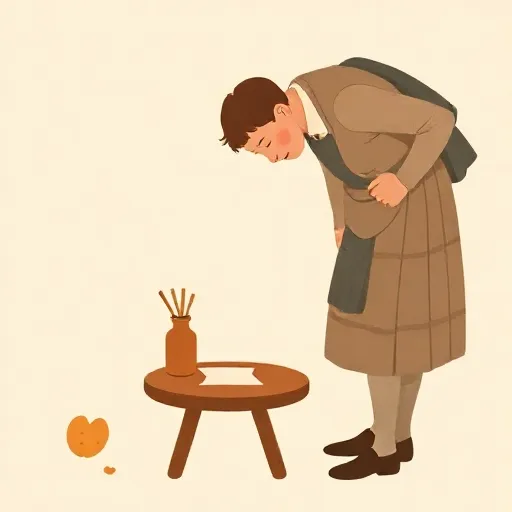
Around 300 CE, an Egyptian priest named Anebo received a letter from the famous Greek philosopher Porphyry (234–305 CE). Porphyry was puzzled. Why did Egyptian priests burn incense, offer animal sacrifices, and chant strange words to reach the divine? Couldn’t a person simply climb toward the gods through careful thinking, without all those rituals? A response arrived, but not from Anebo. The reply came under the name of Abamon, an Egyptian master priest — and it tore Porphyry’s arguments apart. The real author, hiding behind the mask of Abamon, was the philosopher Iamblichus (c. 245–325 CE), a former student of Porphyry himself. The hidden letter, now known as the Reply to Porphyry, exploded into the biggest argument inside an ancient movement called Neoplatonism: can the human soul reach the divine by thinking alone, or do we need rituals and help from gods?
The debate went far beyond Egypt. It forced philosophers to rethink the limits of reason, the power of religious practice, and what it means for a soul to be truly saved.
The Neoplatonist Ladder: Climbing from Body to One

To understand the fight, you first need to see the world through Neoplatonist eyes. Neoplatonism was a school of philosophy that grew from Plato’s ideas and flourished in the Roman Empire from the third to the fifth century CE. Its founder, Plotinus (204–270 CE), pictured all of reality as a vast, vertical chain. At the very top is the One — a single source so utterly simple and perfect that it is beyond all description, even beyond being and thought. From the One flows the Intellect (a realm of pure, living ideas), and from Intellect flows Soul, which gives life to the cosmos and to human beings.
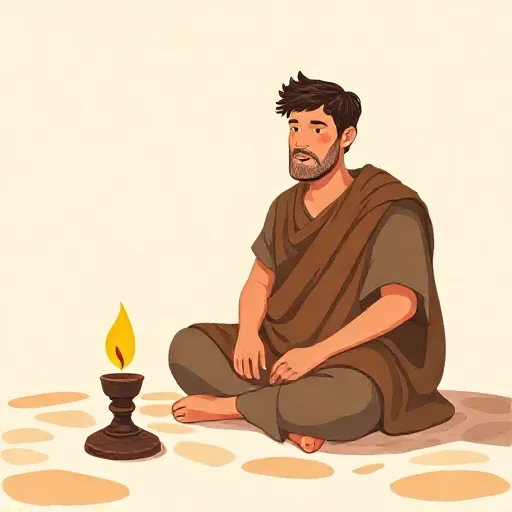
For Plotinus and his student Porphyry, the human soul carries a divine spark. Through sustained philosophical meditation — concentrating on abstract truths and turning inward — a person could gradually rise back up the chain. The soul could purify itself and eventually unite with the One. No temple, no sacrifice, no priest was strictly necessary; your own mind was enough. Porphyry even wrote a treatise called On “Know Thyself” and dedicated it to Iamblichus, pressing that self-knowledge alone opens the highest door.
Yet Porphyry’s sharp questions to Anebo reveal a doubt nibbling at the edges: if reason truly was enough, why did so many ancient peoples — Egyptians, Chaldeans, Greeks — insist on sacred ceremonies? Iamblichus seized on that doubt and turned it into a whole new system.
Iamblichus Shatters the Ladder: The Soul Is Too Weak

When Iamblichus broke with his teacher, he did more than defend rituals. He rewrote the map of the soul. Plotinus had claimed that a part of every human soul — its highest, purest element — never fully descends into the body. That “undescended soul” always remains in the intelligible world, eternally thinking divine thoughts, untouched by confusion or decay. Iamblichus firmly rejected this. For him, the entire soul falls into embodiment. Its essence is mixed with the finite, the changing, even the dark. As a result, the soul cannot simply climb back up through its own intellectual power. It is, he wrote, “connatural to nothingness.”
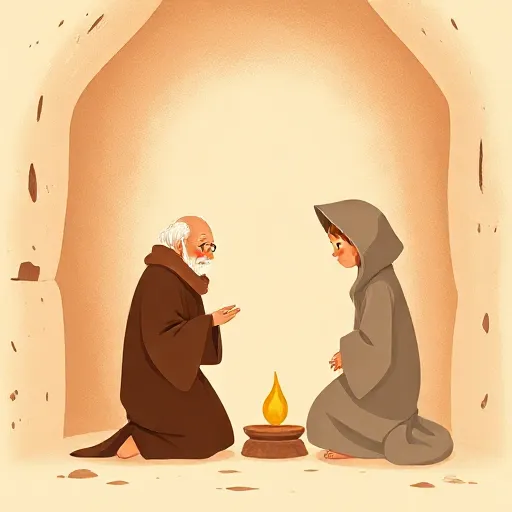
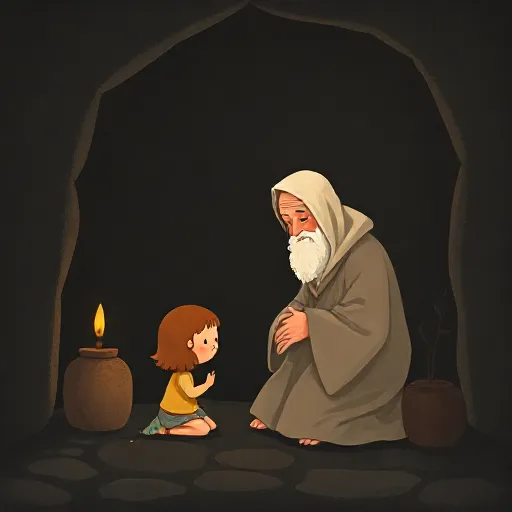
This sounds bleak, but Iamblichus wasn’t trying to depress his readers. He was making room for divine grace. Because the soul is too weak to ascend on its own, the gods must reach down. They do so through theurgy (from Greek words meaning “god-work”). Theurgy is not magic that forces gods to obey; rather, it is a set of revealed practices — prayers, offerings, symbolic objects, sacred words — through which a human being becomes receptive to divine light. Iamblichus called this receptivity epitēdeiotēs, the soul’s fitness to receive the gods’ help. Without it, even the most brilliant reasoning stalls.
He also layered the universe with many more rungs between the One and the material world: not just gods, but archangels, angels, demons, heroes, and rulers of the cosmos. Each level plays a role in drawing souls upward. For Iamblichus, unity is everything. The higher a being sits on the scale, the more unified and divine it is; the lower, the more fragmented. The soul’s job is to cooperate with higher beings through theurgy, so that their unity can heal its brokenness.
Theurgy: More Than Magic, a Rational Mystery

It would be easy to call Iamblichus anti-rational, and some modern scholars once did. But the Reply to Porphyry shows something subtler. Iamblichus distinguished three distinct disciplines: philosophy, which uses reasoning; theology, which draws on revealed traditions like the Chaldean Oracles and Plato’s dialogues; and theurgy, which surpasses reason but never discards knowledge. The best theurgist, he insisted, is also the best theologian. If you act without understanding the divine order, the ritual misfires. So theurgy is not chanting in ignorance. It is, in a sense, the most demanding of all paths because it requires both wisdom and surrendering the illusion that wisdom alone saves.
Porphyry had worried that ritual actions make no sense: why would a transcendent god care about burning incense? Iamblichus answered with a new metaphysics of cause and effect. He taught that an effect has zero independence from its cause — just as a shadow has no substance apart from the body casting it. The gods, as causes, are always present and active. Rituals don’t “persuade” a distant deity; they tune the soul to an ever-present divine signal. Symbols — a certain statuette, a celestial name, a geometric gesture — act like antennae that align the soul with a specific god’s chain of being.
This vertical logic gave Iamblichus’ system enormous power. It unified Plato, Pythagoras, Aristotle, and even Egyptian and Chaldean wisdom into one staircase of reality. And it positioned religious practice not as an optional extra but as the engine that makes philosophy work.
Why This Old Quarrel Still Echoes

Iamblichus lost the short-term battle. Porphyry’s intellectualist style persisted in some schools, and later Christians like Augustine would borrow from Neoplatonism without adopting pagan theurgy. But the long arc bends toward Iamblichus. His ideas shaped the emperor Julian the Apostate’s attempt to revive pagan religion, influenced Proclus and the last great Athenian Neoplatonists, and — through mysterious chain-links — fed into medieval Christian, Islamic, and Jewish mysticism. The very idea of a “ladder of being” with many intermediate spiritual ranks became common currency.
The deeper question, though, is the one Iamblichus forces you to face. Can thinking alone reconstruct your character? You probably know the feeling: you can understand that a fear is irrational, yet the fear remains. You can grasp that you should be patient, yet you snap. Iamblichus would say: of course. The intellect is a small, fragile light. To change the whole soul, you need repeated, embodied practices — rituals, if you like — that gradually make you receptive to something greater than your own thoughts. Whether you call it prayer, meditation, playing music, or keeping a daily habit, Iamblichus’s insight survives: the road from knowing to being runs through doing, and sometimes you must reach for a key you cannot forge yourself.
Think about it
- If a friend told you that deep thinking alone can solve every personal problem, what examples from your own life would you offer to agree or disagree?
- Sports teams, musicians, and martial artists often repeat physical routines that feel almost ritualistic. Do those routines do something that just thinking about the game or piece cannot do? Why?
- Iamblichus believed that receiving help from something beyond yourself is not weakness but wisdom. Can you think of a time when accepting help led to a change that self-reliance could not?