
How Do You Build a City That Makes People Virtuous?
A Long Walk to a New City
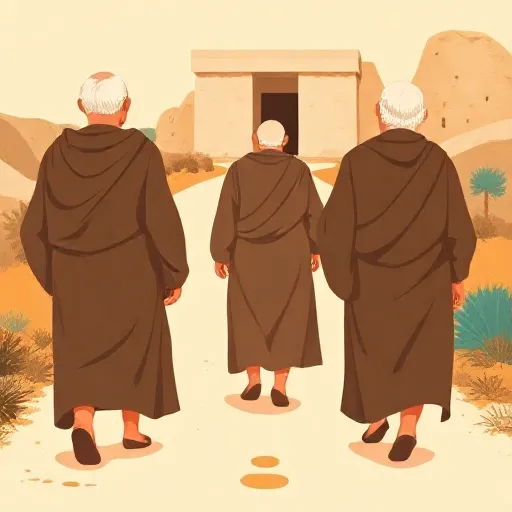
Three old men are walking across the island of Crete, heading for the temple of Zeus. One is an unnamed visitor from Athens, one is a Spartan named Megillus, and the last is a Cretan called Kleinias. They have no idea that their conversation will turn into a book longer than any other Plato ever wrote—the Laws, Plato’s final and most detailed plan for a just city.
The Athenian proposes a game: they will talk about government and laws the whole way. At first, Megillus and Kleinias boast that their cities’ laws were made for war. But the Athenian quickly pushes back. A lawgiver’s single goal, he insists, should be the complete virtue of every citizen—courage, justice, moderation, and wisdom—not just military strength. And real laws, he says, must make the citizens happy, or in Greek, achieve eudaimonia (true well-being, not just a good mood).
Soon Kleinias drops a surprise: the Cretan cities have decided to found a brand‑new colony, to be called Magnesia, and he is one of ten men in charge of giving it laws. He begs the Athenian to help. And so the three travelers, still walking, begin to design from scratch a whole city where virtue and happiness are the ultimate goal.
What Should Laws Aim For? Virtue and Happiness

The Athenian quickly draws a map of what makes a life go well. He divides goods into two kinds: human goods (health, beauty, strength, wealth) and divine goods (wisdom, moderation, justice, courage). The catch? Human goods are only good for a person who is virtuous. For a bad person, the same things—money, good looks, even physical strength—can actually cause harm. If you lack wisdom and justice, you might use your strength to bully, your money to cheat, or your health to chase empty pleasures.
Because of this dependency thesis, making citizens happy and making them virtuous turn out to be the very same project. You cannot simply hand out prosperity. You must shape character. And that means understanding what drives humans. Most of our lives, the Athenian says, are governed by pleasure and pain—two “springs” that flow within us from birth. A city that wants to create good people must train them from childhood to feel pleasure at the right things and pain at the wrong ones. The laws of Magnesia will therefore be less about punishment and more about education.
More Than Commands: Laws That Teach

So how should a lawgiver talk to his citizens? Plato draws a sharp picture. Imagine two kinds of doctors. A slave doctor treats slaves by barking a prescription and rushing to the next patient—no questions, no reasons. A free doctor, treating free people, sits down with the sick person, asks about their experience, and explains why a particular treatment is needed before they agree to it.
Plato thinks the laws of Magnesia should work like the free doctor. Before each law, the lawgiver will offer a prelude—a short speech meant to teach the citizens why that law is just and why following it makes their lives better. Without such persuasion, a law is “mere force,” no different from a slave master’s whip. Some scholars think these preludes are mostly emotional tricks, appealing to honor and shame rather than reason. But others argue that Magnesia’s entire education system is designed to give ordinary citizens a real, though not full philosophical, understanding of why virtue is good. If that is right, then Plato’s late vision is more democratic than his earlier Republic—he now trusts that many people can grasp ethical truths, not just a tiny elite.
A Second‑Best City (Or Is It?)
For readers who know Plato’s Republic, the Laws raises an obvious question: is this new city supposed to be less ideal? At one point, the Athenian mentions a “first‑best” city where everything is shared—property, women, and children—throughout the whole city, not just among the rulers. The traditional view used to be that this refers to the Republic’s ideal, so the Laws is a “second‑best” plan for real humans. But many scholars now point out that the Republic never extended such complete community to the whole population; it kept a separate class of producers with private families. So the “first‑best” mentioned in the Laws might be even more radical. The debate is open, but it’s clear that Magnesia is meant to be a realistic, practical city—yet still aiming at real virtue.
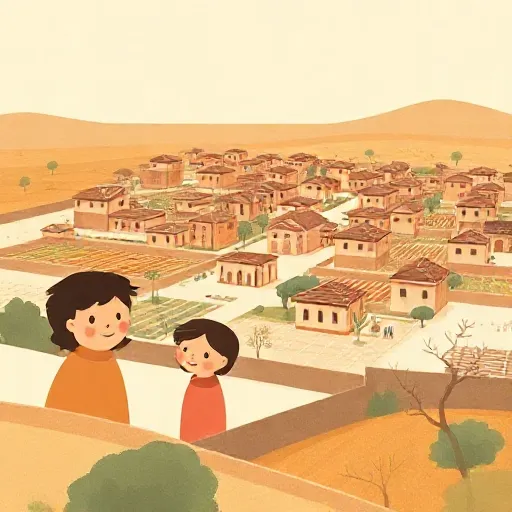
And what does that city look like? Magnesia will have exactly 5,040 households, each owning two plots of land that are equal in quality and cannot ever be sold, divided, or combined. Wealth is divided into four property classes, but anything beyond a modest limit is confiscated. There is no gold or silver money—only a token currency. Women are citizens, can hold office, and receive military training. Slaves and resident foreigners handle trade and manual work. A large Assembly of citizens elects most officials. A Council of 360 members manages day‑to‑day business. Thirty‑seven guardians of the laws (nomophulakes), aged fifty to seventy, supervise magistrates, judge serious cases, and may have the power to revise the laws.
But the most mysterious body is the Nocturnal Council—a group of the wisest elders and a few younger associates who meet every day from dawn until sunrise. Plato says the city ought to be “handed over” to this council, which has sparked fierce debate. Some think they were meant to rule like secret philosopher‑kings. Others believe their influence is informal—they educate future leaders without holding absolute power. The text doesn’t settle the question, and what you decide matters: if the Nocturnal Council has real but limited authority, ordinary citizens still have a meaningful voice; if it has unlimited power, Magnesia starts to look less free than it first appeared.
Singing, Dancing, and Math from the Cradle
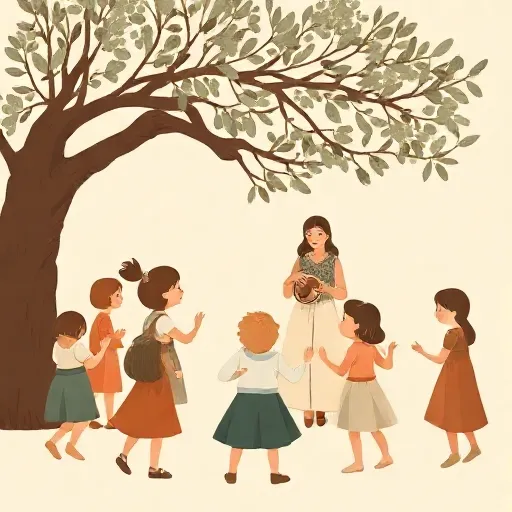
If citizens are going to understand the preludes, they need an education that works from day one. Magnesia’s system starts before birth. Pregnant women are encouraged to walk a great deal, and nurses later carry infants constantly, so that children are rocked as if they were on a ship—Plato calls it “pre‑natal gymnastics.” Between three and six, children play prescribed games, because Plato believes even a change in children’s games can shift what they consider right and wrong.
At six, formal training in music and gymnastics begins. But don’t picture piano lessons and push‑ups. Music means learning to take pleasure in harmonious sounds and movements—being part of choruses that imitate courage, moderation, and justice. The goal is not to become a skilled performer but to learn to love the imitation of goodness and to dislike its opposite. This choral training continues all the way into old age, with age‑specific choruses. It’s a lifelong shaping of what feels delightful or ugly.
Alongside singing and dancing, children study letters, learn the lyre, and are taught arithmetic, geometry, and astronomy. Plato is especially keen that citizens understand incommensurability—the discovery that some lengths cannot be measured exactly by any whole number, a truth that shows the limits of visible objects. In astronomy, they must learn that the planets actually move in perfect circles, not wander randomly, because the heavens are governed by divine reason. The whole curriculum is designed to draw the soul gradually toward appreciating invisible order—a grasp that, for Plato, lies at the heart of genuine virtue.
A Divine Craftsman Who Cares

In the dialogue’s tenth book, the Athenian turns to theology. Some people deny that gods exist, or claim they don’t care about humans, or imagine they can be bribed with sacrifices. Plato offers an argument that has puzzled philosophers ever since. Everything that moves, he says, is moved by something else—except soul, which is self‑moving and therefore the ultimate source of all motion. Soul is older than body and directs the motions of the cosmos. Since the heavens move in orderly, rational paths, they must be steered by a good soul with reason. And such a soul, the Athenian declares, deserves to be called a god.
But what does that mean for you? The Athenian then paints the universe as a single living whole, put together by the divine craftsman for the good of the entire cosmos. Humans are parts of that whole, made for the sake of its well‑being. The greatest enemy of that purpose, he says, is excessive self‑love—the habit of loving your own things, your own family, your own desires, simply because they are yours. Instead, the Athenian insists, a good person loves what is just and fine, whether it happens to belong to himself or to another.
This is a radical ethical vision. It doesn’t ask you to ignore your own happiness; it asks you to find your happiness by playing your part in the good order of the whole world. Virtue becomes not just a personal achievement but a way of fitting into something larger than yourself.
Why a 2,400‑Year‑Old Walk Still Matters

Plato’s three old men never reached a final version of everything; the Laws was unfinished when he died. But their conversation left behind a model that still echoes in our own debates. Should laws try to make citizens good, or should they stay neutral about virtue? Is it ever legitimate for a state to shape what children love through education? And how much power should wise experts have in a free society?
Magnesia’s preludes are one of the earliest statements of the idea that political authority must speak to reason. When a town hall meeting today explains the reasons behind a new rule, or when a school teaches ethics alongside academics, the ghost of that Athenian stranger is still walking down the road. Whether you think Plato’s vision is inspiring or quietly frightening probably depends on how much you trust that ordinary people can actually become wise enough to govern themselves—a question that is far from settled.
Think about it
- If your school decided to train you, from age three, to love certain kinds of music and stories in order to build your character, would that be wise parenting or unfair control?
- A small group of extremely educated people meets before dawn and makes decisions that affect the whole city. Is this ever acceptable, or does power always need to be spread out?
- Can someone be truly happy while being selfish, or does real happiness require caring about a larger whole?