Can You Be a Good Person and a Good Citizen at the Same Time?
A Question That Stares Back at You in Every Civics Class
You sit in a classroom and recite the Pledge of Allegiance, or you memorize the three branches of government. Somebody tells you that one day you’ll be a citizen with rights and duties. But what does that actually mean? And do you need to be a good person to be a good citizen, or can a society run just fine with ordinary, sometimes selfish humans? That question has been fought over for more than two thousand years, and the answer directly affects what your school expects you to learn.
The ancient Greeks had a startling answer: you cannot separate the good person from the good citizen at all. Later thinkers disagreed. They built governments that didn’t depend on everyone being virtuous. The tug-of-war between those two ideas is still alive—in the way schools teach civics, in arguments over whether you should be exposed to beliefs your parents reject, and in how you think about your own role in your community.
In Ancient Athens, Education Was the Whole Point of Being a Citizen
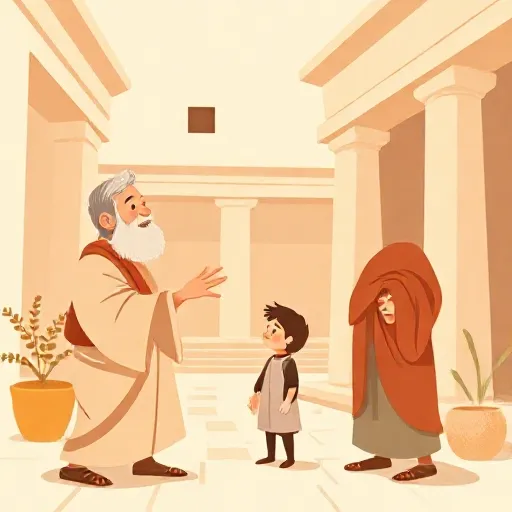
For the Greeks, the city-state, or polis, wasn’t just a place you lived. It was an educational community. They used the word paideia (πaιdeía) to describe a lifelong process of growth. Paideia wasn’t about filling your head with information. It meant training in music, philosophy, athletics, warfare, and the customs of your city, all aimed at making you an asset to your friends, your family, and above all to the polis. A person developed their own powers only by serving the public good.
Tied tightly to paideia was arete, the Greek term for excellence—being the best possible version of yourself, both in reputation and in your inner moral quality. The goal was simple: as individuals became more virtuous, the polis itself became more virtuous. Politics wasn’t just about making laws; it was a school for ordering the lives of citizens. Plato (c. 428–348 BCE) wrote that good education makes a person want to become a “perfect citizen” who knows how to rule and how to be ruled.
Notice the idea: you become fully human by being a citizen. There is no gap between your private self and your public role. For the Greeks, the best life was one of active participation in a community that relied on—and cultivated—your engagement. Today we call this view civic republicanism. It sounds inspiring. But later thinkers saw a dangerous flaw.
The Liberal Turn: What If People Aren’t Angels?
If good government depends on widespread civic virtue, we’re in trouble. That was the worry of classical liberals like Thomas Hobbes (1588–1679). Hobbes thought human nature was self-interested and dangerous. Instead of trying to make everyone virtuous, he said, we should design a government so cleverly that even devils would find it in their interest not to tear society apart. Bernard Mandeville (1670–1733) went further in a famous poem, “The Fable of the Bees.” He argued that private vices—greed, envy, luxury—could actually produce public benefits if the system was arranged properly. You don’t need saints; you need smart institutions.
James Madison (1751–1836), one of the architects of the U.S. Constitution, took this lesson to heart. He noted bluntly that “if men were angels, no government would be necessary.” Since neither citizens nor rulers could be trusted to act like angels, he proposed a whole machinery of checks and balances: dividing power among separate branches, giving each the ability to restrain the others, and using elections to hold representatives accountable. The goal was to design a republic for people of only moderate virtue—the kind you might actually meet in real life.
This didn’t mean Madison gave up on civic virtue entirely. He hoped voters would have the “intelligence and virtue” to select wise leaders. But he bet the whole system on those “auxiliary precautions” that would work even if people fell short. The result was a government built to function despite human weakness. That was a dramatic turn away from the ancient dream of shaping souls.
Rousseau’s Impossible Choice: Natural Man or Citizen?
If Madison lowered the bar for human nature, Jean-Jacques Rousseau (1712–1778) raised it again—but in a tortured way. Rousseau believed that people are naturally good, free, and compassionate in a state of nature. Society, with its private property and inequality, corrupts that goodness. Yet we cannot escape society. So how can you be both a good natural human and a good citizen? That is the agonizing question at the heart of his educational novel, Emile.
Rousseau wrote bluntly: you must choose between making a person or a citizen—you cannot make both at the same time. Society forces self-interest and social comparison, what he called amour propre, the anxious desire to be better than others. Only by willing the general will—the shared decision about what is best for all—can a person be free and moral. A citizen who participates in assemblies and asks “What’s best for all?” rather than “What’s best for me?” can reclaim a kind of natural goodness within society.
But can that really work? Rousseau’s solution in Emile was a tutor who controlled every detail of the boy’s life to preserve his naturalness while preparing him for social life. The child would learn from direct experience, never from books, until his own reason could guide him. The result, Emile, is dutiful but oddly blank—independent, yet secretly shaped by the tutor’s will. Rousseau himself seemed unsure whether the gap between person and citizen could ever be fully closed. His struggle gave birth to a tradition of progressive education that wants children to learn at their own pace from their own experience. It also left a pressing question: must something essential in you be sacrificed to become a good member of a community?
John Stuart Mill Thought Voting Makes You a Better Person
John Stuart Mill (1806–1873) offered a more optimistic middle way. He agreed with Madison that people are not angels, but he thought participation itself could make them better. In Mill’s view, representative government is a two-way street. Good government depends on the virtue and intelligence of the people, but it also promotes those very qualities. When you serve on a jury, attend a town meeting, or run a charitable club, you are forced out of your narrow circle of personal concerns. You learn to weigh joint interests, to argue with evidence, and to feel a stake in outcomes that affect others. Mill called this “the peculiar training of a citizen.”
This is why Mill saw political participation as a form of national education. Ordinary jobs—driving a quill or selling goods over a counter—can dull the mind. Getting involved in public affairs, even at the most local level, expands your ideas and develops your faculties. Government, Mill said, should be judged by “what it makes of the citizens”—it is, in the deepest sense, an agency for improving people.
Yet Mill also feared that an uneducated majority could drag democracy into tyranny and manipulation. His solution for his time was to give extra votes to the well-educated, while hoping that universal education would one day make such a privilege unnecessary. That sounds unfair to modern ears, but it shows how seriously he took the idea that citizenship requires cultivation—and that cultivating it is the very work of a free society.
Why Do We Still Argue About All This in School?
The ancient Greeks thought education should shape a whole person for the polis. Madison wanted a system that didn’t need heroes. Rousseau wrestled with whether a natural self could survive civic demands. Mill believed participation itself educated. These tensions didn’t fade—they walked right into your school.
Today, philosopher Amy Gutmann (b. 1949) argues that democratic society has a responsibility to educate all children for citizenship. Because the state has a stake in the character of future citizens, parents cannot simply teach whatever they want and shield their children from other ways of life. Gutmann says schools must teach critical deliberation: the ability to examine and evaluate different visions of the good life and the good society. You cannot opt out of learning to reason about values, even if your family holds firm certainties. She adds that children must learn mutual respect—not just tolerance, but an actual regard for the dignity of people with very different beliefs. That sounds like an echo of the ancient ideal, updated for a diverse world.
William Galston (b. 1946) pushes back hard. In his view, the job of civic education is more modest: teach students how to evaluate the talents and character of public officials, and teach the virtues that let people of deep disagreement coexist without hating each other. “Civic tolerance of deep differences,” he writes, “is perfectly compatible with unswerving belief in the correctness of one’s own way of life.” You don’t need to admire other people’s choices; you just need to leave them alone. Galston trusts parents more than the state to shape a child’s deepest values. His position shares Madison’s distrust of grand plans to manufacture virtue from above.
The fight between these visions echoes in every debate about whether a curriculum should include books that challenge religious traditions, or whether a student can be excused from a lesson that feels hostile to their family’s worldview. Behind the headlines is the same old question: do we need good people to be good citizens, or can we get by with citizens who simply follow the rules while keeping their private lives to themselves?
That Ancient Question in Your Own Life
So where does that leave you? You probably didn’t cause the tension, but you live inside it. When your school asks you to serve on a student committee or discuss a current event that makes some classmates uncomfortable, you’re feeling the push and pull that started in Athens and rumbled through Madison, Rousseau, and Mill.
The ancient ideal says that showing up, speaking your mind, and wrestling with the good of your whole school community isn’t just a task—it’s the process that makes you a fuller person. The liberal caution says that not everyone needs to be a hero; a fair system can handle a mix of motives. Rousseau’s worry asks whether you can stay true to yourself while doing all of that. And Mill’s hopeful answer suggests that the very act of participating will slowly change you, making your judgment sharper and your sympathies wider.
None of these thinkers had a final answer. But every time you decide whether to pay attention in civics class, whether to speak at a student council meeting, or whether to listen carefully to someone whose life is different from yours, you are redrawing the line between being a good person and being a good citizen. The philosophers just gave you the language to notice that it’s a line at all.
Think about it
- If your school decided that students could vote on the lunch menu, would taking part make you care more about the school community? Why or why not?
- Should your school require you to read a book that your family finds morally wrong? Where would you draw the line?
- Is it better to have a government designed for honest people, or a government that works even if everyone acts selfishly?