What Does Asking Questions Have to Do with Love? Socrates’ Answer
The Man Who Only Knew About Love

Imagine you are head over heels for someone. You write them songs, shower them with compliments, and tell them how amazing they are. That is exactly what a young Athenian named Hippothales did for a boy named Lysis. But the philosopher Socrates (c. 470–399 BCE) stopped him. A real lover, Socrates said, never praises his beloved until he has won him — because if he fails, all those big words will just make him look foolish. Hippothales was stunned. “Then what should I do?” he asked.
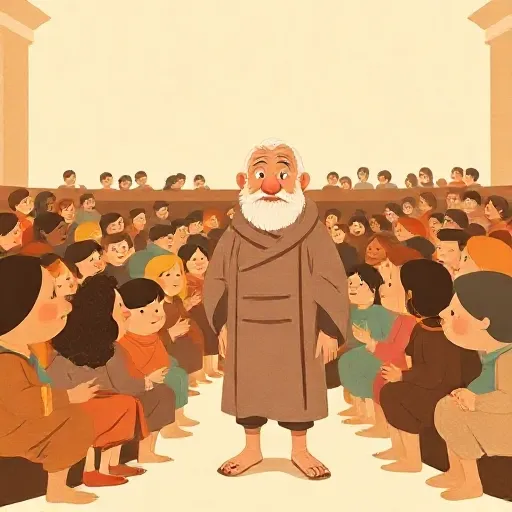
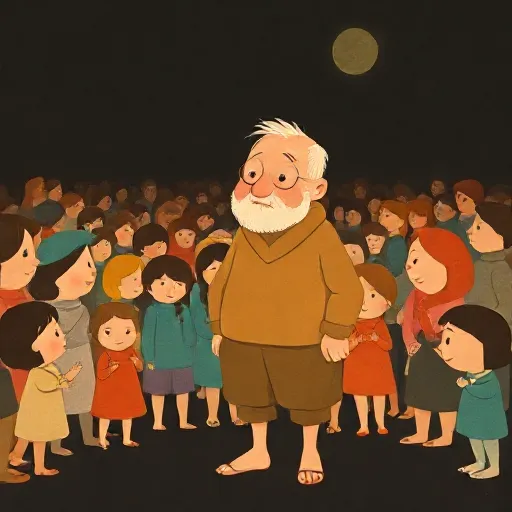
Socrates replied that he would show him: he would have a conversation with Lysis. What followed was not a romantic speech but a long, careful session of questions and answers. Step by step, Socrates led Lysis into a state of aporia — a feeling of being stuck, of realizing you do not know something you thought you did. By the end, Lysis was humbled, and Socrates told Hippothales, “This is how you should talk to your boyfriends, making them humble and drawing in their sails, instead of swelling them up and spoiling them.”
Socrates (and his student Plato, c. 428–348 BCE, who wrote this story down) believed that love is deeply connected to a certain kind of conversation. Socrates even claimed that the only thing he really knew was “the art of love.” But by love he did not mean candlelit dinners. He meant the elenchus — his famous method of testing beliefs by asking questions until hidden contradictions appear. To love someone, for Socrates, was to make them hungry for wisdom, not to puff them up with empty praise. That hunger, once awakened, is the beginning of philosophy itself.
Alcibiades: The Boy Who Loved Socrates Backwards
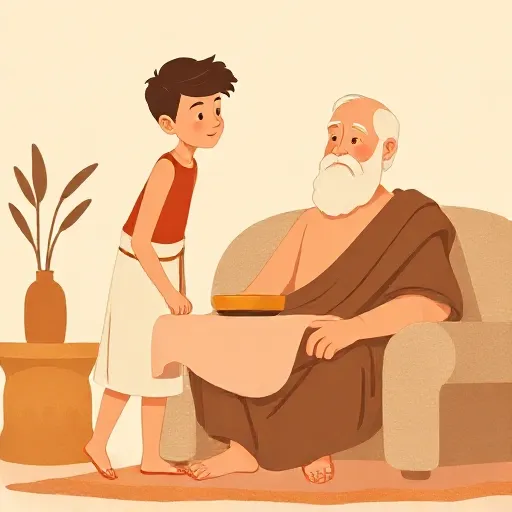
No one shows the tangle of love and philosophy better than the dazzling young politician Alcibiades (c. 450–404 BCE). In Plato’s Symposium, a group of men gather at a banquet to give speeches in praise of love. When Alcibiades staggers in, he does not offer a theory. Instead, he tells a story about his own love for Socrates — a man so strange, he says, that “he seems to be a lover while really establishing himself as the beloved instead.”
Athens in Socrates’ day had a social custom called paiderastia, in which an older man (the erastês) would court a teenage boy (the erômenos) and, in theory, teach him virtue. The older man was supposed to desire the boy’s soul, not just his body. But Alcibiades wanted the whole package: he was convinced that hidden inside Socrates’ famously ugly, satyr-like exterior were “utterly divine and golden” figures of virtue. So he tried the obvious move — he offered his own celebrated beauty in exchange, expecting Socrates to fall for him physically and then share his wisdom with him.
Socrates refused. He would not trade wisdom for sex. He wanted Alcibiades to become truly virtuous, which meant hard work, not a shortcut. Alcibiades felt deep shame, yet the moment he left Socrates he ran right back to the crowd, desperate for applause. His love story was split in two: he admired Socrates’ inner beauty but kept chasing the approval that required no effort at all. This, Plato suggests, is what happens when a love story is incoherent — when your deepest desires pull you in opposite directions without your even noticing it.
Diotima’s Ladder: A Love That Climbs

Socrates may have been a master at arousing a hunger for wisdom, but he freely admitted he could not satisfy it. That job fell to a mysterious wise woman named Diotima, who taught him what she called “the correct way to go in the art of love.” Her lesson has become one of philosophy’s most famous ideas: the ladder of love.
Diotima began with a simple question: what do all of us really want? Her answer was that we want good things to be ours forever. Because we are mortal, the closest we can come is to leave something behind — to “give birth in beauty.” Some people, pregnant in body, have children. But those who are pregnant in soul want to give birth to wisdom and virtue, and they look for a beautiful person to help them do it.
Here the ladder appears. At first, a lover fixates on one beautiful body and wants to make that person better. But as he starts having thoughtful conversations about what beauty is, he notices that the same beauty exists in other bodies too. His obsession relaxes; he learns to love all beautiful bodies without overvaluing any single one. Next he sees that beauty in souls is more valuable than beauty in bodies, and his focus shifts to laws, practices, and sciences that improve souls. Finally, if he keeps climbing, he catches sight of the Beautiful itself — a perfect, unchanging Form that makes all beautiful things beautiful. This is not a physical thing you can touch; it is pure intelligible beauty.
Crucially, Diotima never says the lover abandons the boy he started with. Instead, he learns to love him appropriately, as part of a much larger pattern. The boy is still included, but the lover’s affection becomes richer and more steadfast because it is no longer clinging to one fragile body alone. A person who climbs the ladder, Plato thinks, becomes a true philosopher — someone who loves wisdom unstoppably.
The Wild Horses Inside You: Love as Madness

Can love really feel like a climb? Plato knew it often feels more like a storm. In another dialogue, the Phaedrus, he offers a picture of the soul that explains why. The soul, he says, is like a winged chariot with two horses and a charioteer. The charioteer is reason. One horse, the white one, is spirited and loves honor; it is noble and well-behaved. The other horse, the black one, is appetite — it lunges blindly toward food, drink, and sex.
When someone we love triggers a memory of the Beautiful itself (which the soul glimpsed before birth, Plato claims), the black horse bolts toward physical pleasure. The white horse, ashamed, holds back. After a fierce struggle, the charioteer yanks the reins so hard that both horses fall back on their haunches. If this happens again and again, the black horse eventually learns to trust reason, and the lover’s soul becomes ordered and self-controlled. This is the divine madness of the philosophical lover: he is crazy by ordinary standards because he neglects worldly things, but his madness is actually the healthiest state a soul can be in.
Not everyone reaches that harmony. Followers of Ares, for instance, are more honor-loving than wisdom-loving; their memories of true beauty are dimmer, so they sometimes slip and have sex — though never wholeheartedly, because their reason never fully approves. Even they, however, are helped along by the impulse that love plants in them, and they are not punished after death but encouraged toward a better future.
Plato also insists that the true art of love is a technê — a craft or skilled science. To practice it well, you must be able to collect many scattered examples of something into a single clear definition, and then divide that definition at its natural joints, the way a good butcher knows exactly where to cut. A philosophical lover uses this method to give speeches that are perfectly tailored to the soul of his beloved, leading him upward with words that actually persuade.
Why Your Love Story Needs Philosophy

At the end of the Symposium, after Alcibiades has left with a rowdy crowd, Socrates stays up talking. He is trying to prove to the comic poet Aristophanes and the tragic poet Agathon that the same expert craftsman knows how to write both comedy and tragedy. Plato’s whole dialogue, in fact, is a blend of genres: it contains tragic moments of serious love, comedic speeches full of ridiculous images, and Alcibiades’ entrance which plays like a satyr farce. The real story of love, Plato suggests, must include all of these — because real lives do.
Why does this still matter for you? Every single one of us tells a love story, whether we are twelve or forty-two. It is the story of what we find beautiful, what we chase, what we think will make us happy. Sometimes that story is a tragedy: we are pulled toward something deep but can never quite reach it. Sometimes it is a comedy: we trip over our own foolish ideas and have to laugh. And sometimes it is a farce: we treat other people as objects and end up empty-handed.
Plato’s big bet is that these love stories are not just random feelings. They are made of concepts — like “beauty,” “goodness,” and “happiness” — that can be examined, questioned, and made more consistent. When you sit with a friend and really try to figure out why you like someone, or why a friendship went wrong, you are doing something like what Socrates did. You are holding your love story up to the light of reason. If it turns out to be tangled and contradictory, that is not a disaster — it is an invitation to climb.
Think about it
- Think of a time you really wanted something because you thought it was beautiful or good. Did your desire change when you talked about it with someone who asked hard questions?
- If you could trade your most meaningful friendship for a perfect, beautiful object that you could keep forever, would you do it? Why or why not?
- Suppose you noticed that the story you tell yourself about why you like a certain person keeps changing depending on your mood. Would that be a sign that something is wrong with the story, or just that love is complicated?