Can You Really Know Anything? Plato’s Most Surprising Answer
A Wounded Soldier and a Forgotten Conversation
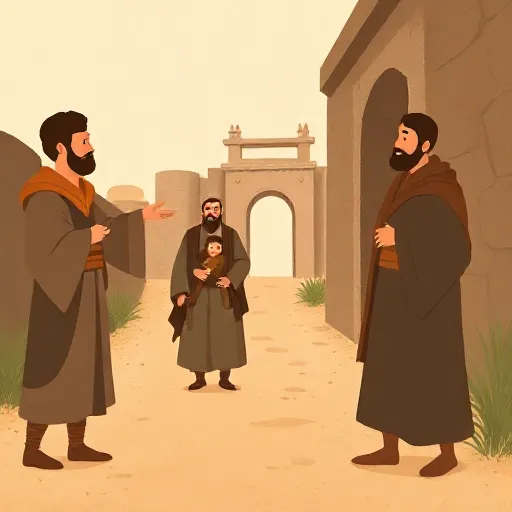
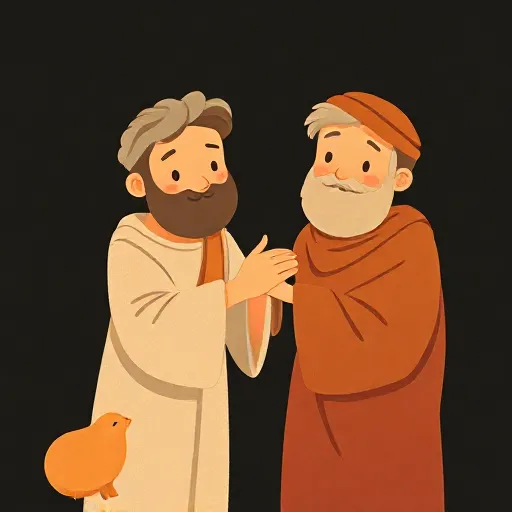
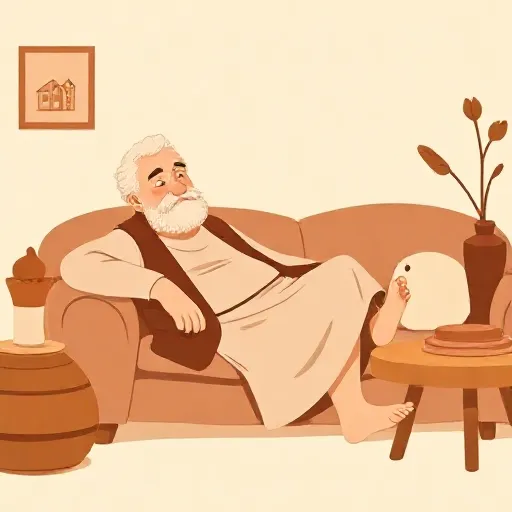
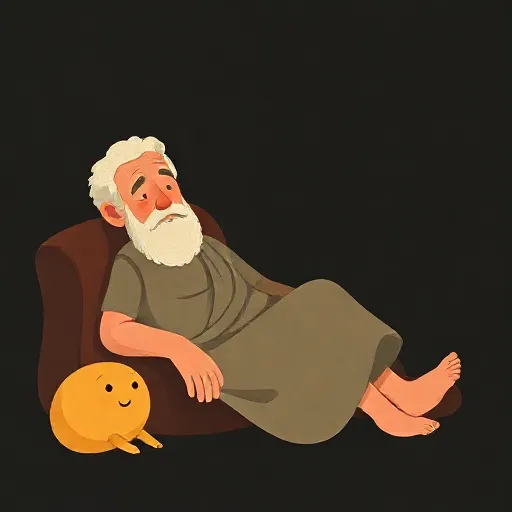
It is the year 369 BC. Outside the city of Megara, two old friends meet. One of them, Eucleides, points to a young man being carried past them on a stretcher. The soldier is Theaetetus, a brilliant mathematician who has nearly died fighting for his city. As they watch him pass, Eucleides says he remembers a strange conversation from long ago — a talk between that same Theaetetus, back when he was a boy, and the famous philosopher Socrates (470–399 BC), just weeks before Socrates was put on trial and executed.
Eucleides pulls out a written copy of that old discussion. He explains that Socrates himself checked the notes and corrected any mistakes. Together, he and Terpsion listen as a servant reads it aloud. The question at the heart of that conversation is simple, but it has never been answered: What is knowledge?
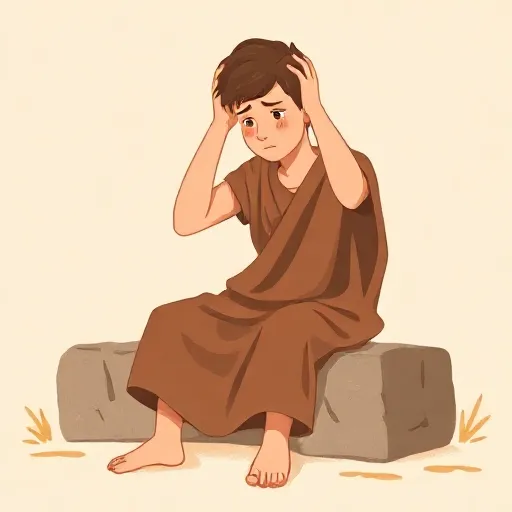
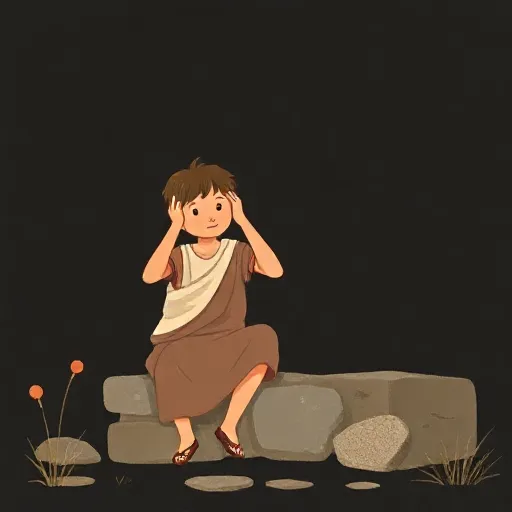
Socrates pushes the young Theaetetus hard. Theaetetus is a whiz at mathematics, but even he can’t say what knowledge really is. Socrates compares himself to a midwife. He says he can’t give birth to ideas himself, but he can help others deliver the ones growing inside them. Theaetetus squirms like someone in labour — and that’s exactly what Socrates wants. For him, being stuck and confused is the best possible starting point for real thinking.
First Try: Knowing Is Seeing (and Hearing, and Tasting)
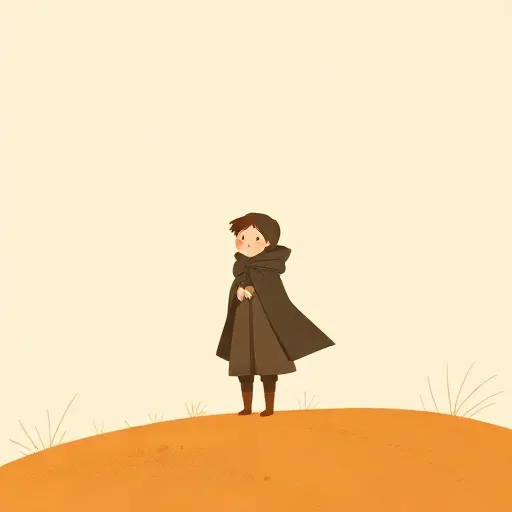
Theaetetus’ first idea sounds obvious: knowledge is perception — what you see, hear, smell, taste, and touch. If you see a red apple, you know it’s red. If you feel cold wind, you know the wind is cold. Simple, right?
Socrates doesn’t just answer yes or no. Instead, he shows that this idea drags along two ancient theories that most people would never accept. First, the thinker Protagoras (lived in the 5th century BC) famously said “Man is the measure of all things” — meaning that whatever seems true to you really is true for you, and whatever seems true to me is true for me. If you feel the wind as cold, then it is cold for you; if I feel it as warm, it is warm for me. Both “truths” are equally true. Second, the philosopher Heracleitus (lived around 500 BC) claimed that everything is in constant flux — nothing stays the same, not even for a moment. The apple you look at now isn’t the same apple an instant later.
If perception is knowledge, Socrates argues, then a dog’s senses are just as good as a human’s, and no one is wiser than anyone else. Worse, if every belief is true, then the belief that “not all beliefs are true” must also be true — and that is a flat-out contradiction. This is the famous peritropê (“table-turning”) argument: Protagoras’ theory refutes itself.
The final blow comes when Socrates points out that we use concepts that our senses could never give us: sameness, difference, existence. You don’t see “sameness” the way you see a colour. Your mind notices that two apples are alike — that’s a thought, not a sensation. So knowledge has to involve more than just raw perception.
Second Try: True Belief — You’re Right, But Do You Really Know?
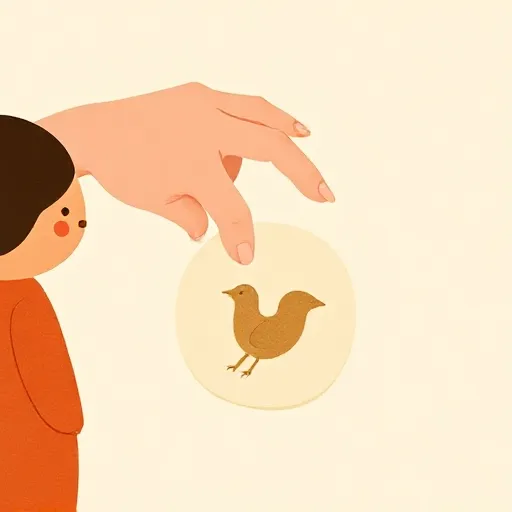
Theaetetus tries again: maybe knowledge is true belief (in Greek, orthê doxa). You have a belief, and it turns out to be correct — doesn’t that mean you know it?
Socrates spots a problem right away. For there to be true beliefs, there must also be false ones. But how can a false belief even happen? How could you ever think one thing is another? To explore this, the dialogue introduces two famous analogies.
First, the Wax Tablet. Imagine your mind is a block of wax. Every time you perceive something, it leaves an imprint, like a seal pressed into wax. Later, when you recall something, you compare the memory-print to what you see now. A false belief happens when you mismatch a new perception with the wrong imprint — like seeing someone in the distance, remembering your friend Socrates, and mistakenly thinking that distant figure is him.
That sounds plausible until you remember that false beliefs also happen with numbers. If you think 5 + 7 = 11, that mistake has nothing to do with your eyes. The Wax Tablet can’t explain it at all.
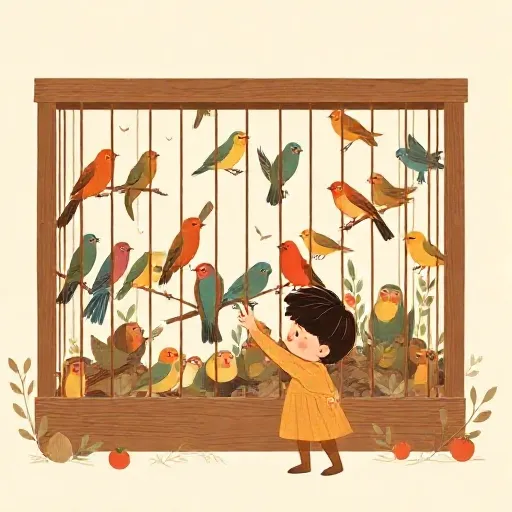
So Theaetetus offers a second picture: the Aviary. Picture your soul as a cage full of birds. Each bird is a piece of knowledge you’ve already caught and stored. When you want to answer a question, you reach in and try to grab the right bird. A false belief happens when you accidentally grab the wrong knowledge-bird — you have the knowledge, but you don’t use it properly.
Socrates shows that this doesn’t work either. If you grab the wrong bird, you must have mixed up two pieces of knowledge. But how could you confuse them in the first place unless you already had a false belief about which bird was which? The explanation goes in circles.
Finally, Socrates delivers a simple counterexample. Imagine a courtroom. A skilled lawyer persuades the jury that the defendant is guilty. The jurors form a true belief, but did they witness the crime? No. Their belief is true only by accident. We don’t say they know the defendant is guilty — they just happen to be right. So true belief alone isn’t knowledge.
Third Try: True Belief Plus an Account — The Dream That Fails
One last attempt: knowledge is true belief with an account. In Greek, logos means “explanation” or “reason.” So to know something, you need not only to be right, but to be able to explain why you’re right.
Socrates introduces what’s often called the Dream of Socrates. The Dream says that everything is made of simple elements (like the letters of the alphabet) and complexes (like a word made of letters). You can’t know the elements; you can only perceive them. But you can know the complexes if you can spell out their elemental parts. Knowledge is being able to break things down.
Socrates shows this idea collapses under its own weight. If a complex is nothing more than its elements, then knowing the complex means knowing the elements too — but the Dream says elements are unknowable. If a complex is more than its parts, then it doesn’t have parts at all, so it’s just as simple as an element and equally unknowable. Either way, the theory contradicts itself.
Then the dialogue tests three ways to understand “account.” Could it just be a spoken statement? Too weak — parrots can make statements without understanding. Could it be listing all the elements? But a child could spell “Theaetetus” without understanding how letters form syllables or what makes a name a name. Could it be naming the one special feature that makes something different from everything else? That leads to an infinite regress: to know that feature, you’d need an account of the feature, and so on forever.
Each attempt to pin down knowledge collapses. The conversation ends in aporia — a dead-end, a state of being completely stuck. Socrates has to leave, heading to the trial that will cost him his life.
Why It Still Matters: The Endless Search for Knowing
So does Plato’s dialogue tell us anything? It never gives a final, tidy definition. But it has shown something important: knowledge is not raw perception, not mere true opinion, and not even correct opinion plus a superficial story. Real understanding seems to demand more — perhaps a grasp of why something is true, not just that it is true.
Plato himself probably believed that true knowledge (epistēmē) is about unchanging, eternal things — what he called the Forms — and that while we’re alive, our thinking can only get close, never all the way there. The Theaetetus hints at this without ever spelling it out. It leaves us with the feeling that the search itself is valuable.
And that’s exactly where you come in. Every time you wonder whether you really know something — a math fact, a friend’s feelings, a news story — you’re stepping into the same puzzle that stumped Socrates and Theaetetus. Do you know it because you saw it? Because you’re convinced? Because you can explain it? And what happens when your explanation itself needs explaining?
The midwife’s work is never finished. Stuckness, it turns out, is where thinking begins.
Think about it
- If a jury convicts someone based on a lawyer’s persuasive story, do the jurors know the person is guilty, or just believe it? What’s the difference?
- Can you know what your best friend looks like if you can’t describe their face in words? Or can you know something without being able to explain it?
- Is it possible to know something that is constantly changing — like the exact temperature right now — or is knowledge only about things that stay the same?