Why Do Things Happen Together? The Hidden Cause Rule
The Barometer and the Storm: An Unlikely Pair
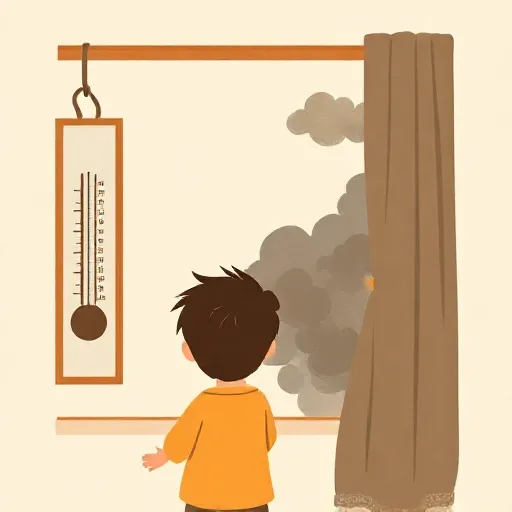
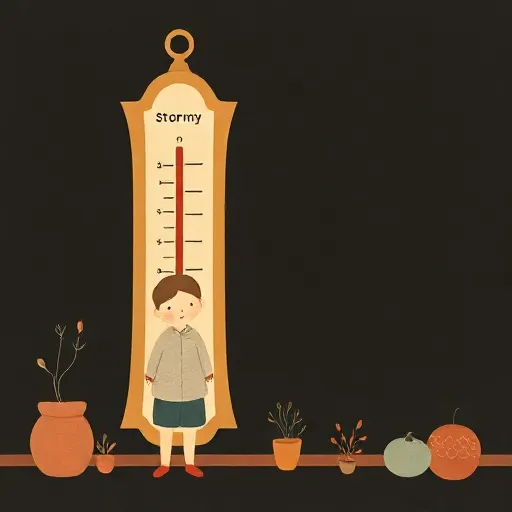
It’s a blustery afternoon. You glance at the barometer on the wall: the mercury has fallen sharply. Hours later, rain pounds the windows. This happens too often to be coincidence. Why do the barometer and the storm march together? Do barometers cause storms? Obviously not. So what ties them?
The philosopher and physicist Hans Reichenbach (1891–1953) asked exactly this question. He proposed a powerful answer: When two events keep pairing up more often than chance alone would allow, there must be a common cause – a third event that makes both of them more likely. His idea, now called the Common Cause Principle, tries to uncover hidden links behind every puzzling correlation.
Reichenbach laid out three possibilities when two events A and B occur together unusually often. Either A causes B, or B causes A, or both share an earlier common cause C. In the last case, C must do two things. First, once you know that C happened, learning about A tells you nothing new about B – C screens off A from B. (And the same must be true when C doesn’t happen.) Second, C must raise the probability of each effect: A is more likely when C occurs than when it doesn’t, and likewise for B.
In the barometer case, the common cause is a drop in atmospheric pressure. That drop makes both a falling barometer and a storm more probable. But if you already know the pressure dropped, hearing that the barometer fell gives you no extra information about whether a storm is coming – the pressure already told you everything. The hidden cause explains the correlation.
A Troupe, a Tainted Meal, and a Mathematical Clue
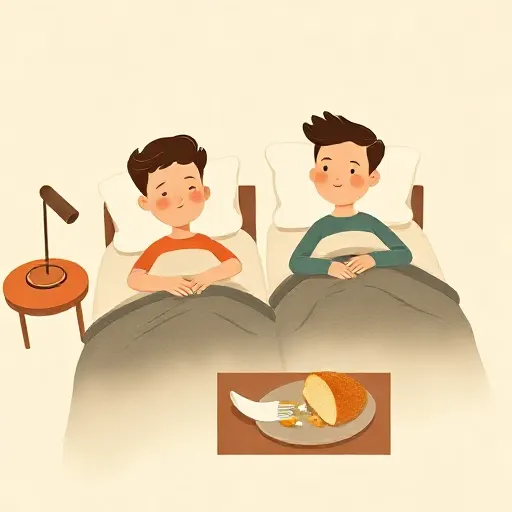
Reichenbach himself imagined a traveling theatre troupe. The leading man and leading lady occasionally fall seriously ill. Both events are rare, yet they tend to happen at the same time. You smell a common cause.
Suppose on any given night there’s a 10% chance the actors eat tainted food at a shared restaurant. When the food is tainted, each actor falls ill with a probability of 80%. When the food is safe, that probability drops to 10% for each. Crunch the numbers: overall, each actor gets sick about 17% of the time, but both get sick together about 7.3% of nights – far more often than the 2.9% expected by pure chance. The correlation is real.
Crucially, once you know whether the food was tainted, the two illnesses become conditionally independent. If the food was bad, learning that the leading man is sick doesn’t change the odds that the leading lady is also sick – the tainted meal already accounts for both. The common cause screens off one effect from the other. The same holds when the food was safe. This is Reichenbach’s screening‑off logic in numbers.
The theatre example reveals a subtle point: spotting a correlation doesn’t let you conclude that this particular pair of sicknesses was caused by this particular tainted meal. Instead, the Common Cause Principle licenses a type‑level inference – it tells you that some common cause exists across many cases, not which token event did it on a single night.
When the Principle Stumbles: Overlapping Darts and Sea Levels
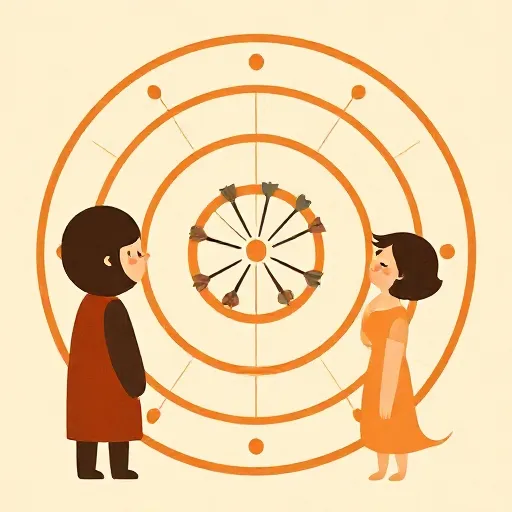
The Common Cause Principle sounds sensible, but it runs into trouble if we push it too far. Imagine shooting darts at a board using a genuinely random process. Draw a small region A entirely inside a bigger region B. If a dart lands in A, it automatically lands in B. So the events are correlated: A and B happen together far more often than pure chance would suggest. Yet no earlier common cause can screen them off, because the correlation is purely about how the regions overlap. The events aren’t distinct enough – one logically contains the other. Philosophers argue that the principle only applies when events are genuinely separate, not when one includes the other by definition. Drawing that line precisely remains a challenge.
A different worry comes from mistaking raw statistics for real probabilities. Consider Venetian sea levels and London bread prices. Both have slowly risen over centuries. If we sample years, we’ll find that high Venetian tides correlate with expensive London bread. But the two phenomena don’t share a hidden cause; they’re just both trending upward over time. The samples aren’t independent, so the statistical pattern doesn’t reflect an underlying, stable probability. The Common Cause Principle only kicks in when a genuine probabilistic correlation exists, not when a time series tricks us with parallel drifts.
These examples don’t refute the principle outright. They show that applying it requirkes a clear distinction between events, and a careful look at how the probabilities are built.
Drawing Arrows of Influence: The Causal Markov Condition
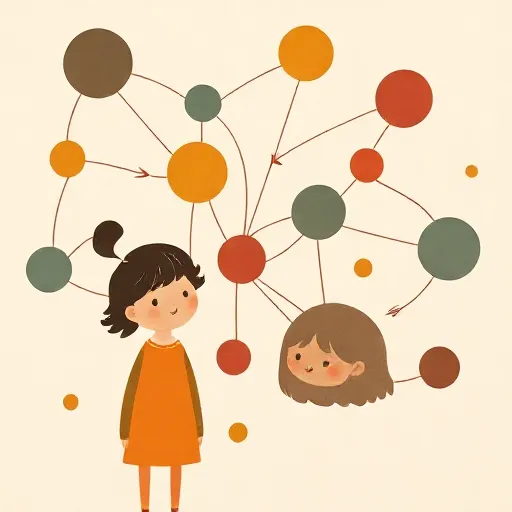
Modern researchers have reshaped Reichenbach’s idea into a tool called the Causal Markov Condition. It powers the diagrams data scientists and doctors use to tease out cause and effect.
Imagine a set of variables – things like smoking, yellow teeth, and lung cancer. We represent their causal links with a directed acyclic graph (DAG) : circles for variables, arrows pointing from direct causes to their effects, and no loops (the “acyclic” part). The parents of a variable are all the variables that point directly to it. The Causal Markov Condition states that, once you know the values of its parents, a variable is probabilistically independent of all its non‑descendants – that is, any variables that are neither its effects nor its effects’ effects. In other words, knowing the direct causes screens off all other indirect influences.
In our simple graph, smoking is a parent of both yellow teeth and lung cancer. Given that someone smokes, the state of their teeth tells you nothing extra about whether they’ll get lung cancer: smoking already explains both. This is an exact extension of Reichenbach’s screening‑off logic to whole networks.
Why does this matter? The Causal Markov Condition – together with a companion principle called faithfulness – lets algorithms start from patterns of correlation and independence and work backward to discover the arrows. Today such methods help spot disease pathways, untangle economic puzzles, and build artificial intelligence. The hidden cause rule didn’t stay in a philosophy book; it shaped how we data‑mine the world.
Quantum Entanglement: A Cosmic Challenge
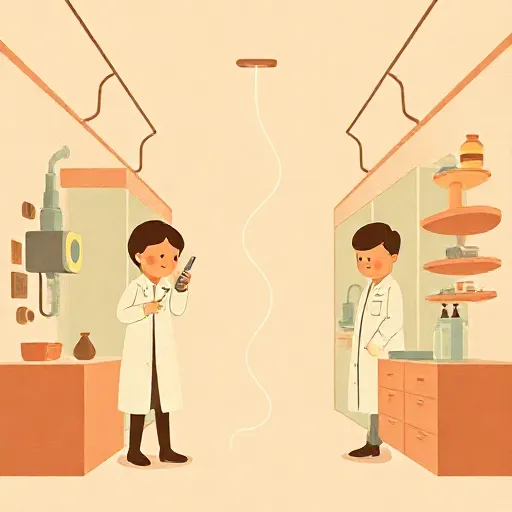
Then came quantum physics, with a discovery that rattles the Common Cause Principle to its core.
In an EPR experiment (named after Einstein, Podolsky, and Rosen), two particles are created together and fly off in opposite directions. Quantum theory says that certain properties, such as spin, remain linked: measuring the spin of one particle instantly tells you the spin of the other, even if they are light‑years apart. The outcomes are correlated more strongly than classical chance allows. According to Einstein’s relativity, no signal can travel faster than light, so the measurement on one side cannot influence the other. That leaves the Common Cause Principle: there must be a hidden earlier event that predetermines both spins.
But the brilliant theorem of John Bell, and decades of precise experiments, show that no local common cause can explain these entangled correlations. Any hidden cause that respects the speed‑of‑light limit cannot produce the pattern we observe. So either the principle fails in the quantum world, or the common cause must be non‑local – connecting the particles across vast distances in a way that upsets our usual ideas of space and time.
Some physicists accept that correlations simply exist without any common cause; entanglement is a fundamental feature of nature, not a puzzle that demands a hidden hand. Others seek interpretations where a deeper, non‑local cause still operates. The question is open, and it sits at the frontier between philosophy and physics.
Why This Matters for You (and for Science)

Every time you see two things happen together – a friend’s smile when you share a joke, or two streets that always flood after heavy rain – your brain reaches for a hidden cause. That instinct is the Common Cause Principle wearing ordinary clothes. Scientists rely on it to hunt for genes, to track the roots of disease, and to untangle social patterns. Reichenbach’s insight gave that instinct a rigorous shape.
The quantum challenge doesn’t mean the principle is useless. Instead, it shows that nature might sometimes be woven from correlations that aren’t caused by anything else. Some patterns could be raw ingredients of reality, not effects of something deeper.
So next time you notice a striking coincidence, ask yourself: is there a hidden hand, or is this one of the universe’s uncaused connections? The search for hidden causes will keep you curious – and it’s still pushing the best minds to rethink the very fabric of cause and chance.
Think about it
- If every correlation you see in daily life could be traced to a hidden cause, would you ever believe a coincidence is just luck?
- Imagine you flip two coins a hundred times, and they always land the same way. What hidden causes would you check for? Could you ever be certain that no cause exists?
- If quantum experiments show that some correlations have no local cause, does that change how we should investigate cause‑and‑effect in medicine or economics?