
Could a Neuroscientist Know What Red Looks Like?
The Black-and-White Neuroscientist
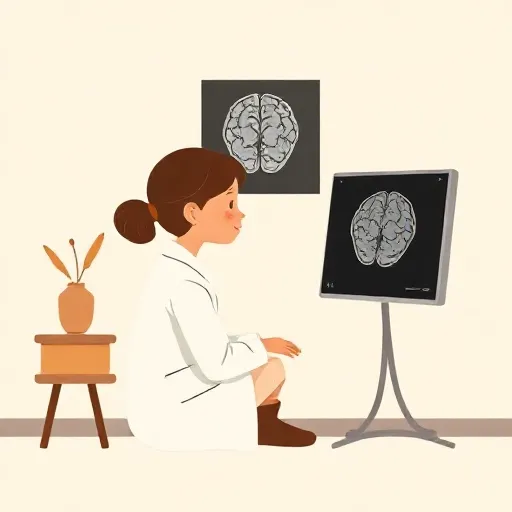
Imagine a scientist named Mary. Mary is the world’s leading expert on color vision. She knows every single physical fact about how light hits the eye, how the retina sends signals, how the brain processes wavelengths, and why a strawberry looks red. Every neuron, every chemical, every equation — she has it memorized. But there’s a catch: Mary has lived her entire life in a black-and-white room. She has never actually seen red, or green, or any color at all. She watches a black-and-white television, reads black-and-white books, and even her own skin looks grey to her.
One day, the door opens and Mary steps outside. She sees a red apple for the first time. The question that makes philosophers lean forward is this: does Mary learn something new? It seems obvious that she does — she learns what it is like to see red. But if she already knew every physical fact about color, and she still learns something new, then the physical facts cannot be the whole story. That thought — that there might be more to the world than the physical — is the starting point for one of philosophy’s liveliest debates: the fight over physicalism.
What Does “Everything Is Physical” Even Mean?

Physicalism is the idea that everything that exists is either physical or depends on the physical. If physicalism is true, then every single fact — from the orbit of Jupiter to the feeling of homesickness — is, at bottom, a physical fact. But what exactly does “depends on” mean? One popular answer is supervenience. Supervenience says that if you duplicated all the physical facts of the world, you would automatically duplicate everything else. Think of a dot-matrix picture: the picture has big visible patterns, but those patterns are nothing over and above the individual dots. Change the dots, and the pattern changes too. The global pattern supervenes on the dots.
For a long time, many philosophers thought supervenience was the best way to spell out physicalism. But a problem soon appeared. Suppose you have a person, and you take a photograph of them. The facts about the photograph depend completely on the person — if the person were different, the photo would be different. Yet the photo is not the same thing as the person. In the same way, it is possible that mental facts supervene on physical facts without really being physical. So supervenience alone might not be enough to make physicalism true. Physicalists need a tighter connection — something more like identity, or at least something that says mental states are nothing over and above physical states.
A stronger version is identity physicalism: the claim that every mental state is literally identical to some physical brain state. But that runs into trouble too. An octopus and a human can both feel pain, yet their brains are built very differently. If pain is identical to a specific human brain state, then the octopus cannot be in pain — which seems wrong. So identity is too strict. Today, many physicalists think the true relation is something in between supervenience and identity — perhaps “realization” or “grounding” — but they are still arguing about it.
What Counts as Physical? The Physics Dilemma

There is an even more basic problem. To say “everything is physical,” you need to know what “physical” means. The most natural answer is: physical properties are the properties that physics tells us about — mass, charge, spin, and so on. That is the theory-based conception of the physical.
The philosopher Carl Hempel (1905–1997) spotted a difficulty with this approach. If “physical” means “whatever our current physics says,” then physicalism is almost certainly false — because today’s physics is incomplete. Nobody thinks we have discovered everything. But if “physical” means “whatever a future, completed physics will say,” then physicalism becomes an empty promise. A future physics might end up including mental items, like raw feelings or consciousness, as fundamental. In that case, saying “everything is physical” would be trivially true — and no longer the exciting claim it seemed to be. This is Hempel’s dilemma.
Physicalists have offered responses. Some say that even if we cannot define “physical” perfectly, we still understand the concept well enough — just as you understand what “red” means even if you cannot define it. Others point out that we have a cluster of paradigm examples: physics from Newton to Einstein to quantum mechanics shares a kind of family resemblance. The dilemma is not a knockout punch, but it shows that the “condition question” — what makes something physical? — is much harder than it first appears.
Mary Returns: The Argument from Qualia

Now let us return to Mary. The philosopher Frank Jackson (b. 1943) used this thought experiment to build a powerful argument against physicalism. He called it the knowledge argument, and it goes like this:
- Before she leaves the room, Mary knows every physical truth about color vision.
- When she sees red for the first time, she learns a new truth — she learns what it is like to see red.
- Therefore, some truths are not physical truths. Physicalism is false.
The key idea here is qualia — the felt, subjective qualities of experience. The redness of red, the taste of cinnamon, the sting of a bee. If even complete physical knowledge cannot tell you about qualia, then something about experience seems to escape the physicalist net.
Physicalists have fought back. One reply is the ability hypothesis, developed by Lawrence Nemerow and David Lewis (1941–2001). It says that when Mary leaves the room, she does not learn a new fact; she gains a new ability — the ability to imagine red, to recognize it, to remember it. Knowing how to ride a bike is not the same as knowing a set of facts about bikes. Mary gains know-how, not know-that. Another reply uses the idea of the a posteriori necessary — the notion, made famous by Saul Kripke, that some truths are necessary but can only be known through experience. “Water is H₂O” is a true identity, but you cannot work it out just by thinking; you have to investigate the world. In the same way, the link between brain states and qualia might be a necessary identity that you can only grasp after you have had the experience. Neither reply is universally accepted; the argument remains very much alive.
Why Think Everything Is Physical? Two Big Arguments
Despite these puzzles, many philosophers think physicalism is the most reasonable view. One major argument is the argument from causal closure. The idea is simple: every physical event that has a cause has a sufficient physical cause. When you decide to raise your arm, your arm goes up — and neuroscientists can trace a complete chain of physical causes from brain activity to muscle contraction. If your mental decision is a separate non-physical event that also causes your arm to rise, then the arm movement would have two distinct causes — a physical one and a non-physical one. That looks like an overdetermination. The cleaner picture, the argument goes, is that mental events just are physical events, or are entirely fixed by them.
A physicalist’s opponent might take a more radical route: epiphenomenalism, the view that mental events do not cause anything at all — they are side-effects, like the smoke from a train that does not push the train. But then it becomes mysterious how you could ever know about another person’s pain, since their pain never causes their words or groans. Most philosophers find that too high a price.
A second, broader argument comes from methodological naturalism. If you want to understand the world, the best method is science. And science has been spectacularly successful at explaining things in physical terms — from DNA to black holes. Physicalism, in this light, is just the big-picture conclusion that this success points to. No other kind of stuff seems required. Yet arguments like Mary’s press back: maybe our scientific picture is missing something essential about first-person experience.
So What About You?

This is not an argument that stays in the classroom. It touches you directly. Your joys, your decisions, the taste of your favorite food — if everything is physical, then each of those is a dance of particles and fields. That does not make them any less real, but it does raise deep questions. Does physicalism leave any room for free will, or are you a domino in a chain that started at the Big Bang? Could a machine that perfectly mimics a human being ever truly feel anything, or would it be a zombie made of wires? The Mary thought experiment endures because it captures something we all recognize: there is a gap between knowing about something from the outside and knowing it from the inside.
Physicalism may turn out to be true. But the debate forces us to keep asking what “physical” really includes — and whether the first-person feel of being you is something that any equation can capture. That question is still wide open, and it is one you get to live inside every single day.
Think about it
- If a scientist could scan your brain and predict every choice you’ll ever make, would it still be fair to blame people for bad choices? Why or why not?
- Imagine a robot that acts exactly like a human and says it feels pain. Could we ever know whether it truly feels anything? How?
- If you knew every physical fact about hiccups — nerve signals, muscle contractions — would you know what it feels like to hiccup? Why or why not?