Can Knowing Everything About the Brain Tell You What Red Looks Like?
A Genius in a Black-and-White Room
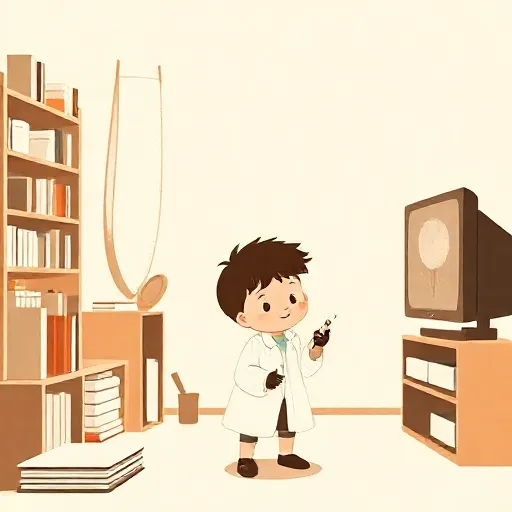
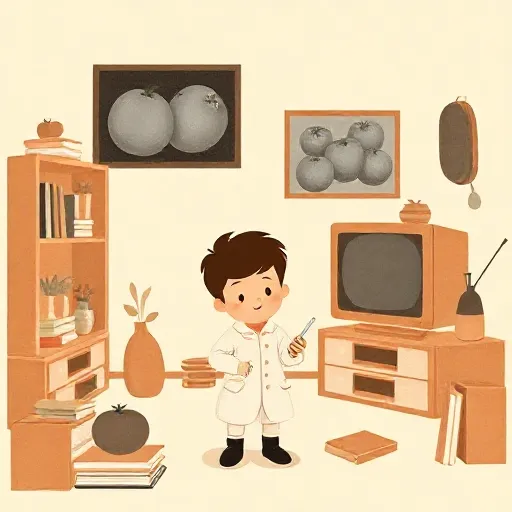
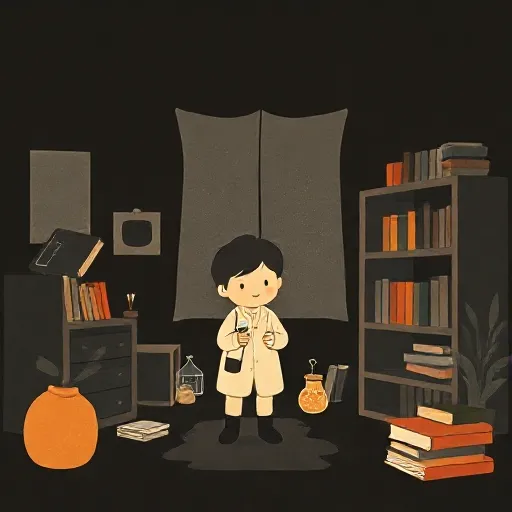
Imagine a scientist named Mary. She is a genius — the world’s greatest expert on color vision. But there is a catch. Mary has spent her entire life in a room that is completely black and white. The walls, her clothes, her books, even the television monitor she uses to study the outside world — everything is in shades of gray. She has never seen a red apple, a blue sky, or a green leaf with her own eyes.
Still, Mary knows everything that science could possibly tell you about seeing colors. She has memorized every fact about the wavelengths of light, every diagram of the retina, every neuron firing in the visual cortex. She can predict exactly which words a person will say when they see a ripe tomato, and why those words come out. If anyone knows all the physical information about color vision, it’s Mary.
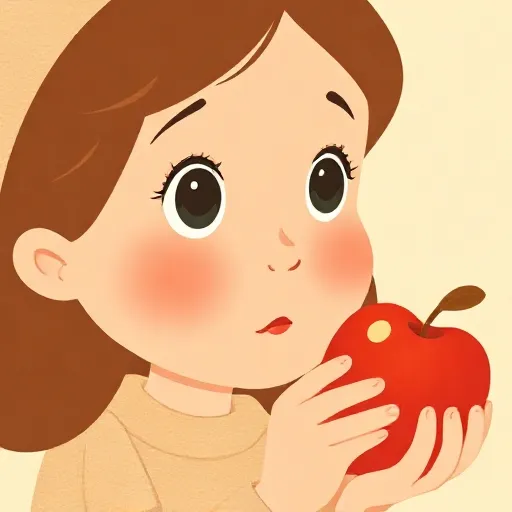
Then one day, the door opens. Mary walks out, and for the first time she sees a bright red tomato. The question Frank Jackson (in 1982) asked the world is simple: does Mary learn something new? Almost everyone says yes — she learns what it is like to see red. But if she already had every physical fact about color vision, then what she learns cannot be a physical fact. And if there are facts that are not physical, then physicalism — the view that everything in the universe is physical — must be false. That is the heart of the Knowledge Argument.
Two Versions of Mary’s Surprise
Mary’s story can be turned into a tidy argument:
- Before leaving the room, Mary knew every physical fact about seeing colors.
- But she did not know what it is like to see red (a fact about the experience).
- Therefore, there is at least one fact that is not a physical fact.
Philosophers call the what-it’s-like quality of an experience its phenomenal character, or more often, a quale (plural: qualia). The reddishness of red, the sharp sting of a toothache, the smell of fresh bread — those raw feelings are qualia. The argument says that qualia cannot be captured by any list of physical facts.
But there is a catch. The argument can be read in two different ways, a weaker one and a stronger one. The weaker reading says only that Mary gains a new kind of knowledge — knowledge she could not get from physical facts alone. That does not by itself prove there are non‑physical facts; it could just be that we can know the same physical facts in two very different ways, and Mary only now has the right kind of access. The stronger reading, which Jackson originally intended, says that Mary gains knowledge of new facts — facts that were never part of her perfect physical knowledge. That would mean the world contains non‑physical facts about experience, and physicalism would be false. Most of the excitement around the Knowledge Argument comes from this stronger claim.
Maybe She Doesn’t Learn Any Facts

Not everyone agrees that Mary gains any factual knowledge at all. One idea, called the Ability Hypothesis, was defended by David Lewis (1983) and Laurence Nemirow (1980). They claim that knowing what an experience is like is not knowing that something is the case — it is knowing how to do something. When Mary leaves the room, she does not learn a new fact; she gains abilities: the ability to imagine seeing red, to remember a blue sky, and to recognize colors when they appear again. According to this view, to know what pain feels like is simply to be able to imagine it and tell it apart from, say, an itch. It is practical know‑how, not factual knowledge.
A different version, the Acquaintance Hypothesis from Earl Conee (1994), says that Mary gains a third kind of knowledge — acquaintance knowledge. It is what you have when you are directly familiar with something, in the most immediate possible way. When you hold a pebble in your hand, you are acquainted with its smoothness. Before her release, Mary knew facts about red qualia, but she was never directly acquainted with the quale of red. That direct familiarity does not add a new fact about the world — it only puts her face‑to‑face with a property she already knew about.
Are these proposals convincing? Many philosophers point out that abilities do not seem to capture everything going on. You could already be able to imagine a shade of red without ever having seen it, yet you still would not know what it is like until the experience hits you. And if Mary merely gained an ability, why does it feel so much like she now understands something she did not understand before — like a missing piece of a puzzle clicking into place? That sense of learning a truth is what pushes some philosophers to think the Ability Hypothesis misses the point.
New Knowledge, Old Facts

A large number of physicalists today accept that Mary does gain new factual knowledge — but they insist that the facts she learns are still physical facts, facts she already knew in a different way. This is the New Knowledge / Old Fact view.
The trick lies in two different kinds of concepts. Before her release, Mary had only physical concepts for thinking about red experiences: words like “activity in V4 neurons” or “opponent‑process channel peaks.” After she leaves the room, she gains a phenomenal concept — a way of thinking about the very same brain state from the inside, as “this feeling.” Phenomenal concepts are special because you can only acquire them by actually having the kind of experience they pick out. Once Mary has seen red, she can think a new thought: “Ah, the experience people call ‘seeing red’ feels like this.” That thought is true because of the very same physical brain property she already knew about — but she now grasps that fact under a new, private mode of presentation.
Think of water. You might know every chemical fact about water — that it is H₂O, that it boils at 100°C — long before you ever connect the cool, wet liquid you are drinking with the formula on the blackboard. The two concepts “H₂O” and “my drinking water” refer to the same substance, but they pick it out in different ways, and you can know all the facts using one concept while still making a fresh discovery when you link them. According to the New Knowledge / Old Fact strategy, Mary’s release is like that moment of connecting “the neural pattern for red” with the phenomenal concept “this quality.”
Philosophers such as David Papineau (1996), John Perry (2001), and Katalin Balog (2012) develop this idea in different ways. Some say phenomenal concepts work like mental pointers or inner demonstrations; others compare them to recognitional skills. The shared message is that Mary’s new knowledge does not point to any ghostly non‑physical fact — it just reveals an old physical fact dressed in a new cognitive outfit.
Why It Still Matters for You
The Knowledge Argument is not just about a fictional scientist in a strange room. It touches something you probably notice every day. Try to explain to a friend who has never tasted chocolate what chocolate is like. No matter how many brain scans or molecular diagrams you share, your friend will not know that rich, bittersweet flavor until they actually put a piece in their mouth. The what‑it‑is‑likeness of chocolate seems to be something that objective, third‑person facts cannot fully hand over.
If Mary’s case shows that even complete science cannot capture the feel of a red tomato, then consciousness might be more than just a complicated tangle of neurons. That does not automatically mean there is a separate soul; many philosophers who take the argument seriously remain physicalists, trying to explain how phenomenal facts fit into a physical world. But the puzzle has forced everyone to admit that there is a hard problem of consciousness: even after explaining all the functions of the brain, there is still the extra mystery of why those functions feel like something at all. The Knowledge Argument is one of the sharpest tools for seeing that mystery, and for wondering whether a perfectly described brain could ever tell you, without you opening your own eyes, what red looks like.
Think about it
- If a robot had every physical fact about pain, would it know what pain feels like, or would it still be missing something?
- Can you think of something you learned only by trying it yourself — like riding a bike — that you could not have known from a perfect textbook? Was that a new fact or a new ability?
- If Mary’s new knowledge is a fact, and all physical facts are facts about the brain, why can’t she figure out what red is like before she sees it?