
Should You Chase Happiness, or Something Harder?
A Choice That Matters Every Day

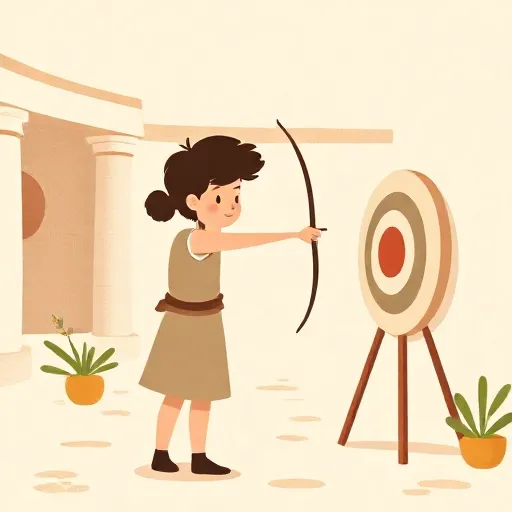
Lena has an hour before dinner. She could keep working on a tough piano piece that still sounds messy. Or she could flop on the sofa and scroll through silly videos. One path is hard but builds a real skill. The other is easy and feels pleasant. Which one would make her life go well?
Most people would say a good life should feel good. But a group of philosophers called perfectionists disagree. They argue that the best human life isn’t just about pleasure or getting what you want. Instead, a truly excellent life develops what is best in us — our minds, our talents, our relationships — whether that feels nice or not.
This idea stretches back to Aristotle (384–322 BCE). He thought that a good life means using your reason and becoming the best version of a human being you can be. Modern perfectionists have sharpened this view and turned it into a full theory of what has value. It challenges everyday assumptions about happiness, government, and what we owe ourselves.
More Than a Gut Feeling

The simplest theory of a good life is hedonism: the best life contains the most pleasure and the least pain. If an activity makes you feel terrific, it adds to your well-being. Another popular view is the desire satisfaction theory: a life goes well when you get whatever you most deeply want, whether that’s becoming a pop star or owning a comic book shop.
Perfectionism says both theories miss something. For a perfectionist, spending ten years counting blades of grass might be extremely pleasant and exactly what you desire, but it wouldn’t amount to a truly good human life. Why? Because a good life connects to what is objectively worthwhile — things like knowledge, artistic achievement, deep friendship, or moral understanding. These goods aren’t good because you happen to enjoy them. They’re good even if you never desire them at all.
This doesn’t mean perfectionists think pleasure is bad. They simply deny that pleasure is the only thing that makes a life valuable. A life rich in understanding but light on comfort could still be an excellent life.
Two Ways to Spot a Perfect Life

Perfectionists don’t all agree on which things are valuable. They divide into two camps.
The first camp is human nature perfectionism. This view, championed by contemporary philosophers like Thomas Hurka and Philippa Foot (1920–2010), ties goodness to our nature. Human beings are special because we can reason, create, and form deep bonds. A life is excellent when it develops these essential human capacities to a high degree. For example, practicing a musical instrument develops your rationality and creativity — so it counts as a perfectionist good.
The second camp is objective goods perfectionism. Thinkers like Derek Parfit (1942–2017) argue that we can skip talk about human nature altogether. Certain things — Parfit called them “the best things in life” — are simply and objectively valuable. Friendship, understanding, aesthetic experience, and moral achievement make a life better. They are on the list, full stop. You don’t need to prove they develop human nature; their value stands on its own.
Both versions face hard questions. Human nature perfectionists must explain what human nature really is and why developing it makes a life good. Is being a math genius truly more “human” than being a caring grandparent? Objective goods perfectionists must explain how they know what belongs on the list. Why is watching a great play objectively good, but binge-watching a silly show is not? No one has a complete answer yet.
Do You Owe It to Yourself to Be Excellent?

If some activities are genuinely excellent, do you have a duty to pursue them? Perfectionism often says yes. This leads to the idea of self-regarding duties — obligations you have to yourself, not to anyone else.
Immanuel Kant (1724–1804) argued that every person has a duty to develop their talents and not waste their life in idle amusement. He thought this duty was categorical, meaning it binds you whether you feel like it or not. You can’t shrug your shoulders and say “I just don’t desire excellence.” The duty remains.
Many people resist this idea. They think duties are only about how we treat others, not ourselves. But perfectionists respond: even if we don’t call it a “moral” duty, there are still powerful reasons to develop your mind and avoid wasting your potential. You can ignore those reasons, but your life will be worse for it — like ignoring the keys of a piano you never learn to play.
Not everyone is equally placed to achieve excellence. Aristotle himself noted that bad luck can ruin a life. Perfectionists admit this. They ask only that you do what is within your power. If you can become more reflective, more skilled, or more connected to others, you have a reason to try. This expands the range of ethical thinking beyond talk of rights and harms to others. It makes your own life a project you can do better or worse.
When the Government Tries to Help You Be Good

If some ways of living really are better, should the government promote them? This is where perfectionism collides with political philosophy.
Many modern thinkers defend state neutrality. On this view, the government should not favor any particular vision of a good life. Citizens disagree deeply about what is valuable — some find meaning in religion, others in science, others in family. The government, neutrality defenders say, must stay neutral among these reasonable views. It can’t hand out money to opera houses but ignore video game tournaments simply because opera is “better.”
Perfectionists reject this. They argue that the state should protect and promote objective goods, just as it promotes justice. John Stuart Mill (1806–1873) offers a tricky example. Mill valued autonomy — the ability to lead life on your own terms — so highly that he became a fierce defender of individual liberty. Yet Mill himself thought individuality was an objective human good. So his famous harm principle — the idea that we should only interfere with someone to prevent harm to others — was itself grounded in a perfectionist value. Mill wasn’t neutral; he simply thought the best way to promote excellence was to leave people free.
Later philosophers like Joseph Raz (born 1939) pushed further. Raz argued that real autonomy requires having worthwhile options. If the state closes off dangerous or worthless activities — say, highly addictive drugs — it may actually protect your ability to lead a valuable life. That doesn’t strip your freedom; it clears the path.
Still, critics worry. They say that when the government decides what is worthwhile, it can become manipulative, treating citizens like children who can’t be trusted to choose. The philosopher Ronald Dworkin (1931–2013) insisted that people have a right to ethical independence — the freedom to make their own big life choices, even if those choices are mistaken. Perfectionists reply that showing someone a better path doesn’t mean disrespecting them. But the tension between guiding and bossing around isn’t easily solved.
The Fight Over Excellence — and Why It’s Yours Too

You might not use the word “perfectionism,” but you already live inside its questions. Think about the subjects you study. Schools don’t let you spend all day playing video games, even if you’d enjoy it more than algebra. They assume some skills — critical thinking, literacy, understanding the world — are objectively worth learning. That’s a perfectionist assumption wearing a classroom uniform.
The debate also shows up in bigger social arguments. Should a city spend tax money on a beautiful new library, or on a bigger shopping mall? Should parents push a child to practice an instrument they don’t enjoy, on the grounds that musical skill is truly valuable? These are not easy calls, and perfectionism doesn’t give you one simple answer. It does force you to notice that your gut instinct about “what feels right” might not be the whole truth.
Perfectionism asks you to see your own life as something that can be done well or done poorly — not just in terms of happiness points, but in terms of real achievement, love, understanding, and beauty. That’s a demanding idea. But it’s also an inspiring one. It says that what you make of yourself, and what kind of world you help build, really matters.
Think about it
- If you could take a pill that made you perfectly happy doing nothing but watching TV all day, would the life that follows be a good one? Why or why not?
- Should schools be allowed to require after-school clubs that promote excellence, like debate or coding, even if many students would rather just hang out?
- Is it ever okay for a government to fund a public art museum while cutting support for other hobbies people enjoy, if the government believes art is more valuable?