What Will Make You Truly Happy? Aristotle’s Answer
Three Paths, One Question
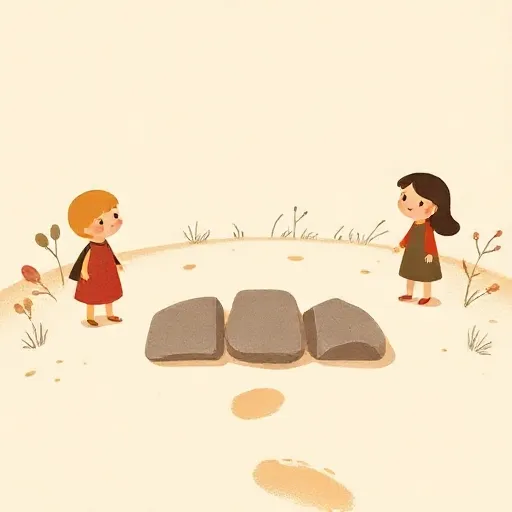
Imagine you are standing where three roads fork. A sign points down the first path: “Pleasure — enjoy every moment.” Down the second: “Politics — gain power and honor.” Down the third: “Wisdom — understand the world.” Which one would you take if you wanted a truly good life?
That is the question Aristotle (384–322 BCE) asks in the Nicomachean Ethics. He is not just wondering what feels good. He wants to know what eudaimonia really is — the Greek word for happiness but better translated as “flourishing” or “living well.” To flourish, a tomato plant needs sun, soil, and water. What does a human being need? Aristotle thought we could figure it out by looking at what makes us different from everything else.
The Knife, the Eye, and You

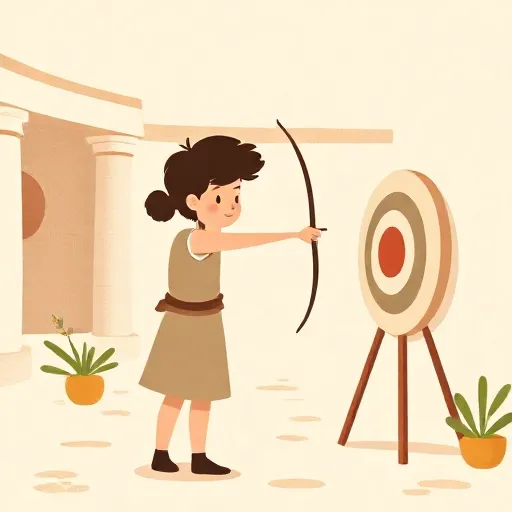
If I hand you a knife and ask, “What makes this a good knife?” you will probably mention how sharp it is. A knife’s “work” — its ergon — is to cut. It does that job well when it has the right aretê, or excellence: sharpness. Now think about an eye. Its work is to see; a good eye has clear focus. What about a human being? Aristotle observes that unlike plants (which simply grow) and animals (which also move and feel), humans are the only creatures who can guide their lives with reason. So our ergon, our special work, is to use reason. Living well means doing that excellently.
From this he builds his famous function argument: the highest human good is activity of the rational part of the soul in accordance with virtue (the same word, aretê, meaning excellence). In plainer terms: true happiness is not some feeling that comes and goes — it’s an active life of thinking and choosing well, day after day, year after year. A happy life is the human version of a perfectly sharp knife doing exactly what it is made to do.
But Aristotle is careful. He admits we need more than just skill. Without some friends, a bit of money, decent health, and a stable community, even an excellent person won’t find many chances to act virtuously. Still, he insists that luck does not hand us the highest good — we ourselves must develop the habits and understanding that make a life worth living.
The Golden Mean: Like Baking a Perfect Cake
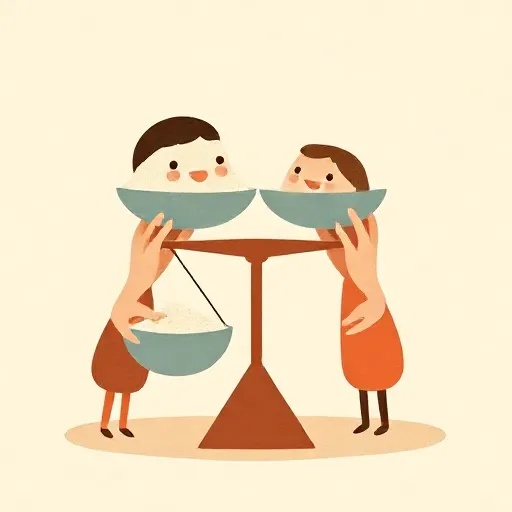
If heroism is charging into every danger and cowardice is fleeing from all of them, then courage must sit somewhere in between. Aristotle calls this the “middle” or mean between two extremes, one of excess and one of deficiency. Courage is the mean between rashness and cowardice; generosity between wastefulness and stinginess. Each ethical virtue is a hexis — a stable disposition, built by practice — to feel and act in the right way, at the right time, for the right reasons.
You can think of it like baking a cake. There is no single recipe that works for every oven, every flour, every humidity. A good baker learns to judge when the batter needs a little more liquid or a little more flour. Similarly, a virtuous person doesn’t follow a rigid rulebook; she knows, from experience and practice, how to respond to exactly this situation. Aristotle even says that some emotions, like spite or envy, and some actions, like murder or theft, are always wrong — there is no correct “amount” of them. But for most of life, hitting the mean takes judgment, not a calculator.
He also insists that virtues aren’t just cold knowledge. They involve proper feelings. When you are brave, you still feel fear, but the right amount of fear: enough to respect the risk, not so much that you freeze. The person you want to become genuinely enjoys doing good things; she doesn’t only grit her teeth and obey a rule.
Yet Aristotle knows we often fail. Sometimes we know what’s better and still choose worse. That brings us to one of his most honest and modern-feeling discussions.
When Your Desires Take Over
You have probably experienced this: you swore you’d stop scrolling and go to sleep, but your thumb kept moving. You were not confused about what would be healthier — you just didn’t do it. Aristotle calls this akrasia (incontinence, literally “lack of mastery”). The akratic person acts against reason because of a strong feeling, like anger or a craving for pleasure.
He distinguishes two kinds. A weak person deliberates, makes a choice, and then gets swept aside by passion — like someone who decides not to eat the whole cake, then eats it anyway while feeling bad. An impetuous person doesn’t even stop to think; emotion pulls the trigger before reason gets a seat at the table, and regret only comes after. Both are different from a truly vicious (evil) person, who has convinced himself that kindness or honesty has no value. The vicious person isn’t in inner conflict — he’s wholeheartedly following greedy or cruel goals, and over time that destroys his own contentment.
Aristotle’s remarkable move is partly agreeing with Socrates. Socrates said no one knowingly does wrong; if you really knew what was good, you’d do it. Aristotle thinks real, clear-sighted reason is rarely present in akratic moments — the passion clouds the mind, so in a way the person doesn’t have full knowledge at that instant. But he disagrees with Socrates by insisting that emotions are real inner competitors that can weaken or silence reason. A life of virtue means training those emotions from childhood so they rarely become unruly rivals.
The Life of the Mind: Why Thinking Is Best

All those ethical virtues — courage, temperance, justice — are supposed to work together under the guidance of phronesis, or practical wisdom. That is the intellectual skill that helps you see what the mean is right here, right now. But Aristotle goes further. He asks: is practical wisdom the very best thing a human can do?
Book VI of the Ethics introduces another intellectual virtue: theoria, or theoretical wisdom (contemplation, deep understanding). It’s the state of mind you have when you grasp why things are the way they are — like understanding the fundamental laws of the universe, not just how to navigate daily life. Aristotle thinks this activity is even higher than ethical action. Why? Because it is the most godlike part of us. A god doesn’t need to be brave or generous; a god simply thinks, perfectly and without interruption. When we engage in theoretical study, we briefly share in something divine.
In the final book of the Ethics, he compares three lives: the life of pleasure, the life of politics (active ethical virtue on a grand scale), and the life of the philosopher. The pleasure-seeker is aiming too low — amusements are for rest, not the main event. The political life is noble and happy in a secondary way, but it always has an uneasiness. Courage is needed because there are wars; justice because things go wrong. Even the best political activity is, in a sense, “unleisurely” — it fixes problems. But the philosopher’s contemplation is peaceful, complete, and not restless. Perfect happiness, Aristotle concludes, is this: a long life of thoughtful study with the external resources to keep doing it.
He doesn’t mean you should abandon all friendships and hole up in a library. A philosopher still needs practical wisdom, self-control, and enough friends to share the journey. The point is that the crowning activity — the one that makes a life truly great — is the one that uses our highest capacity: reason, aimed at the deepest truths.
Why Aristotle’s Challenge Still Matters

You will probably never stand at a literal Greek crossroads. But you face the three paths all the time. Should you choose a course of study because it’s fun, because it will make you impressive, or because it trains your mind to understand complicated things? Should your summer be only relaxation, or a balance of restoration and meaningful effort? Aristotle doesn’t hand you a calculator; he hands you a mirror. He asks you to notice what you’re really aiming at.
His view is not that you must be a philosopher to be happy — he admits that a political life, full of ethical action, is a good life in a secondary way. But his challenge is to ask whether the very best life for a human being is one where your thinking powers are not just used as a tool to get other things, but are exercised for their own sake, because that is what a human being is. It’s a provocative idea: maybe the thing that finally satisfies you is not pleasure or even doing good deeds, but understanding — the quiet joy of seeing how things fit together.
More than two thousand years later, people still argue about whether happiness is a feeling of joy, a life of service, or a state of wisdom. Aristotle’s answer remains one of the fullest. It says: live actively, train your emotions, need your friends, but don’t let the highest part of yourself go to sleep.
Think about it
- If you could be excellent at only one thing — understanding deep truths or being a deeply kind and fair person — which life would feel more worth living to you? Could you have both?
- Aristotle thought you need some luck (health, friends, a safe community) to be happy. Do you agree that a good life depends on things outside your control, or can you make your own happiness no matter what?
- Would you rather be a brilliant thinker who has few close friends, or a beloved and helpful community member who never has time to sit quietly and think? What might you be giving up either way?