What If Light, Not Motion, Was the Real Foundation of Everything?
A Forbidden Book in Rome
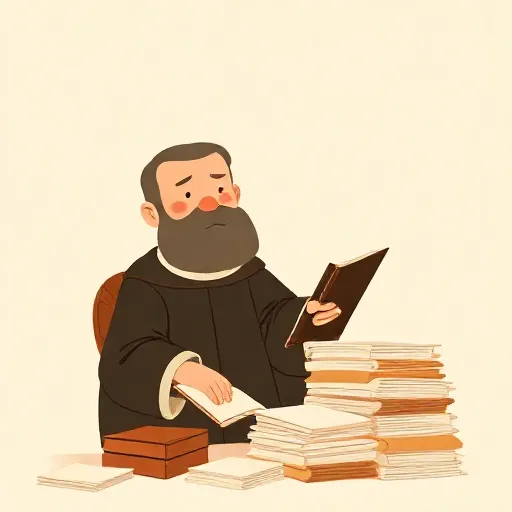
It is 1592. Francesco Patrizi (1529–1597), a white-haired philosophy teacher in Rome, has just received terrible news. The Church’s book censors have condemned his life’s work, a fat volume called New Universal Philosophy. They say it contains dangerous ideas and cannot be read until many pages are corrected. Patrizi had hoped this book would finally replace the stale, old teachings that filled every European university. Instead, he will spend his final years defending it. Why did his ideas cause such a storm? Because he dared to say that almost all of the “established truth” about the physical world was wrong—and that a different, much older path led to real knowledge.
Why He Thought Aristotle Had It All Wrong
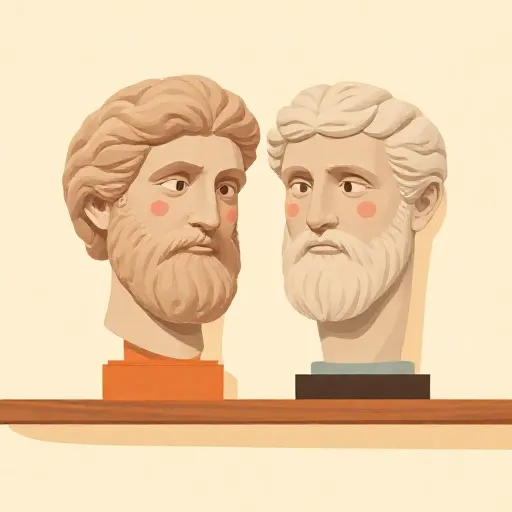
For centuries, every university taught that Aristotle (384–322 BC) had unlocked the secrets of nature. According to him, everything on Earth was made of four elements—earth, air, fire, and water—and the heavens moved in perfect circles carried by invisible crystal spheres. He explained motion with “form” and “matter,” and he insisted that a vacuum (completely empty space) could never exist. Most scholars believed this was basically finished science. Patrizi, who had mastered Greek at the University of Padua, decided to read Aristotle’s own words with fresh eyes. The more he studied, the more he felt that Aristotle’s system was full of gaps.
In 1571 he published a massive attack called Peripatetic Discussions, which he expanded in 1581. He compared Aristotle’s views, point by point, with those of Plato (428/427–348/347 BC). Plato, he argued, was wiser, more in harmony with Christian faith, and gave a better account of reality. Patrizi even suggested that a late ancient text called the Theology of Aristotle—really a summary of the thinker Plotinus (around 204–270)—proved that Aristotle secretly agreed with Plato while pretending to be an independent genius. This made Aristotle, in Patrizi’s eyes, something of a dishonest teacher.
Patrizi’s deepest complaint was about the basics. Aristotle’s principles of form (the shape or identity of a thing) and matter (the stuff that gets shaped) could not, Patrizi thought, explain what things truly are. Matter was just pure possibility, and form could not exist apart from a body. Worse, Aristotle’s universe was a closed, finite bubble, and he denied that empty space was possible. To Patrizi, this was a cage that blocked all new discovery. So he decided to build an entirely different system—one in which light and space, not motion and fixed spheres, were the true keys to understanding everything.
Light: The New Foundation of Everything
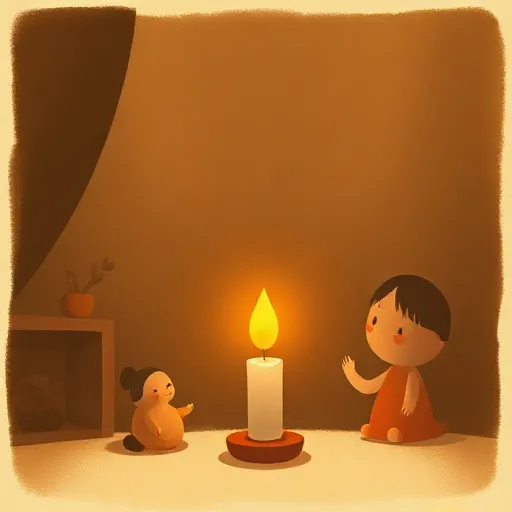
The first part of Patrizi’s New Universal Philosophy is called Panaugia, or “All-Splendor.” Its goal is to prove that God exists—but not by the usual path. Aristotle had argued that motion requires a first “Unmoved Mover.” Patrizi threw out that argument and started instead with light. Why? Because light, he thought, is both a physical thing we can see and a hint of something beyond the physical.
He reasoned like this: Wherever there is a beam of sunlight, there must be a source. Physical light is always flowing from somewhere. If you trace it back far enough, you must arrive at a pure, unbodied light—a First Light (Lux Prima) that has no material source at all. That First Light is God. From God, a kind of secondary light or illumination flows out, bringing all of reality into being. Light, then, is the bridge between the incorporeal (spirit, mind, God) and the corporeal (everything you can touch). This was a radical break from Aristotle, who had seen motion as the most basic clue to the divine. Patrizi replaced motion with light, and many scholars recognize that this draws deeply on Plato and later Platonic thinkers who used the sun as an image of the ultimate Good.
From Ancient Magic to a New Physics

Patrizi didn’t stop with Plato. He was fascinated by writings that seemed even older. He collected texts attributed to Hermes Trismegistus, a legendary Egyptian sage, and to Zoroaster, an ancient Persian priest. Many Renaissance thinkers, like Giordano Bruno (1548–1600), treated these works as guides to spiritual magic. Bruno used them to attack the Church’s authority and was eventually executed. Patrizi saw them very differently. He believed they contained a true “ancient theology” that had been passed down before Plato and that merely echoed what Plato would later say more clearly. For him, they were not magical handbooks but extra support for his Platonic vision. He even printed some of these texts in his 1593 edition of the New Universal Philosophy.
Ironically, within Patrizi’s own lifetime, scholars began to prove that many of these “Hermetic” writings were actually composed much later, in the early centuries AD, and were not really ancient Egyptian at all. Yet Patrizi’s open-minded digging into old sources helped rescue many forgotten texts for later generations. His willingness to take seriously what was labelled “magical” or “fake” also shows something important: he was not afraid to look everywhere for ideas that could overturn a tired orthodoxy.
Why Space Mattered More Than Place
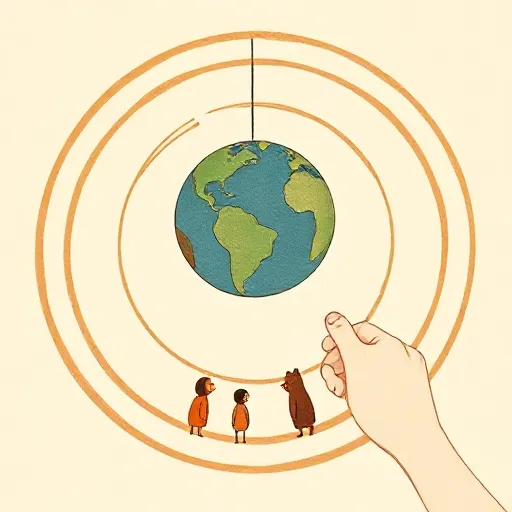
The final section of Patrizi’s book, Pancosmia (“All-Cosmos”), is where his new physics really takes off. He scraped away Aristotle’s four elements and put in their place four fresh principles: space (spatium), light, heat, and humidity. Space came first. Unlike Aristotle’s “place” (which was nothing but the inside surface of a container), Patrizi’s space was a real, boundless container that could exist even if all bodies disappeared. Picture a vast, empty warehouse that stays perfectly empty whether or not you stack boxes inside it. That is how he thought about the cosmos.
He divided space into two kinds. Mundane space is finite and holds our physical universe. Around it stretches an infinite external space, empty of all bodies. The universe itself has three worlds: the Empyrean (an infinite realm filled with pure light), the Aetheric (where stars and planets move freely down to the Moon), and the Elementary (our home, below the Moon). There are no crystal spheres; the planets glide through a fluid-like aether. Patrizi kept the Earth at the center but allowed it to rotate once a day, which was daring for his time.
He also drew a sharp line between mathematical space and physical space. Mathematical space is pure geometry—three-dimensional, empty, and timeless. Physical space contains real bodies and adds resistance, a kind of push-back when things try to move through it. This distinction would later influence thinkers like René Descartes (1596–1650) and Gottfried Wilhelm Leibniz (1646–1716), who likewise wrestled with how pure mathematics relates to the material world. Patrizi, in short, was placing mathematics before physics, a move that would help launch modern science.
His Questions Still Echo Today
In his own century, Patrizi’s book was silenced. Yet his ideas did not die. The notion that space is an infinite, real container—not just the inside of a sphere—would reappear stronger in the next century. His insistence that light was fundamental helped encourage later physicists to take light seriously as a key to nature. Most of all, his example showed that even the most trusted authority can be challenged with careful reading and a bold imagination.
Today, when you look at a star or turn on a lamp, you are living in a world that Patrizi helped imagine: a universe of unbounded space where light travels from unimaginably distant suns. He was not always right, and he never saw his book accepted. But he asked the kind of questions that move whole civilizations forward. The next time you hear a “fact” that everyone agrees on, you might try thinking like Patrizi: read the old texts yourself, look for a beam of light where nobody else is looking, and ask whether the universe might be far stranger than the experts say.
Think about it
- If your whole school was taught that one thinker had all the answers, would you dare to point out mistakes—even if the most powerful people believed them?
- Patrizi thought light was the best clue to the deepest reality. What everyday thing do you think might hold a big secret about the universe?
- The Church condemned Patrizi’s book for containing “dangerous” ideas. Can an idea be dangerous? Should it ever be forbidden?