Did a Comet Smash Aristotle’s Universe to Pieces?
A Comet That Refused to Follow the Rules
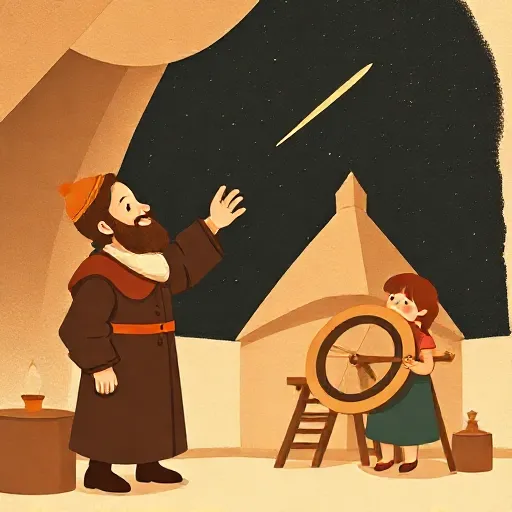
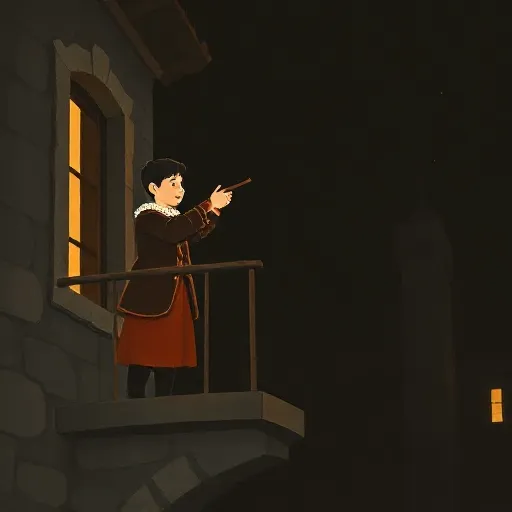
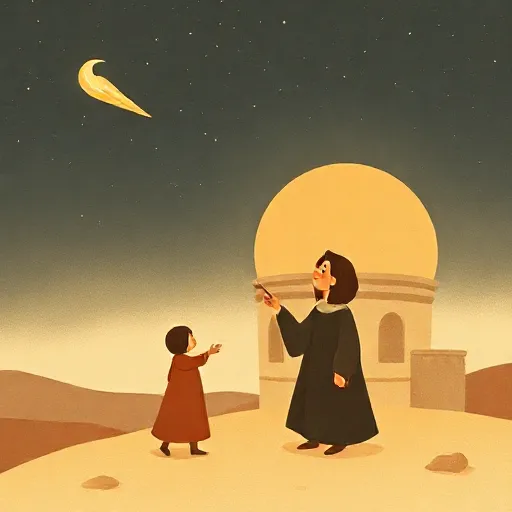
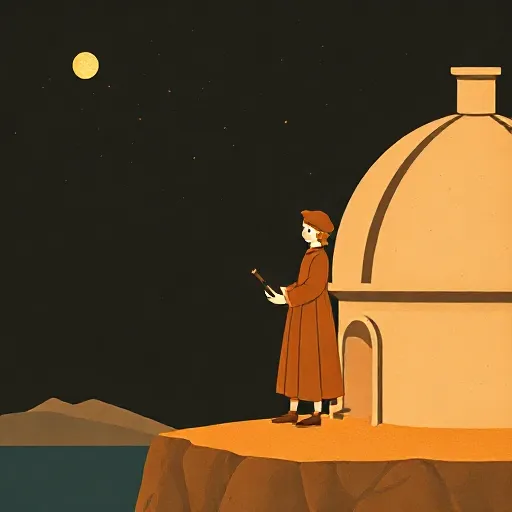
On a cold November night in 1577, the Danish astronomer Tycho Brahe (1546–1601) stood on his island of Hven and spotted a bright comet. He was not the first to see one. But he was one of the first to measure its distance carefully, using the best instruments of his age. The numbers told him something impossible: the comet was moving far beyond the moon. According to the science taught in every university, that should not happen. The old textbooks — written by the ancient Greek philosopher Aristotle (384–322 BCE) — insisted that the heavens were perfect and unchanging. A comet out there was a crack in a universe that had stood for two thousand years.
The Old Picture of the World: Two Floors
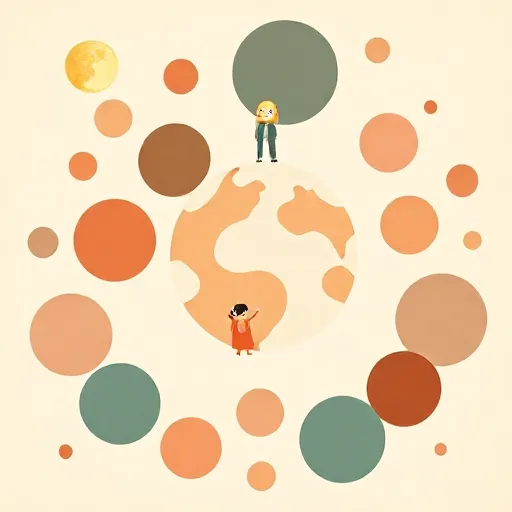
To understand why the comet upset people, picture the universe Aristotle described. It had two floors, separated by the moon. Below the moon was the sublunar world — our home, made of four elements: earth, water, air, and fire. Everything down here was messy. Things were born, grew old, and died. Rocks fell straight down toward the center of the Earth because they belonged to the element earth, which always tried to reach its natural place. Fire flickered upward because its natural place was higher.
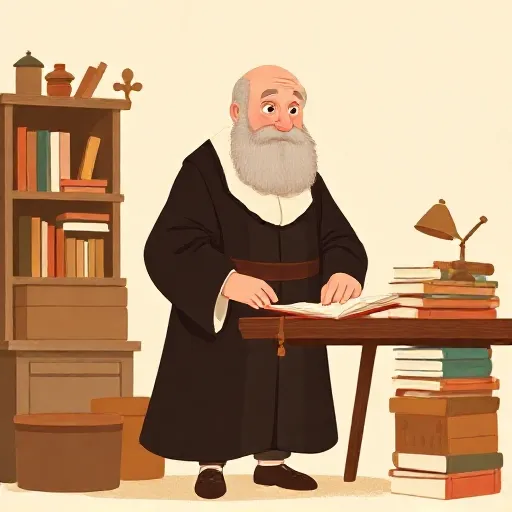
Above the moon lay the supralunar world, made of a fifth element called aether — a perfect, invisible stuff that never changed. The stars and planets were set in enormous, transparent crystalline spheres that rotated around the Earth in perfect circles, forever. In that realm there was no birth, no decay, no surprises. Aristotle’s physics was a tidy, fixed box. Most medieval universities treated it like a finished map of reality. Professors lectured on his works, and students memorized the map, sphere by sphere.
Brahe’s comet refused to stay in the downstairs chaos. So did a new star that suddenly appeared in 1572 and was shown by the Jesuit astronomer Christopher Clavius (1538–1612) to be among the so‑called fixed stars. The spheres were supposed to be solid and transparent — how could a comet move through them? The tidy box was suddenly too small.
Plato Returns and Lectures Get Lively
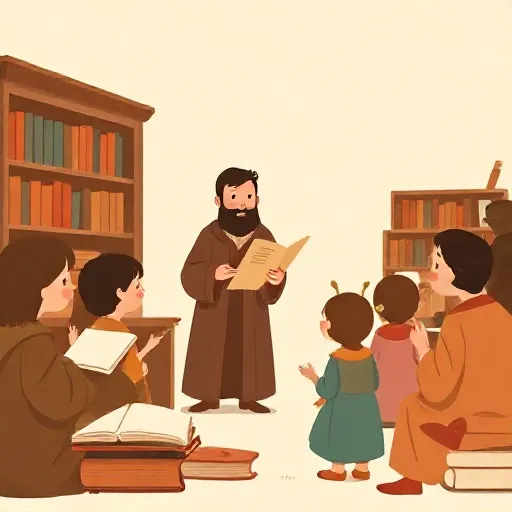
Change did not come only from the sky. In the fifteenth century, European scholars rediscovered the works of Plato and other ancient followers like Plotinus. The philosopher Marsilio Ficino (1433–1499) translated Plato into Latin and argued that Plato was mainly a theologian, while Aristotle was an investigator of the physical world beneath the moon. That dichotomy — splitting the two giant thinkers — loosened Aristotle’s grip. For the first time in centuries, it felt safe to say that Aristotle might be wrong about nature without sounding like you were attacking religion.
Even inside the universities, the air felt different. Professors still taught Aristotle’s Physics, On the Heavens, and other treatises. But now they added new commentaries by ancient interpreters like Alexander of Aphrodisias and Simplicius. Some teachers began to openly question the old master. In Bologna, Pietro Pomponazzi (1462–1525) made his students laugh by mocking Aristotle’s claim that the zone around the equator was too scorching for human life. Pomponazzi had read the reports of the navigator Antonio Pigafetta, who had just sailed through that very region and met people living there happily. Direct experience was starting to count more than an old page.
Copernicus, Bruno, and an Infinite Universe
The biggest shock came when the Earth lost its throne. Nicolaus Copernicus (1473–1543), working with mathematics rather than telescopes, proposed that the Sun — not the Earth — sat at the center of the planetary system. His model still used circles and still assumed a finite universe. But it planted a dangerous idea: maybe our place in the cosmos is not special.
The Italian philosopher Giordano Bruno (1548–1600) took that idea and ran with it. Bruno argued that the universe is infinite. There are no crystalline spheres, no single center, no “upstairs” realm made of aether. Instead, an endless space contains countless worlds like our own. He reached this conclusion partly by rethinking the nature of matter — he claimed matter was not a passive lump waiting for form, but an active, living principle that carries all forms within itself. If matter is alive everywhere, then there is no boundary between the perfect heavens and the grubby Earth.
Bruno’s infinity frightened many. If there are other worlds, do they have people? The philosopher Tommaso Campanella (1568–1639) tried to quiet the religious worry: he said the inhabitants of other worlds were not human beings and had no need of salvation. Even Johannes Kepler (1571–1630), who admired the Copernican system, pushed back against Bruno’s idea of a boundless cosmos. But the question would not go away: were the heavens finite, like a closed room, or did they just keep going?
From Books to Gardens: Trusting Your Own Eyes
While some thinkers argued with mathematics and metaphysics, others turned to their senses. In the 1540s, universities in Pisa, Padua, and Florence founded botanical gardens — living libraries of plants. Scholars who had previously only read about herbs in ancient books could now touch, smell, and compare real specimens. Huge illustrated catalogs of animals and plants began to circulate. Their authors did not just copy Pliny or Aristotle; they talked to fishermen, sailors, and farmers who knew nature firsthand.
Artisans and “men without letters” also made discoveries. The potter Bernard Palissy (1510–1589) recognized that fossils were the remains of once‑living things, not freaks of the earth. Leonardo da Vinci (1452–1519) had argued the same long before. Observation was becoming a kind of authority of its own.
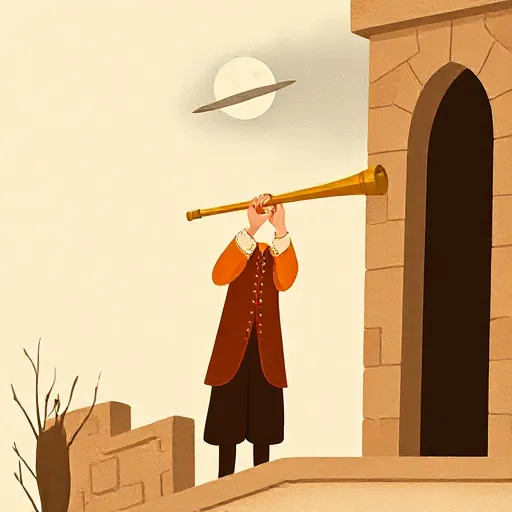
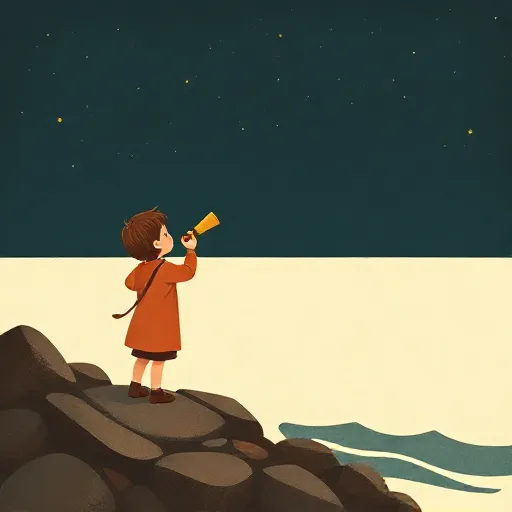
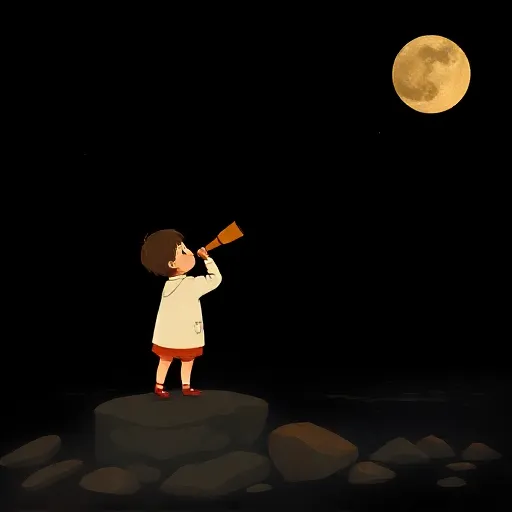
Then came the telescope. Galileo Galilei (1564–1642) pointed his instrument at the moon and saw mountains and craters — a surface that looked as rough as the Earth’s. He watched moons circle Jupiter, proving that not everything orbited our home. Galileo described matter in purely mathematical terms — size, shape, motion — and stripped away Aristotle’s qualitative talk of hot, cold, wet, and dry. For him, the book of nature was written in the language of mathematics, and you had to read it with your eyes, not just with your memory of ancient authorities.
Other natural philosophers, like Francis Bacon (1561–1626), demanded a fresh start. Bacon did not simply want to repair Aristotle’s system; he wanted to replace it with an empirical method — one built on careful experiments and the testimony of the senses, not on syllogisms. The message grew louder: if a fact could be seen, measured, and shared, it mattered more than any philosopher’s promise.
Why It Still Matters: Questions Bigger Than Answers
The Renaissance did not end with a single winner. Aristotle did not vanish; he was still taught in many schools. The fight between trusting ancient books and trusting your own eyes did not stop. What did change was the feeling that nature could be questioned out loud, in public, without pretending that faith and science were the same thing.
That shift lives in every science class today. When you ask, “How do we know that?” you are doing exactly what Brahe did with his comet and Galileo did with his telescope. You are treating the world as something you can investigate, not just something you must believe. The Renaissance thinkers did not answer all their big questions — is the universe infinite? what is matter made of? does Earth really move? — but they gave us permission to keep asking them. And that permission is still the engine of every new discovery.
Think about it
- If a new discovery seemed to prove your favorite science book wrong, would you change your mind or keep believing the book? Why?
- Some Renaissance thinkers found the idea of an infinite universe thrilling, while others found it frightening. Which reaction comes closer to yours, and what might that tell you about yourself?
- Is it ever okay to believe something only because a respected authority said it, even if you see no evidence yourself? Why or why not?