Do You Have the Right to Change Your Government? Thomas Paine's Answer
A Pamphlet That Started a Revolution
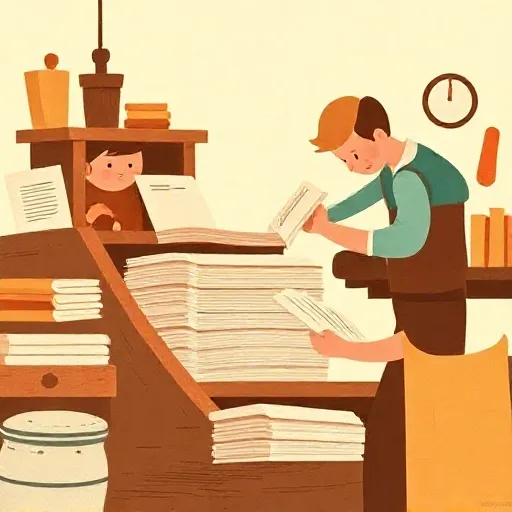
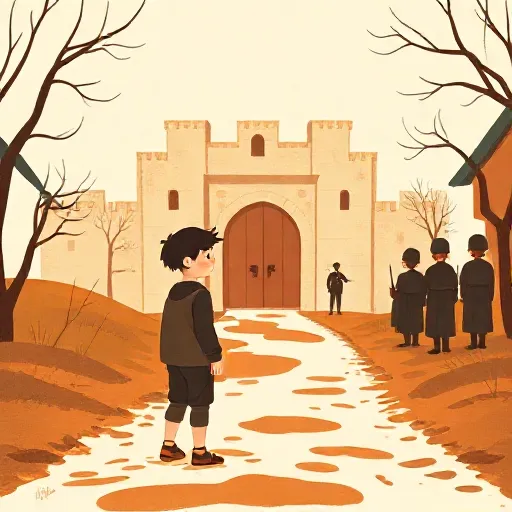
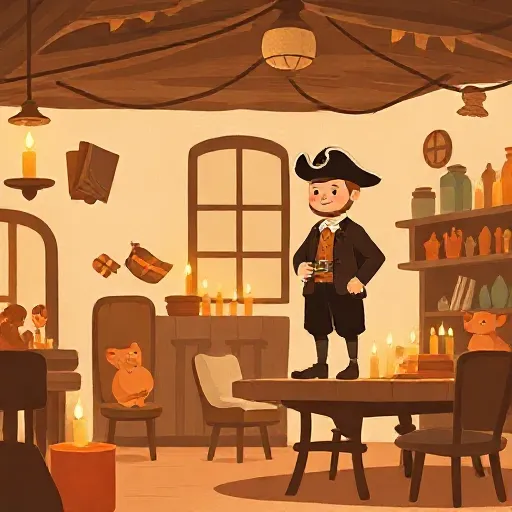
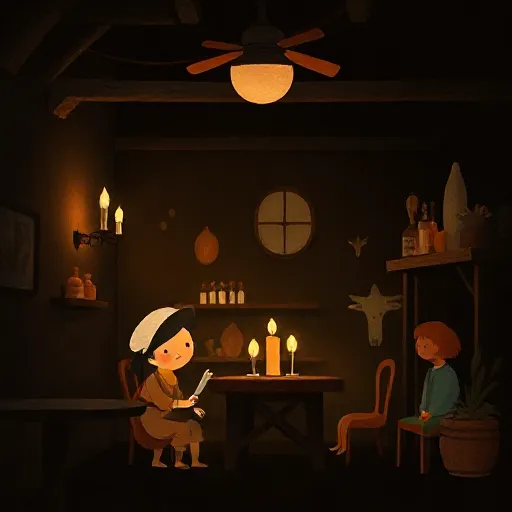
On a chilly evening in February 1776, a crowd gathered in a Philadelphia tavern. A man stood on a chair and read aloud from a thin pamphlet. The words were not polite. They called the British king a “royal brute” and said Americans had every right to govern themselves. That pamphlet, Common Sense, sold over 100,000 copies in one year and persuaded an entire continent to break away from England.
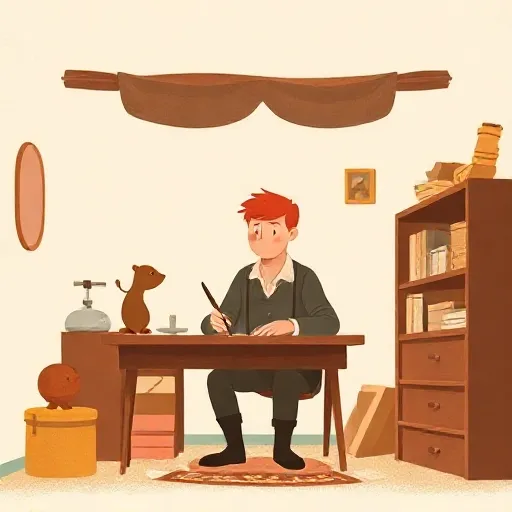
The author was Thomas Paine (1737–1809), an Englishman who had failed at many trades. He had been a staymaker (crafting the stiff boning for women’s corsets), an excise officer, a teacher, and a shopkeeper. In 1774 he left England for Philadelphia with little more than a letter of introduction from Benjamin Franklin. America was on the brink of war with Britain, and Paine quickly saw that the colonists needed a push — not toward compromise, but toward independence.
Paine’s pamphlet opened with a sharp contrast. Society, he wrote, comes from our needs and brings us together in affection. Government comes from our wickedness; it is a “necessary evil” that restrains us when we misbehave. Because all people are capable of selfishness, some authority is needed. But Paine believed that the simplest kind of government was the best — a republic where ordinary citizens choose their own representatives. Monarchy and aristocracy, he insisted, only made things worse. Because he put this in plain, fiery language instead of in scholarly jargon, ordinary people listened.
The “Royal Brute” and the Absurdity of Hereditary Rule
Paine aimed his fiercest attack directly at King George III. He believed the king was not a fatherly protector but a tyrant who valued his own power over the colonies’ happiness. “Nature has deserted the connection,” Paine wrote, “and art cannot supply her place.” To him, it was ridiculous that one family should rule generation after generation.
He especially mocked the hereditary principle — the idea that political power passes from parent to child simply by birth. He said:
The idea of hereditary legislators is as inconsistent as that of hereditary judges, or hereditary juries; and as absurd as an hereditary mathematician, or an hereditary wise man; and as ridiculous as an hereditary poet-laureate.
You would not trust a surgeon just because her mother was a surgeon. Why trust a lawmaker for the same reason? Paine thought a free people must choose who governs them, and they should be able to throw those leaders out.
He pushed this even further with a bold idea about time. No past generation, he argued, has the right to lock the future into its decisions. In Rights of Man he declared:
There never did, there never will, there never can exist a parliament, or any description of men, or any generation of men, in any country, possessed of the right or the power of binding and controlling posterity to the “end of time.”
Each generation, he insisted, must be free to make its own rules. A democracy cannot be handcuffed by dead kings or old parliaments.
Your Rights Are Not a Gift from the Government
Where do your freedoms actually come from? Paine’s answer was simple: they come from being a person, not from any government. He called these natural rights and divided them into two kinds.
First, there are rights you can exercise completely on your own — like the right to follow your own conscience and think your own thoughts. No one else is needed for you to decide what you believe. Second, there are rights you cannot protect alone. Property is a good example: you need the help of society (laws, courts, police) to secure what you own. For these, you pool your imperfect natural power with others so that the community can protect everyone together. In this way, every civil right “grows out of a natural right or is a natural right exchanged.”
This meant that the people are the true sovereign — the final authority. Government is not above the people; it is their servant. Yet Paine was careful. He did not think the majority could do whatever it wanted. In his Dissertations on Government he said a republic must be a “sovereignty of justice,” not a “sovereignty of will.” The job of a just government is to protect rights and keep right and wrong in their proper places, even if a loud majority demands something unfair. For Paine, the people’s power was limited by what is right, not by how many want it.
Owing the Community for the Earth
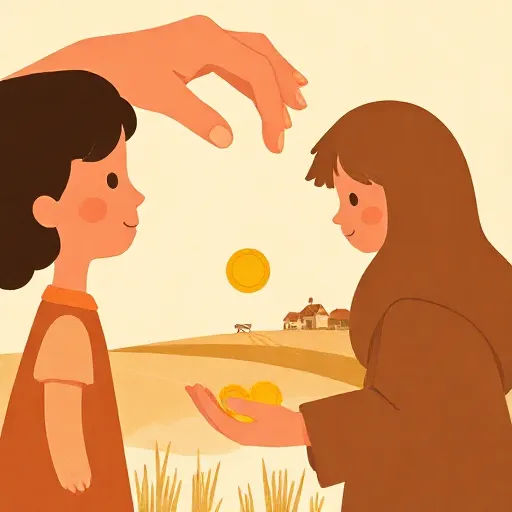
In the second part of Rights of Man (1792), Paine sketched a surprising list of welfare proposals. He suggested using tax money to fund public education, pensions for the elderly, support for new mothers, and help for young people moving to the city to find work. At first, these ideas seemed like generous charity — but he soon gave them a deeper foundation.
In a later pamphlet, Agrarian Justice (1795–6), Paine argued that the land and its resources originally belonged to everyone. When land became private property, those who ended up with none lost something. So every landowner owes a sort of rent to the community for what they hold. He proposed that this “ground-rent” be collected through a tax on inherited wealth and used to give every person a capital grant at age twenty-one, plus a yearly pension after fifty.
“No person,” he wrote, “ought to be in a worse condition when born under what is called a state of civilization, than he would have been had he been born in a state of nature.” In Paine’s view, these payments were not a handout but a matter of justice — a way of restoring the equal birthright we lost when land was enclosed.
A Faith of Reason, Not of Priests
Paine’s bluntness did not stop at politics. In The Age of Reason (1793–4) he attacked organized religion with the same energy he had aimed at kings. He was not an atheist. He was a deist — someone who believes a divine creator designed the universe and that we can see this design through reason and observation of nature.
He called the study of theology in churches “the study of nothing” and dismissed miracles, mysteries, and prophecies as nonsense designed to control people. Instead, he urged everyone to read what he called the “Bible of Creation”: the stars, the seasons, the laws of physics. For Paine, God was an unmoved first cause whose moral law was written into the cosmos itself. He believed that acting morally meant imitating the goodness that shows up in nature — and that cruelty to any living thing was a violation of that duty.
These views made him deeply unpopular in America, where many still held traditional Christian beliefs. But for Paine, religious freedom and political freedom were two sides of the same coin. Just as simple republican government protected you from despotism, simple deist belief protected you from “priestcraft.”
Why Thomas Paine’s Ideas Still Echo Today
Paine died in obscurity in 1809, shunned by many who once cheered him. Yet his most radical proposals refused to die. Today, some philosophers and economists argue for a universal basic income or a child inheritance trust — ideas directly inspired by Paine’s vision in Agrarian Justice. When you hear debates about whether a government owes its young citizens a financial start in life, you are hearing an echo of Paine’s claim that the earth belongs to everyone.
His attack on hereditary power also lives on in the way we think about democracy. You do not need to have been born into a special family to run for office or to demand that the laws be rewritten. Every few years, every generation gets its chance to reshape the rules. And his belief that no generation can bind the next raises hard questions: how do we honor promises made in the past without handing our future to ghosts?
More than anything, Paine trusted ordinary people to think for themselves. He wrote for the farmer, the sailor, the shopkeeper — not for crowned heads or university scholars. When you question an unfair rule, refuse to accept something just because “that’s how it’s always been,” or imagine a fairer way to share a common resource, you are doing exactly what that man on the tavern chair hoped millions of readers would do.
Think about it
- Paine said no generation can be forced by the ones before it. If your town’s previous leaders promised to keep a forest forever wild, does your generation have the right to cut it down for a new park? Why or why not?
- Paine hated titles like “duke” or “lord.” Are there any titles today — like “Olympic champion” or “Nobel laureate” — that are earned and okay, or do all special titles create unfairness?
- If you were born with natural rights, does that mean you should have a vote on the rules that affect you right now, even if you’re only twelve? What are the best arguments against letting kids vote?