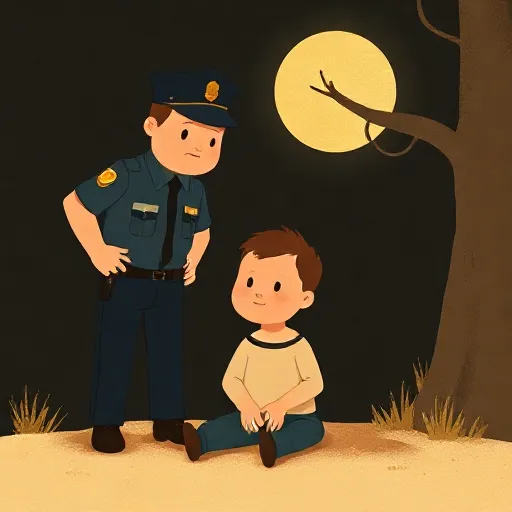

Trapped in a Giant's Cave: Is That Really Peace?
What Is Peace? More Than Just a Quiet Cave

Imagine you’re trapped in a cave with a one-eyed giant who plans to eat you. The monster isn’t attacking right now — it’s just waiting. That eerie silence might feel like peace, but you’re still a prisoner. Long ago, the philosopher Jean-Jacques Rousseau (1712–1778) described a similar scene: the hero Ulysses and his crew, stuck in the Cyclops’ cave, waiting their turn to be devoured. That’s not real peace — it’s fear dressed up in stillness.
Many people think peace simply means the absence of war or violence. Scholars call this negative peace — all the fighting has stopped, but the problems that caused it may still boil under the surface. Imagine two countries that hate each other but hold back because each is scared of the other’s bombs. That’s negative peace: a tense truce, not a real solution.
Pacifists — people committed to making true peace — argue that we need something deeper. They describe positive peace, a condition where communities work together, meet everyone’s needs, settle disagreements fairly, and treat each other with dignity. That kind of peace isn’t just silence; it’s a buzzing, living calm where people flourish.
There’s also a hidden enemy that disrupts positive peace: structural violence. This term names the ways laws, habits, and institutions harm certain groups without a single punch being thrown — things like racism, poverty, or sexism that trap people in unfair situations. Pacifists who focus on positive peace want to fix those systems, not just stop shooting. Their goal is a world where nobody has to live like the prisoners in the Cyclops’ cave.
Is War Always Wrong? The Absolute Pacifist’s View
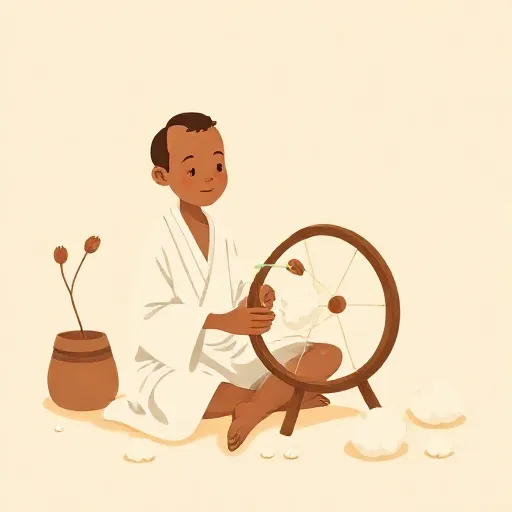
Some pacifists say war and violence are never acceptable. This is called absolute pacifism. For them, no situation — not even defending innocent people against a terrible enemy — can make killing right.
The Russian writer Leo Tolstoy (1828–1910) argued that the only way to escape violence is to submit to it peacefully and endure suffering without hitting back. Many Christians point to Jesus’s words in the Sermon on the Mount: “Do not resist one who is evil” and “Love your enemies.” Inspired by this, some early Christian martyrs chose death over raising a sword.
The most famous modern example is Mohandas Gandhi (1869–1948), who led India’s struggle for independence without weapons. His principle, ahimsa, comes from Indian traditions like Jainism, Buddhism, and Hinduism. Ahimsa means nonviolence — not just avoiding physical harm, but a total commitment to compassion. Gandhi believed that history was slowly moving toward ahimsa, and he practiced it in every part of his life, even as a spiritual discipline.
Martin Luther King Jr. (1929–1968) combined Christian love with Gandhi’s methods during the American civil rights movement. He insisted that nonviolence wasn’t cowardly; it took tremendous courage to absorb pain without retaliating. King even taught his followers to overcome “internal violence” — the hatred and rage they might feel — and replace it with love.
Absolute pacifists often make a shocking claim: it’s better to be killed than to kill. They admit that living completely without causing harm is almost impossible — Gandhi noted that even eating involves harming plants or tiny creatures — but they see nonviolence as a lifelong goal, a star to steer by. For them, peace is an end in itself, not just a tool to get something else.
Sometimes War Is a Lesser Evil: Contingent Pacifism

Not all pacifists are absolute. Contingent pacifism (or conditional pacifism) holds that war is almost always wrong, but might be justified in very rare, specific circumstances — if strict moral rules are followed.
The philosopher Bertrand Russell (1872–1970) opposed World War I but supported the fight against Nazi Germany in World War II. He called his position “relative political pacifism”: most wars cause more suffering than they prevent, but a few can be the lesser of two horrors.
A group of thinkers known as just war pacifists take this further. They borrow ideas from the just war theory, an ancient tradition that lists conditions for a war to be fair — for instance, the cause must be just, war must be the last resort, and noncombatants must never be targeted. Just war pacifists argue that modern warfare, with its bombs that can’t tell soldiers from civilians, almost never meets those standards. They say that while war might be acceptable in theory, the way we actually fight today makes it impossible to justify.
Some contingent pacifists base their stance on skeptical pacifism: they doubt that governments ever have good enough reasons for war. History shows that leaders often twist facts to stir up fear. Until a leader can prove — clearly and honestly — that every peaceful option has failed, the default answer should be “no war.” This puts the heavy burden of proof on the side wanting to fight.
How Can Nonviolence Actually Work? The Power of Active Peace
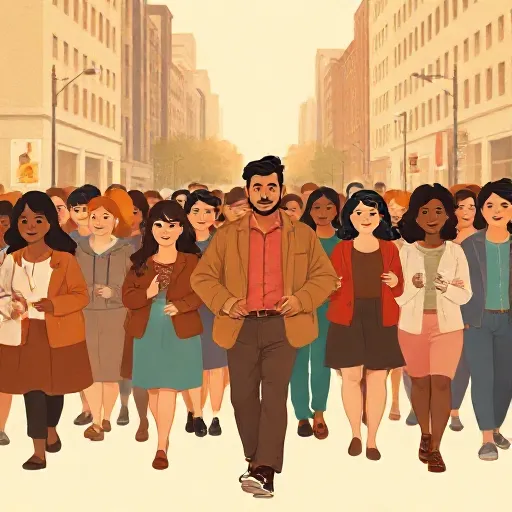
One of the strongest arguments for pacifism doesn’t just say war is bad — it shows that nonviolent action can be effective. Gandhi called his method satyagraha, which means “truth-force” or “love-force.” Instead of harming opponents, satyagrahis (practitioners of satyagraha) peacefully disobeyed unjust laws, accepted the punishment, and aimed to win over the other side.
King adapted this in the United States. Through bus boycotts, sit-ins, and marches, he and thousands of Black Americans exposed violent racism and built sympathy across the country. Later, the “velvet revolutions” in Eastern Europe during the late 1980s and early 1990s toppled dictatorships without bloodshed.
Critics counter with a painful example: nonviolence couldn’t have stopped the Nazis. As President Barack Obama once put it, a head of state can’t always follow the pacifist’s path — sometimes military force seems necessary to protect millions. This objection is serious, and pacifists don’t have an easy answer. But they respond that wars come with catastrophic long-term costs — wrecked economies, poisoned environments, cycles of revenge — and that we must invest far more in creative, nonviolent alternatives before concluding that war is the only way. The goal isn’t to do nothing; it’s to build a nonviolent “army” trained in conflict resolution, mediation, and civil defense — a real-life equivalent of what Gandhi called a “nonviolent army.”
“But What If You’re Attacked?” Big Objections to Pacifism

Pacifism has always faced sharp criticism. Here are four major objections and how pacifists reply.
“Pacifists are cowards.” The critic says pacifists avoid fighting because they’re afraid of pain. Pacifists reply that willingly suffering violence without running away or hitting back is one of the bravest acts imaginable. Gandhi and King showed that — they faced beatings and prison, not because they were weak, but because they were committed to a higher principle.
“Pacifists are free riders.” They enjoy the safety that soldiers provide but don’t share the burden. Pacifists answer that they can serve their communities in other ways — as medics, teachers, or peacebuilders — and that their long-term goal is a world where no one needs to be a soldier.
“Pacifists want clean hands without actually solving problems.” This objection says pacifists withdraw from the messy real world to keep their conscience spotless. Pacifists argue back: they don’t withdraw; they actively resist evil, just with different tools. The core idea is that means and ends must match — you can’t build a just, peaceful society through violent methods without corrupting the result.
“Pacifism is contradictory.” If you value human life so much, why won’t you kill to defend it? The philosopher Jan Narveson (1936–present) claimed this creates an internal inconsistency. Pacifists reply that killing to protect life is itself a contradiction — it treats a human being as disposable. Some draw a line between personal self-defense (which many pacifists accept) and the massive, impersonal killing of war, which destroys the dignity of individuals entirely.
Making Peace Real, From the Playground to the World
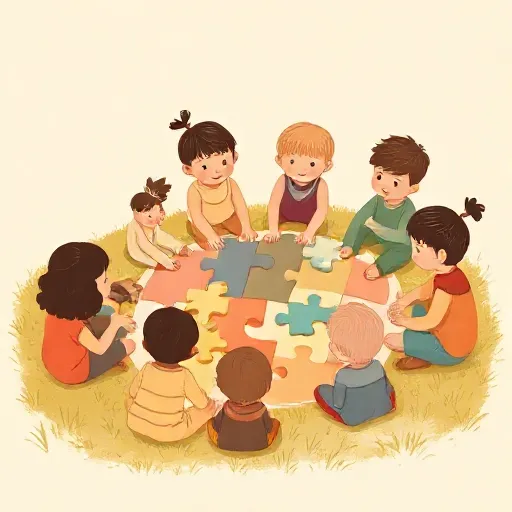
Why does any of this matter to you, right now? Peace isn’t just something that happens between countries. The same questions pop up every day. When you see someone being bullied, do you step in with force, or do you find another way to stop it? When a disagreement with a friend gets heated, do you yell louder, or do you try to understand what’s really going on underneath?
The structural violence we talked about — racism, poverty, neglect — shows up in schools and neighborhoods too. A classroom where some kids are left out or treated unfairly isn’t experiencing positive peace, even if no one is fighting. Pacifism, in its fullest sense, asks us to build fair communities, heal harm through listening and reconciliation, and stand up against injustice without becoming what we oppose.
Every time you choose patience over explosion, or work to include someone who’s been ignored, you’re practicing peacefulness as a skill — what philosopher Michael Fox calls “peace as a way of life.” The challenge of the Cyclops’ cave isn’t just an old story. We face a choice between a fake peace that just keeps people quiet and a real peace that makes everyone freer. That choice is made over and over, in big ways and small, and the pacifist tradition insists that there’s always a nonviolent path forward if we have the courage to look for it.
Think about it
- If a bully is hurting your friend and won’t stop unless someone pushes them away, is it ever okay to use force? Why or why not?
- Can a country be “at peace” if some of its citizens live in poverty or constant fear? What does that tell you about real peace?
- If you knew for certain that a war would prevent ten times as many deaths in the future, would it be right to fight? How would you decide?