Who Decides What Happens to Your Body After You Die?
The Late-Night Decision: Whose Body Is It?
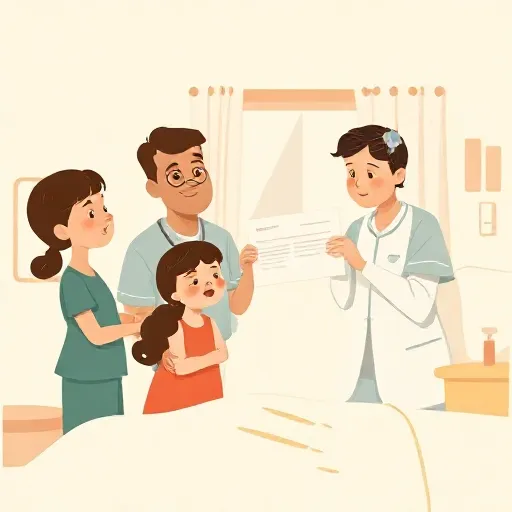
It’s 3 a.m. in an intensive care unit. A teenager has just died in a car crash. A doctor tells the family that their child was a registered organ donor — and that her heart, kidneys, and liver could save several lives. But the family, reeling from shock, says no. In nearly every country with a transplant program, the doctor will not take the organs. The law might allow it, but the hospital’s practice is clear: the family’s refusal stops everything.
This is what philosophers call a double veto system. The dead person can veto retrieval — if they formally objected while alive. But even if they gave clear consent, the family can veto too. In many places, this is a creation of the medical profession, not the law. Doctors fear bad publicity and a collapse of public trust if they override grieving families.
But what about the dead person’s own wishes? Some philosophers think that the dead can have posthumous interests — interests that survive their bodies. On one view, taking an organ from someone who refused would be a genuine harm to that person’s interests. On another, it’s only about the fears and concerns people have while alive; anticipating that their refusal might be ignored would make them suffer. Many people never think about donation, so in those cases it’s hard to say they have any interest at all. And in practice, most systems allow retrieval without the deceased’s consent as long as the family agrees. The dead’s refusal is respected, but their consent is never required.
Should the Dead’s Wishes Always Win?
If you believe posthumous interests exist, the next question is how much they matter. John Harris (born 1945) and others argue that whatever interests the dead have are tiny compared to the desperate needs of patients with organ failure. In their view, a simple calculation of benefit and harm would justify ignoring the objections of a dead person — especially if their refusal would cost a life. They think people aren’t really affected by their posthumous interests being set back, or that the fear of retrieval while alive isn’t weighty enough.
Other philosophers reply that if we accept that living people have strong rights over their own bodies, we have reason to think those rights extend after death. T. M. Wilkinson (born 1965) has developed a view like this, suggesting that the living can hold rights over what happens to their bodies later. But this raises tricky questions: can a right really protect a dead person? Some legal and political theorists doubt that rights can work this way at all.
This dispute isn’t just academic. It feeds directly into the most radical proposal for increasing organ supply: conscription — taking organs from all suitable dead bodies, no matter what the deceased or their family said. Hardly any government supports conscription, but several philosophers do, including Harris and Cécile Fabre (born 1971). They point out that we already tax estates to help the poor; organs, being useless to the dead, could be seen as resources that the state may take to fulfill the welfare rights of the sick. If the needs of those with organ failure really outweigh any posthumous interests, conscription begins to look like a logically consistent — if politically impossible — position.
What If No One Knows What the Dead Wanted?
Most people never leave clear instructions. This has led some to propose opt-out (or presumed consent) systems. Under a “hard” opt-out, organs would be taken unless the deceased had formally objected, even if the family said no. A “soft” version would still allow the family to veto. The leading argument for opt-out is that inertia works both ways: in an opt-in system people who want to donate often don’t get around to signing up; in an opt-out system, inertia would keep them on the donor list and more organs would be available.
But there’s a flaw in the simple inertia argument. In nearly every country, it’s already legal to take organs without the deceased’s consent — the family’s agreement is enough. So there is no default of non-retrieval that needs flipping. The real question is whether it’s right to use bodies without any indication the person wanted to donate. Some say it is worse to take organs in error than to fail to take them in error, because a person has a right not to have their organs taken but no right to have them taken. Yet we already dispose of bodies without consent in other ways, and we sometimes give unconsented medical treatment to unconscious patients.
The debate remains lively because hard data is scarce. Many factors affect how many organs are actually retrieved — from the number of intensive care units to public awareness campaigns — so it’s extremely difficult to prove that changing consent rules would make a big difference.
When the Family Says No, Even to a Clear Yes
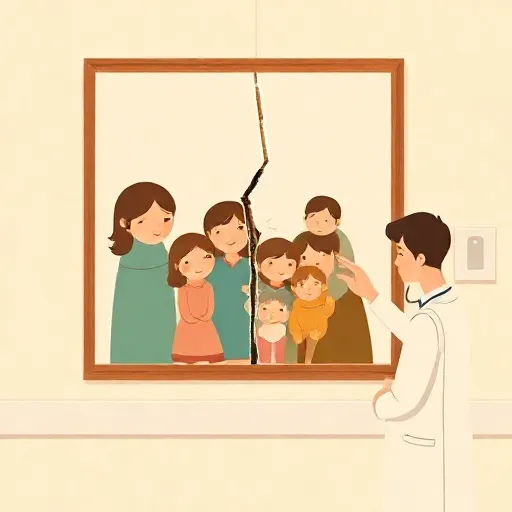
Should a family’s veto ever be overridden? Some philosophers argue that allowing families to block retrieval gives excessive weight to their distress, against both the dead person’s express wishes and the life-or-death needs of potential recipients. Yet it turns out that families rarely override a known donor’s wishes, and many donors might not want their families to suffer extra trauma. So the family veto may actually align with what the deceased would have wanted, all things considered.
Transplant professionals also have a practical reason: they fear that overriding families would create damaging myths. People already misunderstand what “brain death” is, and urban legends circulate about doctors hastening death to harvest organs. If families publicly claimed their views were ignored and their relatives weren’t really dead, the supply of organs might shrink — not grow. This practical fear has given families an unofficial veto power that most doctors treat as binding.
Some U.S. states have passed first-person consent laws, which say that if the deceased ticked a “donate” box, the family cannot override. It’s unclear how often those laws are actually enforced. Ethically, one worry is that donors who checked a box on a form might not have fully understood that their families’ wishes would be cast aside.
Giving While You’re Still Alive
So far we’ve talked about the dead. But thousands of people each year donate an organ while they’re alive, most often a kidney to a relative or friend. That brings its own ethical puzzle: a healthy person undergoes surgery that has no medical benefit for them — and carries risks, including a small chance of death (around 1 in 3,000 for kidney donation). Medical ethics traditionally says “do no harm,” so why is this allowed at all?
One answer is that valid consent can justify harm. For competent adults, consent is widely accepted as a necessary condition — though a further question is how much risk consent can permit. Another answer is that donating may not harm the donor when you look at the whole picture. If someone’s wellbeing is tied up with a loved one, watching that person suffer or die from organ failure can be a deep harm. Philosophers call this vicarious harm, and the distress donors would feel if prevented from donating is sometimes called psychosocial harm. So a donor who gives a kidney might actually be better off — not worse off — all things considered.
But consent is only valid if it’s genuinely free and informed. When the potential recipient is a close family member, critics worry about family pressure. A threat of violence clearly makes consent invalid. What about the quieter threat of being ostracized — the family giving you the cold shoulder forever? Some views of coercion say that such pressure doesn’t ruin consent, because people generally have a right to withdraw goodwill. Others disagree. In practice, transplant teams sometimes help reluctant donors back out with a “white lie,” telling the family they are medically unsuitable.
Transplant programs also screen candidates psychologically, looking for what they judge to be an excessive sense of duty or abnormal emotional involvement. That makes some people nervous: who decides what counts as “excessive”? Screening once kept some members of a religious group called the Jesus Christians from donating to strangers, raising hard questions about how to tell brainwashing from genuine religious commitment.
Matters get even trickier with donors who cannot give consent, such as a young child or a person with a severe intellectual disability. Some argue that if a child donates a kidney to a sibling and the sibling lives, the donor gains so much psychosocially that there’s no net harm — so the “do no harm” rule isn’t broken. But policy-makers often ban such donations anyway, fearing abuse and the risk that a donor might later regret a choice they never made themselves.
Who Gets the Organ When There’s Only One?
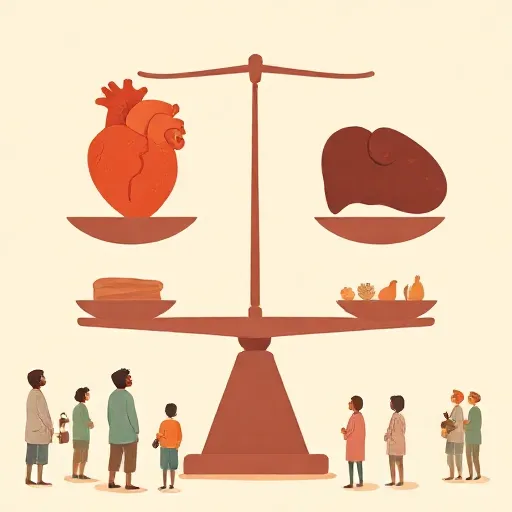
Even if we solve the consent puzzles, another problem remains: allocation. There are always more people in need than there are organs. What principles should decide who goes first?
Official guidelines talk about benefit to the patient, how sick someone is, urgency, and time spent waiting. But these principles often conflict: the person who has waited longest might not be the one who would benefit most. And organs differ wildly — a liver failure is often immediately fatal without a transplant, while kidney patients can survive on dialysis for years. So a fair scheme for kidneys might need different rules than one for livers.
Two especially charged questions keep coming up. First, should people who are partly responsible for their own illness — heavy drinkers who need a liver, or smokers who need a lung — get lower priority? Some say yes, to create an incentive to be healthy. But incentives only work if people are thinking decades ahead and aren’t addicted; many heavy drinkers are dependent on alcohol and aren’t calculating future transplant odds. A punishment argument also fails: in most countries drinking isn’t a crime, and punishment should involve a court, not a hospital waiting list.
The most careful version is the restoration argument. Here’s the idea: risk-takers (people who knowingly lead unhealthy lives) increase the demand for scarce organs. That means non-risk-takers end up waiting longer or dying because of choices others made. To restore fairness, the argument says, risk-takers’ entitlements should shrink until non-risk-takers are no longer harmed. It’s an attractive idea because it doesn’t rely on judging anyone’s lifestyle as morally bad — only on preventing harm to innocent third parties.
But Stephen Wilkinson (born 1965) has pointed out a stunning implication. In some countries, smokers die younger and therefore cost the healthcare system less overall than non-smokers. If that’s true, the restoration argument would force us to give smokers higher priority — otherwise smokers would be harmed by non-smokers’ longer lifespans consuming more resources! Most people find that conclusion absurd, which suggests the argument has deep problems. And even if we set that aside, pinning down exactly which health conditions a person is “responsible” for turns out to be fantastically difficult — genes, environment, and luck all play huge roles.
The second charged question is social value: should we give extra priority to people who are especially valuable to society? In the 1960s, a committee in Seattle secretly judged the social worth of kidney patients to decide who would get dialysis. The experiment was widely viewed as a disaster, partly because it’s impossible to make such judgments fairly and partly because it violates the principle that every patient deserves equal concern. Some today argue for a narrow exception for frontline healthcare workers during a pandemic, not because they’re more valuable as people, but because keeping them alive might increase the number of transplants that can happen overall. That’s a pragmatic argument, not a claim about moral desert.
Why This Matters Right Now
When you get your first driving licence, many places will ask you: do you want to be an organ donor? That moment is a tiny piece of a giant ethical machinery that decides who lives and who dies. The questions this article has walked through — whose consent should count, whether families should ever be overridden, whether it’s ever right to take organs from someone who didn’t say yes, and how to share a scarce lifesaving resource — are not just for doctors and lawyers. They shape the actual laws and practices in your country, right now.
Thousands of people die each year waiting for a transplant. Changing the rules might raise or lower that number, but it’ll never make the dilemmas disappear. Because the conflict at the heart of all this isn’t medical — it’s a clash of values that any thoughtful twelve-year-old can start to grapple with. Who gets a say when it’s your body on the line?
Think about it
- If a dying person has never said anything about donation, should we assume they’d want to help save a life, or assume they’d want to keep their body intact? Why?
- Could a family’s emotional distress ever be so strong that it’s right to ignore the written wishes of a registered donor?
- Should someone who needs a liver because of heavy drinking get lower priority than someone born with a liver disease, even if both have the same chance of a successful transplant?