Do You Live On After Death? A Philosophical Showdown
What Happens When You Die? Two Ancient Answers
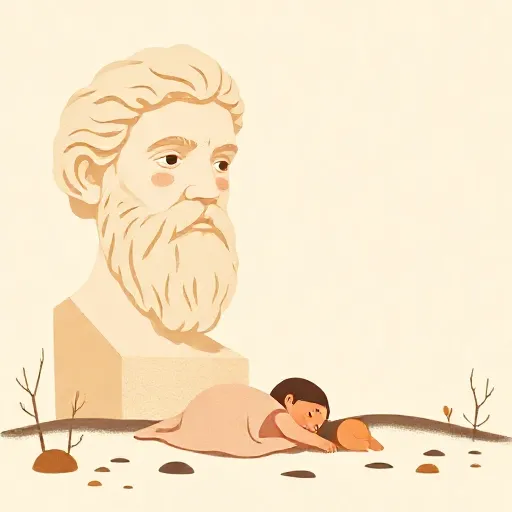
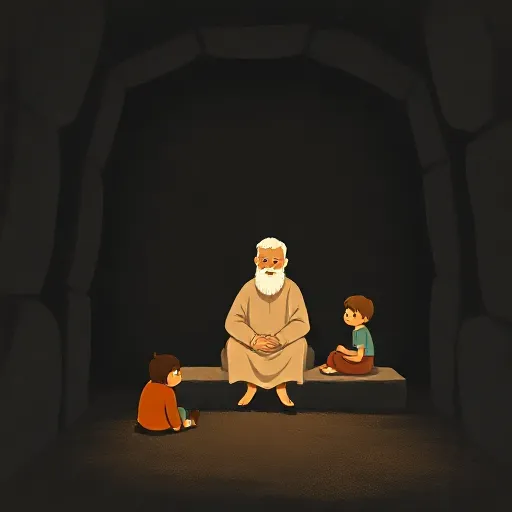
In a prison cell in Athens, the philosopher Socrates (469–399 BCE) waited to be put to death. His friends were terrified, but Socrates told them there was nothing to fear. Your body might be destroyed, he said, but your soul — the real you — does not depend on flesh and bones. The soul lives before birth and will live on after your body crumbles. In fact, Socrates argued, a wise person can even welcome death, because it frees the soul from the heaviness of the body so it can think more clearly in an afterlife. His student Plato (427–347 BCE) wrote these conversations down, and the idea spread: you are not just a body; you are a soul that can survive death.
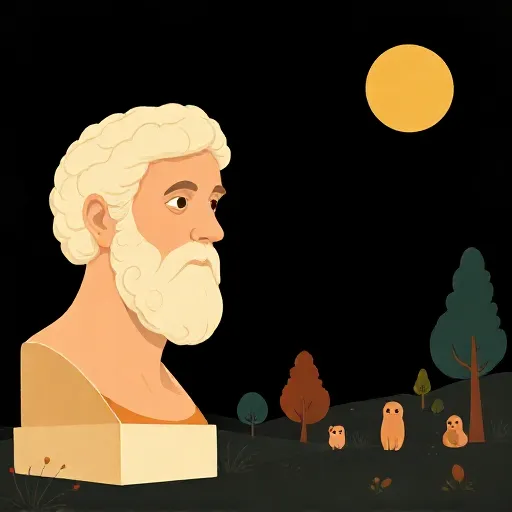
Not everyone in the ancient world agreed. The Stoic teacher Epictetus (around 55–135 CE) had a very different view. He believed that when your body dies, you stop existing, completely. There is no ghostly self that floats away. And yet, Epictetus insisted, you still should not fear death. Since you will not be there to suffer or miss anything, there is nothing bad waiting for you. It is like a deep, dreamless sleep you never wake from — not scary, just nothing.
So here were two opposite answers to the same huge question: Plato’s survival (you go on living) and Epictetus’s annihilation (you simply end). Both thinkers agreed that death need not terrify you. But they could not agree on what actually happens — and that fight has never stopped.
Does Any of This Matter for How You Live Now?
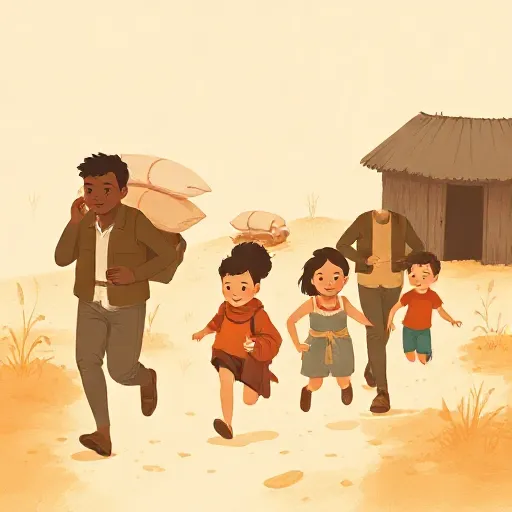
You might wonder: why even argue about an afterlife? Can’t you just live your life and ignore the question? The modern philosopher Peter Singer (born 1946) says you can. He imagines a village where aid workers help people become healthy, educated, and self-sufficient. The project is a wonderful success. Then a gloomy person asks, “What difference did it make? In a thousand years they’ll all be dead.” Singer’s reply is that the goodness of the act does not depend on centuries of future history. Picture time as a huge block where every moment is equally real; it is always true that in the year of the project, those villagers were happier and better off. You don’t need to guarantee that your good deeds echo literally forever.
The philosopher Erik Wielenberg (born 1972) makes a similar point with an everyday memory. He remembers gym class arguments where the teacher would say, “Ten years from now, will any of you care who won this game?” Wielenberg thought a fair answer was: “Does it matter now whether we will care in ten years?” The value of the game, the fun and the effort, sits right there in that hour. He then asks a much harder question: wasn’t it better that the Holocaust ended when it did, rather than dragging on for years longer, regardless of what happens a million years from now? When terrible things happen, we care intensely about when they stop — not just about far-distant outcomes.
Not every philosopher is satisfied with this picture. If you truly love the villagers you helped, wouldn’t you hope they flourish in 2030, 2040, and beyond? Suppose an aid worker announced on leaving: “No matter what happens to you after we go — even a plague in an hour — our act is just as valuable, and I truly don’t mind what becomes of you.” That would sound cold, maybe even heartless. Love reaches forward; it wants good things to last. And if you think a good afterlife is even possible, then hoping for that — for the people you care about — is natural. The same goes in the other direction: if a terrible afterlife were possible, we would hope to be spared. Our deepest values tug us toward caring about more than right now.
Ronald Dworkin (1931–2013) tried to hold both sides together. He admitted that we “desperately dread” the idea of being completely snuffed out. But he also argued that a human life can be a work of art complete in itself. When you play a tune well, make a chair, or love someone, the satisfaction is real and whole. Why, he asked, can’t a whole life also be an achievement that doesn’t need to go on forever? You can live richly even if there is no sequel after death.
So the dispute becomes: can a life be fully meaningful if it just ends, or does meaning require that something of us goes on? And is the possibility of an afterlife worth hoping for and investigating? To answer that, you need to ask whether survival is even possible.
Can You Survive Without Your Body? The Soul Puzzle

The first big divide among philosophers is about what you are. If you are a non-physical soul that happens to be connected to a body — a view called dualism — then the death of the body does not automatically destroy you. Your soul could, in principle, continue. Dualism does not guarantee survival; maybe your mind depends so heavily on your brain that it fades when the brain does. But dualism at least opens a door.
The rival view is materialism (or physicalism): you just are your physical body, especially your brain. When your brain stops working, the thinking, feeling you stops too. For a materialist, the only way to live again after death would be some kind of bodily comeback — a resurrection. Many religious traditions picture exactly that: God reassembles your body or creates a new one that is truly you.
But here trouble arrives. If God creates a body exactly like yours, is it really you, or just a copy? The philosopher Peter van Inwagen (born 1942) uses an example. Imagine a monastery that claims to own a manuscript written by Saint Augustine’s own hand, but the monks also admit that the original was burned in the year 457 and God miraculously recreated it the next year. Would you accept that the recreated paper is the very same manuscript Augustine touched? Van Inwagen says most of us would find that impossible to swallow. A perfect duplicate is not the original object. If the same logic holds for people, then a recreated body might be a replica of you, not the you who lived and died.
Some materialists try to escape the replica problem by saying that what makes you “you” is not the exact atoms but a first-person perspective — your unique way of being aware of yourself. If that perspective could somehow be transferred, identity could be preserved. Others propose that God might secretly preserve the crucial part of your body at the instant of death and restore it later. But none of these moves has won wide agreement. The puzzle remains: if everything you are is physical, keeping you alive after death seems to require something that looks awfully like magic — or a copy.
Dualism dodges the replica problem, because the soul itself does not need to be rebuilt; it stays the same thinking subject. Dualists still have to explain how a disembodied soul could think and feel, but many have offered detailed pictures of souls living in a world of shared, dream-like images. So while dualism doesn’t prove an afterlife, it makes it easier to imagine a real continuation of you. Materialism, on the other hand, makes the possibility depend on a very tricky bridge between a dead body and a living one.
Does the Universe Give Us Clues?
So far we have been asking whether survival is possible. But is there any reason to think it is real? Here philosophers start looking at the big picture of reality.
Many thinkers notice that belief in an afterlife fits especially well with belief in a loving God. If a perfectly good and all-powerful God exists, it seems natural that God would want to give people more than a few decades of life — especially for those who suffer unfairly or die young. The desire that justice and love should not stop at the grave pushes many theists to expect an afterlife. The great philosopher Immanuel Kant (1724–1804) argued that we need to hope for an afterlife so that moral progress can continue and happiness can eventually match goodness. Without that hope, the universe can look deeply unjust.
Turning that around: if there is no afterlife, the sheer amount of misery and unfairness in the world becomes even harder to understand. That doesn’t make the problem of evil simple for believers, but it does mean that the afterlife question is tied to the biggest questions about whether the cosmos cares about you at all.
There is also a quieter argument. Human beings almost everywhere, across cultures and centuries, have longed for some kind of life after death. If the universe is just the mindless result of natural forces, that longing is just a biological quirk — wishful thinking. But suppose the universe was shaped by a loving God. In that case, our deepest, most widespread desires might be pointing toward something real. The desire for an afterlife would not be proof, but it would be a reasonable clue. The argument cannot settle the case; it simply shows that where you start — with a God-filled or a God-empty picture of reality — changes how you hear that inner hope.
Why the Question Still Matters for You

This is not just an old argument. It sneaks up on you whenever you lose someone you love, or when you lie in bed and ask, “Does my life actually count?” Philosophers don’t have a neat final answer. But thinking carefully about the debate changes how you understand your own values.
If Dworkin is right and death is the end, then your life can still be a shining, complete achievement — a song that is beautiful even though it finishes. If the dualists and theists are right, then your love and care for others may stretch far past the grave, and the story doesn’t just stop. Either way, the hope you carry for the future — for loved ones, for justice, for your own unfinished self — tells you something real about what you treasure most. Paying attention to that, say many philosophers, is the beginning of wisdom.
Think about it
- If you were certain there is no afterlife, would you live differently? Would your biggest decisions change, or would the things you love stay the same?
- Imagine meeting someone who thinks the whole universe will end in a thousand years and that nothing will be remembered. Can you give them reasons why it still matters to treat others kindly today?
- You are building a project — a garden, a story, a friendship — that you know will be destroyed in a year. Is the effort still worth it? Why or why not?