How Did Olympiodorus Teach Plato in Secret?
“All People Want to Drink from Plato’s Fountain”

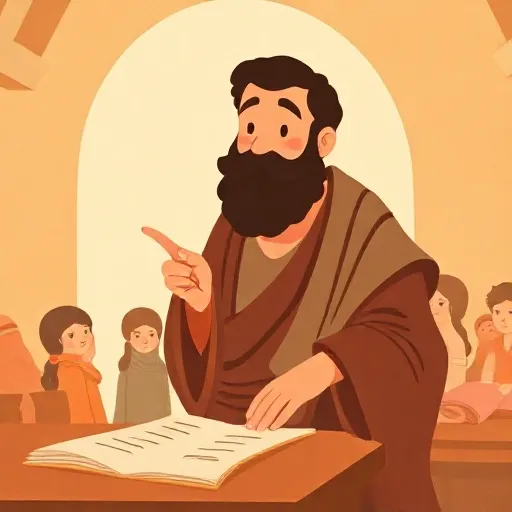
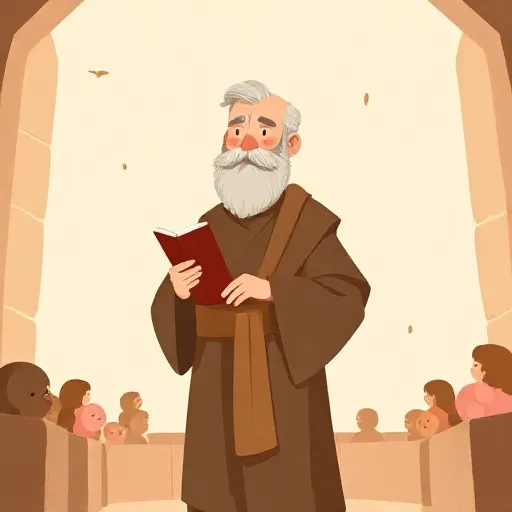
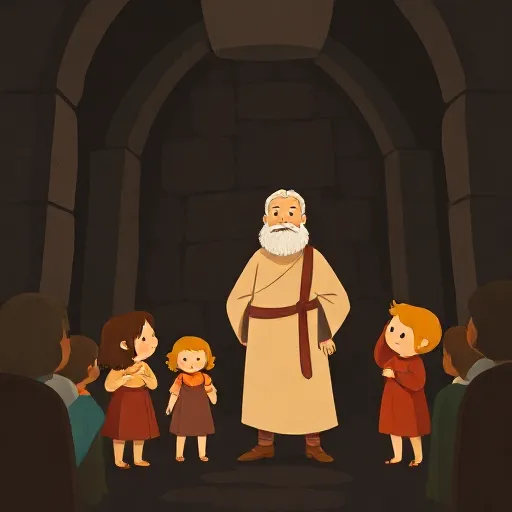
It is a warm morning in Alexandria, around the year 550. A man named Olympiodorus (around 500–570) faces a room full of young students. He unrolls a scroll of Plato and begins his lecture. But he knows this is a tricky crowd. Almost all his students are Christians. His own beliefs are pagan, rooted in the old Greek gods. Yet the first words out of his mouth are bold:
“All men have a desire for Plato’s philosophy because all men want to draw something useful from it; they hurry to be spell‑bound by its fountain.”
He is not just flattering them. He is promising them something safe. Plato, he hints, can be useful. That one word—“useful”—is the key. Olympiodorus must convince his audience that ancient pagan books are worth their time without ever sounding like an enemy of their faith.
Olympiodorus was the official chair of philosophy in Alexandria. He called the great teacher Ammonius “our philosopher” and probably studied under him as a young man. After Ammonius died, Olympiodorus inherited the job. But the job came with a heavy burden. He had to teach pagans’ wisdom in a city where the emperor was working hard to shut paganism down.
The Emperor Who Tried to Stamp Out Pagan Learning
The emperor Justinian (ruled 527–565) was determined to wipe out pagan philosophy. In 529 he closed the Academy in Athens, the most famous philosophical school of the ancient world. He took its property and sent its thinkers fleeing. A pagan teacher could easily feel like a hunted animal.
But here is the strange part: in Alexandria, philosophy survived and even thrived. Why? The answer is that Christian leaders needed philosophy themselves. The empire was torn apart by arguments about the nature of Christ—did he have two natures, human and divine, or one? To join those debates, you needed sharp logic and a deep understanding of concepts like substance and being. That meant studying Aristotle and Plato. So even as Justinian attacked pagan life, he could not ban classical learning entirely. The education called paideia—the full classical training that included philosophy—remained essential for anyone who wanted to be taken seriously in politics or the church.
Olympiodorus was the perfect person for this half‑tolerated role. He was a trained pagan philosopher who could speak to Christian students. He never attacked their faith. He turned Plato and Aristotle into a shared cultural treasure, not a rival religion. Later scholars called him “the first classicist” because, more than seeking truth, he worked to keep the books alive for their practical value.
The Secret Method: Overview, Then Close Reading

How do you teach suspicious students without getting into trouble? Olympiodorus invented a neat structure. Every class, or praxis, had three steps. First, a passage from Plato or Aristotle was read aloud. Second came the theôria, a general overview where the teacher could talk about what the passage meant in broad terms. Third came the lexis, a detailed, line‑by‑line close reading that focused on language, logic, and rhetoric.
This two‑layer commentary let Olympiodorus handle dangerous topics gently. In the overview he kept things safe and uplifting. In the close reading he could point out clever wordplay or logical moves without committing himself to a pagan worldview. He also leaned heavily on what he called common notions (koinai ennoiai)—basic ideas that any reasonable person could accept. When a student asked a tough question about contradictory myths, Olympiodorus dodged by saying, “We put our trust in those who stay closer to the common notions.” In other words, he would not declare a myth true or false; he would just point to what everybody already believed.
His method was so successful that his own teachers’ teacher, Proclus, had used a similar pattern. Under Olympiodorus it became a polished survival tool.
Gods, Witches, and the Tension in the Room

Even with a careful method, the Greek gods kept popping up. Plato’s dialogues are full of Zeus, Cronus, and Hera. Olympiodorus often replaced those names with the single word “God.” He told his students: “Do not be disturbed by names. Think that these powers do not have individual essences and are not distinct from one another, but place them within the first cause.” He was saying, in effect, “Just imagine all these gods as different faces of the one God you already believe in.”
Some topics were harder to smooth over. In Plato’s Gorgias, Socrates mentions Thessalian witches who supposedly pulled down the moon. The students’ ears perked up. They wanted to know more about magic. So Olympiodorus gave them a whole lecture on how witches were thought to attract infernal demons during an eclipse, and why ordinary people beat bronze pots to scare the demons away. He ended with, “I have dealt with these things because you are not without ideas about these customs. Now, let me come to the present topic.”
Notice the trick: he satisfied their curiosity for a few minutes, then steered them straight back to the text. He never said the magic was real, and he never said it was nonsense. He just offered a story. That was enough to keep the classroom happy and the emperor’s spies unprovoked.
The Alchemist Who Wasn’t Him (Probably)
There is a mystery tied to Olympiodorus’ name. Several ancient manuscripts describe a work on alchemy—how to purify metals and harness “divine water”—and they say it was written by “Olympiodorus, the Alexandrian philosopher.” For a long time people thought the same man who taught Plato also dabbled in secret chemistry.
But most scholars today are not convinced. The alchemical treatise quotes Saint Paul and sounds like a Christian author. Its style and vocabulary are nothing like Olympiodorus’ philosophy lectures. Still, the thinker Cristina Viano has argued that Olympiodorus might have written an original alchemical commentary that was later expanded by a compiler. On this view, what we have is a hybrid: a genuine core mixed with later additions, all published under the famous name. In any case, the alchemy text shows one thing for sure: Olympiodorus’ name carried such weight that people wanted to hide behind it.
Why a Cautious Teacher Still Matters
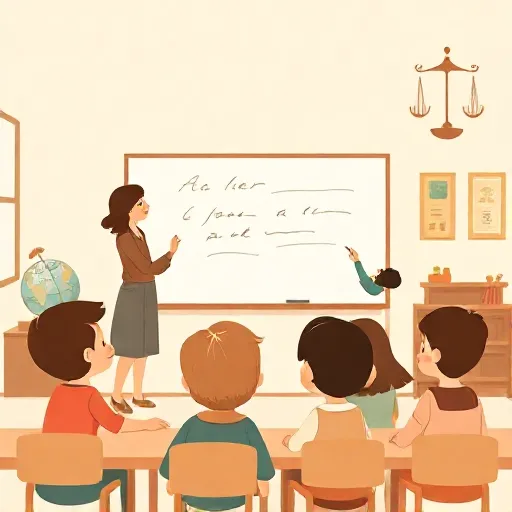
Olympiodorus never openly defied the emperor. He never wrote a famous book of his own ideas. Some philosophers have called him disappointing, a man who played it too safe. But look at what he did pull off: for decades, in a city where paganism could be punished, he kept Plato and Aristotle alive for hundreds of students. After he died, his pupils—David and Elias—continued teaching in his style. The material even reached Constantinople. His commentaries on Plato’s Phaedo were copied more than almost any of his other works.
You might have been in a situation where you felt you had to hide what you really thought. Maybe you had an idea that your friends would mock, or an opinion that a grown‑up might dislike. Olympiodorus’ story reminds us that careful speech is not the same as lying. Sometimes, choosing the right moment and the right words is the only way to keep important ideas from being crushed. That is a philosophical skill worth learning.
Think about it
- If you had to teach a subject that some powerful people wanted to ban, how would you decide what to keep in and what to leave out?
- Olympiodorus ignored a rival thinker, John Philoponus, even though they worked at the same school. Is it ever fair to ignore someone because their ideas make your life harder?
- Imagine you are a student in Olympiodorus’ classroom. He tells you a myth about Greek gods but says, “Don’t take the names literally.” How would you figure out what you actually believe?